Deep Sea Neutrino Telescope Puts Einstein’s Theory of Relativity to the Ultimate Test
An underwater neutrino telescope has put Einstein’s theory of relativity to a new test, tightening the limits on potential departures from standard physics.
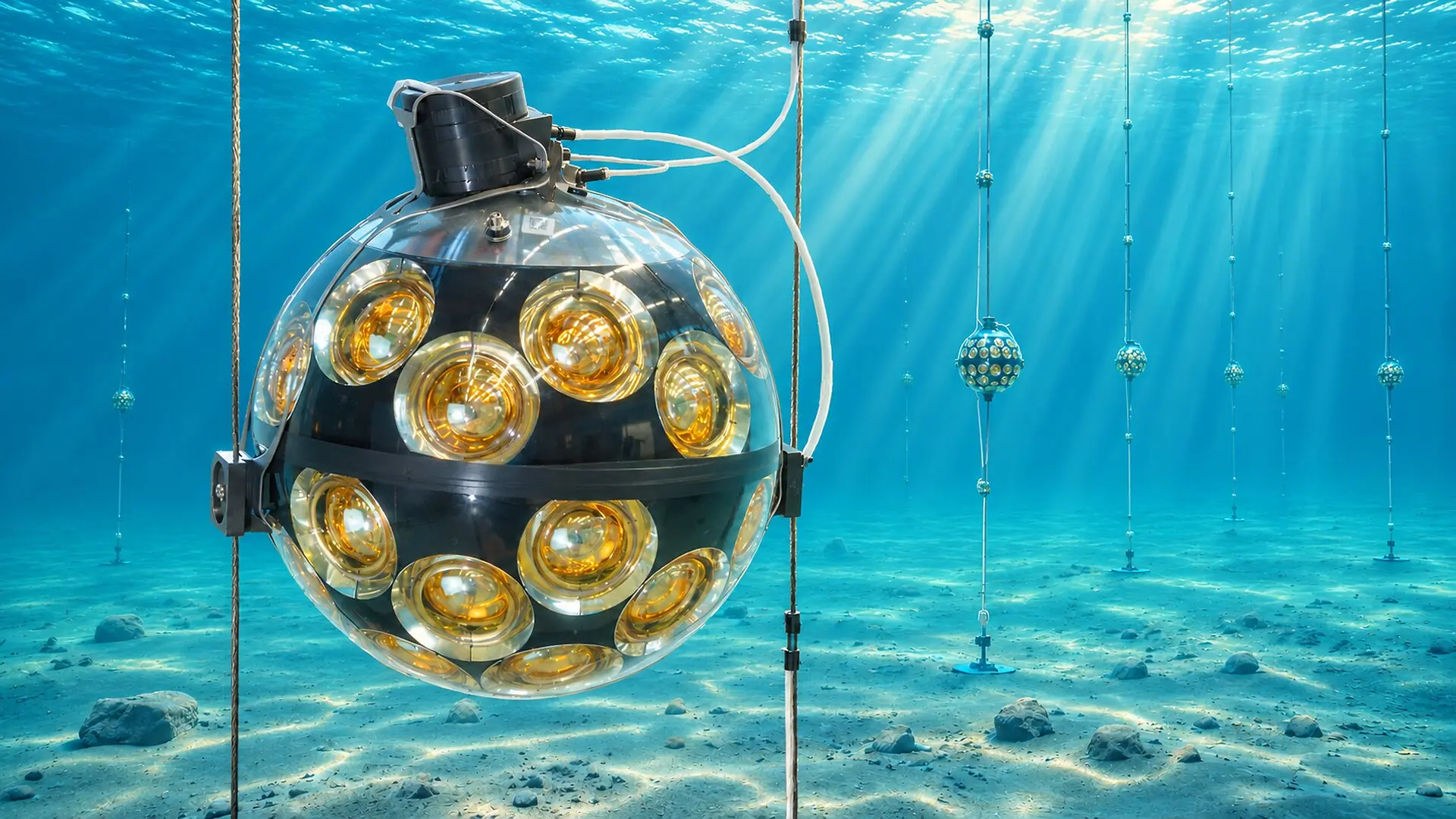
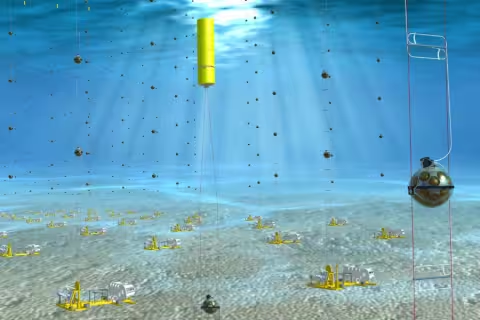
Deep within the Mediterranean Sea, a sprawling neutrino observatory has provided a rigorous new test for one of the bedrock principles of modern physics: Lorentz invariance. By analyzing a vast dataset of atmospheric neutrinos, the KM3NeT collaboration has confirmed that Einstein’s theory of relativity remains robust under the conditions probed by their detector, while simultaneously narrowing the window for potential deviations that could hint at exotic new physics.
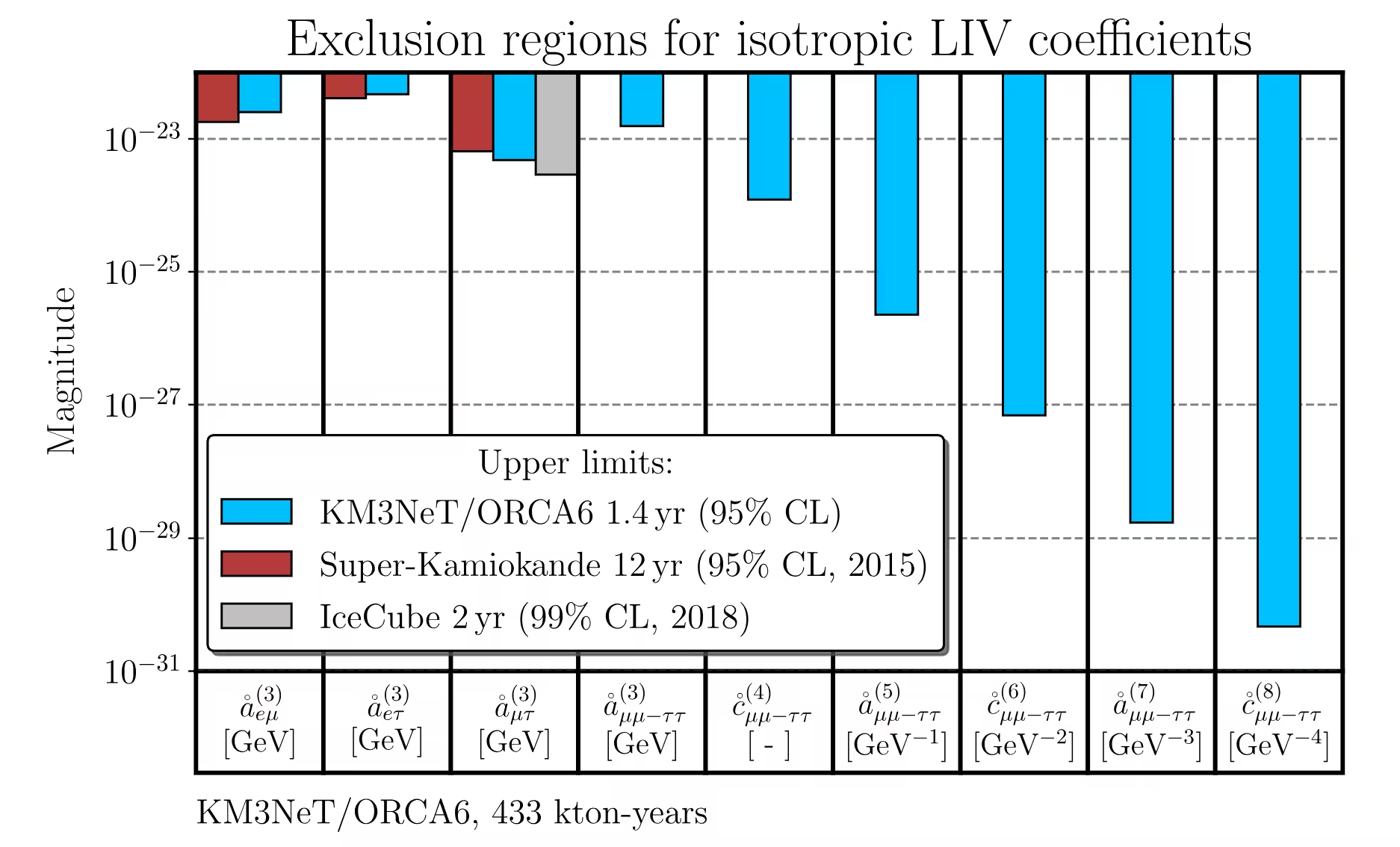
The research, published in the Journal of Cosmology and Astroparticle Physics, utilized the ORCA detector to examine 5,828 candidate neutrino events. While the study uncovered no evidence of Lorentz symmetry breaking, it successfully established fresh experimental limits, including the first direct constraints on specific behaviors involving muon and tau neutrinos.
Testing the Fabric of Spacetime
Lorentz invariance posits that the fundamental laws of physics remain unchanged regardless of an observer’s orientation or velocity. This principle is a cornerstone of relativity and a foundational element of the Standard Model of particle physics. However, theoretical attempts to unify general relativity with quantum mechanics—the quest for quantum gravity—suggest that spacetime might not be perfectly smooth at the smallest scales. If spacetime possesses a discrete, granular structure, it could manifest as subtle violations of Lorentz symmetry.
“We still don’t know whether our spacetime is continuous or might be discrete,” explains Alba Domi, a researcher at the Erlangen Centre for Astroparticle Physics at Friedrich-Alexander-Universität Erlangen-Nürnberg and a co-author of the study. “Looking for violations of Lorentz invariance is one way to investigate this possibility.”
Neutrinos as Cosmic Probes
Neutrinos are notoriously elusive, rarely interacting with matter as they traverse the Earth. Their unique ability to oscillate—or change between different flavors—makes them ideal candidates for detecting deviations from standard physical laws. By comparing the observed patterns of these oscillations against theoretical models, scientists can search for distortions that might signal new, hidden physics.
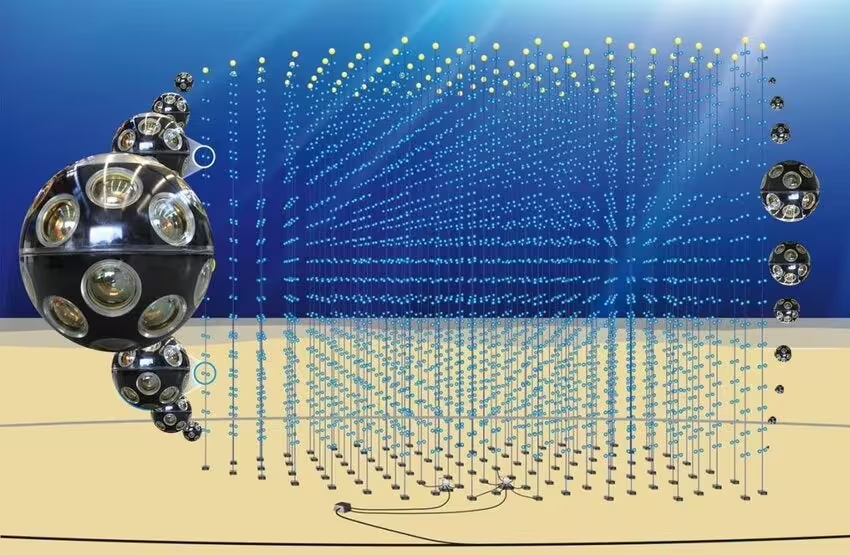
The team analyzed 1.4 years of data captured by just six of the detector’s units. By mapping the energy and arrival direction of the neutrino candidates, they sought any anomalous shifts in oscillation probabilities. The absence of such anomalies allowed the researchers to place strict upper limits on specific flavor-dependent departures, providing a new benchmark for theoretical physicists.
A Growing Telescope
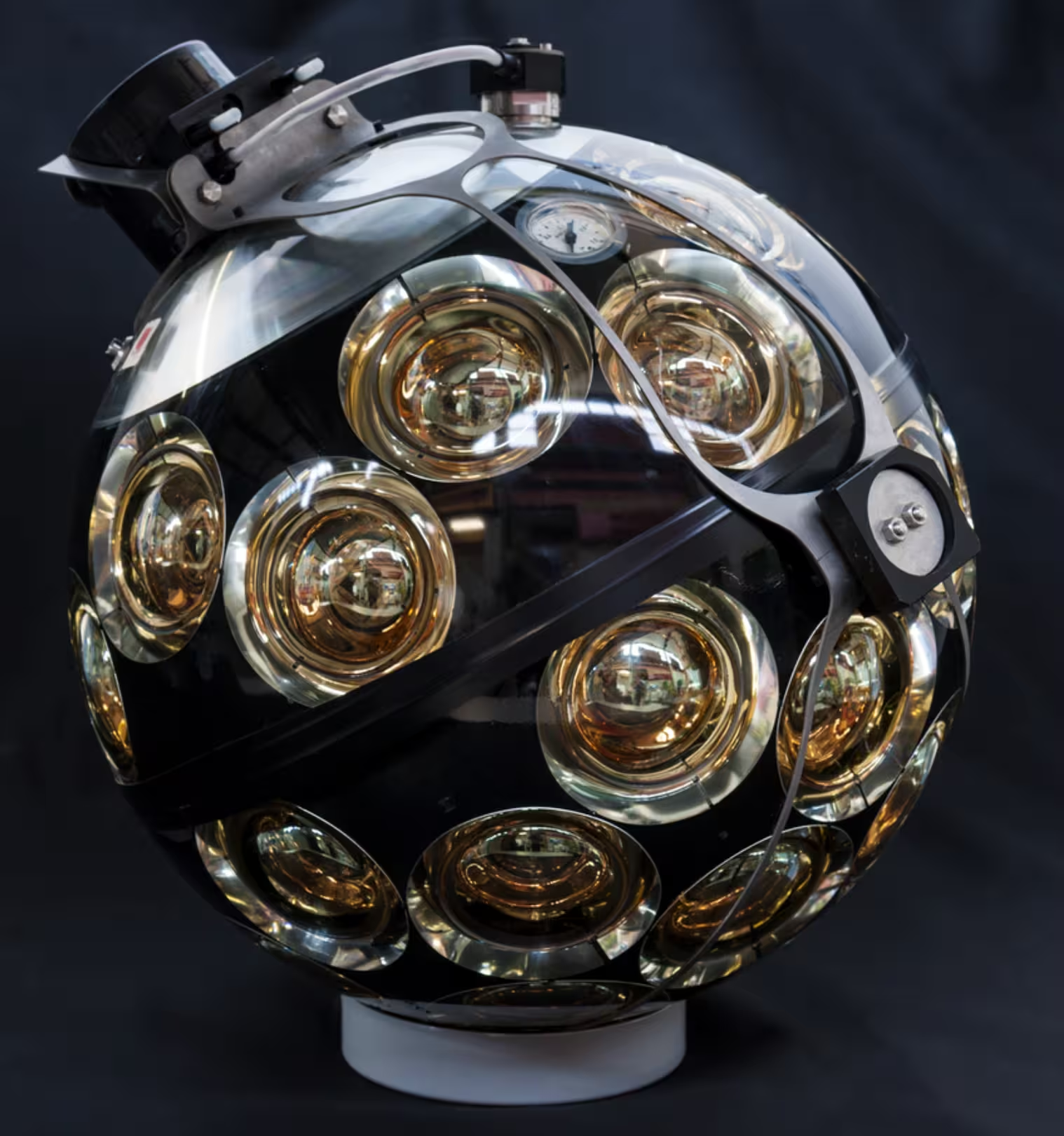
Despite being in an early stage of development, the ORCA detector has already achieved sensitivity levels competitive with veteran observatories like IceCube and Super-Kamiokande. This efficiency highlights the immense potential of the KM3NeT array as it continues its expansion.
“These results show the potential of KM3NeT/ORCA to test fundamental principles of physics, even with a relatively small detector,” says Lukas Hennig, a PhD student at ECAP and study co-author. “With more data and an expanding detector, we will be able to search for even smaller effects.”
Future Horizons for High-Energy Physics
Looking ahead, the collaboration aims to leverage the ARCA detector, which is designed to capture high-energy neutrinos originating from distant astrophysical phenomena. Because certain Lorentz-violating effects are theorized to become more pronounced at higher energies, ARCA could prove critical in pushing the boundaries of these tests even further.
This research was supported by the European Union’s Horizon Europe program through the Marie Skłodowska-Curie Postdoctoral Fellowship (QGRANT). As the detector grows and observational time accumulates, the scientific community expects to probe ever-smaller scales of physics, continuing the search for answers that might one day bridge the gap between Einstein’s gravity and the quantum world.
This article has been fact checked for accuracy, with information verified against reputable sources. Learn more about us and our editorial process.
Last reviewed on .
Article history
- Latest version
Reference(s)
- “KM3NeT - opens a new window on our universe.”, June 1, 2021 KM3NeT <https://www.km3net.org/>.
- Adriani, O.., et al. “Atmospheric neutrino constraints on Lorentz invariance violation with the first six detection units of KM3NeT/ORCA.” Journal of Cosmology and Astroparticle Physics, vol. 2026, no. 11, November 4, 2026, pp. 012 IOP Publishing, doi: 10.1088/1475-7516/2026/11/012. <https://doi.org/10.1088/1475-7516/2026/11/012>.
- “Erlangen Centre for Astroparticle Physics.”, November 3, 2026 <https://ecap.nat.fau.de/>.
- “Moving knowledge | FAU Erlangen-Nürnberg.”, February 19, 2025 FAU <https://www.fau.eu/>.
Cite this page:
- Posted by Aisha Ahmed