Astronomers Are Baffled by a Mysterious Radio Source That Has Been Active for 20 Years
An exceptionally bright, mysterious source in the Milky Way is defying current theories about stars, black holes, and the nature of cosmic radio emissions.
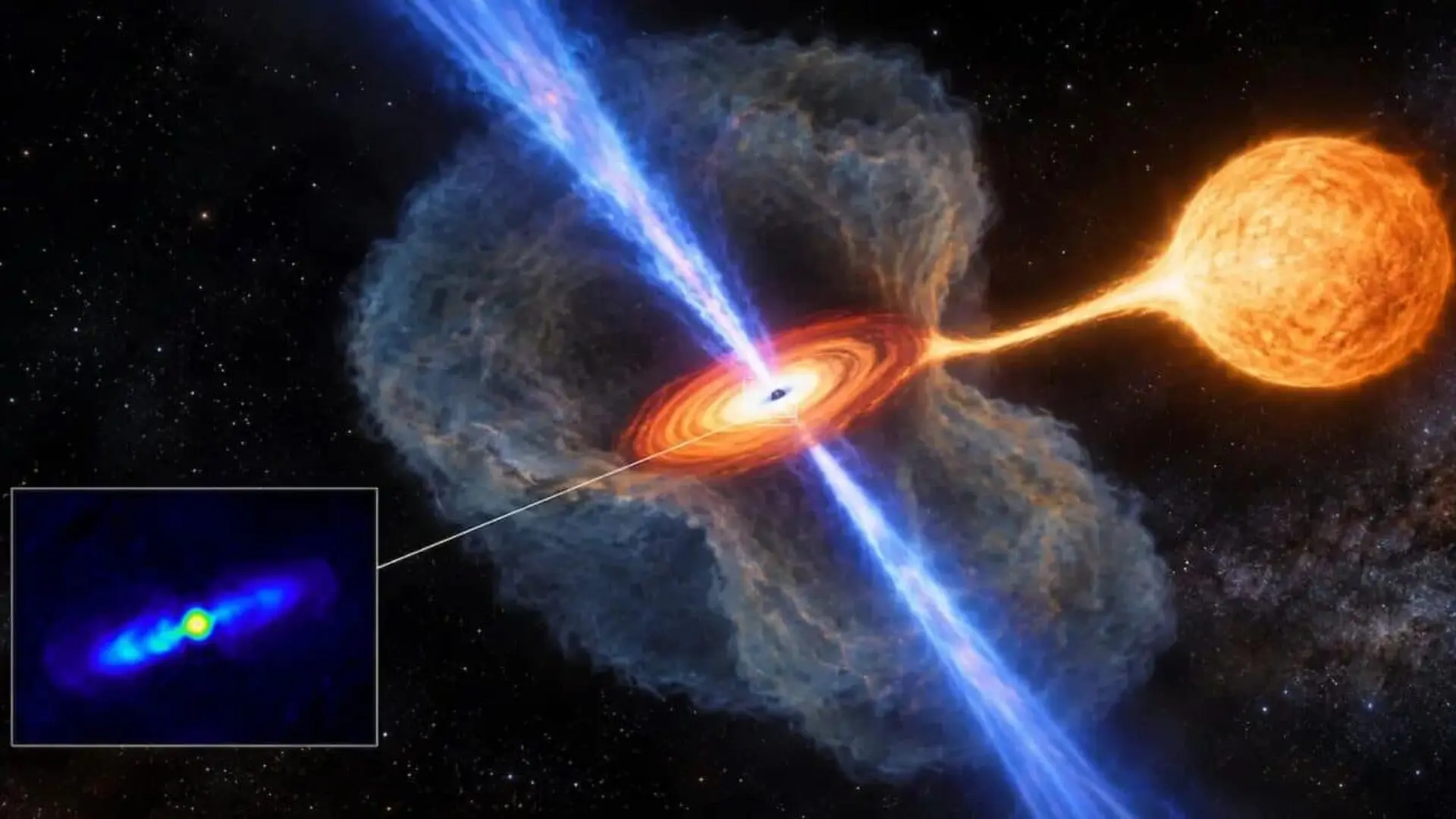
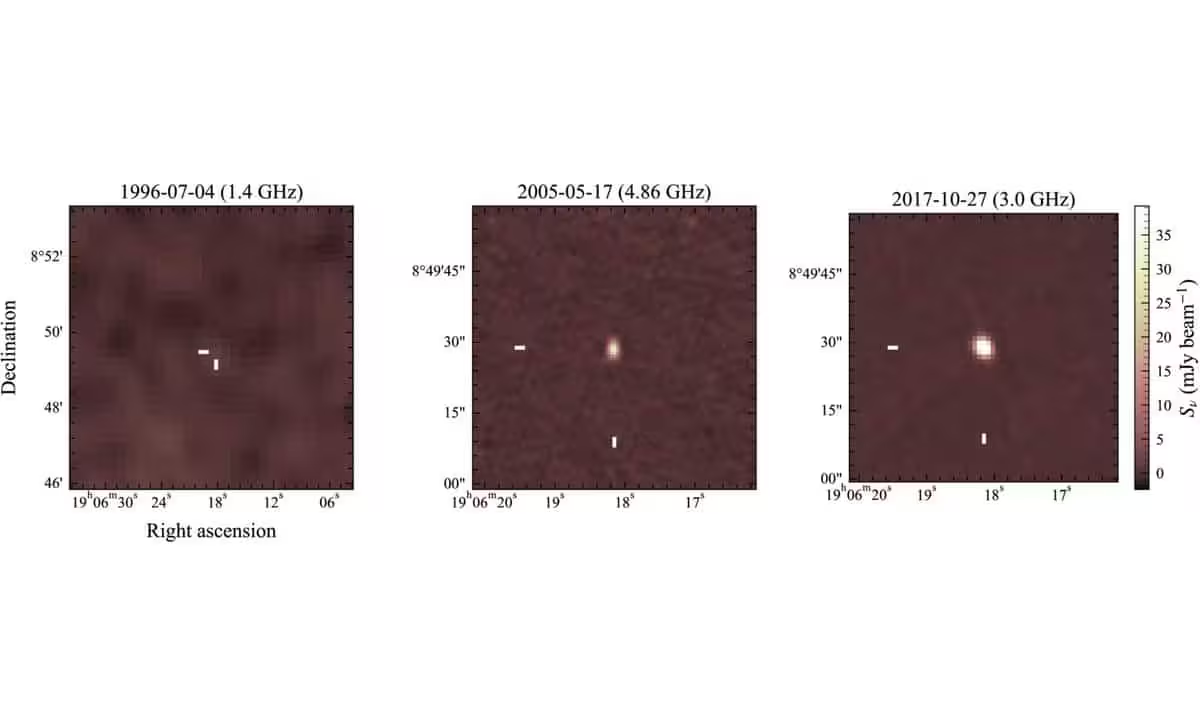
Astronomers are struggling to classify a peculiar celestial object that has been broadcasting erratic radio pulses across the Milky Way for at least two decades. The source, known as VT J1906+0849, was first identified by the Very Large Array Sky Survey (VLASS) in 2017, but subsequent archival research has pushed its history back to at least 2005. Despite its prominence, the object defies every known category of radio-emitting phenomena.
A Long-Term Radio Enigma
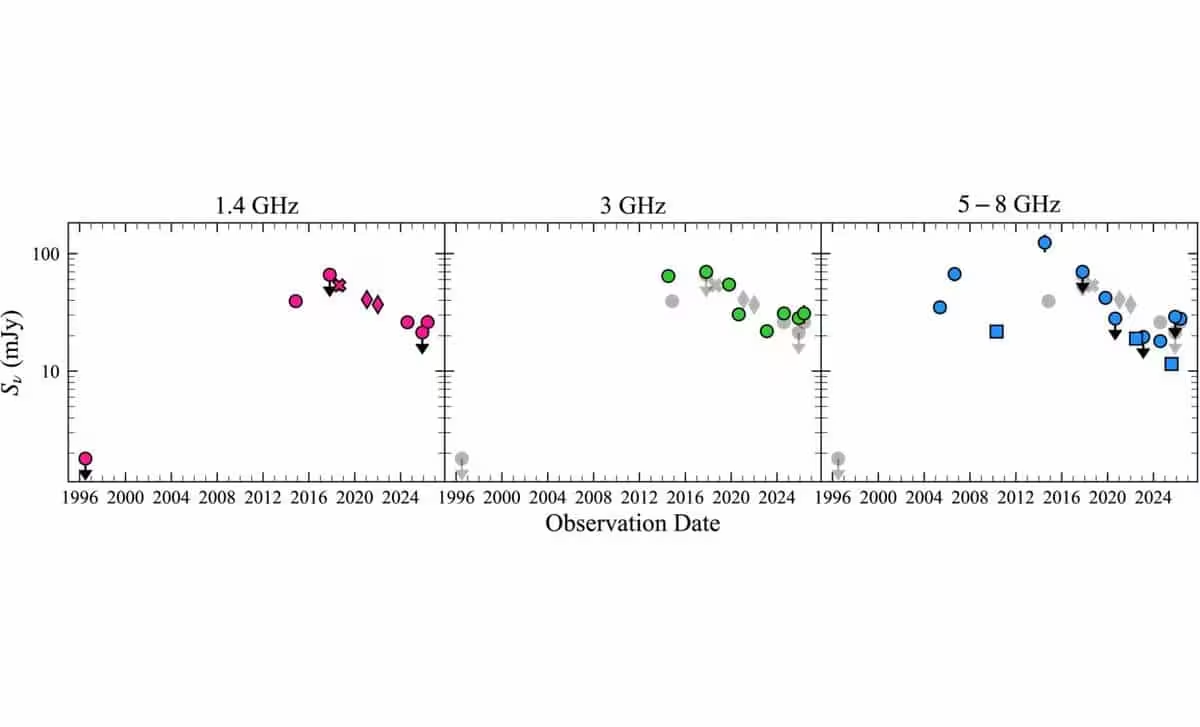
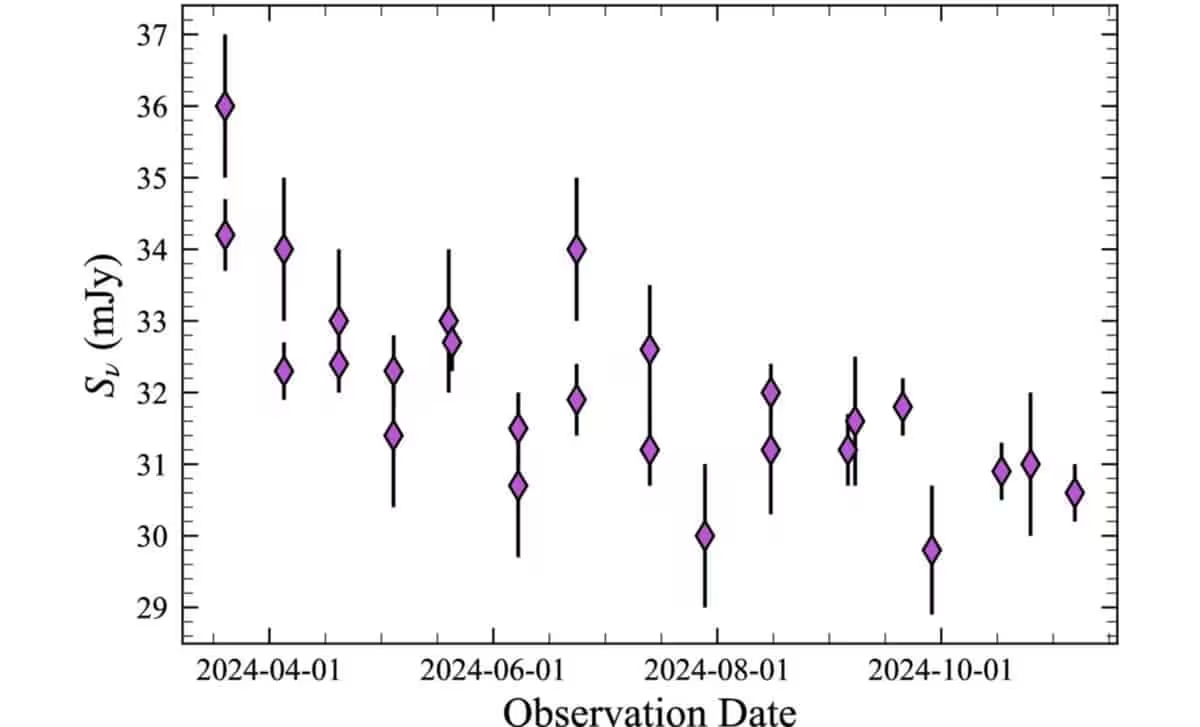
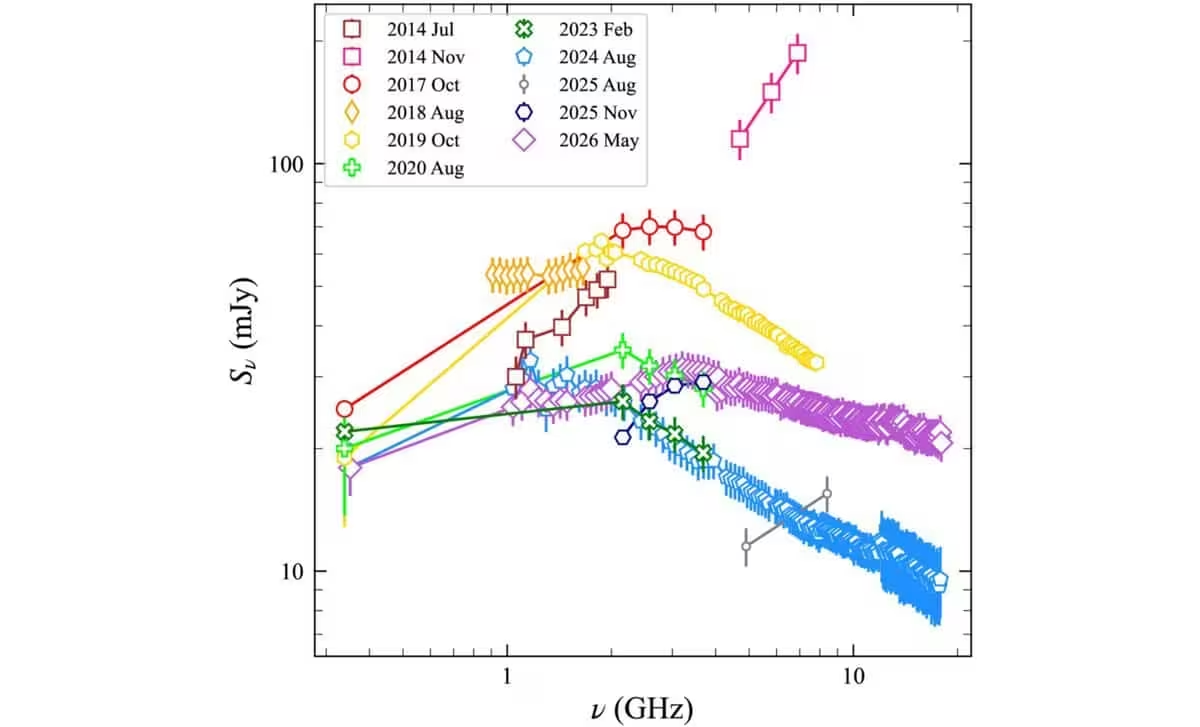
The transient source, located between 50,000 and 110,000 light-years away, has been caught in over 30 separate observations. A team led by Caltech researcher Jessie Miller discovered that while the object was absent from radio surveys in 1996, it emerged by 2005 and has remained active ever since. Its brightness is not static, fluctuating significantly with a notable peak in 2014 and a recent surge in intensity.
The signal is notably broadband, meaning it emits across a wide range of frequencies. This characteristic is a primary reason researchers have largely dismissed the possibility of artificial or extraterrestrial origin. Intentional communication typically utilizes narrow-frequency bands to maximize energy efficiency, whereas the erratic, wide-spectrum emissions of VT J1906+0849 point toward a chaotic natural process.
Unmatched Power and Unusual Behavior
To better understand the object, the research team looked beyond radio waves, identifying the first non-radio counterpart in the infrared spectrum. This data suggests the source is compact—likely no larger than the orbit of Jupiter—yet its brightness is immense. When compared to known cosmic engines, the object fails to fit the profile of standard candidates:
- Active Galactic Nuclei: While bright, the source does not conform to the established patterns of black-hole-driven galactic centers.
- Flare Stars: VT J1906+0849 is approximately one billion times brighter than typical flare stars.
- Binary Systems: It outshines magnetically active binary systems by a factor of one million.
- Cataclysmic Variables: Even compared to systems where a white dwarf strips matter from a companion, this object is 100,000 times more intense.
Proposed Mechanisms and Future Research
The current hypothesis suggests that VT J1906+0849 may be a compact object, such as a neutron star or black hole, that is actively feeding on material. The researchers propose that a continuous “synchrotron outflow” interacts with a dense, asymmetric disk of wind surrounding the object. This interaction could potentially drive the intense, persistent radio emission observed by telescopes.
This model also offers a possible explanation for why the object remains invisible in X-rays: a dense disk of matter may be obscuring that radiation, effectively hiding the engine driving the system. However, this remains speculative.
For now, VT J1906+0849 serves as a reminder of how much of our own galaxy remains mysterious. By utilizing wide-field surveys, astronomers hope to find similar transients that might reveal whether this object is a one-of-a-kind anomaly or the first discovered representative of an entirely new class of high-energy cosmic systems.
This article has been fact checked for accuracy, with information verified against reputable sources. Learn more about us and our editorial process.
Last reviewed on .
Article history
- Latest version
Cite this page:
- Posted by Aisha Ahmed