Astronomers Find Three Giant Planets That Should Have Been Swallowed By Their Dying Stars
Three distant exoplanets have defied the odds by surviving their star’s transition into a red giant, leaving astronomers searching for the cause of their luck.
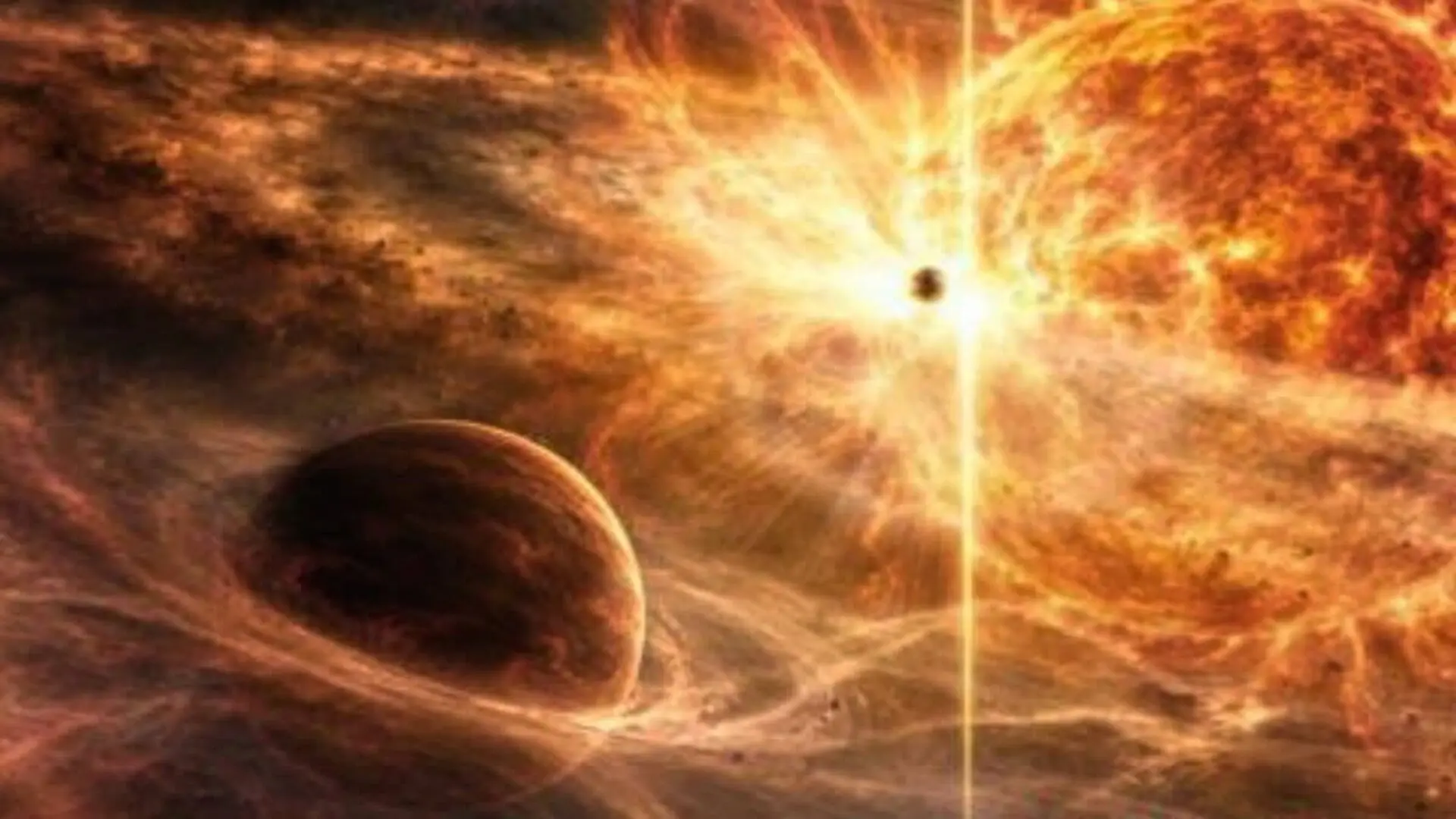
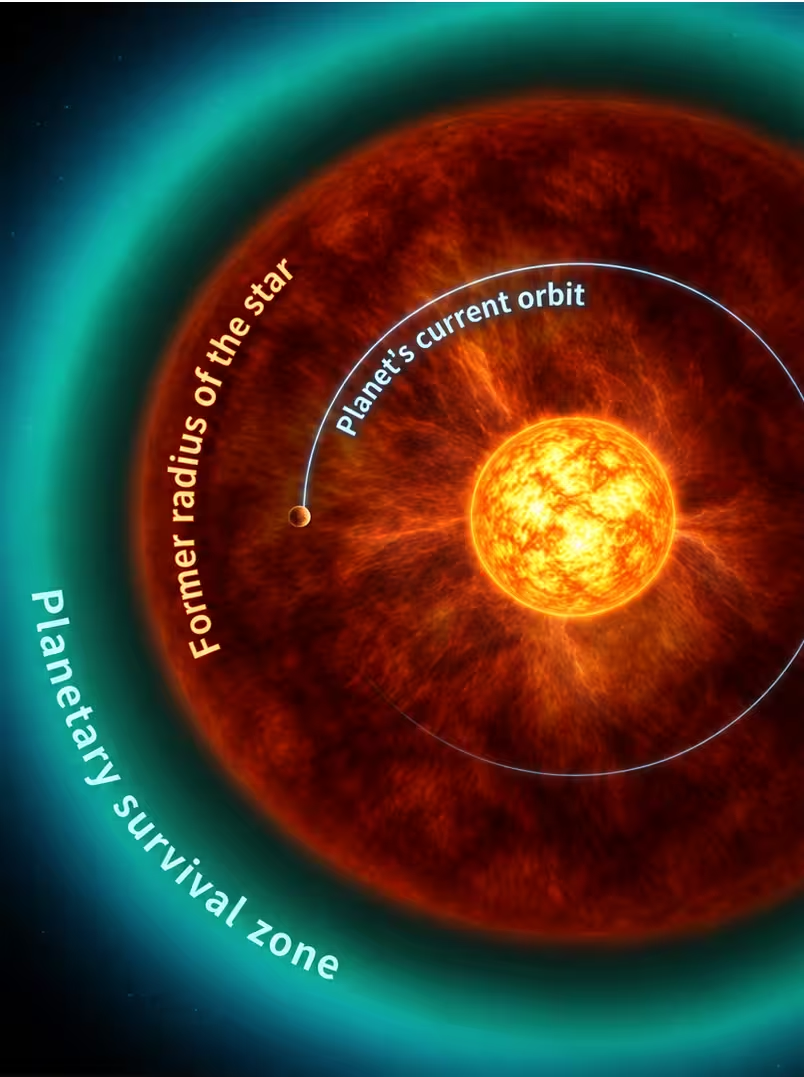
In the quiet reaches of the Boötes constellation, a massive gas giant circles its host star with remarkable defiance. The planet, boasting a mass nearing that of Jupiter, completes a full revolution every 30 days while sitting at a distance less than one-fifth of the gap between the Earth and the Sun. By all conventional metrics of stellar evolution, this world should have been obliterated long ago, as its parent star—the aging 24 Boötis—has already expanded well beyond the planet’s current orbit during its violent red giant phase.
This planetary anomaly is not an isolated incident. A new investigation, published in the Proceedings of the National Academy of Sciences, identifies a total of three such survivors. Led by Professor Qian Shengbang of Yunnan University, the research team highlights that these planets reside within the very volumes of space their stars once occupied at their maximum expansion.
Deciphering the Lives of Stars
The three stellar hosts—24 Boötis, HD 12648, and TYC 4282-605-1—pose a challenge to astronomers because they occupy a transition point in stellar life cycles. From a distance, a star in its red giant phase looks indistinguishable from a “red clump” star, a later stage where the star has contracted slightly and initiated core helium fusion. To solve this mystery, the team utilized asteroseismology. By analyzing the subtle, heartbeat-like flickers caused by starquakes, researchers confirmed that all three stars have successfully moved past the red giant branch and are now burning helium.
Defying Gravitational Engulfment
Evolutionary modeling confirms that these stars swelled to sizes that should have doomed their companions. Among the survivors, 24 Boötis stands out; located 308 light-years away, its orbiting companion is significantly closer to its star than any other known planet around a red clump star. The remaining two systems involve more massive giants: HD 12648 b, found 594 light-years away, and the massive TYC 4282-605-1 b, which weighs nearly 11 times as much as Jupiter.
The existence of these planets contradicts recent surveys, including a 2025 analysis using NASA’s TESS telescope, which suggested that giant planets in close proximity are routinely consumed as their stars age. Edward Bryant, who led that survey, noted that while the high rate of planetary loss was expected, the efficiency with which stars strip their systems of close-in companions remains striking.
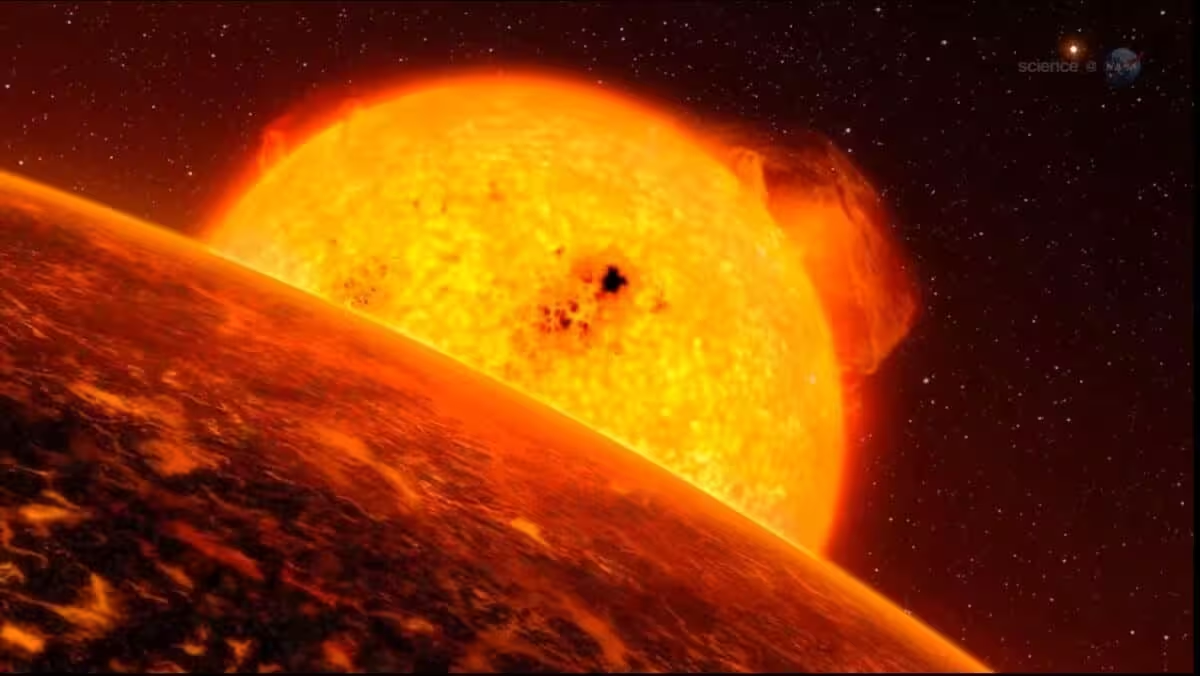
Qian’s research team suggests that these survivors may have escaped destruction through specific, complex histories. It is possible these stars underwent mergers with smaller stellar companions, fundamentally altering their growth trajectory. Alternatively, the surviving planets may have been pushed into safer orbits after the star consumed other, closer worlds in the system.
Implications for the Future of Our Solar System
These findings provide a glimpse into the distant future of the Sun. In roughly 5 billion years, the Sun will initiate its own transformation into a red giant, likely swallowing Mercury and Venus. While some models suggest Earth could theoretically survive such an expansion, experts like Vincent Van Eylen of University College London caution that the viability of life is an entirely different matter. By documenting these resilient planets, researchers are beginning to understand that the final acts of stellar systems are far more varied and chaotic than standard astronomical models previously predicted.
This article has been fact checked for accuracy, with information verified against reputable sources. Learn more about us and our editorial process.
Last reviewed on .
Article history
- Latest version
Reference(s)
- Lin, Wen-Xu., et al. “The survival paradox of close-in planets orbiting red-clump giants.” Proceedings of the National Academy of Sciences, vol. 123, no. 43, October 22, 2026 National Academy of Sciences, doi: 10.1073/pnas.2603847123. <https://www.pnas.org/doi/10.1073/pnas.2603847123>.
- <https://www.pnas.org/authored-by/Qian/Sheng-Bang>.
- “TYC 4282-00605-1 | NASA Exoplanet Archive.” <https://exoplanetarchive.ipac.caltech.edu/overview/TYC%204282-605-1%20b>.
- Lea, Robert. “Aging stars destroy their planets more often than we thought: What does this mean for Earth?.”, November 7, 2025 Space <https://www.space.com/astronomy/exoplanets/aging-stars-destroy-their-planets-more-often-than-we-thought-what-does-this-mean-for-earth>.
Cite this page:
- Posted by Aisha Ahmed