Webb Detects Mysterious Reflective Clouds on a Broiling Lava World
Webb telescope observations reveal that lava planet TOI-561 b may host reflective mineral clouds, explaining its unexpectedly cool dayside temperatures.
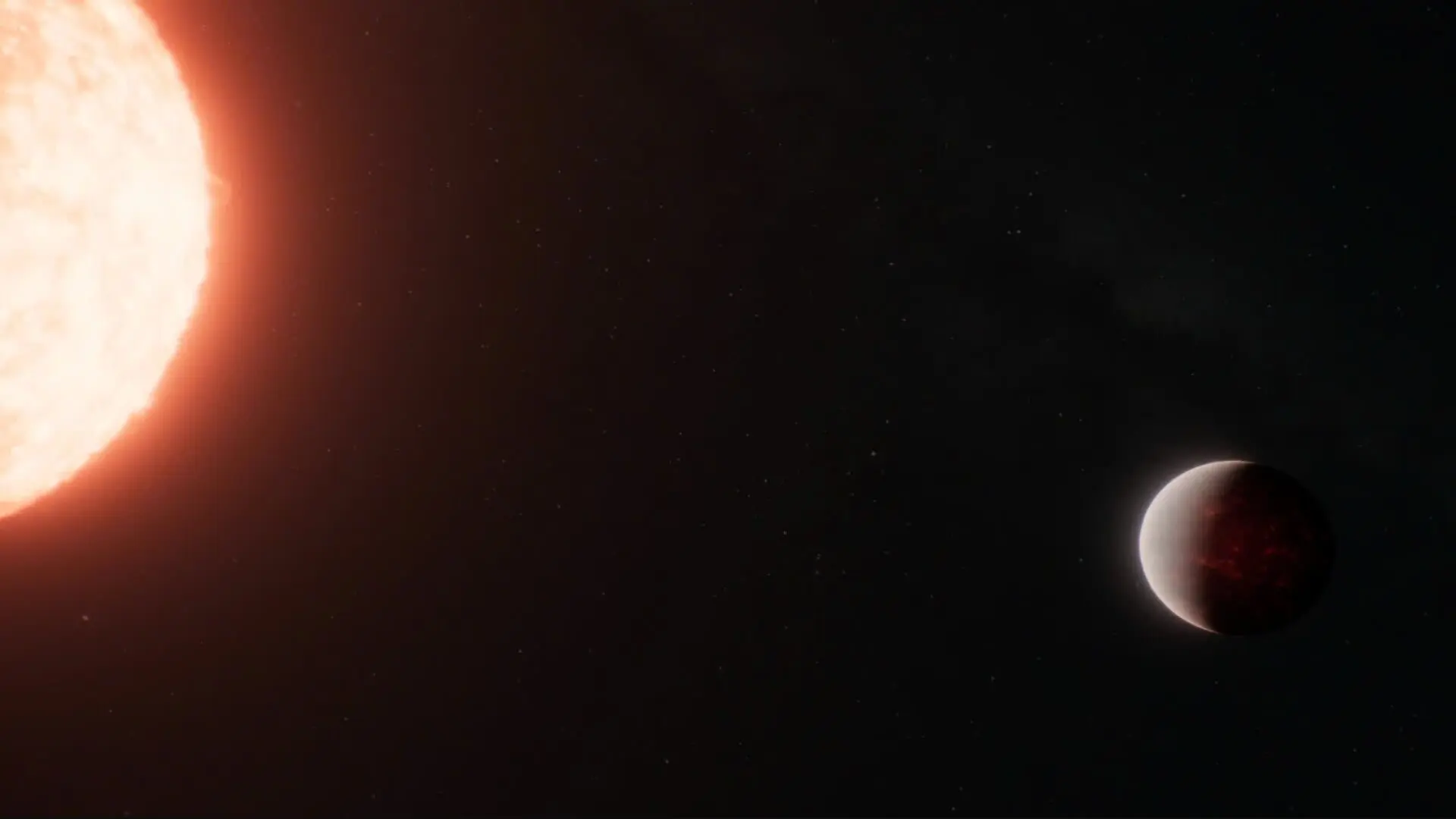
Astronomers using the James Webb Space Telescope (JWST) have discovered that the scorching exoplanet TOI-561 b is acting more like a mirror than a dark, barren rock. Despite orbiting its host star in less than 11 hours, which should theoretically bake the planet into a featureless, heat-absorbing sphere, the world exhibits a unexpectedly cool dayside. This suggests that the planet may be shrouded in a reflective global atmosphere, potentially composed of exotic mineral clouds.
The findings, detailed in The Astronomical Journal, stem from an analysis of roughly 37 hours of infrared data captured by the JWST. Led by researchers at the University of Waterloo, including contributions from University of Birmingham astrophysicist Anjali Piette, the study indicates that simple heat redistribution cannot account for the planet’s thermal profile. Instead, the team proposes that high-altitude clouds are bouncing incoming starlight back into space before it can be absorbed.
Analyzing the Orbital Glow
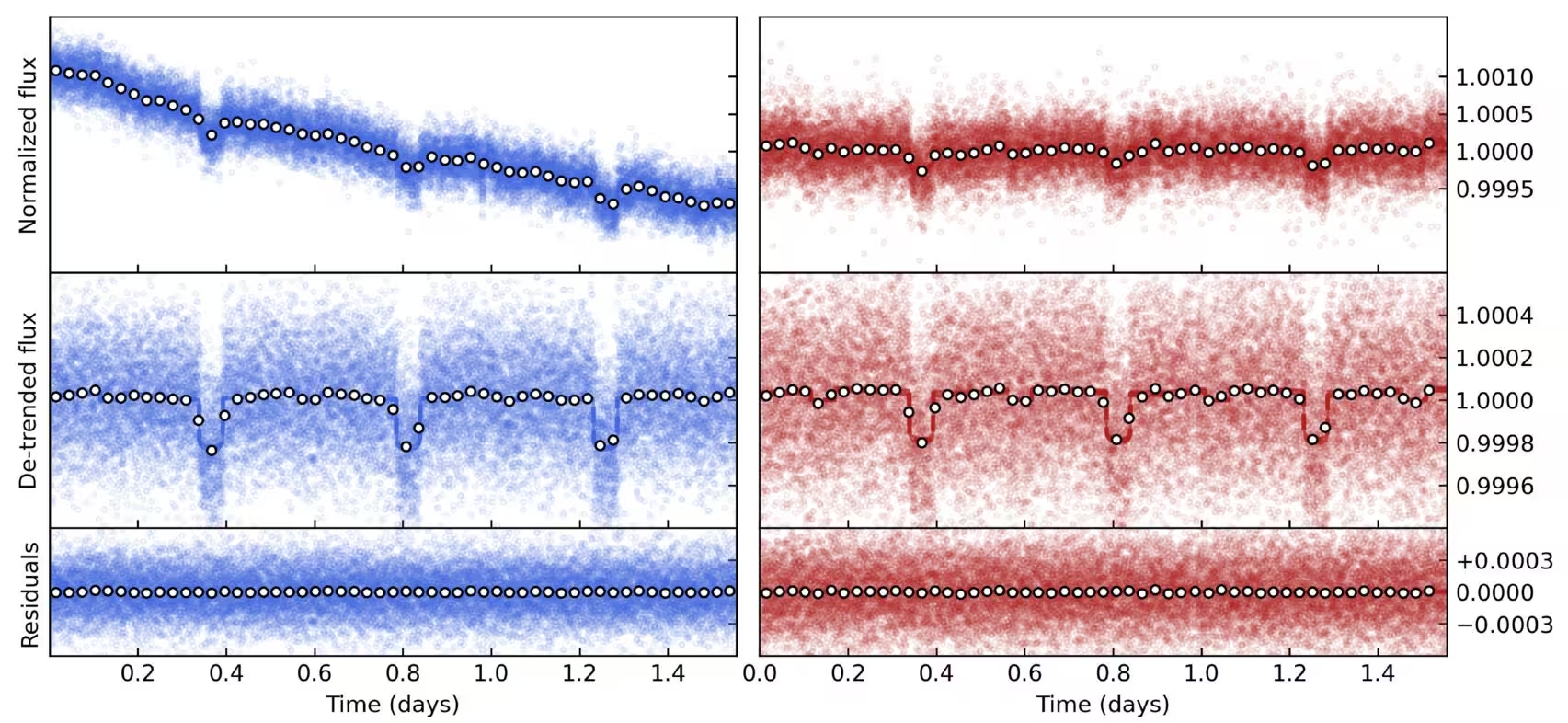
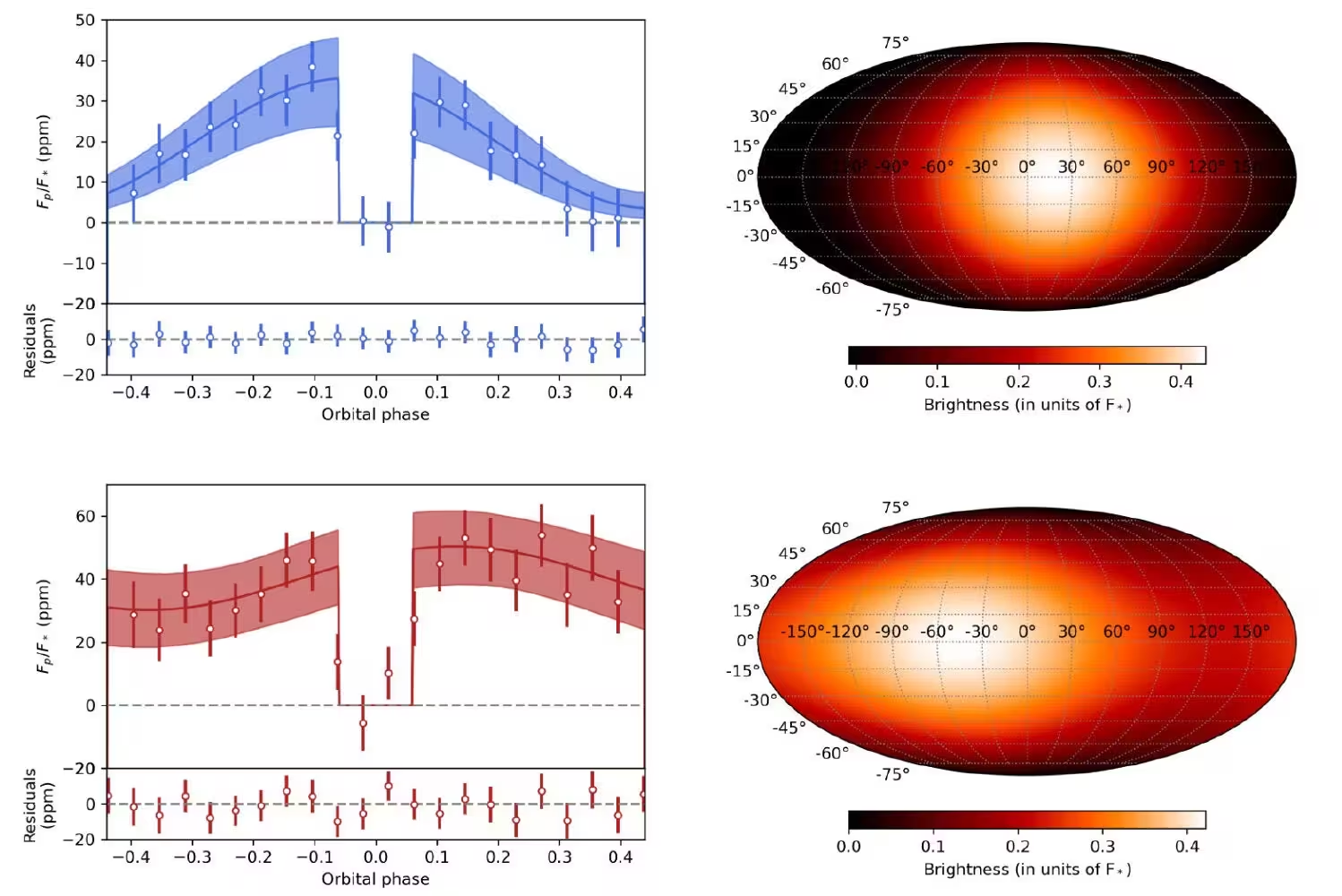
TOI-561 b is a super-Earth that is likely tidally locked, meaning one hemisphere is perpetually scorched by the host star while the other remains in permanent shadow. By tracking the planet’s phase curve—the variations in brightness as the world orbits its star—researchers were able to distinguish between energy moved to the nightside and energy reflected away from the surface.
The JWST’s Near-Infrared Spectrograph captured data in the three to five-micrometer range. While the planet does redistribute some heat to its nightside, the measurements show the dayside is significantly cooler than the physical models for a bare-rock world would predict. The data implies an albedo, or reflectivity, comparable to that of Venus, with roughly three-quarters of incoming light potentially being reflected.
Mineral Clouds and Atmospheric Resilience
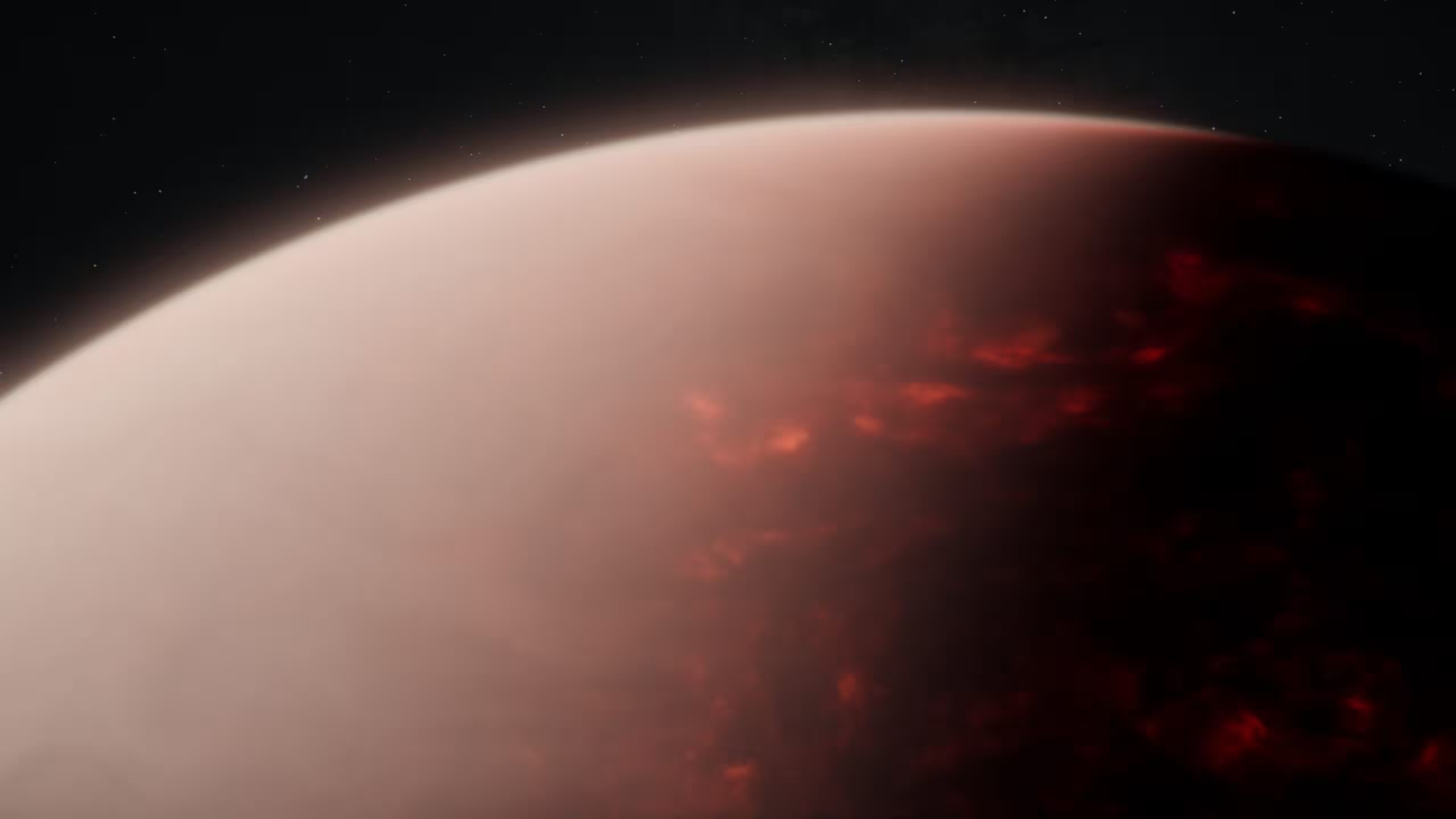
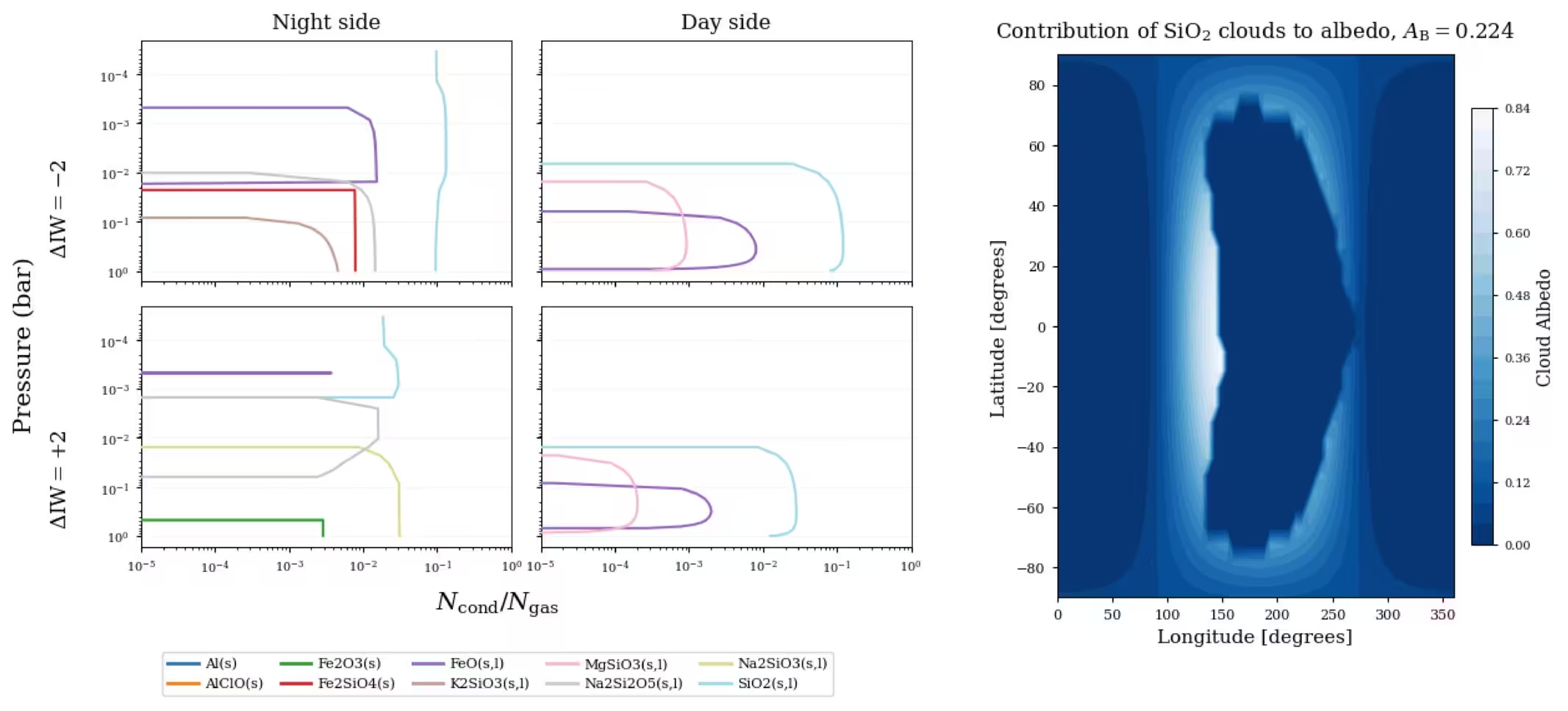
The existence of an atmosphere on a planet so close to its star presents a major theoretical challenge. Typically, intense stellar radiation should strip such a world of its gas envelope over billions of years. However, the presence of these potential mineral clouds provides a possible mechanism for survival. The team hypothesizes that vaporized rock from a molten surface, such as silicon dioxide or magnesium silicate, could condense into reflective particles in the cooler regions of the atmosphere.
This creates a reflective shield that helps keep the planet’s climate from runaway heating. While the exact chemical makeup of these clouds remains unconfirmed, the current energy budget strongly points to the presence of some form of atmospheric haze or particulate layer. “It acts as a planetary-scale sunscreen,” the researchers suggest, though they emphasize this does not make the planet hospitable; it remains an extreme, high-heat environment.
Future Observations
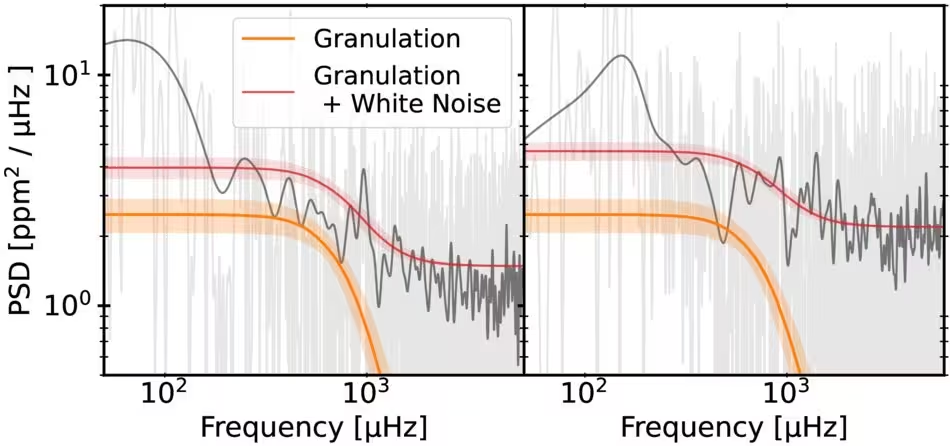
Despite the clarity of the current data, some discrepancies remain, particularly when comparing models across different detector channels. These minor variations could be due to complex atmospheric weather, instrumental noise, or subtle stellar granulation—the boiling, bubbling surface of the host star itself.
To definitively solve the mystery of what is swirling in the atmosphere of TOI-561 b, astronomers hope to use the Mid-Infrared Instrument (MIRI) on the JWST to look for distinct chemical signatures, such as the 15-micrometer absorption feature of carbon dioxide. Until then, the planet remains a captivating example of how even the most extreme worlds can harbor complex, unexpected environmental dynamics.
Further Reading
- NASA’s Webb Detects Thick Atmosphere Around Broiling Lava World
- NASA’s Webb Hints at Possible Atmosphere Surrounding Rocky Exoplanet
- Cheops shows scorching exoplanet acts like a mirror
- Thermal emission from the Earth-sized exoplanet TRAPPIST-1 b using JWST
- Atmospheres of Rocky Exoplanets
This article has been fact checked for accuracy, with information verified against reputable sources. Learn more about us and our editorial process.
Last reviewed on .
Article history
- Latest version
Reference(s)
- Boucher, Samuel., et al. “A Highly Reflective Atmosphere on the Lava World TOI-561b Revealed by JWST/NIRSpec Phase Curves.” The Astronomical Journal, vol. 172, no. 4, September 29, 2026, pp. 239 American Astronomical Society, doi: 10.3847/1538-3881/ae9763. <https://iopscience.iop.org/article/10.3847/1538-3881/ae9763>.
- “Home | University of Waterloo.” <https://uwaterloo.ca/>.
- “A leading global university - University of Birmingham.” University of Birmingham <https://www.birmingham.ac.uk/>.
- Sabia, Stephen. “NIRSpec - NASA Science.”, August 12, 2024 NASA <https://science.nasa.gov/mission/webb/nirspec/>.
- McCoy, Marty. “NASA’s Webb Detects Thick Atmosphere Around Broiling Lava World - NASA Science.”, December 11, 2025 NASA <https://science.nasa.gov/missions/webb/nasas-webb-detects-thick-atmosphere-around-broiling-lava-world/>.
- McCoy, Marty. “NASA's Webb Hints at Possible Atmosphere Surrounding Rocky Exoplanet - NASA Science.”, May 8, 2024 NASA <https://science.nasa.gov/missions/webb/nasas-webb-hints-at-possible-atmosphere-surrounding-rocky-exoplanet/>.
- <https://www.esa.int/Science_Exploration/Space_Science/Cheops/Cheops_shows_scorching_exoplanet_acts_like_a_mirror>.
- Greene, Thomas. “Thermal emission from the Earth-sized exoplanet TRAPPIST-1 b using JWST - Nature.”, vol. 618, no. 7963, pp. 39-42. Nature, doi: 10.1038/s41586-023-05951-7. <https://www.nature.com/articles/s41586-023-05951-7>.
- Wordsworth, Robin., et al. “Atmospheres of Rocky Exoplanets.” Annual Review of Astronomy and Astrophysics, vol. 60, no. 1, August 18, 2022, pp. 159-201. Annual Reviews, doi: 10.1146/annurev-astro-052920-125632. <https://www.annualreviews.org/content/journals/10.1146/annurev-astro-052920-125632>.
Cite this page:
- Posted by Aisha Ahmed