Porous Organic Cages Unlock Stable Palladium Catalysis for C–H Activation
Scientists develop a cryptand-like organic cage to stabilize ultrafine palladium nanoparticles, creating a recyclable and efficient catalyst for direct C–H functionalization.
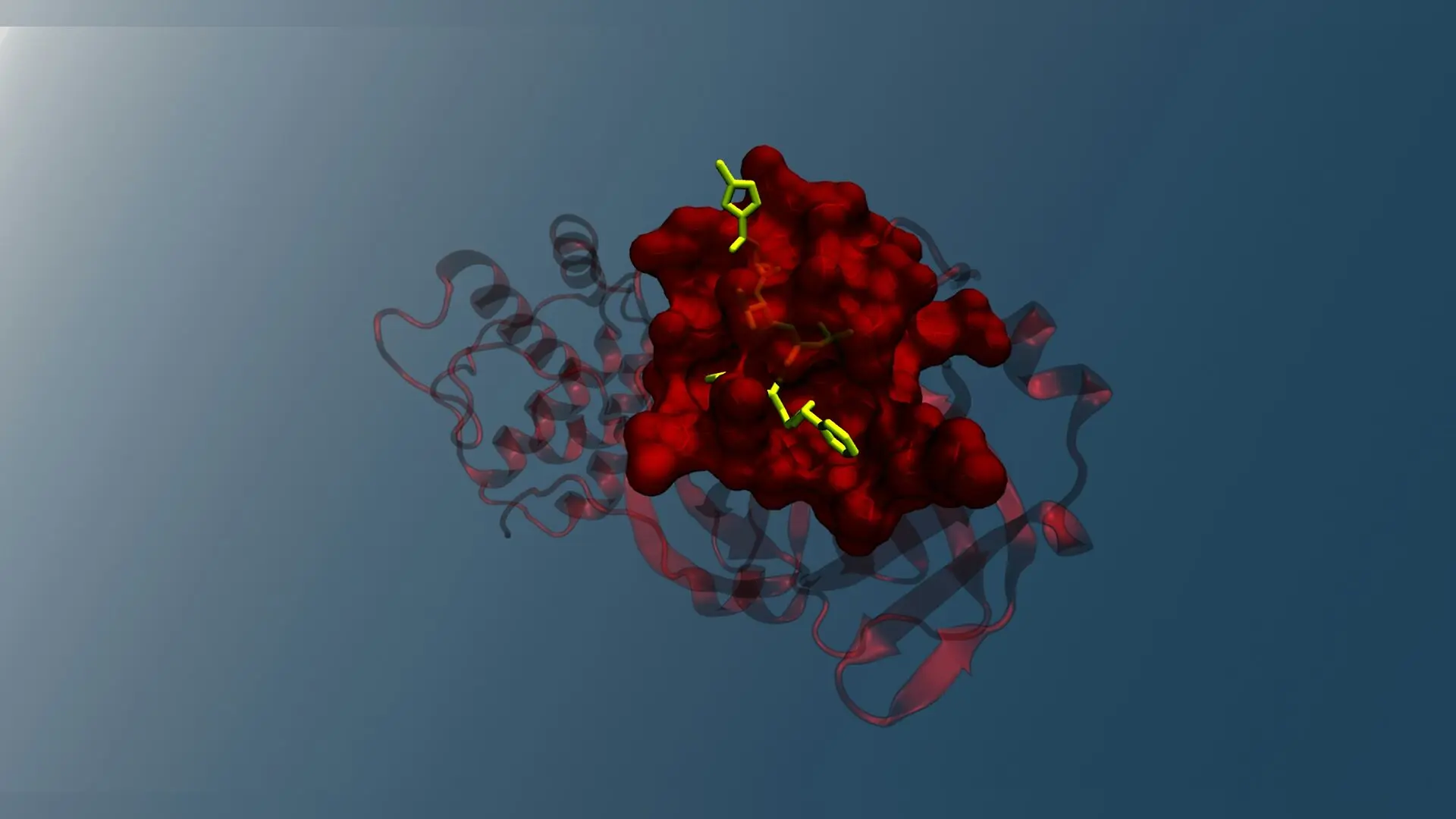
Direct functionalization of inert chemical bonds has emerged as a cornerstone of modern synthetic chemistry, allowing researchers to construct complex molecular architectures with high atom economy. Among various strategies, palladium-catalyzed C–H activation stands out for its ability to forge carbon-carbon and carbon-heteroatom bonds directly. In particular, the direct arylation of benzothiazoles at the C2 position yields 2-arylbenzothiazoles, which serve as essential structural motifs in drug discovery, agrochemicals, and functional materials possessing antitumor, antiviral, and antimicrobial properties. Conventional synthetic routes typically rely on homogeneous palladium catalytic systems that, while versatile, demand high catalyst loadings, strong bases, and elevated temperatures, alongside lacking practical recyclability.
To resolve these persistent challenges, researchers have turned toward heterogenization, attempting to anchor active metal species onto solid supports for effortless recovery and reuse. Nevertheless, heterogeneous catalysts frequently suffer from reduced catalytic activity compared to their homogeneous counterparts, while unsupported ultrafine nanoparticles are notoriously prone to destructive agglomeration due to high surface energies. In a study published in RSC Advances, a multi-institutional team of scientists successfully addressed this long-standing dilemma by employing a discrete porous organic cage as a specialized molecular scaffold to host and stabilize ultrafine palladium nanoparticles.
Designing the Cryptand-Like Organic Cage Support
The foundation of the new catalytic system rests upon a specialized cryptand-like amine cage, designated as PAC. The researchers initially synthesized a precursor cycloimine cage through the condensation of terephthaldehyde and tris(2-aminoethyl)amine in ambient chloroform. Because imine linkages render the structure chemically vulnerable to acidic and basic environments, the team performed a post-synthetic reduction using sodium borohydride in methanol. This critical reduction converted the brittle imine bonds into robust, flexible amine linkages, yielding the chemically stable PAC framework in a high 96 percent yield.
Theoretical modeling via density functional theory calculations revealed that the optimized PAC structure adopts a shape-persistent trigonal prism geometry. The framework features terminal units positioned at the top and bottom, connected by aromatic pillars that create an internal cavity. The secondary amine groups within the framework provide ideal chelating pockets for coordinating palladium ions. Upon introducing palladium acetate followed by controlled reduction, the system generated uniformly dispersed, ultrafine palladium nanoparticles securely anchored within the multi-cage confined environment.
Material Characterization and Nanoparticle Stability
Advanced analytical techniques confirmed the structural integrity and precise dimensions of the newly formed composite material, designated as Pd/PAC. Powder X-ray diffraction patterns clearly displayed characteristic peaks corresponding to both the crystalline organic cage matrix and the standard crystallographic planes of metallic zero-valent palladium. High-resolution transmission electron microscopy further demonstrated that the palladium nanoparticles possessed an impressively narrow size distribution, averaging just 3.97 nanometers across more than two hundred measured particles.
This remarkable uniformity highlights the vital role of the porous organic cage matrix. Rather than clustering into massive aggregates, the growing nanoparticles were successfully confined and stabilized by the inter-cage spaces and chelating sites of the PAC framework. X-ray photoelectron spectroscopy verified that the palladium species existed predominantly in the catalytically active zero-valent state, accompanied by only minor surface oxidation fractions.
Catalytic Efficiency and Substrate Scope
The catalytic performance of the Pd/PAC composite was thoroughly evaluated using the coupling reaction between benzothiazole and iodobenzene as a model system. Through systematic optimization of temperature, base selection, and solvent composition, the researchers determined that running the reaction with potassium carbonate in dimethylformamide at 140 degrees Celsius yielded optimal results without requiring external phosphine ligands, toxic co-catalysts, or chemical oxidants.
Under these refined conditions, the catalytic protocol tolerated a wide array of substituted aryl iodides and bromides bearing diverse electron-donating and electron-withdrawing functional groups. Substituted aryl halides reliably afforded the corresponding 2-arylbenzothiazole derivatives in good to excellent isolated yields. Furthermore, hot filtration experiments and inductively coupled plasma mass spectrometry analyses of reaction filtrates confirmed the true heterogeneous nature of the catalyst, proving the complete absence of metal leaching into the solution phase during the transformations.
Mechanistic Insights Through Computational Chemistry
To unravel the underlying reaction pathway, the team performed extensive density functional theory calculations. The theoretical investigations evaluated the relative total energies and frontier molecular orbitals of various proposed intermediates, reactants, and final products. The computational data identified that coordination of benzothiazole to the palladium center forms a thermodynamically stable intermediate configuration that drives the catalytic cycle forward.
The calculations also mapped a progressive decrease in the HOMO-LUMO energy gap and an increase in molecular softness as the reaction progressed from reactants through the key intermediates, corroborating the enhanced chemical reactivity observed along the pathway. Structural analysis of bond lengths and angles confirmed the key oxidative addition of the haloarene, followed by carbon-carbon coupling and subsequent reductive elimination that successfully regenerates the active palladium catalyst while releasing the functionalized heteroarene.
Ultimately, this work introduces a sustainable blueprint for coupling molecular organic cages with metal nanoparticle catalysis. By merging the distinct advantages of homogeneous molecular precision with the practical recovery benefits of heterogeneous systems, the Pd/PAC hybrid opens exciting avenues for designing advanced nanocatalysts tailored for complex organic transformations.
The research was published in RSC advances on October 19, 2026.
This article has been fact checked for accuracy, with information verified against reputable sources. Learn more about us and our editorial process.
Last reviewed on .
Article history
- Latest version
Cite this page:
- Posted by John Williams