Dead Star Found With Two Mysterious Rings That Could Be The Future Of Our Solar System
Astronomers have discovered two distinct gas rings around a white dwarf, suggesting hidden planets could hold the key to our Solar System’s final fate.
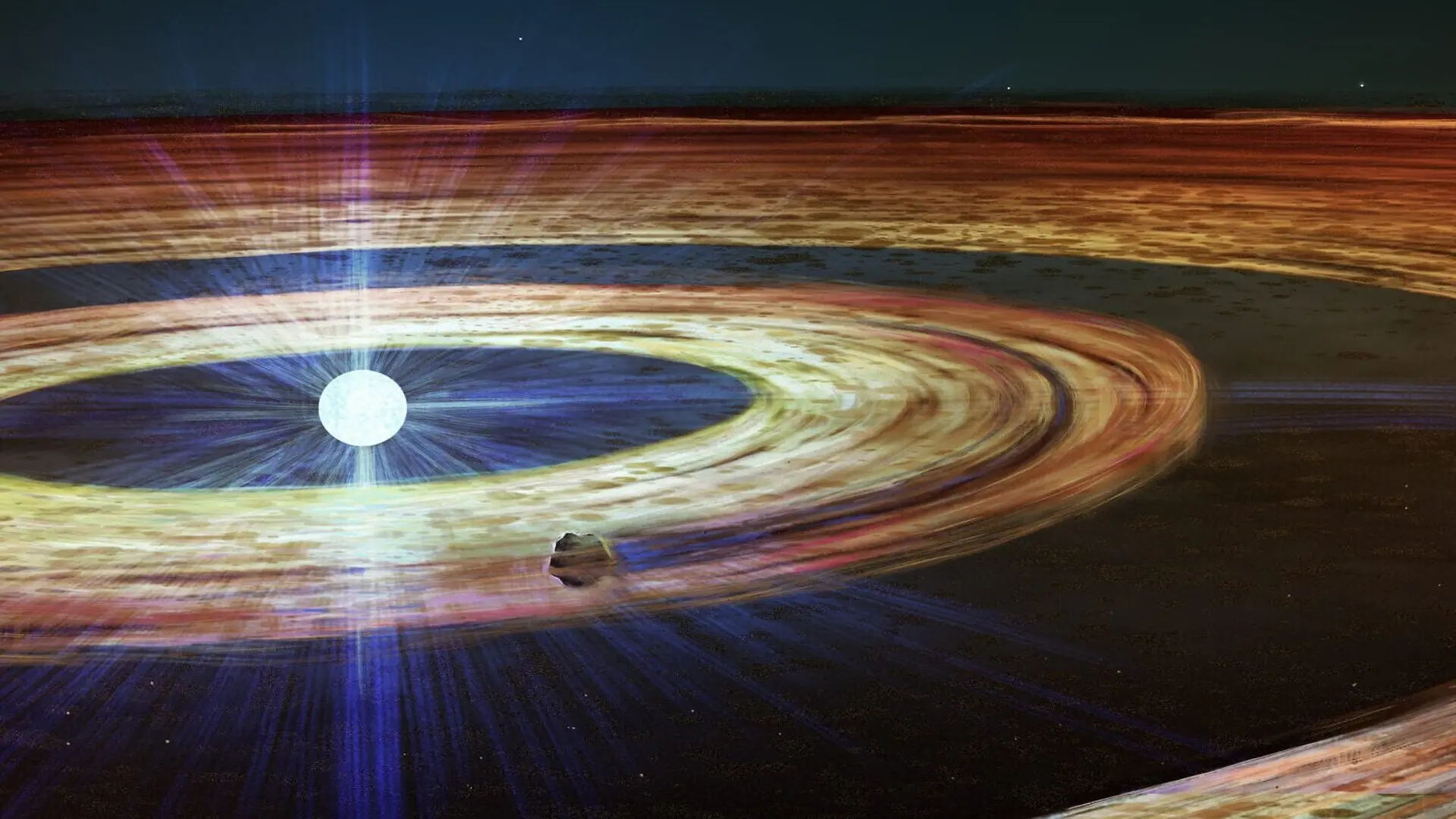
Astronomers have uncovered a highly unusual configuration surrounding a white dwarf, revealing two distinct rings of gas separated by a clear, persistent gap. This discovery, centered on the stellar remnant J1328−1450, suggests that the remnants of dead planetary systems are far more complex and structured than previously understood.
The findings, detailed in Nature Astronomy by an international team led by Nicola Pietro Gentile Fusillo of the University of Trieste and the INAF Astronomical Observatory of Trieste, were made using the European Southern Observatory’s Very Large Telescope in Chile. By analyzing the light signatures from the system, the researchers were able to map the distribution of gas orbiting the dense, dead stellar core.
Spectral Data Unveils a Dual-Ring System
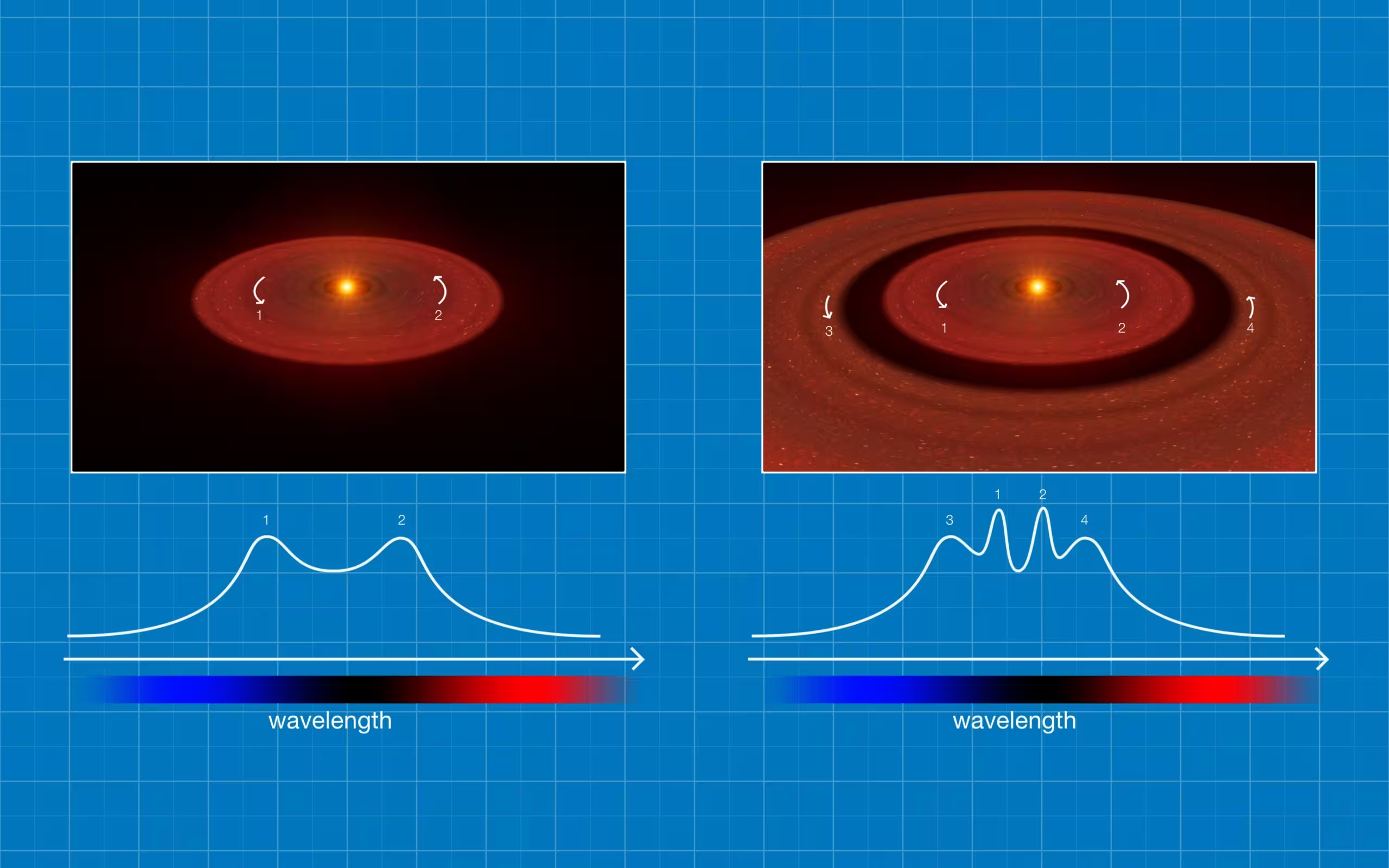
White dwarfs represent the final evolutionary stage for stars like our Sun. As they exhaust their nuclear fuel, they shed their outer layers, often destroying nearby planets in the process. However, some rocky debris can survive and settle into discs around the remnant. While most previously studied systems show a uniform debris disc, J1328−1450 exhibits a signature of four distinct spectral peaks.
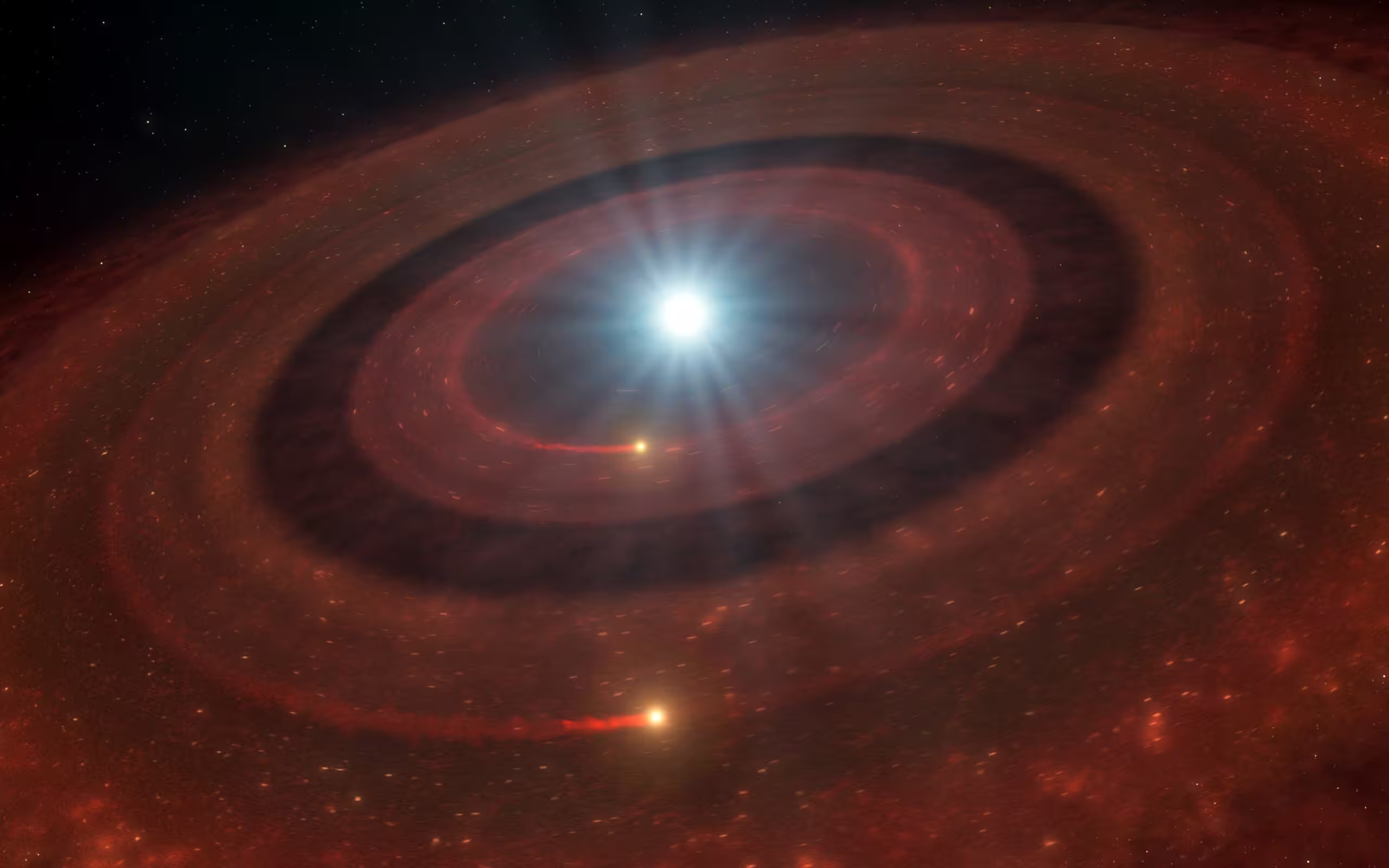
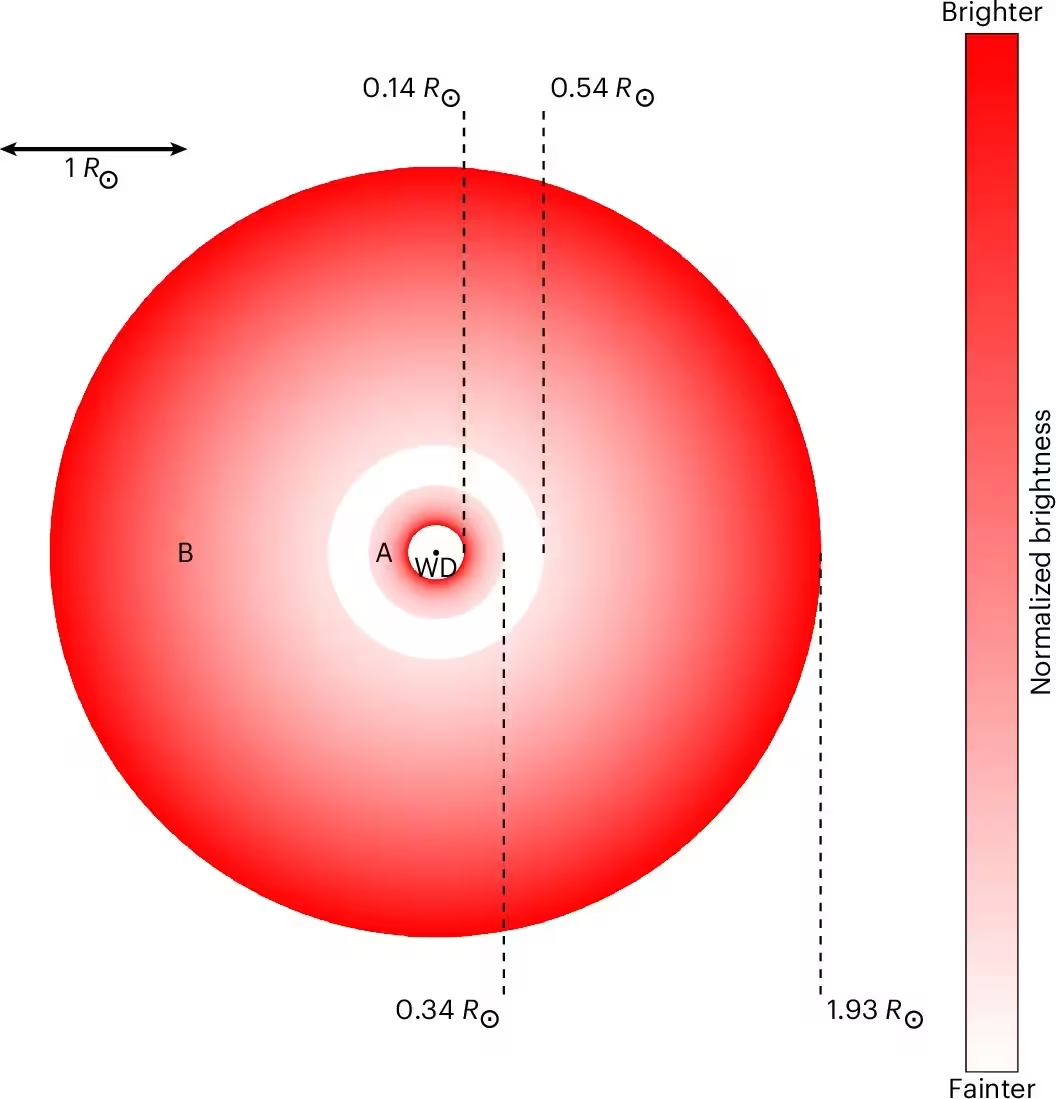
Standard rotating discs typically produce a two-peaked spectral line as material moves toward and away from an observer. The four-peaked signature observed in the calcium and oxygen emissions indicates two separate, concentric rings of gas. Modeling suggests the inner ring orbits between 0.14 and 0.34 solar radii from the white dwarf, while the outer ring resides between 0.54 and 1.93 solar radii, separated by a distinct interval.
Chemical Evidence of Distinct Origins
The study revealed a notable chemical discrepancy between the two rings. Magnesium is present in the inner ring but is notably absent in the outer one. This compositional difference suggests that the rings are not merely fragmented parts of a single object, but potentially represent material from different parent bodies or different layers—such as a crust and mantle—of a destroyed planet.
Co-author Felipe Lagos-Vilches of the University of Warwick and Universidad Técnica Federico Santa María noted that the stability of these rings challenges existing models of debris disc evolution. Because gas naturally tends to spread over time, the researchers hypothesize that the structure is maintained by the gravitational influence of two undetected planetesimals embedded within the system. These bodies would act as reservoirs, continuously generating gas through interactions with surrounding dust, thereby preventing the rings from mixing.
Constraints on Surviving Worlds
While the researchers have not directly imaged these hypothetical bodies, their calculations show that such objects would need to withstand immense tidal forces. Depending on their internal density and structural integrity, these survivors could range from roughly 45 kilometers to several thousand kilometers in diameter, potentially reaching sizes comparable to the Moon or Pluto in the outer regions of the disc.
This system serves as a stark reminder of the long-term survival of planetary material after a star’s death. While it is not a direct forecast of our own Solar System’s future, it demonstrates the high level of structural preservation that can occur, providing a new window into the complex final chapters of planetary evolution.
Further Reading on Stellar Remnants
- Discovery of a second-generation planet candidate accreting onto a white dwarf (Nature Astronomy, 2026)
- Discovery of an icy and nitrogen-rich extrasolar planetesimal (Monthly Notices of the Royal Astronomical Society, 2025)
- Rapid formation of exoplanetesimals revealed by white dwarfs (Nature Astronomy, 2022)
This article has been fact checked for accuracy, with information verified against reputable sources. Learn more about us and our editorial process.
Last reviewed on .
Article history
- Latest version
Reference(s)
- Gentile Fusillo, Nicola. “A double debris disc around a white dwarf sculpted by two planetary bodies - Nature Astronomy.”, October 26, 2026, pp. 1-9. Nature, doi: 10.1038/s41550-026-03004-3. <https://www.nature.com/articles/s41550-026-03004-3>.
- Williams, Jamie. “Discovery of a second-generation planet candidate accreting onto a white dwarf - Nature Astronomy.”, October 5, 2026, pp. 1-9. Nature, doi: 10.1038/s41550-026-02983-7. <https://www.nature.com/articles/s41550-026-02983-7>.
- <https://academic.oup.com/mnras/article/543/1/223/8255944>.
- Bonsor, Amy. “Rapid formation of exoplanetesimals revealed by white dwarfs - Nature Astronomy.”, vol. 7, no. 1, pp. 39-48. Nature, doi: 10.1038/s41550-022-01815-8. <https://www.nature.com/articles/s41550-022-01815-8>.
Cite this page:
- Posted by Aisha Ahmed