A Rare Born-Again Star Is Defying Predictions As It Reheats After Decades Of Silence
Nearly 30 years after its mysterious transformation, a distant star is providing astronomers with a rare, front-row seat to the final stages of stellar life.
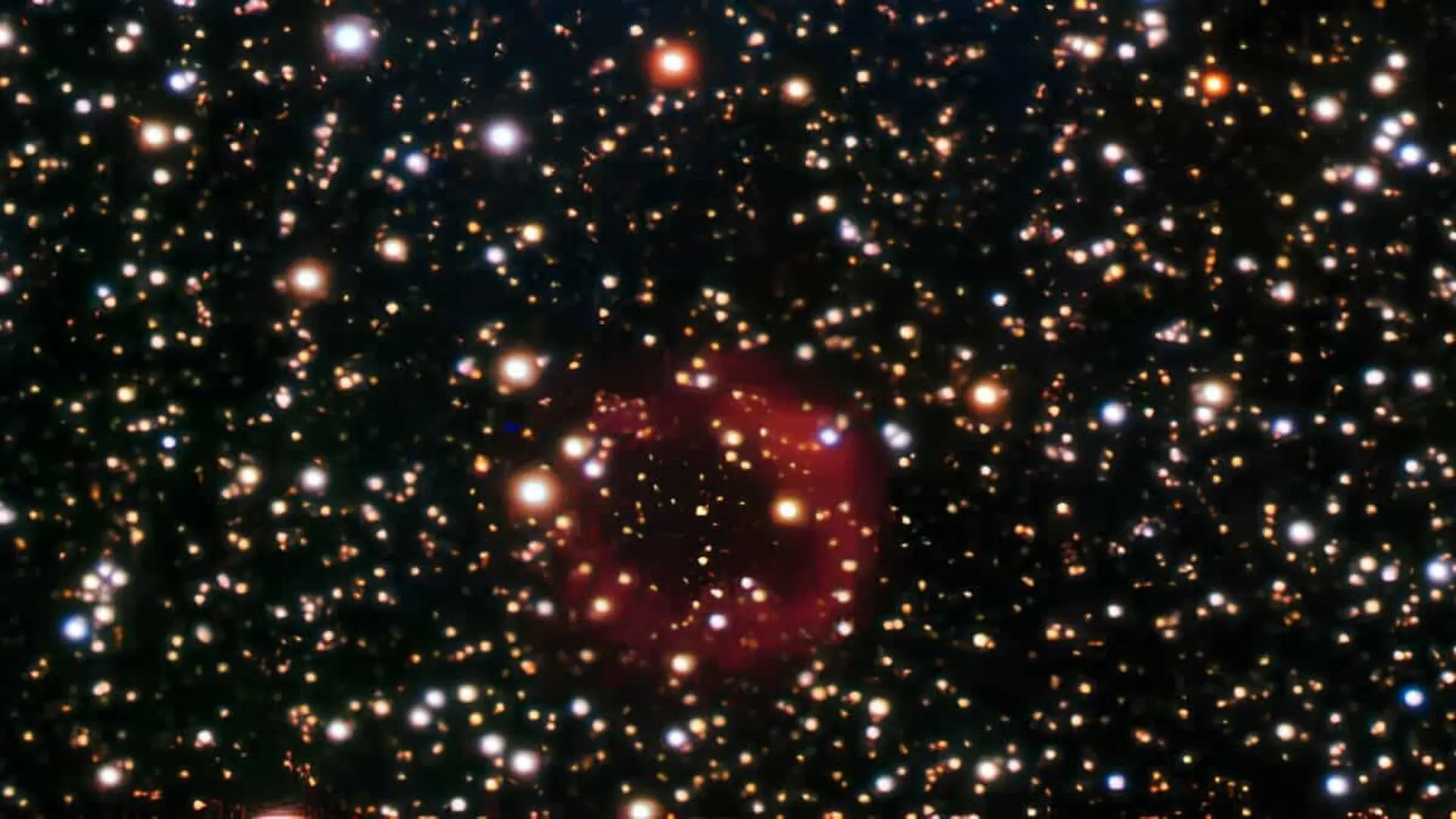
While the life cycles of stars typically span millions or billions of years, making real-time observation of stellar evolution nearly impossible, one celestial anomaly is defying the timeline. Known as Sakurai’s Object, this star was first identified in 1996 following a sudden, dramatic spike in luminosity. In the decades since, it has undergone a rapid physical metamorphosis, providing astrophysicists with a rare, front-row seat to the dramatic final chapters of a star’s life.
A research team led by Wagner Marcolino of the Observatório do Valongo and Albert Zijlstra of the University of Manchester’s Jodrell Bank Centre for Astrophysics recently deployed advanced spectroscopy and computer modeling to decode the star’s current state. Their findings offer updated insights into its temperature, chemical makeup, and the intense stellar winds emanating from its surface, helping to settle long-standing debates over how dying stars briefly return to earlier evolutionary states.
A Cosmic Resurrection Obscured by Cosmic Debris
Sun-like stars eventually exhaust their nuclear fuel, shedding their outer layers to reveal a dense, fading core known as a white dwarf. Sakurai’s Object had already reached this terminal stage when a deep-seated helium flash reignited the star’s core. This burst of renewed nuclear activity forced the star to expand and cool, briefly reclaiming the characteristics of a massive giant. This phenomenon has led scientists to label such bodies as “born-again stars.”
Following its discovery, the star continued to brighten for five years before it was effectively smothered by a thick shroud of dust and gas ejected during its expansion. Only two such objects have ever been documented in this state, the other being V605 Aquilae, which experienced its own transformation roughly 80 years before the discovery of Sakurai’s Object.
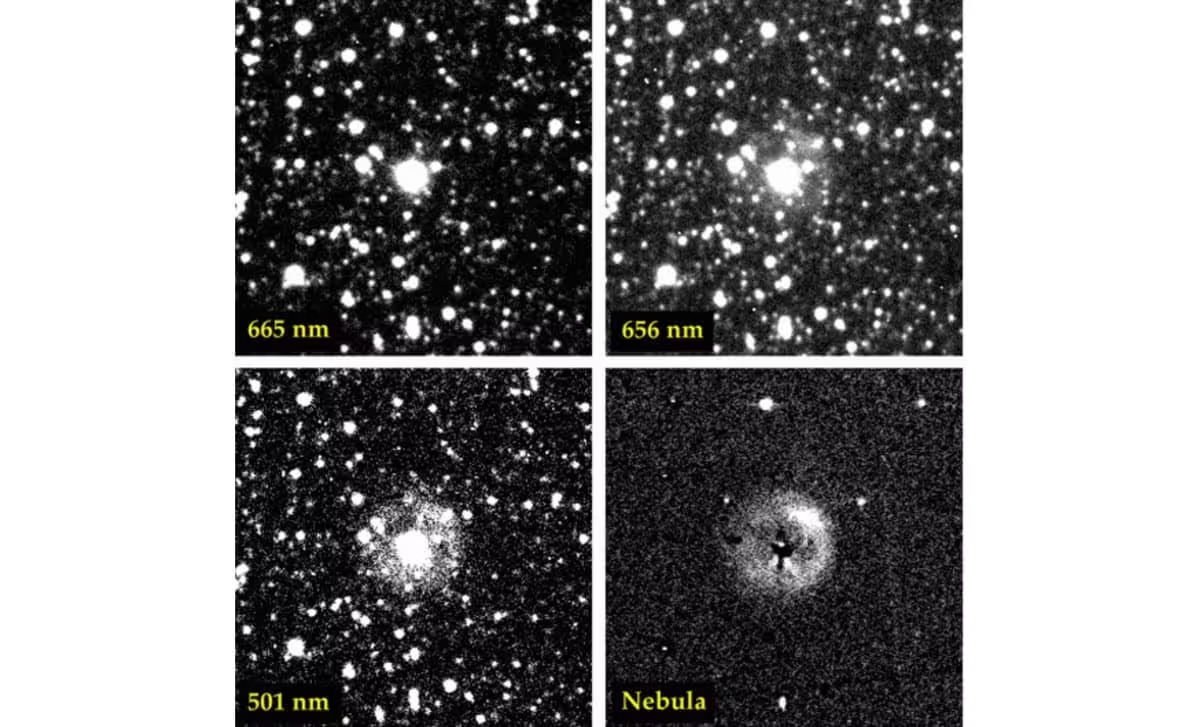
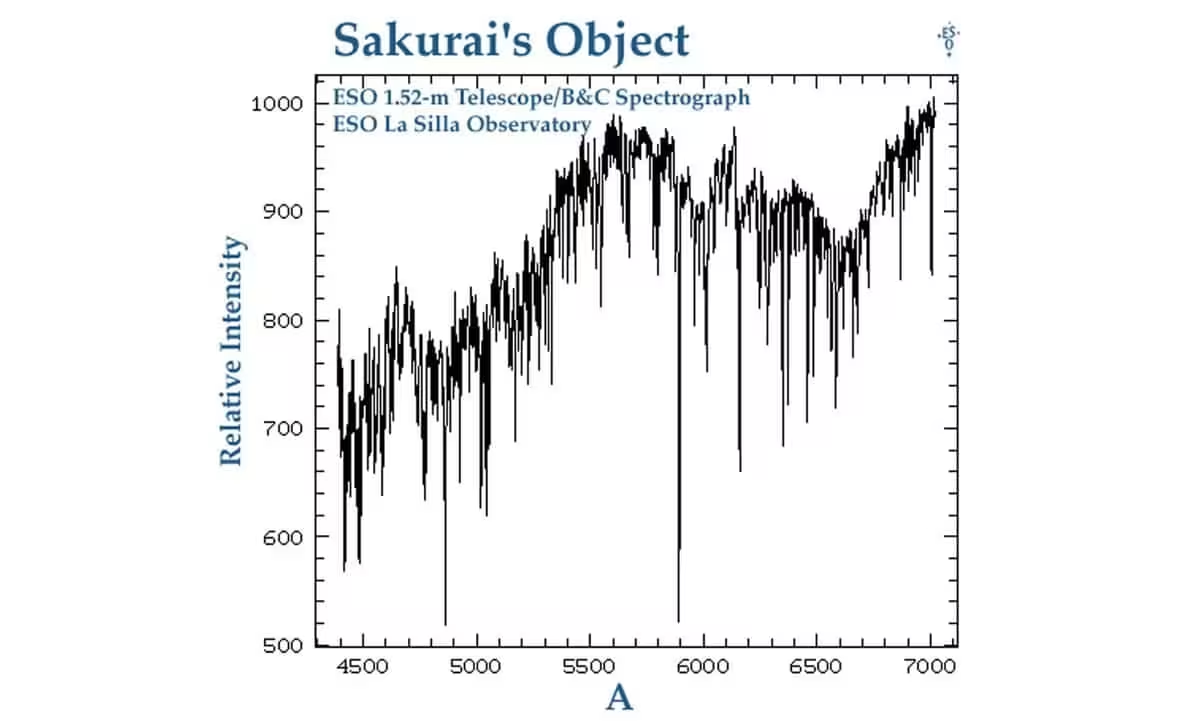
Theory dictates that these stars should eventually reheat as they resume their path toward white dwarf status, accompanied by a shift in surface chemistry. However, tracking this progression in Sakurai’s Object was hampered by its dusty cocoon. While earlier attempts to detect the spectral hallmarks of a heating core proved fruitless, data collected as recently as 2025 has provided the first faint signs of this elusive transition.
High-Velocity Winds and Chemical Shifts
To bypass the obscuring dust, the team utilized the Very Large Telescope (VLT) in Chile, operated by the European Southern Observatory. By analyzing 18 spectral exposures taken in 2023, researchers used light wavelengths to peer through the outer debris and isolate the chemical signature of the star itself.
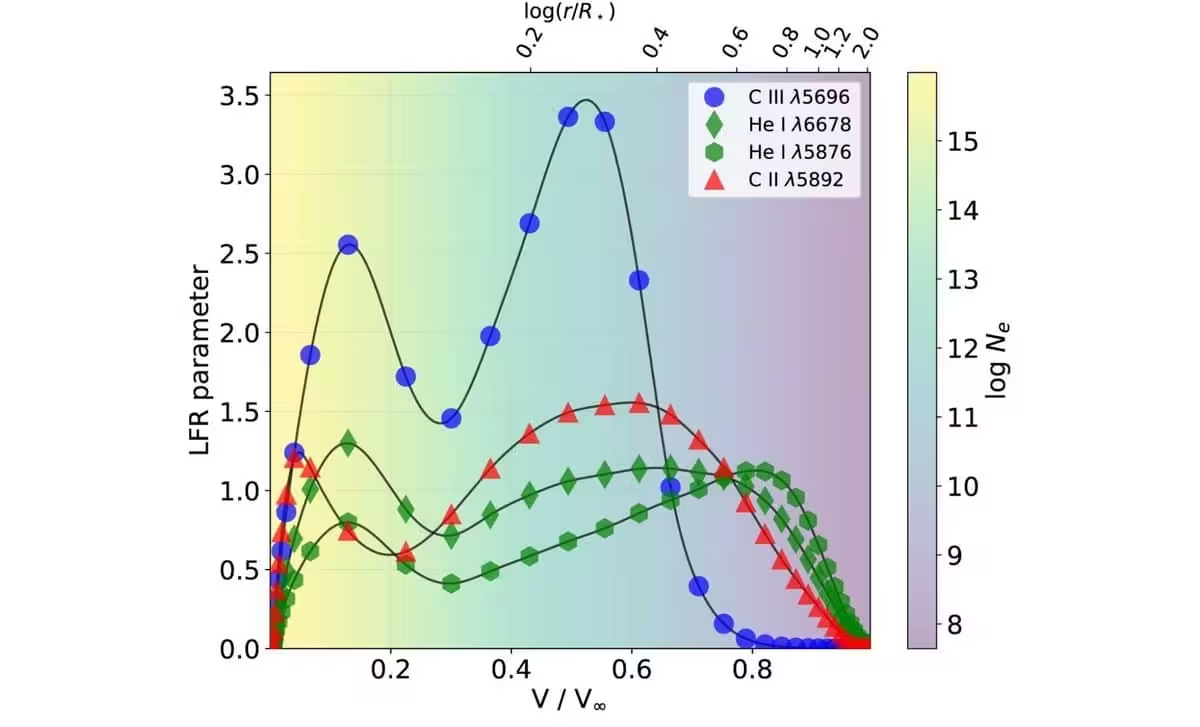
The analysis revealed powerful emission lines of helium and carbon, which the team concluded were being generated by a high-speed stellar wind flowing at approximately 500 kilometers per second (roughly 310 miles per second). Unlike the older, ejected material from the 1990s, this wind originates from a region very close to the star—roughly double the distance between the Earth and the Sun.
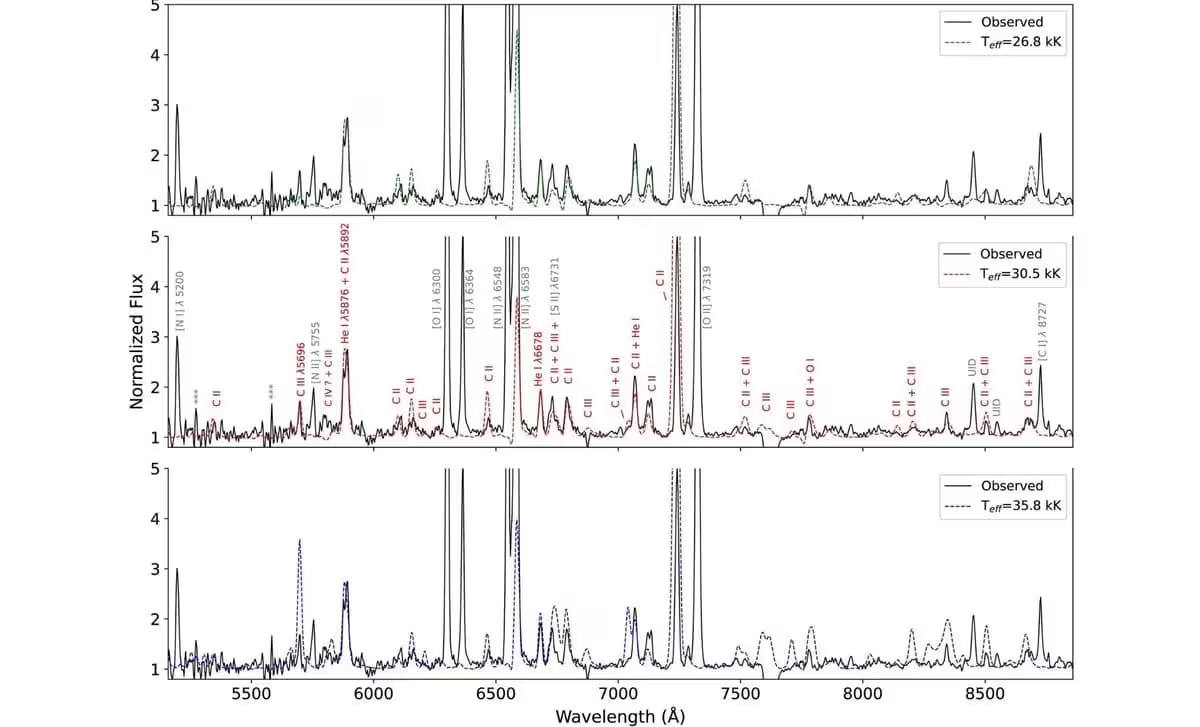
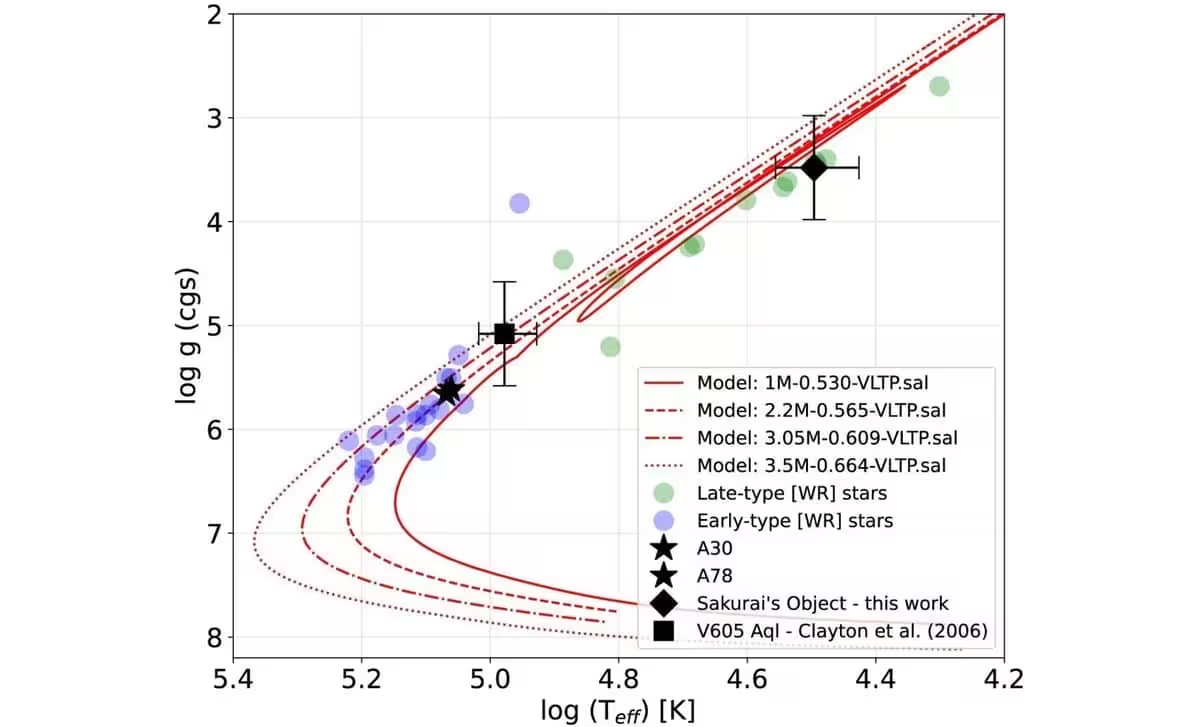
The chemical composition of the surface has also undergone a radical transformation. Shortly after the initial flash, helium was the dominant element at 90%. Current modeling shows that carbon has surged to represent 51% of the surface material, while helium has dropped to 43%. Additionally, the star’s temperature is estimated to be around 30,500 Kelvin (approximately 54,500°F), making it roughly five times hotter than our Sun and marking the first successful temperature calibration of the object since 1998.
Testing Theoretical Models of Stellar Death
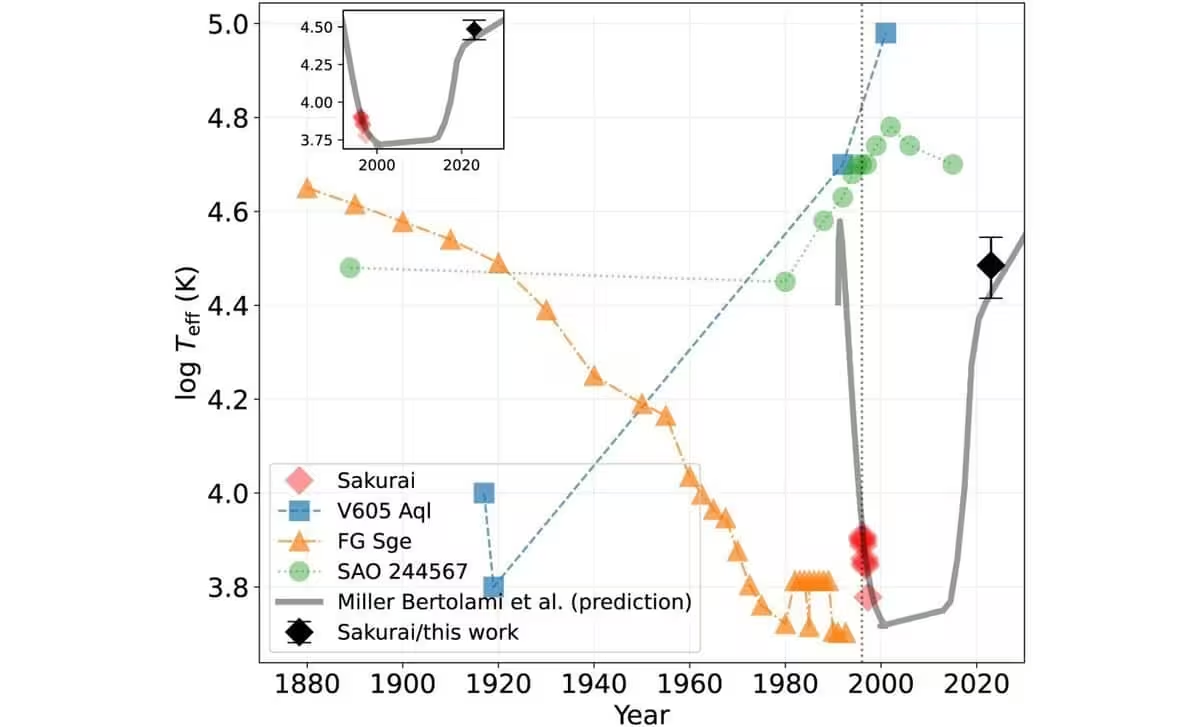
The new temperature data acts as a litmus test for various astrophysical models attempting to predict how dying stars behave. Earlier predictions from 2005 anticipated a much faster rise in temperature—suggesting the star should have reached 90,000 Kelvin by 2020. The current, much lower measurement aligns more closely with a 2006 model, providing evidence that the reheating process is more gradual than some theorists previously believed.
“Our measurements show that the star is reheating more gradually than some earlier models predicted,” said Zijlstra. “That gives us an important way of testing which theories best describe what happens when a dying star briefly springs back to life.”
While uncertainties remain—including the star’s exact distance from Earth and the complex, non-uniform nature of the stellar winds—this latest study offers a critical checkpoint. Astronomers plan to continue monitoring the object, as its ongoing evolution offers a unique opportunity to watch the internal dynamics of stellar death unfold in real time rather than relying on static, disconnected snapshots of different stars.
This article has been fact checked for accuracy, with information verified against reputable sources. Learn more about us and our editorial process.
Last reviewed on .
Article history
- Latest version
Reference(s)
- “Observatório do Valongo.” <https://ov.ufrj.br/>.
- “Jodrell Bank Centre for Astrophysics - The University of Manchester.” <https://www.jodrellbank.manchester.ac.uk/>.
- “ESO — The European Southern Observatory.” <https://www.eso.org/public/>.
Cite this page:
- Posted by Farah Siddiqui