Webb Telescopes Captures Mysterious Icy World Awakening Into A Comet
JWST has captured an icy Centaur warming up after a Saturn encounter, potentially transforming the distant world into an active comet.
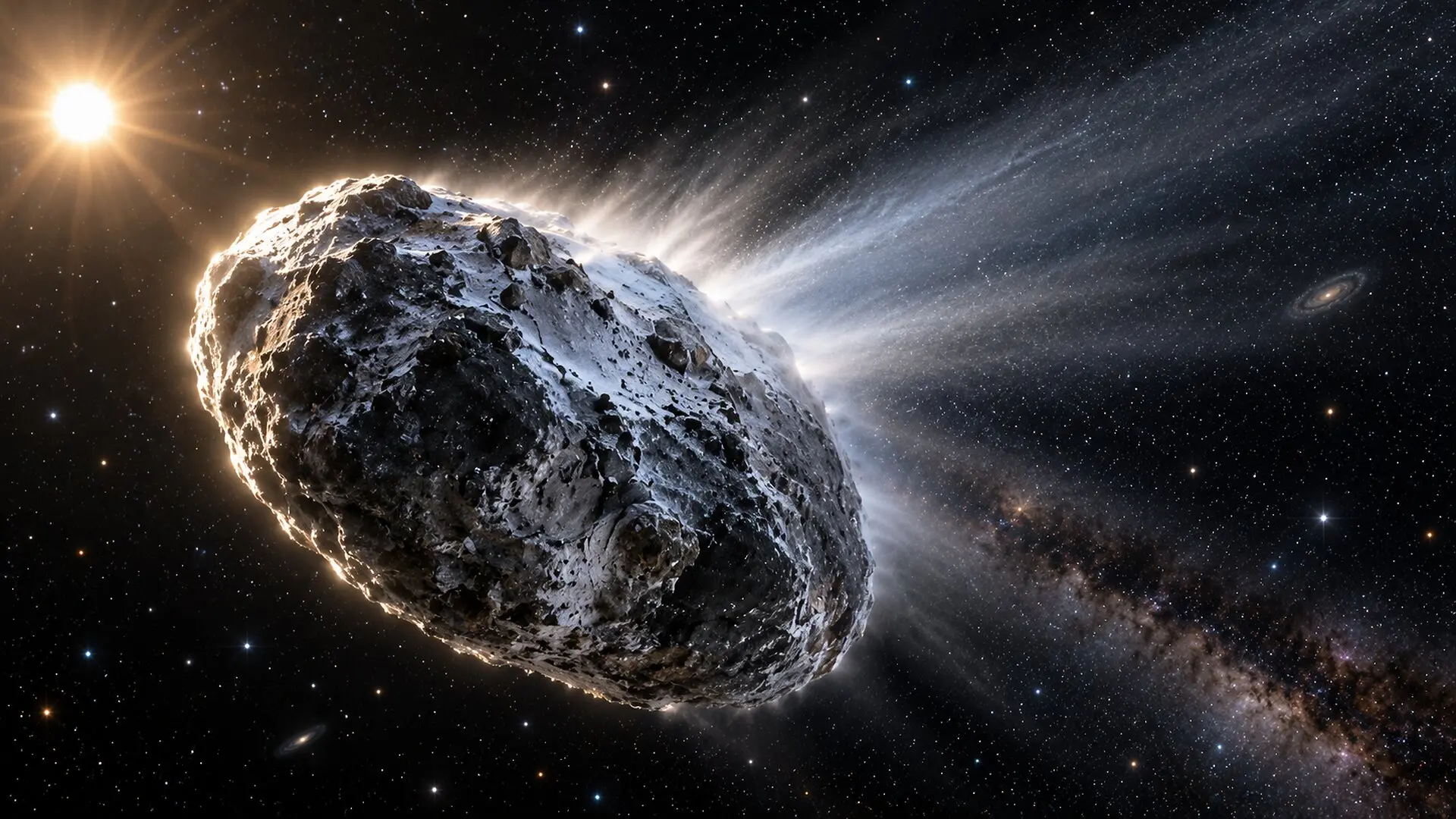
Deep in the outer reaches of the solar system, more than 3 billion miles from our planet, a small, frozen body is providing a rare glimpse into the dramatic evolution of a future comet. The object, known as 450P/LONEOS, is a member of the Centaurs—a class of icy, unstable bodies that orbit among the giant planets, often acting as a bridge between the cold, distant trans-Neptunian population and the short-period comets that visit the inner solar system.
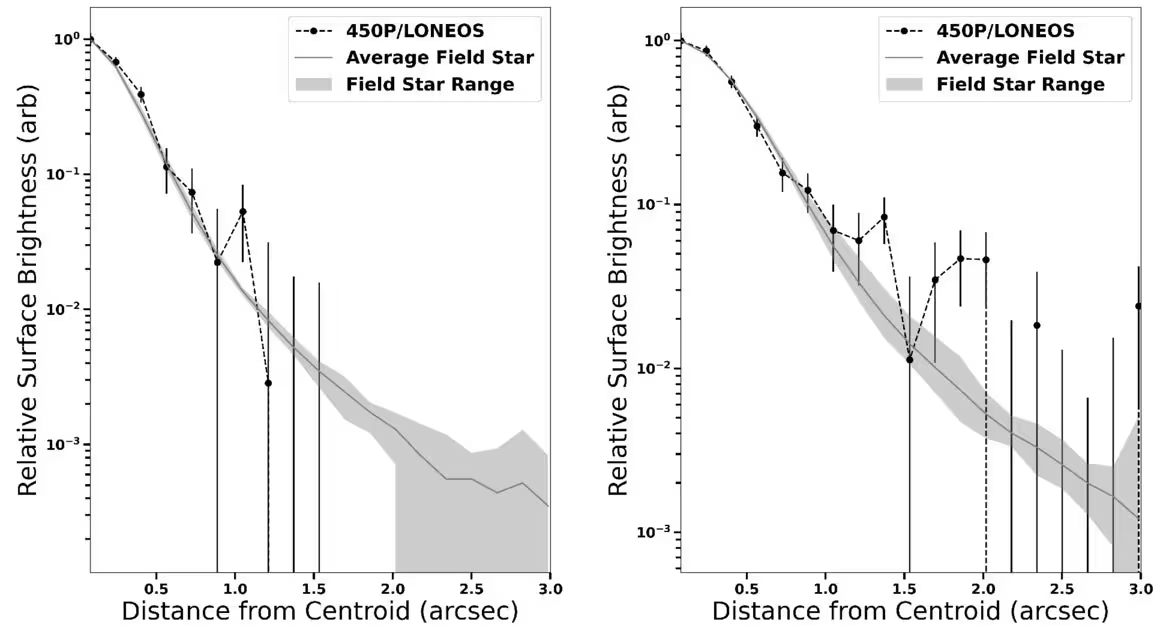
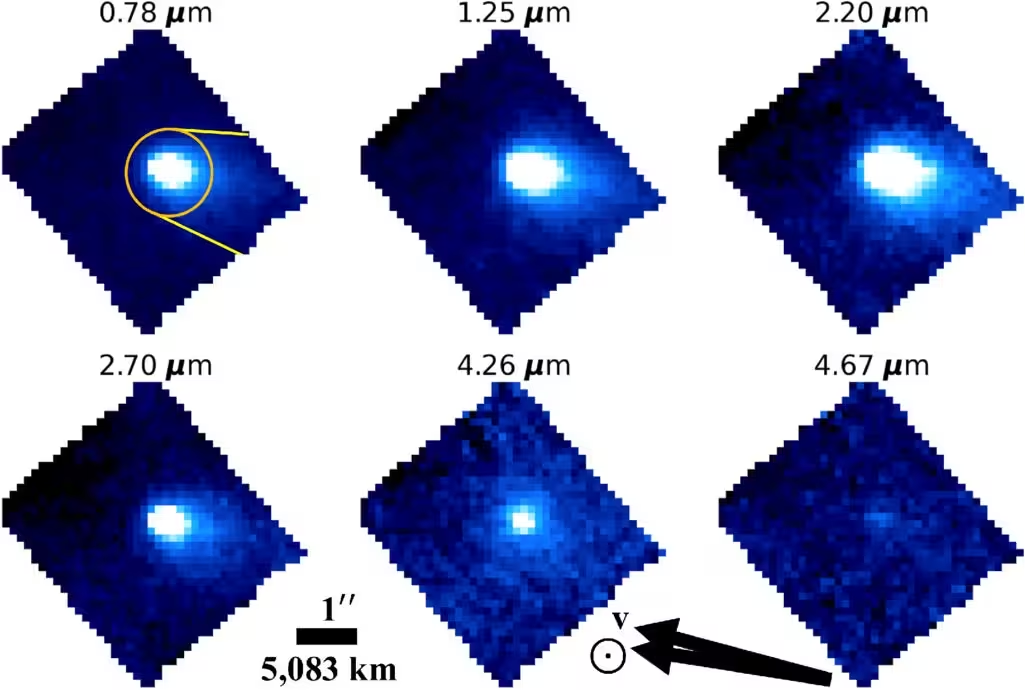
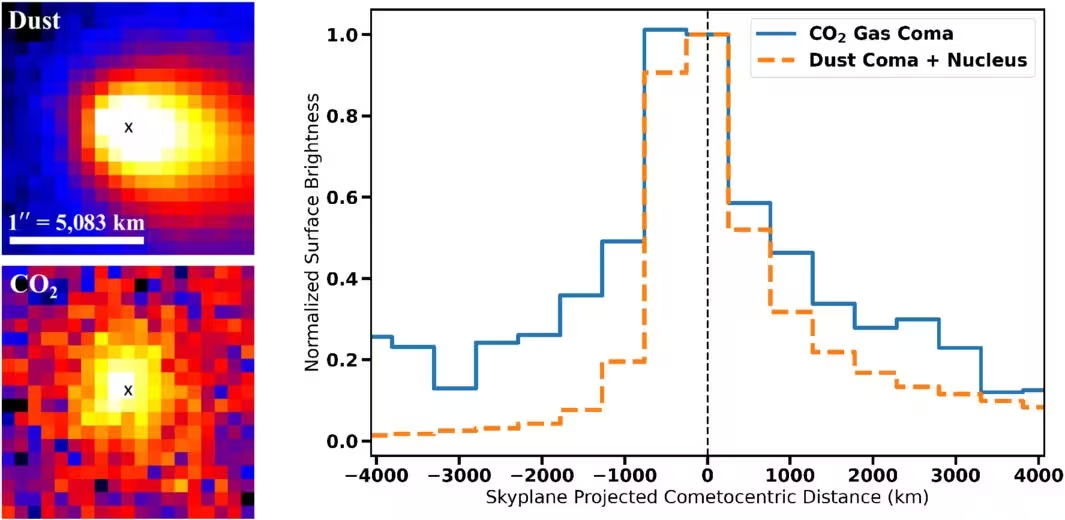
Recent observations conducted by a team led by the University of Central Florida, utilizing NASA’s James Webb Space Telescope and the Gemini North telescope, have captured the object in a state of active transformation. Researchers identified a distinct cloud of dust and carbon dioxide gas surrounding the nucleus, suggesting that the object is beginning to wake up as it experiences increased solar heating.
A Gravitational Nudge Triggers Activity
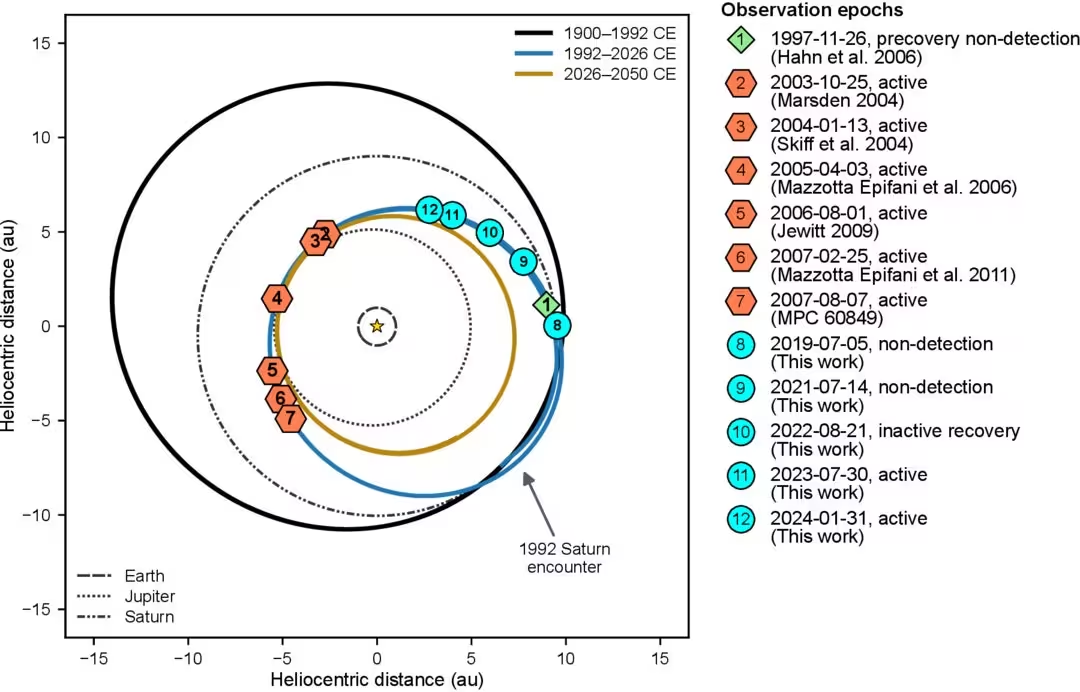
Centaurs typically remain dormant due to the extreme cold of their distant orbits, where traditional water-ice sublimation is insufficient to drive cometary activity. However, 450P serves as a natural laboratory for studying how orbital shifts can force these primitive bodies to change. A significant gravitational interaction with Saturn in 1992 altered the object’s path, pulling it from a more remote trans-Saturnian trajectory into a warmer orbit closer to Jupiter. This “a-jump” in its orbital semimajor axis exposed the body to heightened solar energy, a phenomenon linked to the activation of roughly 39 other observed Centaurs.
As planetary scientist Charles Schambeau noted, these objects are vital for understanding the transitional phase of solar system evolution. By tracking how increased warmth impacts the surface and subsurface layers, researchers are gaining insight into how volatiles are released to form a coma, effectively turning a quiet icy rock into a dynamic, dusty visitor.
Chemical Signatures from the Outer Solar System
Evidence of this awakening was starkly visible to the Webb telescope on September 3, 2023. While gaseous water and carbon monoxide remained absent, the Near-Infrared Spectrograph detected a clear signature of carbon dioxide emission. Because carbon dioxide can sublimate at temperatures too low for water ice to activate, it appears to be the primary driver behind the dust jets emanating from 450P.
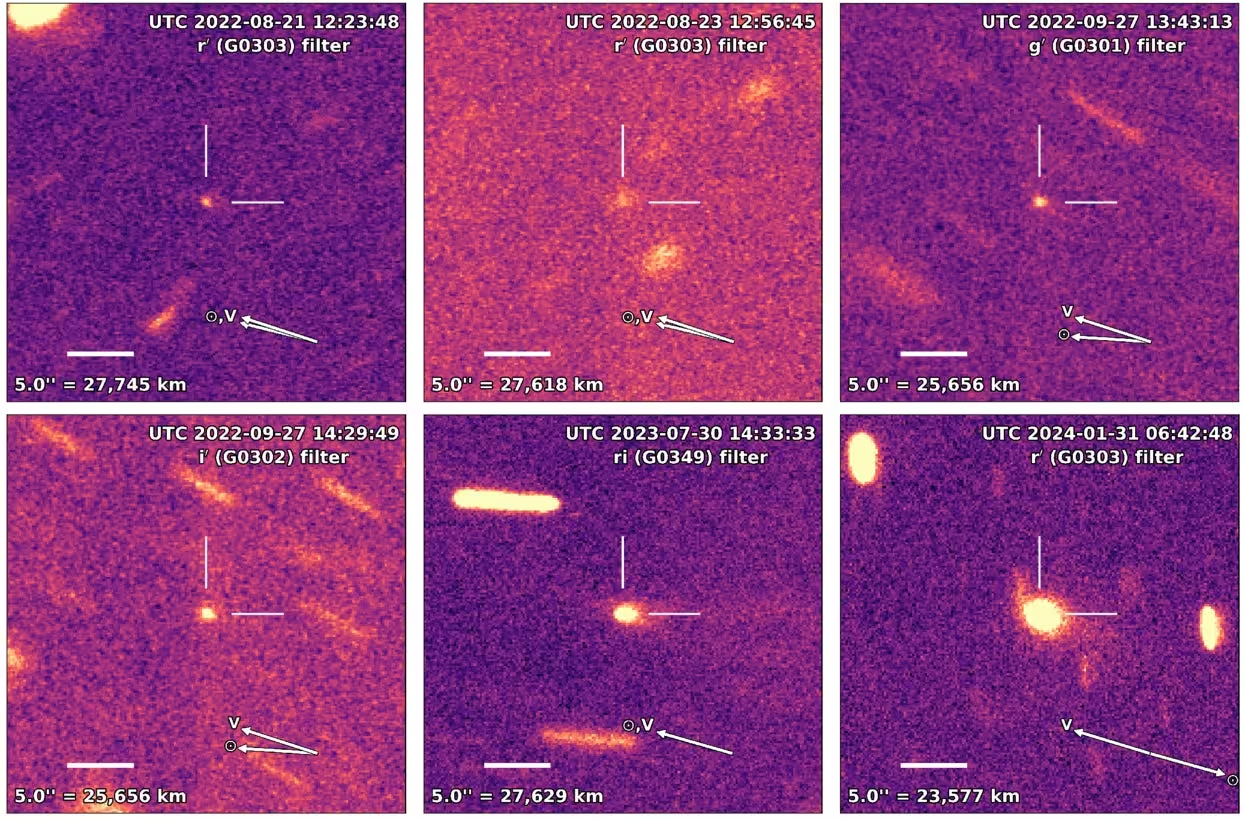
The team also identified signs of solid water ice within the surrounding dust grains, some of which may exist in a crystalline state. This observation hints at a complex internal process: as the Centaur warms, its buried amorphous ice—which has a disordered, porous structure capable of trapping gases—reorganizes into a crystalline form. This phase transition releases the trapped carbon dioxide, which then escapes through the nucleus, carrying fine dust particles into space.
A Long-Term View of Celestial Change
The study of 450P/LONEOS offers a rare, real-time look at a process that takes place over timescales far longer than a human lifetime. Following its 1992 encounter with Saturn, the object is expected to have another close pass by Jupiter in July 2026, which may further stabilize its orbit for the next two centuries. While the current data provides a snapshot of its behavior, the combination of orbital reconstruction and high-resolution spectroscopy establishes 450P as a cornerstone for studying the lifecycle of icy bodies.
By mapping the volatile chemistry and structural changes of objects like 450P, astronomers are successfully connecting the dots between remote, frozen relics and the familiar comets that grace our inner solar system. Further observations could reveal whether the object’s current activity levels will escalate as it continues its inward journey, or if it will settle into a stable, consistent emission pattern.
This article has been fact checked for accuracy, with information verified against reputable sources. Learn more about us and our editorial process.
Last reviewed on .
Article history
- Latest version
Cite this page:
- Posted by Aisha Ahmed