Construction Workers Uncover 7000 Year Old Skeleton Beneath Future School Site in Germany
Construction workers unearthed a mysterious grave at a school building site, revealing an extraordinary discovery that defies standard historical burial norms.
Archaeologists in Leipzig, Germany, have unearthed a 7,000-year-old grave that now stands as the oldest burial ever discovered within the city limits. The finding emerged during preparatory work for a new elementary school, shedding fresh light on the region’s early agrarian history and the lives of those who occupied the Leipzig Lowland Basin millennia ago.
A Rare Glimpse Into Neolithic Life
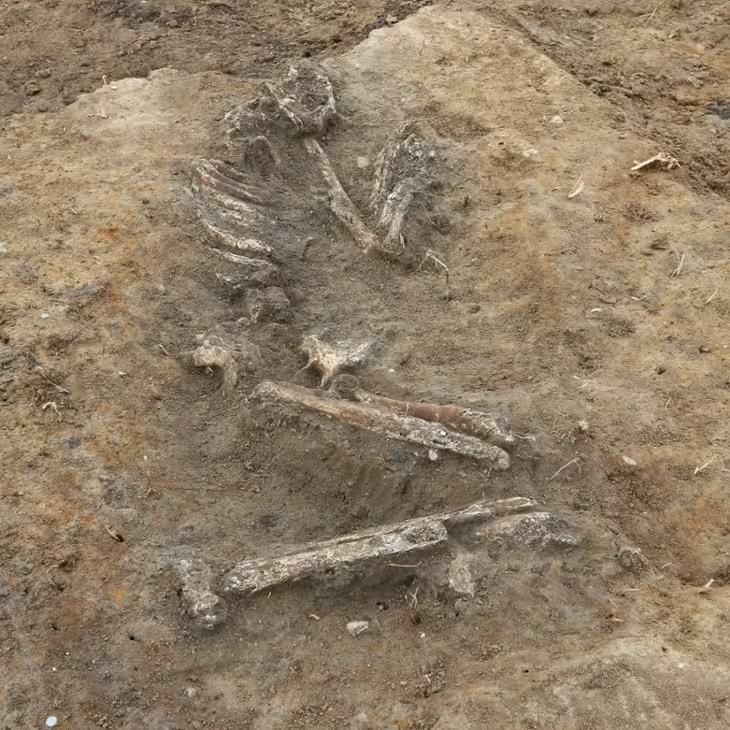
The site, positioned safely above the White Elster River, has long been recognized for its archaeological potential due to its proximity to documented Bronze Age activity. However, the recent discovery of a remarkably well-preserved human skeleton provided a significant, unexpected milestone for researchers. The individual was found in a traditional crouched position, lying on their side with legs drawn toward the torso. According to the Saxony State Office for Archaeology, such skeletal integrity is exceptionally rare in the region, where acidic soil conditions typically destroy human remains, leaving investigators to rely solely on burial pit geometry or scattered artifacts for identification.
“This is a rare stroke of luck, as bone preservation is so poor in large parts of Saxony that graves can only be identified by the objects placed in the grave and the shape of the grave pits,” officials explained in their announcement.
Evidence of an Early Agrarian Settlement
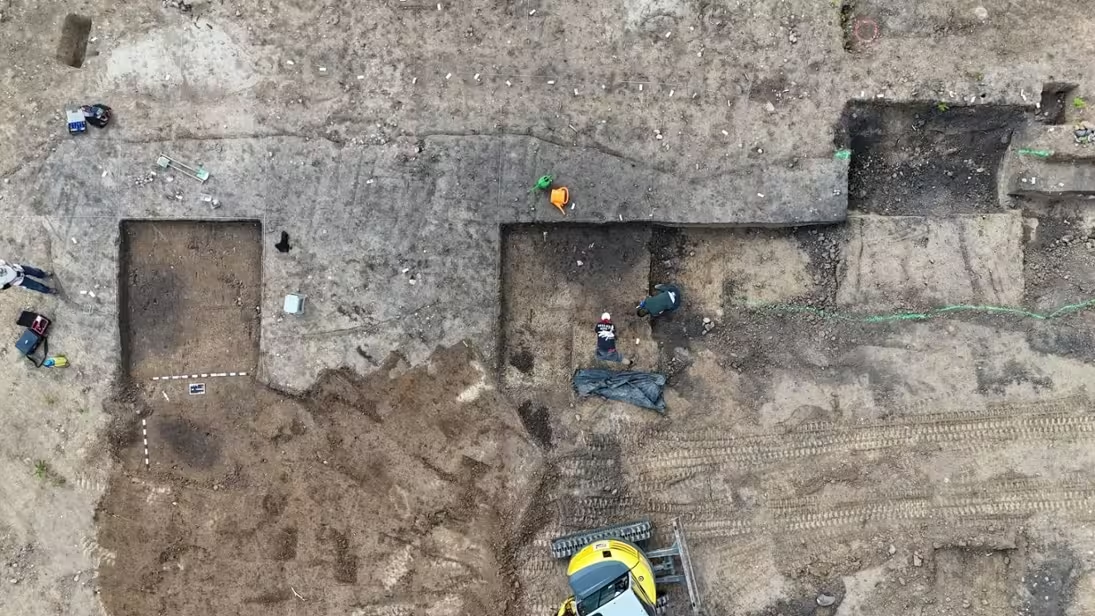
The discovery was not limited to the burial alone. Excavations revealed the structural foundations of a prehistoric community belonging to the Linear Pottery culture. Also known as Linearbandkeramik, this society was among Europe’s first to transition fully to agriculture and sedentary living between 5500 and 4500 BCE. The archaeological team identified a series of postholes marking the locations of ancient wooden buildings, including one structure spanning roughly 98 feet (30 meters) in length.
While the site was partially impacted by construction activity in the 1960s, the underlying soil layers successfully shielded these critical remnants from total destruction. The presence of both domestic housing and a burial site indicates a sustained, organized settlement within this fertile river valley.
Continued Analysis of the Find
Researchers are currently working to finalize the excavation process to ensure no further historical data is lost before the school project proceeds. Although the burial lacked the typical pottery or grave goods often associated with Linear Pottery culture, the spatial context and construction style confirm its cultural origin. Future laboratory analysis of the human remains is expected to provide deeper insights into the health, diet, and demographic makeup of these early European pioneers.
This article has been fact checked for accuracy, with information verified against reputable sources. Learn more about us and our editorial process.
Last reviewed on .
Article history
- Latest version
Reference(s)
- “7000 Jahre alte Siedlung und ältestes Grab im Leipziger Stadtgebiet entdeckt.”, September 30, 2026 <https://www.medienservice.sachsen.de/medien/news/1100212>.
- “Linear Pottery culture | Anthropology | Research Starters | EBSCOhost.” EBSCO <https://www.ebsco.com/research-starters/anthropology/linear-pottery-culture/?utm_source=chatgpt.com>.
Cite this page:
- Posted by Vikram Desai