Why You Likely Choose A Partner Who Shares Your Genetic Traits And Lifestyle Habits
Choosing a partner isn’t just luck. New research reveals how shared genetics, education, and lifestyle habits play a major role in who we fall for.

While dating apps and social circles are often viewed through the lens of personal preference, new research suggests that the search for a partner is influenced by a complex interplay of genetics and environment. This tendency to pair up with individuals who mirror our own characteristics, known as assortative mating, appears to play a significant role in how traits are distributed across populations and families.
Gretchen Saunders, a researcher at the University of Minnesota specializing in statistical genetics and psychology, examined these dynamics by analyzing genetic and phenotypic overlaps among married couples and siblings. Her findings, recently detailed in the journal Behavior Genetics, highlight that while people do not necessarily choose partners based on DNA, the resulting unions create lasting genetic patterns.
The Genetic Signatures of Romantic Choice
Assortative mating is not just about physical resemblance; it encompasses educational background, behavioral habits, and health-related markers. Because these traits are often heritable, couples who share them are more likely to pass those same genetic predispositions to their children, potentially amplifying certain characteristics within lineages over time.
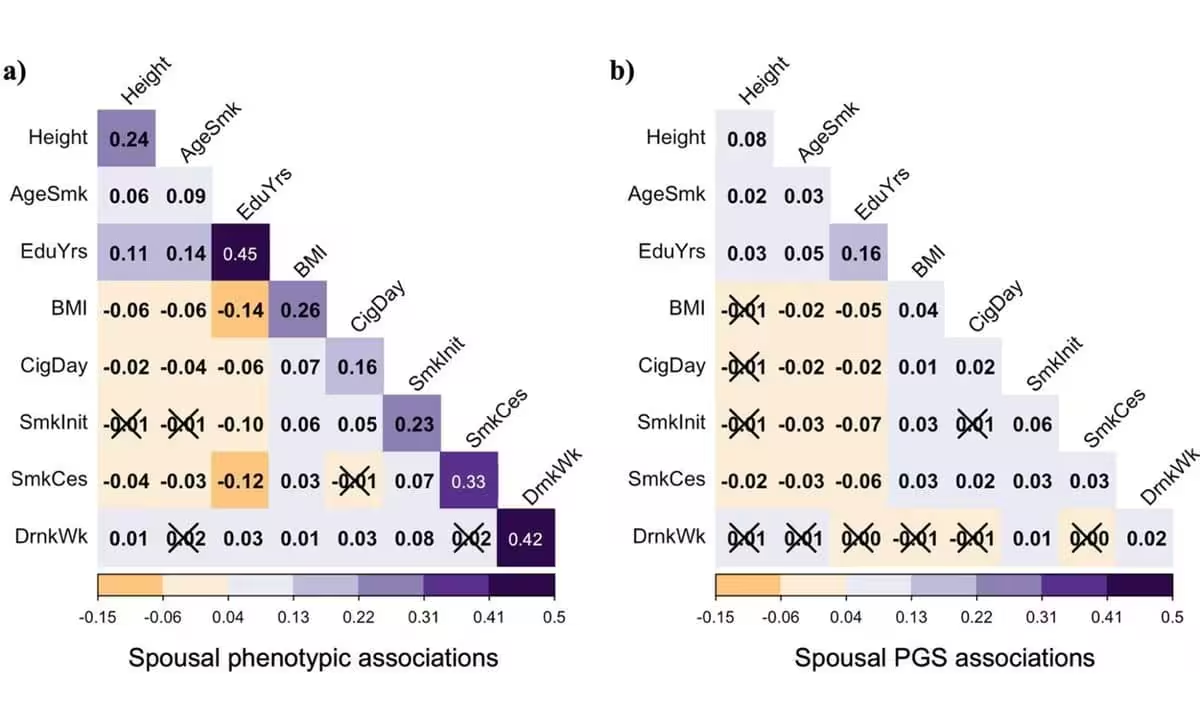
To quantify these trends, the study analyzed eight distinct traits, ranging from height and body mass index (BMI) to educational attainment and consumption patterns involving alcohol and smoking. By using polygenic scores—which aggregate the influence of multiple genetic variants to predict a person’s predisposition toward a specific phenotype—the researchers could compare how closely the genetic makeup of partners aligned.
The results indicated that education was the strongest point of similarity among spouses. Following education, alcohol consumption habits showed notable correlation. Interestingly, the study also uncovered cross-trait patterns, such as individuals with high academic achievement often pairing with taller partners who maintained lower BMIs and lower rates of smoking.
Beyond Mere Preference
Saunders emphasizes that these findings should not be interpreted as biological determinism. While genetic predisposition plays a role, social environments, professional settings, and shared cultural norms are major drivers in who we meet and eventually marry. These external structures dictate the pool of potential partners, often leading to relationships between people who move in the same circles.
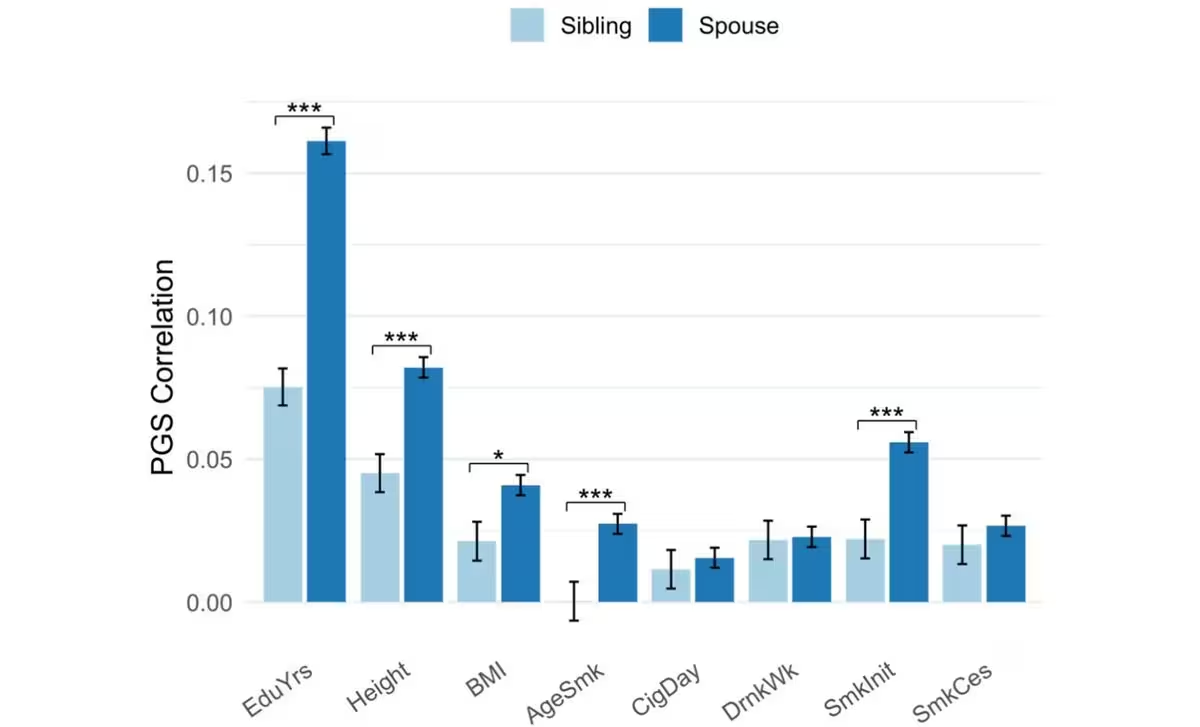
The study also highlighted a clear distinction between static and dynamic traits. Inherited physical traits like height and BMI showed the most consistent genetic correlations between partners, while behaviors that can change over the course of a life—such as daily cigarette intake or specific drinking patterns—showed weaker genetic links. By comparing these trends with sibling data, the researchers confirmed that these patterns of partner selection have been present across multiple generations.
A Complex Social and Genetic Landscape
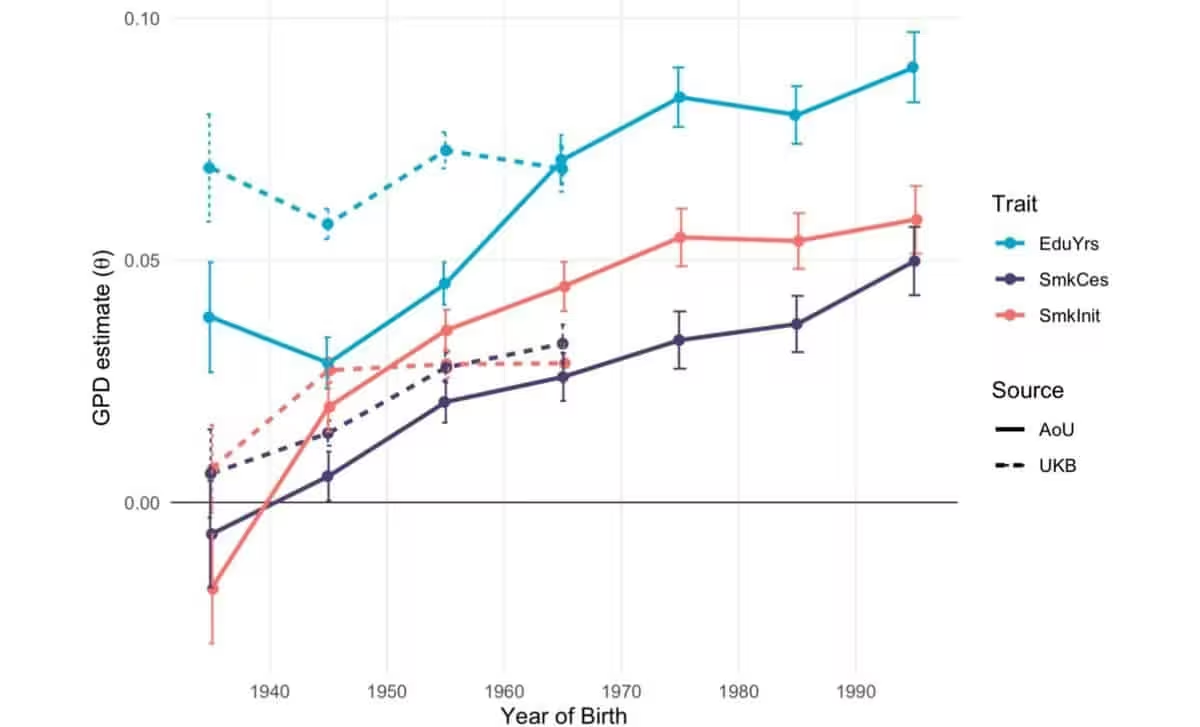
The research underscores that while genetic architecture provides a foundation for how we relate to one another, it is filtered through shifting societal norms. The study highlights that variations in genetic patterns across different cohorts often reflect changes in opportunities and social structure rather than fundamental changes in human attraction.
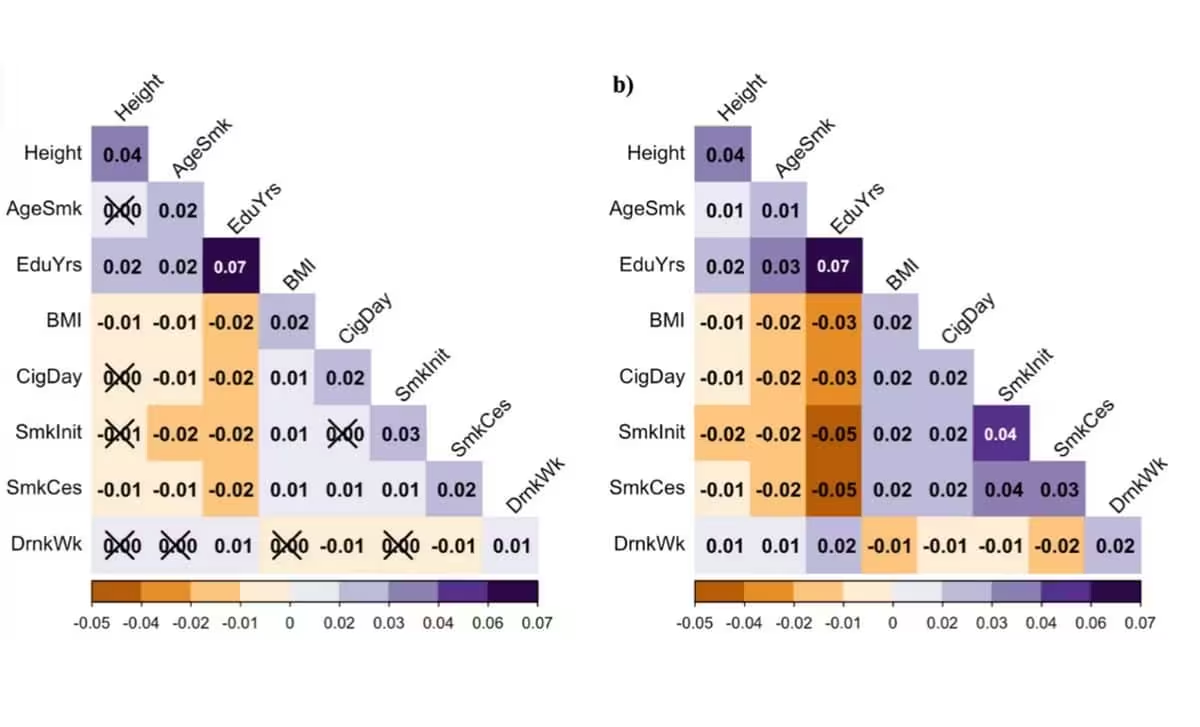
Ultimately, the work illustrates that mate selection is an ongoing process of negotiation between our internal biological predispositions and the external world. As Saunders noted in the study, understanding these mechanisms is essential for researchers looking to unravel the broader mysteries of social inequality and the long-term evolution of human populations.
This article has been fact checked for accuracy, with information verified against reputable sources. Learn more about us and our editorial process.
Last reviewed on .
Article history
- Latest version
Reference(s)
- Saunders, Gretchen R. B.. “Changing Patterns of Assortative Mating for Educational, Substance Use, and Anthropometric Traits.” Behavior Genetics, September 27, 2026 Springer Science and Business Media LLC, doi: 10.1007/s10519-026-10285-x. <https://link.springer.com/article/10.1007/s10519-026-10285-x>.
Cite this page:
- Posted by Elizabeth Taylor