Mysterious 4,400 Year Old Inscription Found Inside Ancient Egyptian Tomb Reveals Rare Moral Code
Archaeologists have discovered a 4,400-year-old tomb at Saqqara featuring one of ancient Egypt’s earliest autobiographies, detailing the life of official Khuwy.
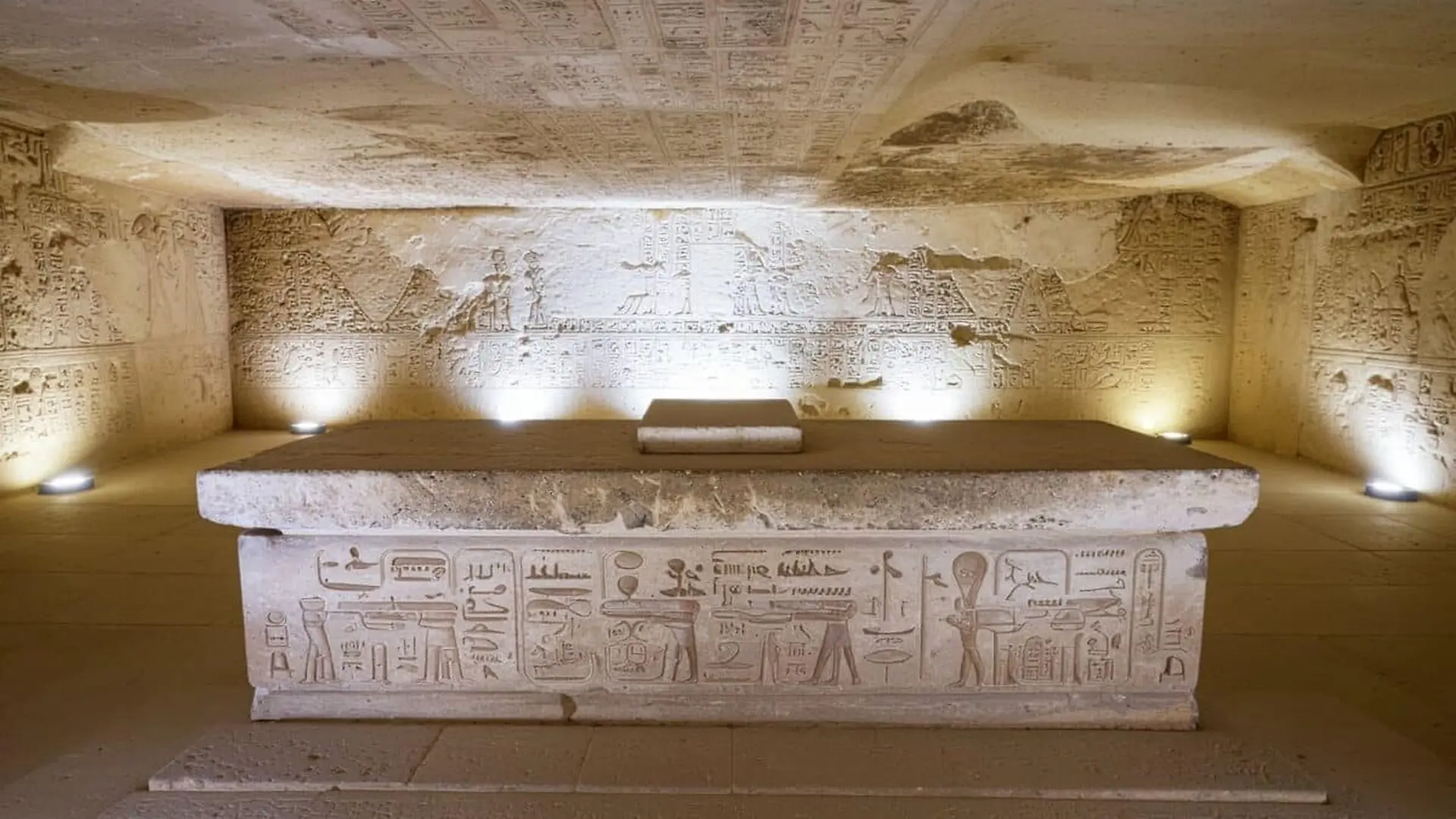
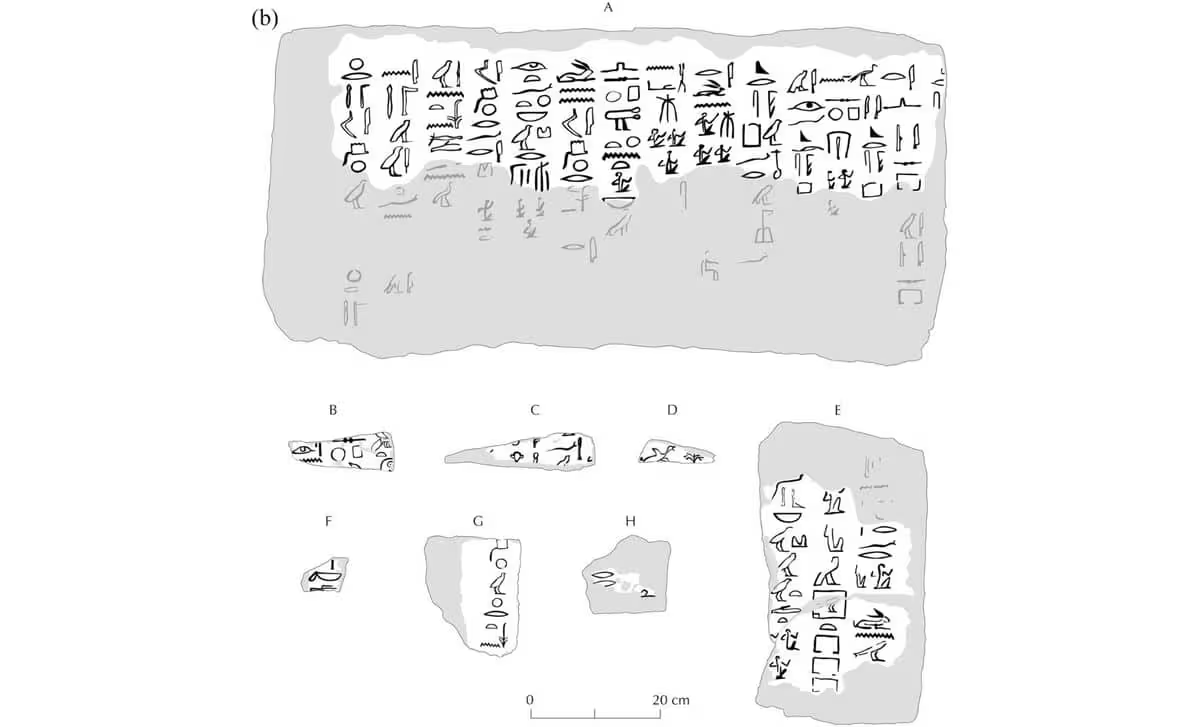
Archaeologists working near the pyramid of the Old Kingdom ruler King Djedkare have unearthed eight limestone fragments that offer a rare glimpse into the life of an elite official named Khuwy. Discovered during 2019 excavations in a tomb at South Saqqara, the remnants of this 4,400-year-old inscription provide a sophisticated example of the early Egyptian biographical tradition.
Ancient Ethical Declarations
The fragments, categorized as pieces A through H, were analyzed by Egyptologist Hana Vymazalová of Charles University. Her findings, detailed in The Journal of Egyptian Archaeology, classify the text as an “ideal biography,” a genre used by high-ranking officials to cement their moral legacy and outline their preparations for the afterlife. Among the decipherable lines is the claim, “I never took anything from any man,” which serves as a testament to the ethical self-presentation favored by the Egyptian bureaucracy of the era.
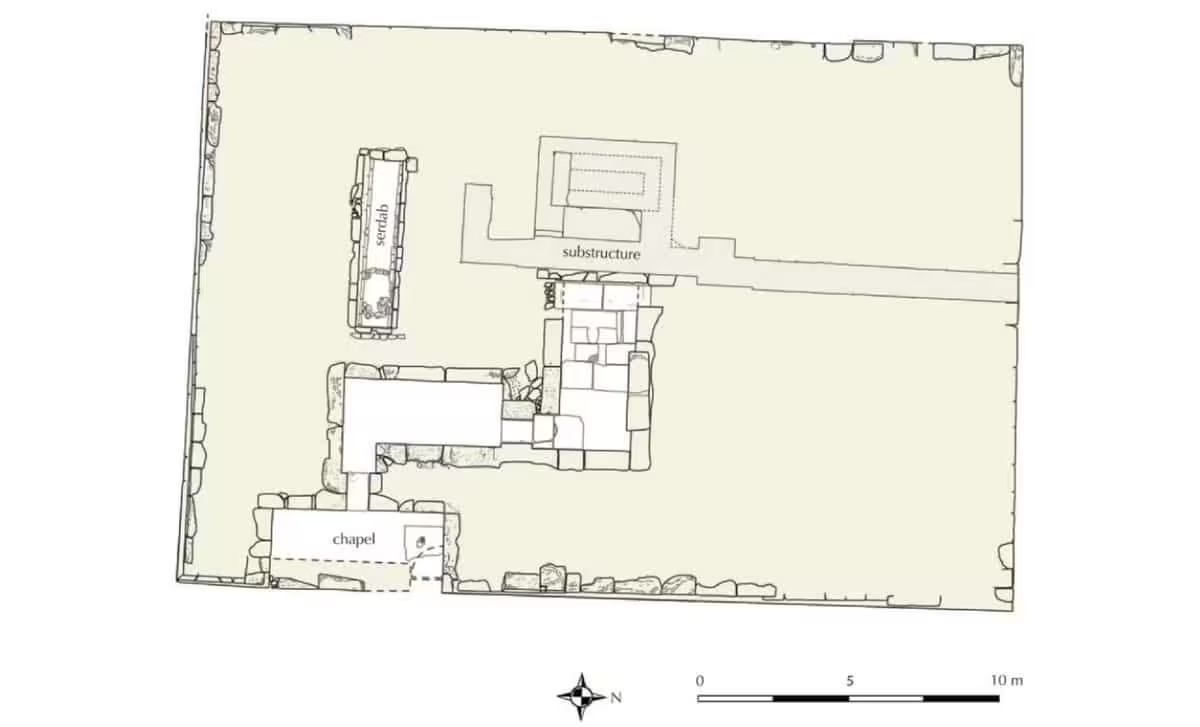
Khuwy’s tomb itself is a site of significant archaeological interest. While the upper chapel was heavily scavenged for limestone during the New Kingdom, the burial chambers remain among the most well-preserved examples from the Old Kingdom. The largest fragment discovered at the site measures over a meter in length and features sunken relief hieroglyphs that denote Khuwy’s professional ties to the “Great Courts,” the central administrative hubs of the state.
Evidence of Royal Favor
The text is particularly notable for its explicit mentions of King Djedkare and Queen Setibhor. While the context of these references is obscured by the loss of surrounding text, researchers note that the use of Djedkare’s royal name—rather than his more common moniker, Isesi—suggests an exceptionally close relationship with the monarchy. Further fragments hint at funerary provisions and the maintenance of a cult dedicated to Khuwy after his death, though some of the wording, including potential warnings against tomb desecration, remains incomplete.
The status of the deceased is further corroborated by the material used for his final resting place. The fine white stone of the sarcophagus and the high-quality craftsmanship of the tomb decorations indicate that the project was likely commissioned within a royal workshop. Despite the damage inflicted by tomb robbers over the centuries, the surviving inscriptions provide a vital archaeological record of the intersection between personal ambition and state service in ancient Egypt.
This article has been fact checked for accuracy, with information verified against reputable sources. Learn more about us and our editorial process.
Last reviewed on .
Article history
- Latest version
Reference(s)
- Vymazalová, Hana. “The Biographical Inscription from the Tomb of Khuwy at Djedkare’s Royal Necropolis.” The Journal of Egyptian Archaeology, October 28, 2026 SAGE Publications, doi: 10.1177/03075133261498063. <https://journals.sagepub.com/doi/10.1177/03075133261498063>.
Cite this page:
- Posted by Vikram Desai