New Quantum Theory Suggests The Entire Universe Could Collapse Into A Definite Reality
A new study using random collapse dynamics in quantum cosmology offers a groundbreaking path toward uniting quantum mechanics with Einstein’s relativity.

Quantum mechanics presents a fundamental puzzle: while the theory describes a universe of overlapping possibilities, the world we perceive appears fixed, singular, and definitively structured. Reconciling this behavior—particularly on a cosmic scale where no external observer exists to trigger a transition from quantum superposition to a classical outcome—remains one of the most challenging hurdles in modern physics.
A study recently published in the Journal of High Energy Physics proposes a potential path forward by applying spontaneous wavefunction collapse to a model of the early universe. Researchers Matteo Carlesso and José Luis Gaona-Reyes of the University of Trieste, alongside colleagues Lucía Menéndez-Pidal and Mir Faizal, suggest that modifying the mathematical evolution of the quantum state could allow the cosmos to settle into a definite geometry naturally.

Bridging the divide between quantum flux and cosmic reality
In standard quantum theory, a state can exist as a superposition of multiple configurations simultaneously. The challenge of how these possibilities resolve into a single, observable reality is often illustrated by the famous Schrödinger’s cat thought experiment. While decoherence provides a partial explanation by showing how environmental interactions can suppress interference, it does not fully address how a singular outcome is selected, especially in a closed system like the universe, which lacks an outside environment to facilitate such a transition.
The research team explored whether an intrinsic, physical mechanism for wavefunction collapse could solve this issue. By introducing stochastic, nonlinear terms to the equations governing the evolution of the universe, they created a model where the quantum state essentially “selects” a trajectory, moving toward a defined cosmic geometry without requiring an outside measurement.
Designing a minimalist quantum cosmos
To keep the complex mathematics of quantum gravity tractable, the team focused on a simplified, highly symmetrical universe—one that is spatially flat, homogeneous, and isotropic. By representing matter as an idealized fluid and utilizing a specific internal variable as a proxy for time, they transformed the Wheeler–DeWitt equation into a Schrödinger-like form. This internal clock allowed the team to track how the universe’s wavefunction evolves.
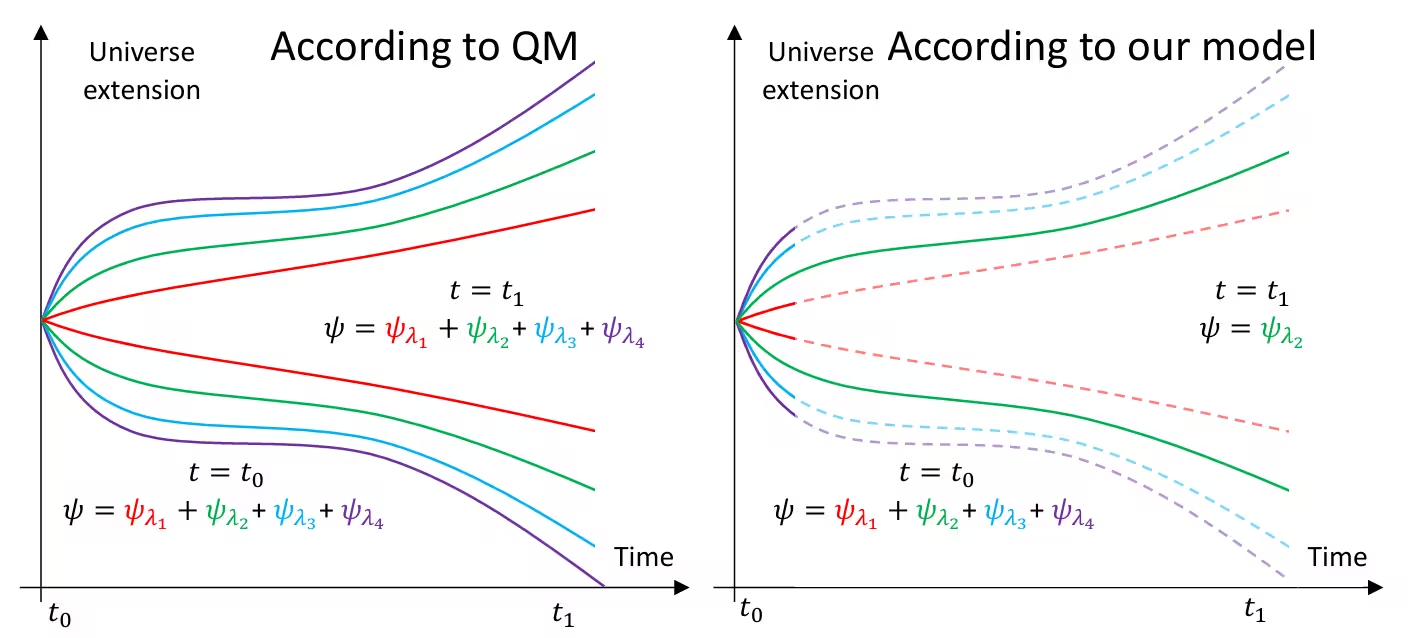
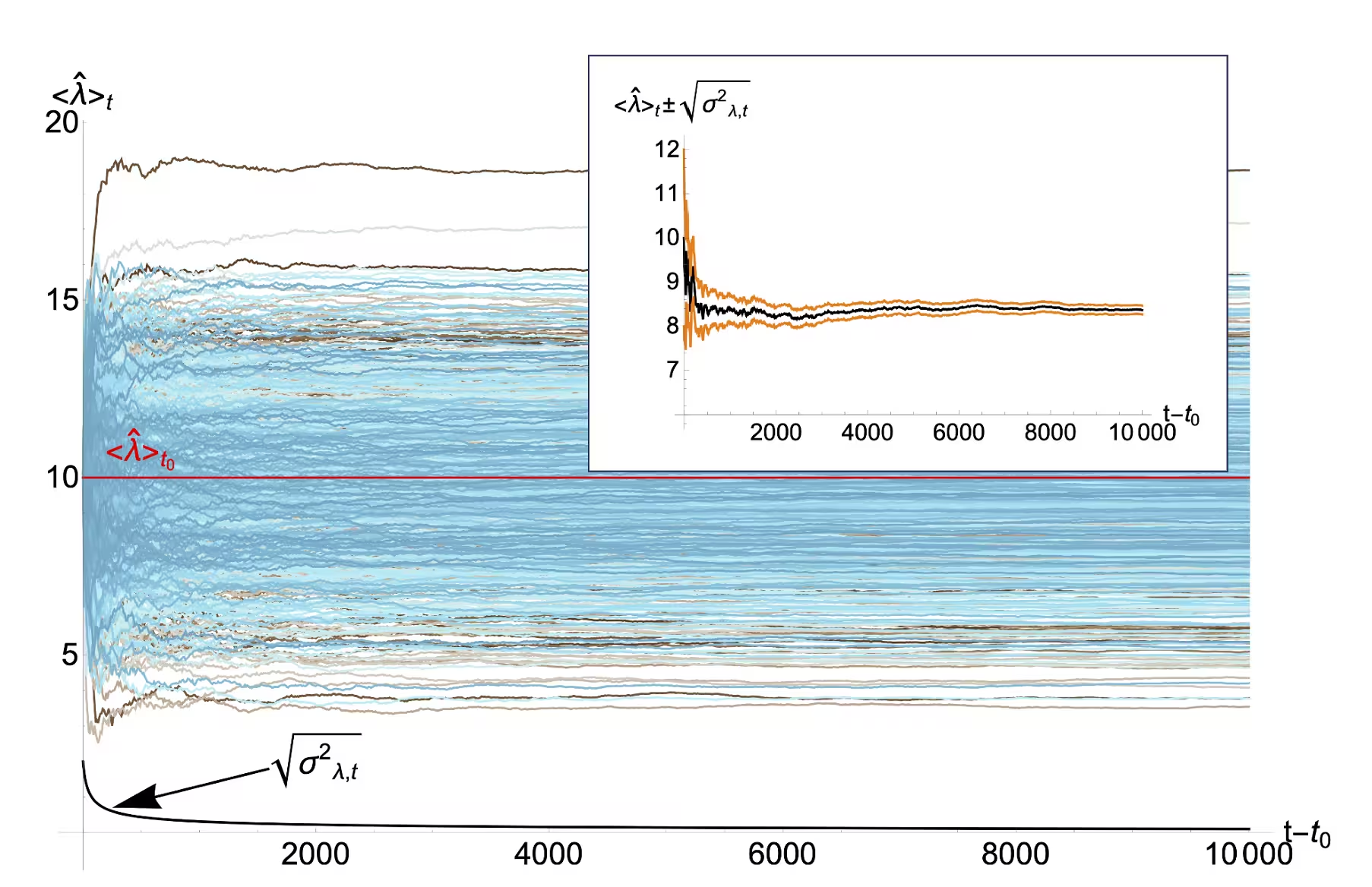
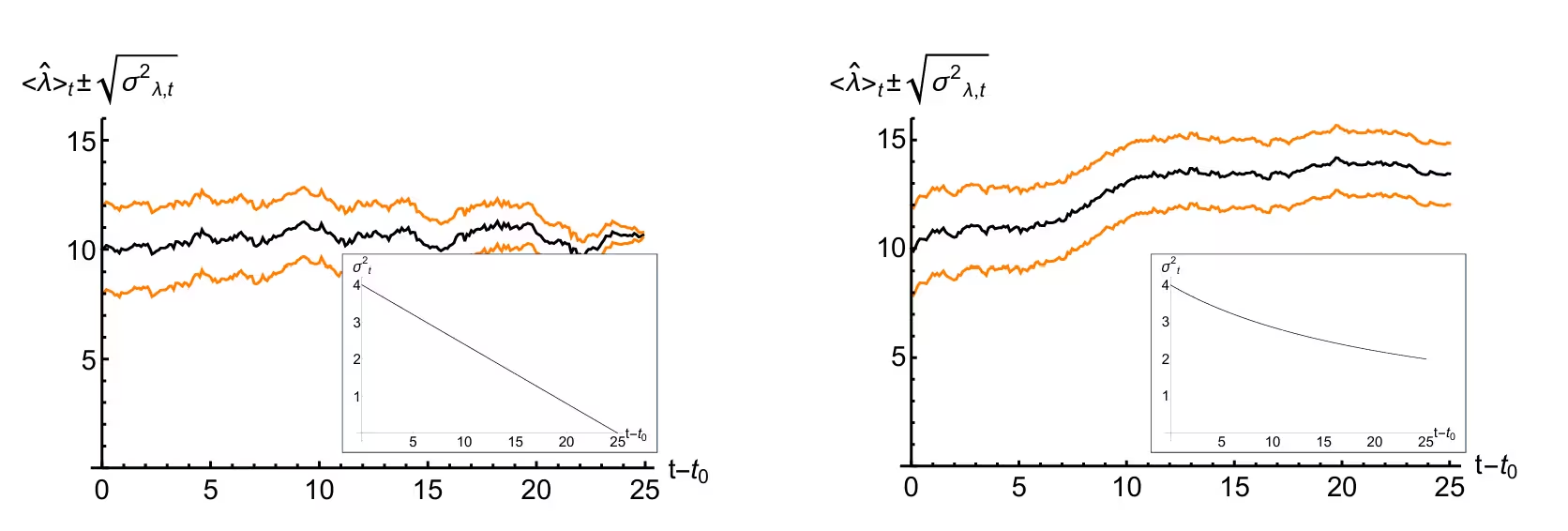
Within this framework, the addition of random, continuous noise forces the quantum state to narrow its spread. “Our model describes a quantum universe that eventually collapses, becoming effectively classical,” Carlesso noted. Rather than an instantaneous event, this is a progressive localization of the state, suggesting that the universe’s structure could emerge as a result of intrinsic dynamical processes.
Refining the cosmological constant
The researchers also applied their framework to parametrised unimodular gravity. In this context, the quantity determined by the collapse could be interpreted as the cosmological constant—a value tied to the accelerated expansion of the universe. While this does not resolve every mystery surrounding dark energy, it offers a theoretical mechanism for how a specific value might emerge from a quantum distribution of possibilities.
A framework for future verification
It is important to emphasize that this study does not provide experimental proof or a complete theory of quantum gravity. Instead, it serves as a proof-of-concept that demonstrates how modified quantum dynamics might function in a cosmological setting. Because this model relies on internal, spontaneous processes, it avoids the need for external observers, yet it remains distinct from the observable universe’s current expansion history.
Testing these ideas will ultimately require precise laboratory experiments, such as those monitoring atomic interference or using advanced quantum sensors to detect potential deviations from standard quantum predictions. While the current proposal remains a theoretical hypothesis, it provides a concrete, mathematical foundation that allows physicists to further investigate the boundary where quantum possibilities give way to a singular, classical reality.
Key literature on quantum foundations
- Probing quantum mechanics with nanoparticle matter-wave interferometry(Nature, 2026)
- Present status and future challenges of non-interferometric tests of collapse models(Nature Physics, 2022)
- Underground test of gravity-related wave function collapse(Nature Physics, 2020)
- Models of wave-function collapse, underlying theories, and experimental tests(Reviews of Modern Physics, 2013)
- Decoherence, the measurement problem, and interpretations of quantum mechanics(Reviews of Modern Physics, 2005)
This article has been fact checked for accuracy, with information verified against reputable sources. Learn more about us and our editorial process.
Last reviewed on .
Article history
- Latest version
Reference(s)
- Gaona-Reyes, José Luis., et al. “Spontaneous collapse models lead to the emergence of classicality of the Universe.” Journal of High Energy Physics, vol. 2024, no. 2, February 23, 2024 Springer Science and Business Media LLC, doi: 10.1007/JHEP02(2024)193. <https://doi.org/10.1007/JHEP02(2024)193>.
- “University of Trieste | University of Trieste.”, November 6, 2026 <https://www.units.it/en>.
- Pedalino, Sebastian. “Probing quantum mechanics with nanoparticle matter-wave interferometry - Nature.”, vol. 649, no. 8098, pp. 866-870. Nature, doi: 10.1038/s41586-025-09917-9. <https://www.nature.com/articles/s41586-025-09917-9>.
- Carlesso, Matteo. “Present status and future challenges of non-interferometric tests of collapse models - Nature Physics.”, vol. 18, no. 3, pp. 243-250. Nature, doi: 10.1038/s41567-021-01489-5. <https://www.nature.com/articles/s41567-021-01489-5>.
- Donadi, Sandro. “Underground test of gravity-related wave function collapse - Nature Physics.”, vol. 17, no. 1, pp. 74-78. Nature, doi: 10.1038/s41567-020-1008-4. <https://www.nature.com/articles/s41567-020-1008-4>.
- Bassi, Angelo., et al. “Models of wave-function collapse, underlying theories, and experimental tests.” Reviews of Modern Physics, vol. 85, no. 2, April 2, 2013, pp. 471-527. American Physical Society (APS), doi: 10.1103/RevModPhys.85.471. <https://doi.org/10.1103/RevModPhys.85.471>.
- Schlosshauer, Maximilian. “Decoherence, the measurement problem, and interpretations of quantum mechanics.” Reviews of Modern Physics, vol. 76, no. 4, February 23, 2005, pp. 1267-1305. American Physical Society (APS), doi: 10.1103/RevModPhys.76.1267. <https://doi.org/10.1103/RevModPhys.76.1267>.
Cite this page:
- Posted by Nida Rehman