New Mathematical Breakthrough Finally Solves the Chaos of Binary Asteroid Motion
Astronomers have developed a new geometric method to accurately simulate the complex orbital motion of binary asteroids with irregular shapes.
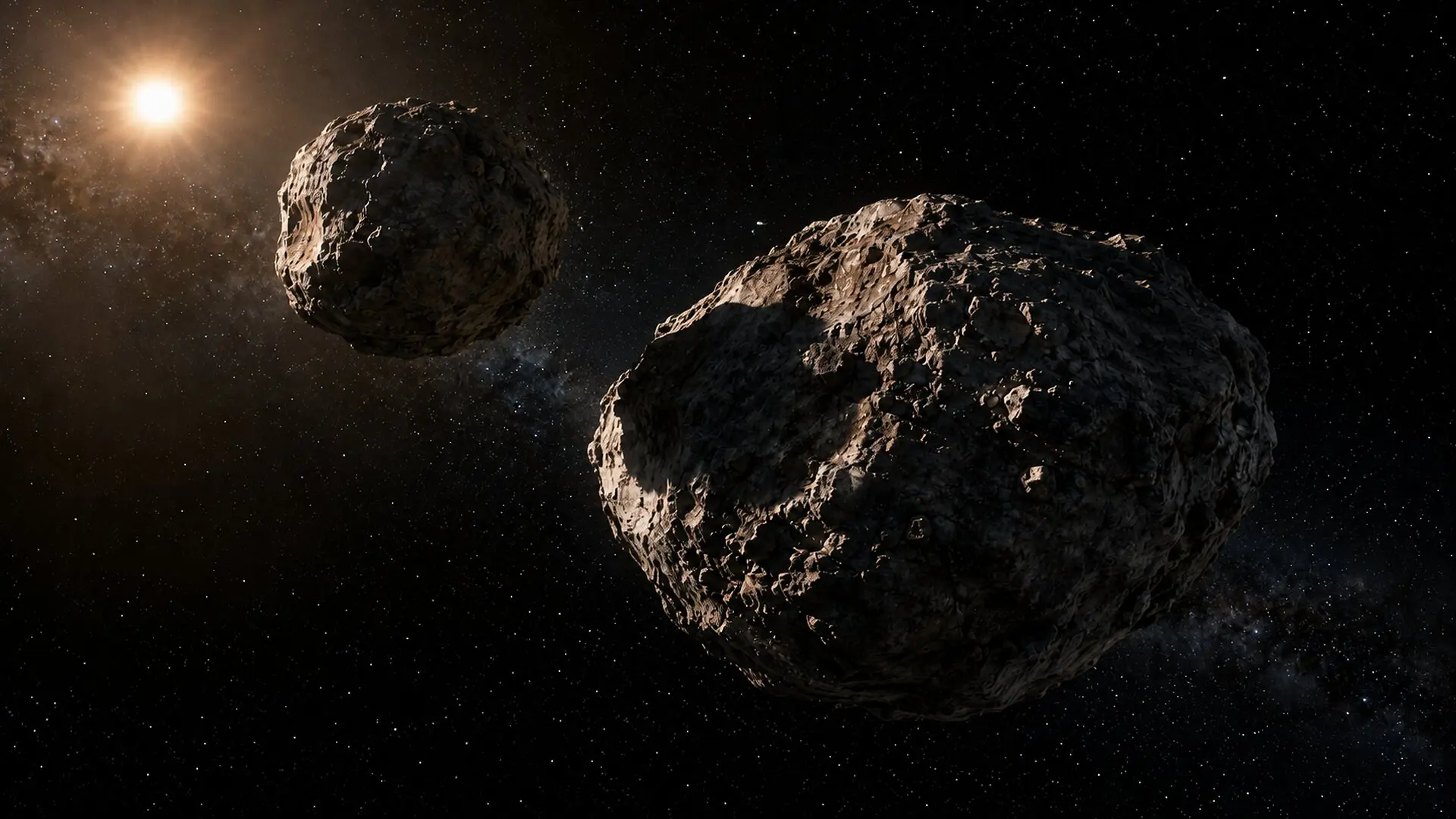
Predicting the long-term behavior of binary asteroid systems—where two celestial bodies dance in a tight gravitational embrace—has long been a complex challenge for planetary scientists. Unlike simple point masses, these systems often behave like intricately coupled mechanical machines, where the irregular shape, orientation, and rotation of each body constantly influence the other. A new mathematical approach now promises to make these complex simulations both faster and significantly more accurate.
A research team led by Guo Yongxin at Liaoning University’s College of Physics has developed an innovative integration technique specifically designed to model these interactions. By treating orbital motion and rotation as a unified geometric system rather than separate variables, the method avoids the common errors that plague standard numerical simulations. Their findings, published in Space: Science & Technology, offer a more robust way to assess impact threats and plan future missions to small solar system bodies.
Accounting for Irregular Gravity
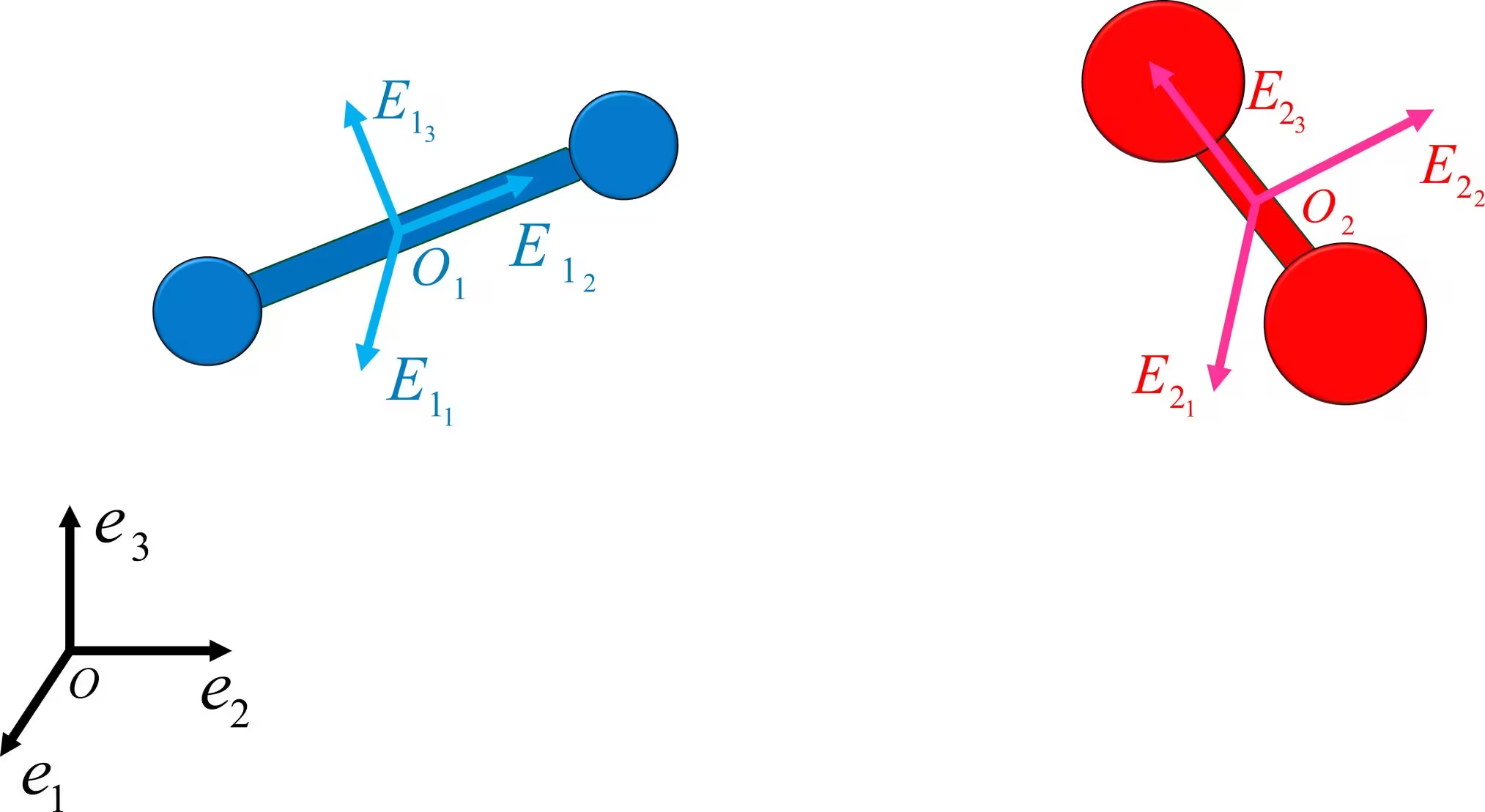
When two asteroids orbit closely, the classical “two-body problem” model fails because it assumes the objects are perfect spheres. In reality, the gravitational pull between binary asteroids depends heavily on their specific orientations. To capture this, the team used a “double-dumbbell” model, representing each asteroid pair as two rigid masses connected by a massless rod.
The researchers utilized the Euclidean group SE(3), a mathematical framework that describes an object’s position and rotation simultaneously. By anchoring this to a coordinate frame fixed to one of the bodies, the team simplified the complex relative motion of the pair. This approach effectively bypasses the mathematical singularities that often occur when using standard Euler angles to track rotation, eliminating the need for cumbersome extra constraint equations.
Efficiency Through Geometry
The core of the new method lies in a Hamel variational integrator derived from a discrete version of Hamilton’s principle. By building the numerical model from a discrete Lagrangian, the team was able to express the motion directly on a Lie algebra. This is a critical departure from traditional geometric integrators that operate on Lie group elements, which require more intensive computation.
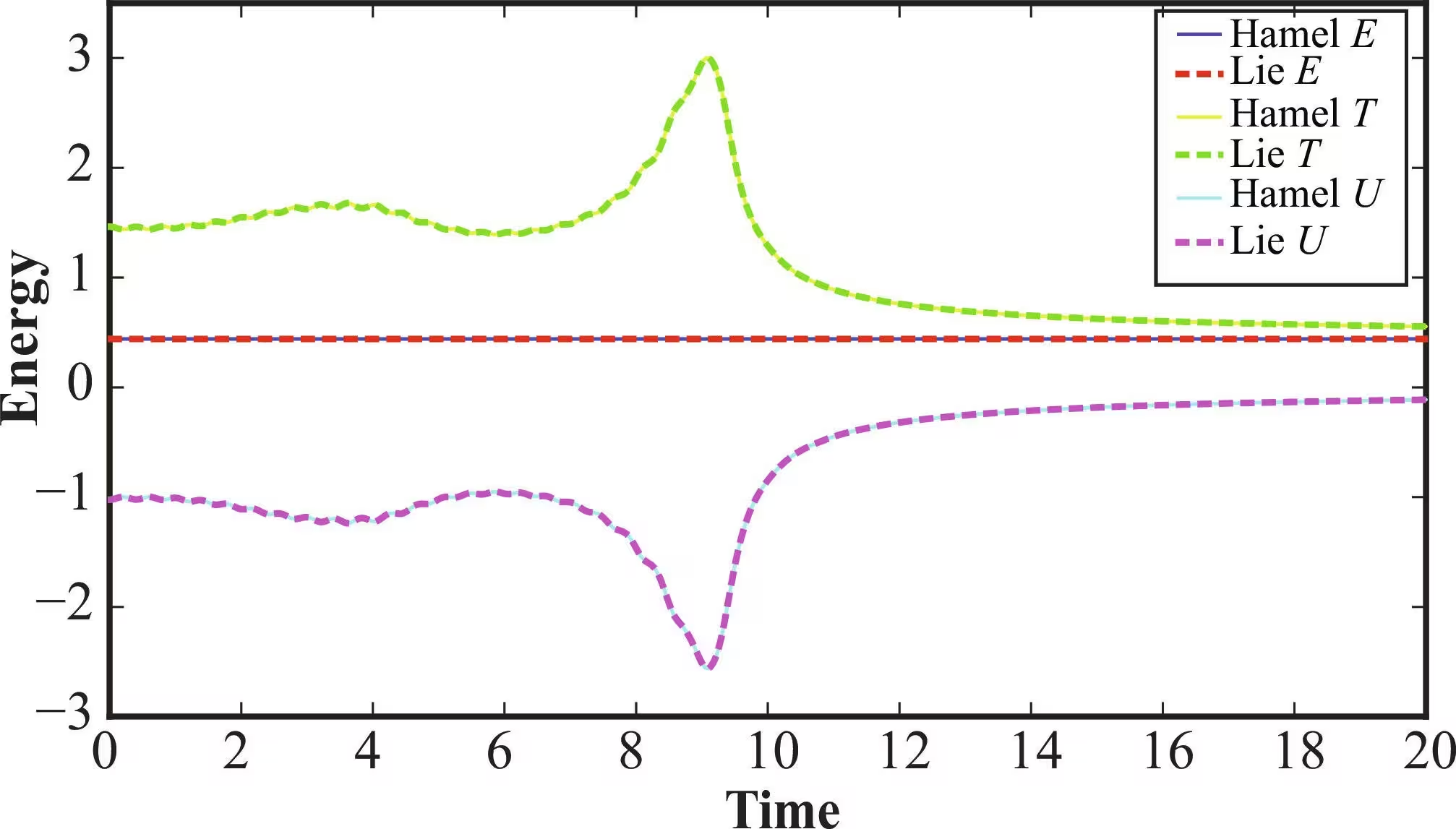
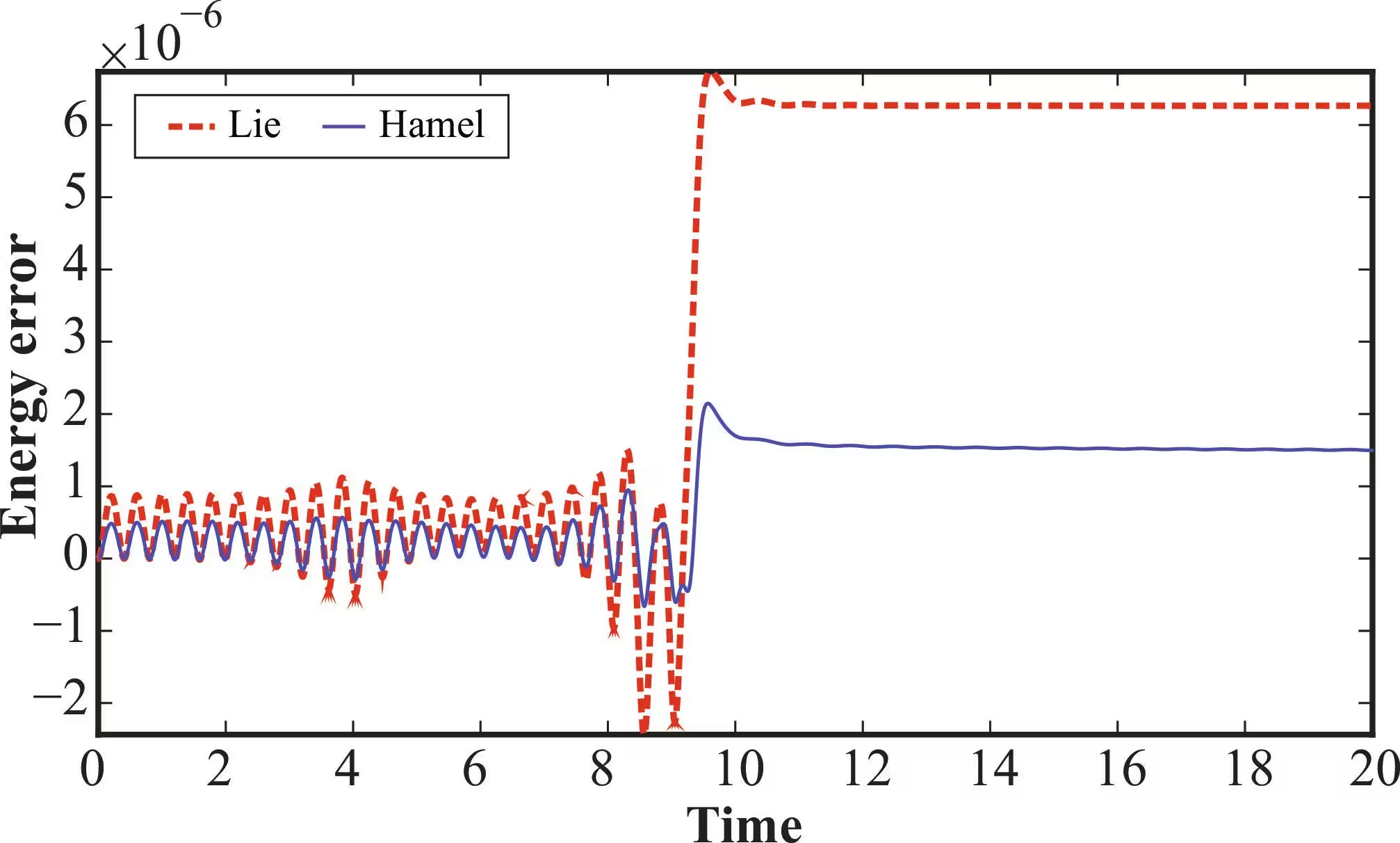
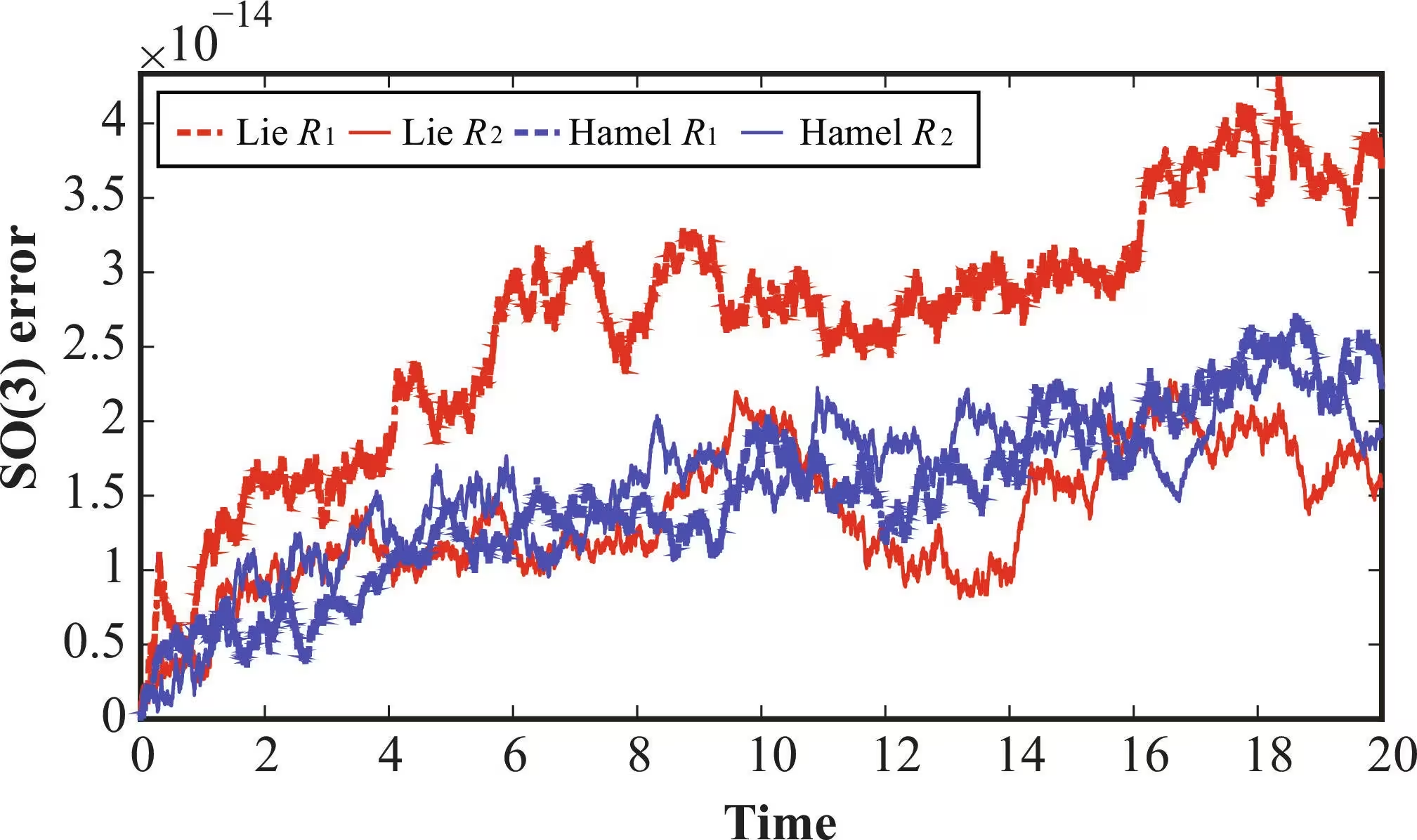
When tested against a standard Runge–Kutta integrator, the advantages of the Hamel approach were clear. While the Runge–Kutta method struggled to maintain the necessary geometric structure of the rotation matrix—leading to a “drift” in accuracy over time—the new method remained stable. By preserving the system’s symplectic structure, the Hamel integrator keeps energy and angular momentum consistent, even during long-term simulations spanning many orbits.
Better Data for Planetary Defense
The implications of this research extend beyond theoretical mathematics. With approximately 16% of near-Earth asteroids thought to be binary systems, high-fidelity modeling is essential for planetary defense and future space exploration. Errors that accumulate in standard simulations can lead to significant miscalculations in orbital trajectories, potentially undermining mission success.
The Hamel variational integrator offers a balance of precision and efficiency, requiring fewer CPU operations per time step than traditional methods. As scientists look toward future missions—such as those targeting the Didymos-Dimorphos system—this improved ability to model coupled translational and rotational dynamics will provide a clearer picture of how these fascinating celestial pairs evolve over time.
Recommended Reading
- A global binary asteroid system model with irregularly shaped components via iterated surface integral (Monthly Notices of the Royal Astronomical Society, 2025)
- The Radio Science Experiment on Hera, Juventas and Milani (Space Science Reviews, 2025)
- Rotational lightcurves of Dimorphos and constraints on its post-DART impact spin state (Icarus, 2024)
- Planar spacecraft trajectories in the Didymos–Dimorphos binary asteroid system (Planetary and Space Science, 2024)
- A benchmarking and sensitivity study of the full two-body gravitational dynamics of the DART mission target, binary asteroid 65803 Didymos (Icarus, 2020)
This article has been fact checked for accuracy, with information verified against reputable sources. Learn more about us and our editorial process.
Last reviewed on .
Article history
- Latest version
Reference(s)
- <https://academic.oup.com/mnras/article/536/1/592/7907864>.
- Tortora, Paolo., et al. “The Radio Science Experiment on Hera, Juventas and Milani.” Space Science Reviews, vol. 221, no. 8, December 3, 2025 Springer Science and Business Media LLC, doi: 10.1007/s11214-025-01253-8. <https://link.springer.com/article/10.1007/s11214-025-01253-8>.
- Pravec, P.., et al. “Rotational lightcurves of Dimorphos and constraints on its post-DART impact spin state.” Icarus, vol. 418, August 1, 2024, pp. 116138 Elsevier BV, doi: 10.1016/j.icarus.2024.116138. <https://www.sciencedirect.com/science/article/pii/S0019103524001982>.
- Voyatzis, G.., et al. “Planar spacecraft trajectories in the Didymos–Dimorphos binary asteroid system.” Planetary and Space Science, vol. 240, January 1, 2024, pp. 105825 Elsevier BV, doi: 10.1016/j.pss.2023.105825. <https://www.sciencedirect.com/science/article/pii/S0032063323001940>.
- <https://www.sciencedirect.com/science/article/abs/pii/S001910352030230X>.
Cite this page:
- Posted by Aisha Ahmed