Physicists Discover A Cosmic Glitch That Makes Gravity Weaker On Large Scales
New Planck satellite data suggest gravity may weaken on the universe’s largest scales, hinting at a potential cosmic glitch that defies current physics.
For more than a century, Albert Einstein’s theory of general relativity has stood as the bedrock of modern physics, successfully passing every rigorous test applied to it. Yet, as researchers look toward the farthest reaches of the cosmos, they have encountered a persistent puzzle that hints at a possible breakdown in our current understanding of gravity. A team of scientists from the University of Waterloo and the University of British Columbia has proposed a provocative solution, describing a “cosmic glitch” where gravity appears to weaken by approximately 1 percent across distances spanning billions of light-years.
The study, published in the Journal of Cosmology and Astroparticle Physics, does not seek to dismantle Einstein’s framework, which remains indispensable for local phenomena ranging from the Big Bang to the observation of black holes. Instead, the researchers suggest that the theory may require a subtle adjustment when applied to the immense, sprawling scales of galaxy clusters and beyond.
Rethinking Gravity on Universal Scales
Robin Wen, the study’s lead author and a recent graduate of Waterloo’s Mathematical Physics program, describes the model as an essential nuance for understanding the universe. “Gravity has been essential for everything from theorizing the Big Bang to photographing black holes,” Wen noted. "But when we try to understand gravity on a cosmic scale, at the scale of galaxy clusters and beyond, we encounter apparent inconsistencies. It’s almost as if gravity itself stops perfectly matching Einstein’s theory. We are calling this inconsistency a ‘cosmic glitch’: gravity becomes around one per cent weaker when dealing with distances in the billions of light years."
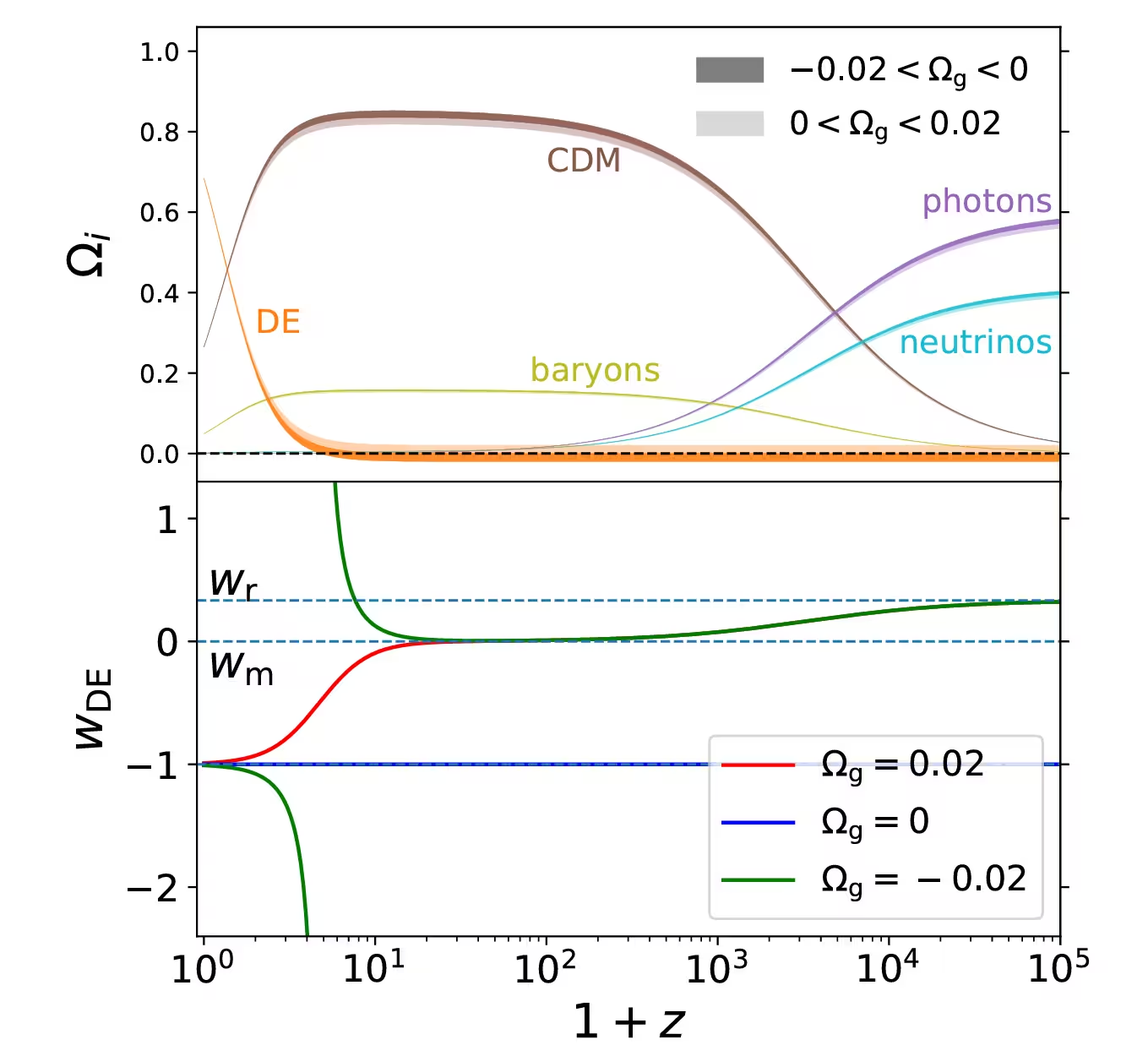
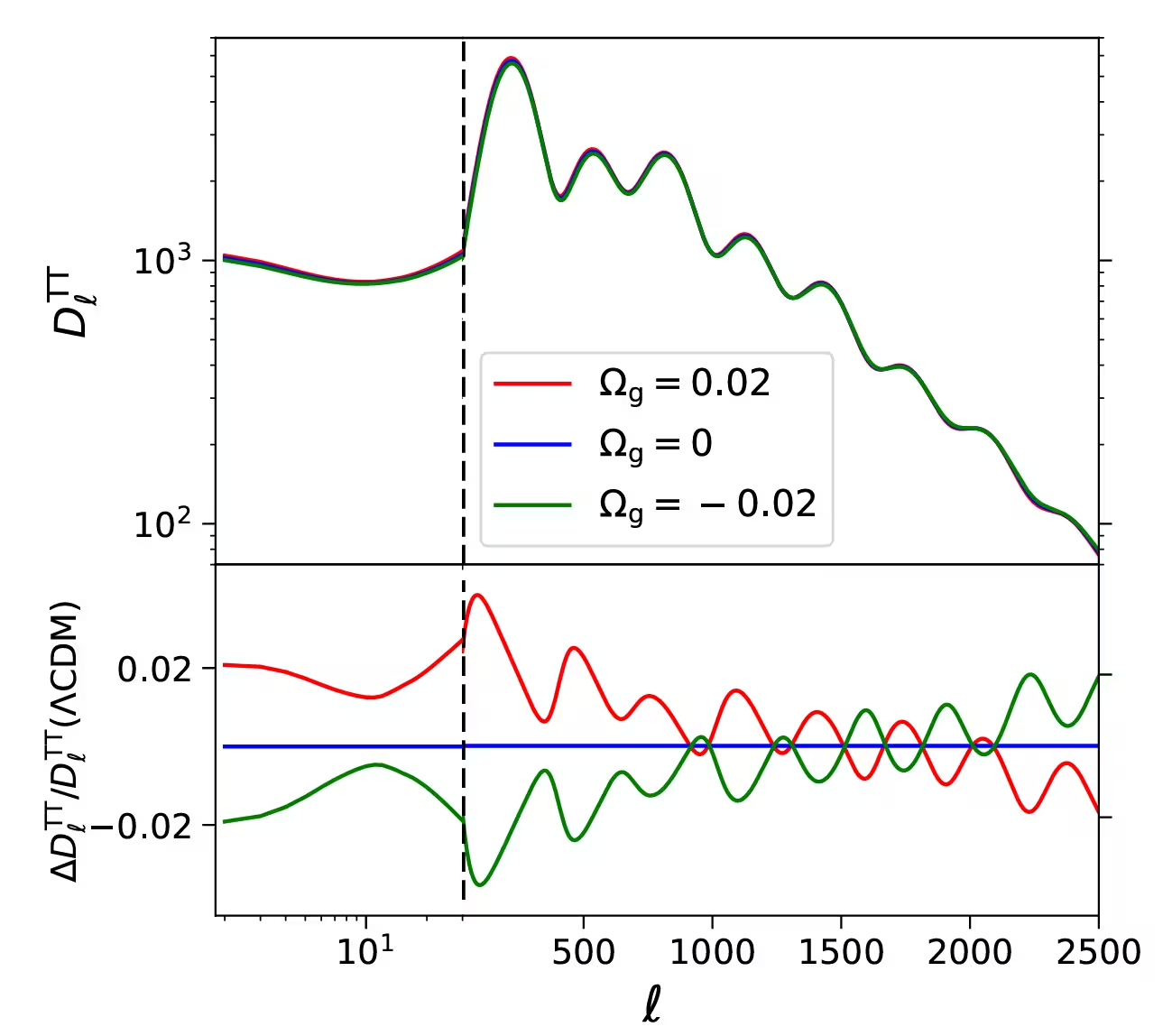
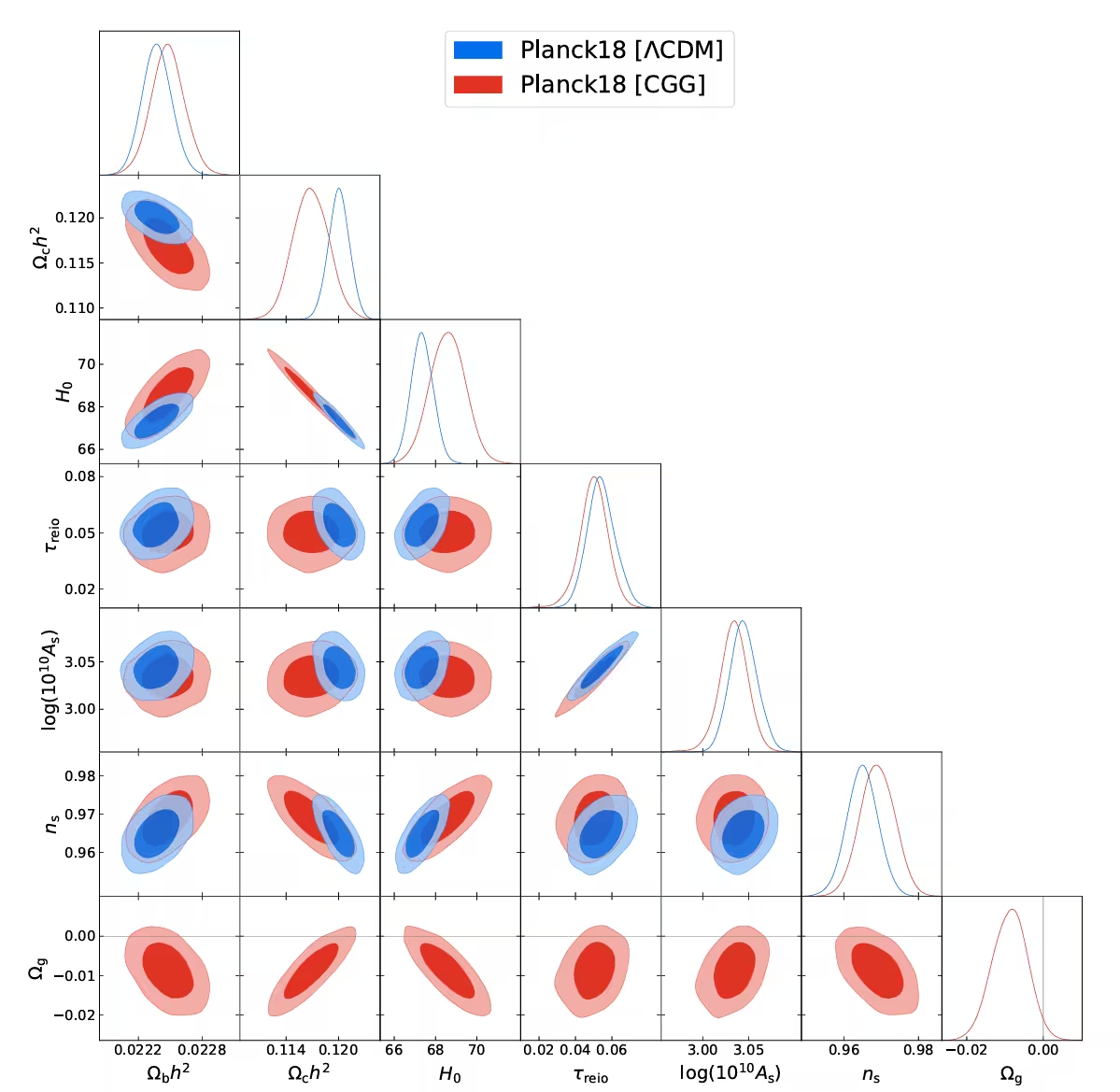
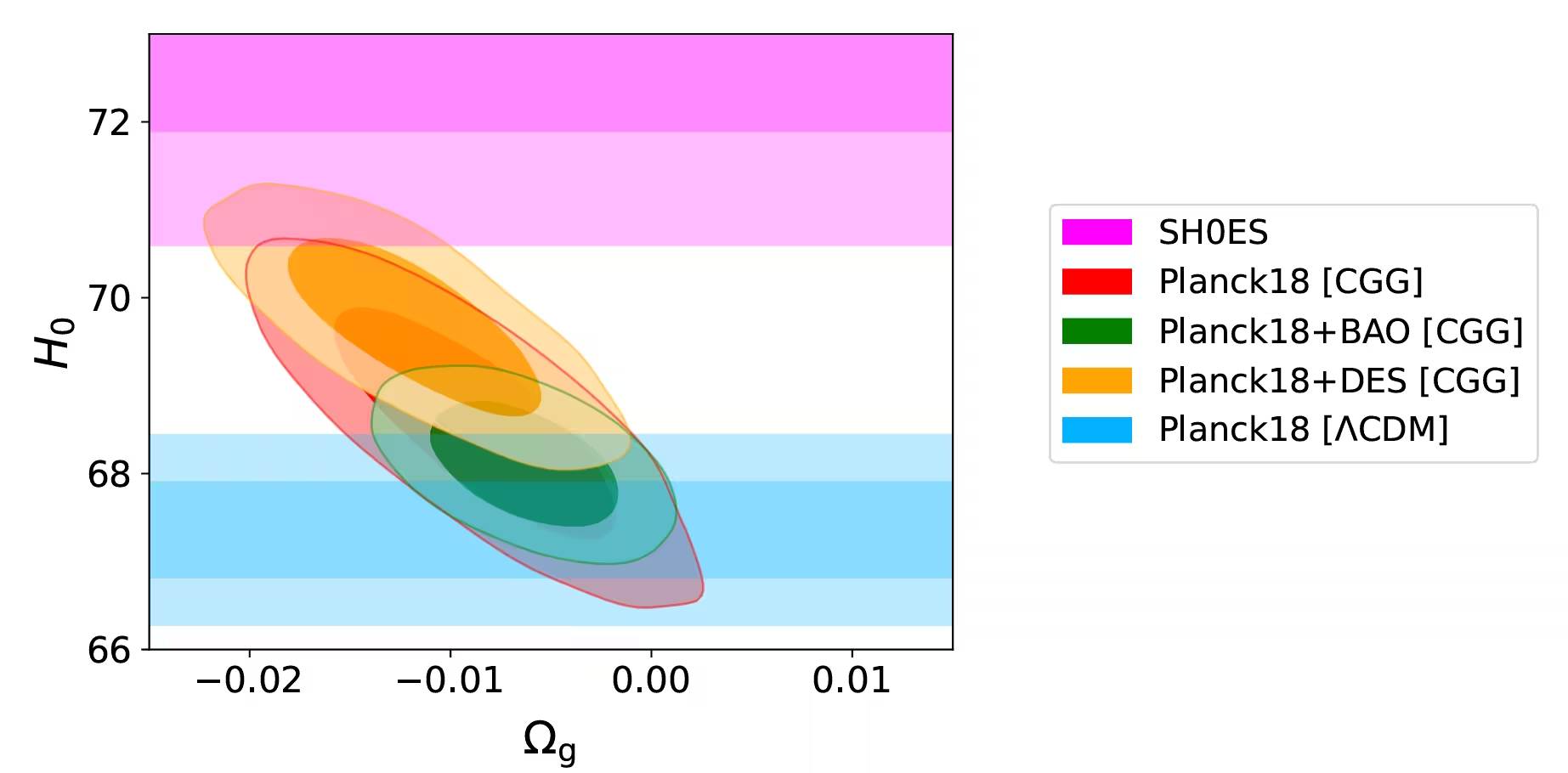
To quantify this, the team introduced a parameter dubbed Ωg. In standard cosmological models, Ωg is zero. By analyzing data from the 2018 Planck mission regarding the cosmic microwave background, the researchers calculated an Ωg value of -0.0087 ± 0.0046, suggesting a deviation from the standard model of approximately two standard deviations.
Addressing the Hubble Tension
One of the most persistent issues in cosmology is the “Hubble tension”—a disagreement between measurements of the universe’s expansion rate derived from the early universe compared to those from the more local distance ladder. The standard ΛCDM model typically yields a lower expansion rate than what is observed by the SH0ES project. When the team applied their cosmic glitch model to the Planck data, the estimated expansion rate increased, partially bridging the gap between these conflicting observations.
“The farther away galaxies are, the faster they are moving, to the point that they seem to be moving at nearly the speed of light, the maximum allowed by Einstein’s theory,” said Niayesh Afshordi, an astrophysics professor at the University of Waterloo and researcher at the Perimeter Institute. “Our finding suggests that, on those very scales, Einstein’s theory may also be insufficient.”
Future Observations and Verification
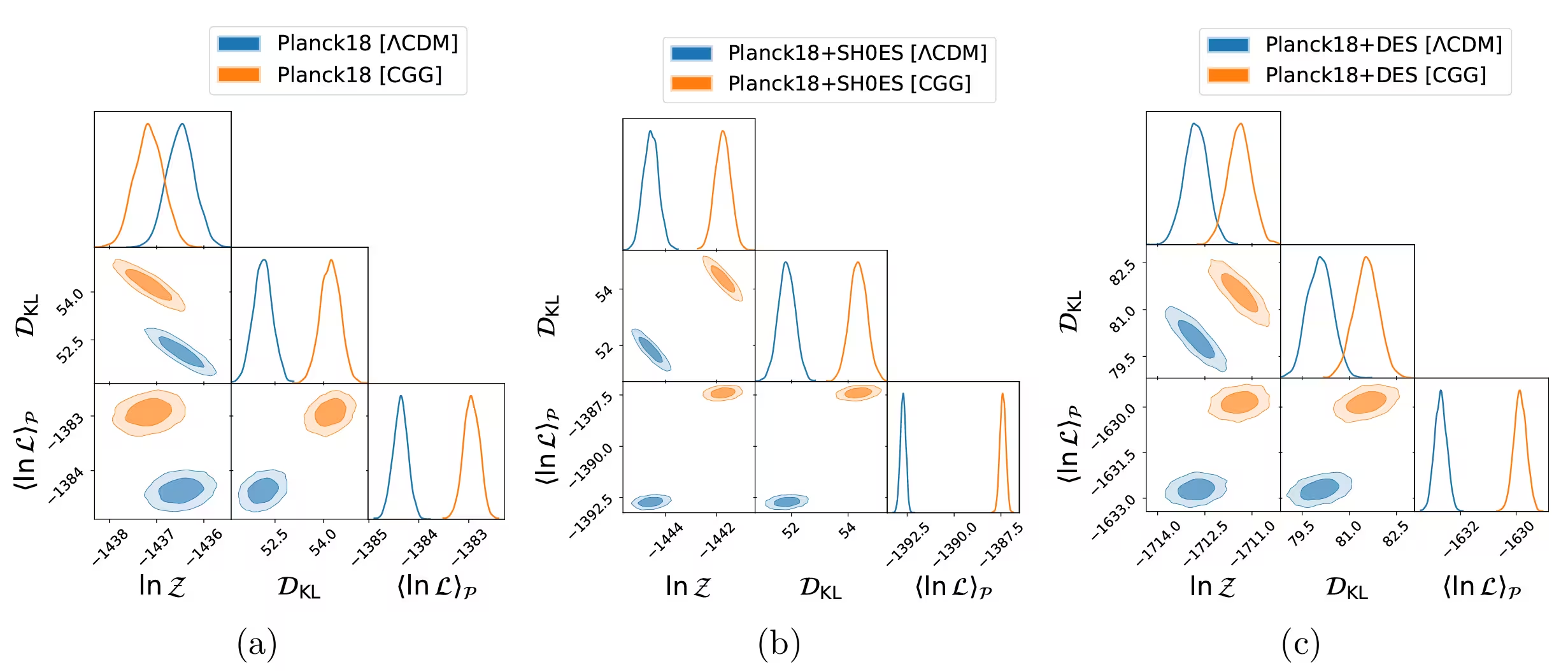
While the findings offer a compelling theoretical path forward, the researchers remain cautious. Subsequent analysis using updated data, such as the Planck Public Release 4, resulted in a weaker statistical preference for the glitch, moving the value closer to the standard prediction. Furthermore, the model does not fully resolve other discrepancies, such as the S8 parameter concerning matter clustering.
The team views their work as a “footnote” to Einstein’s existing framework rather than a complete replacement. By defining gravity’s effective strength differently across sub-horizon and super-horizon scales, they have provided a new avenue for testing the limits of general relativity. The next generation of large-scale surveys, including the Dark Energy Survey, DESI, and Euclid, will be critical in determining whether this cosmic glitch is a genuine feature of our universe or a statistical artifact that vanishes with higher-resolution data.
“This new model might just be the first clue in a cosmic puzzle we are starting to solve across space and time,” Afshordi added.
This article has been fact checked for accuracy, with information verified against reputable sources. Learn more about us and our editorial process.
Last reviewed on .
Article history
- Latest version
Reference(s)
- Wen, Robin Y.., et al. “A cosmic glitch in gravity.” Journal of Cosmology and Astroparticle Physics, vol. 2024, no. 03, March 20, 2024, pp. 045 IOP Publishing, doi: 10.1088/1475-7516/2024/03/045. <https://iopscience.iop.org/article/10.1088/1475-7516/2024/03/045>.
- “Dark Energy Survey.” <https://www.darkenergysurvey.org/>.
Cite this page:
- Posted by Aisha Ahmed