NASA’s New Space Telescope Is Exposing The Bizarre And Complex Secrets Of Lonely Brown Dwarfs
NASA’s SPHEREx telescope is revealing surprising chemistry and cloud patterns in brown dwarfs, challenging current models of these enigmatic cosmic objects.
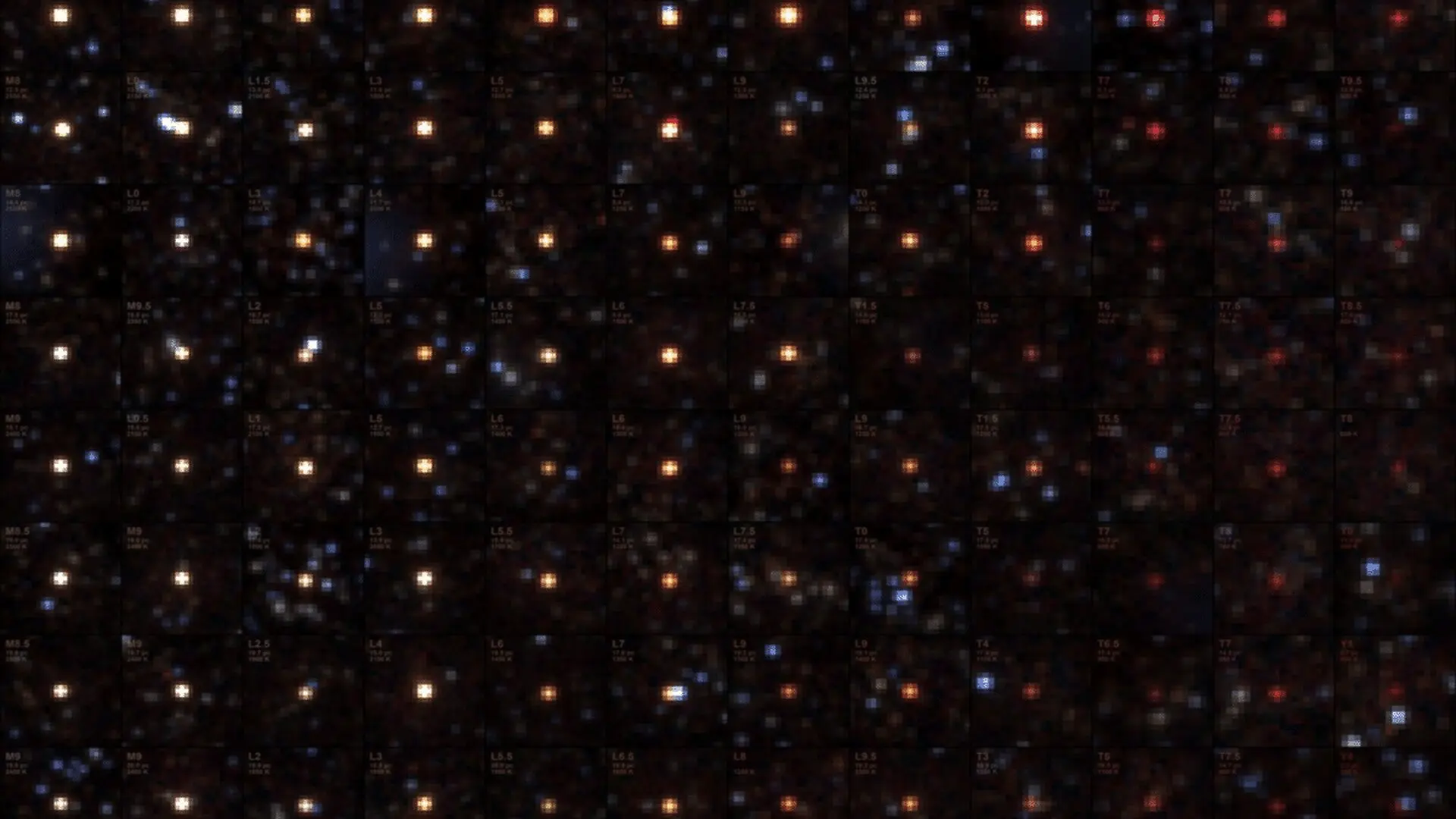
New observations from NASA’s SPHEREx space telescope are challenging our understanding of brown dwarfs, those mysterious, free-floating objects that exist in the strange middle ground between planets and stars. By peeling back the layers of these cosmic drifters, researchers have identified complex chemical signatures and cloud patterns that current theoretical models struggle to explain, suggesting that these cool, solitary worlds are far more diverse than previously assumed.
Understanding the Nature of Cosmic Drifters
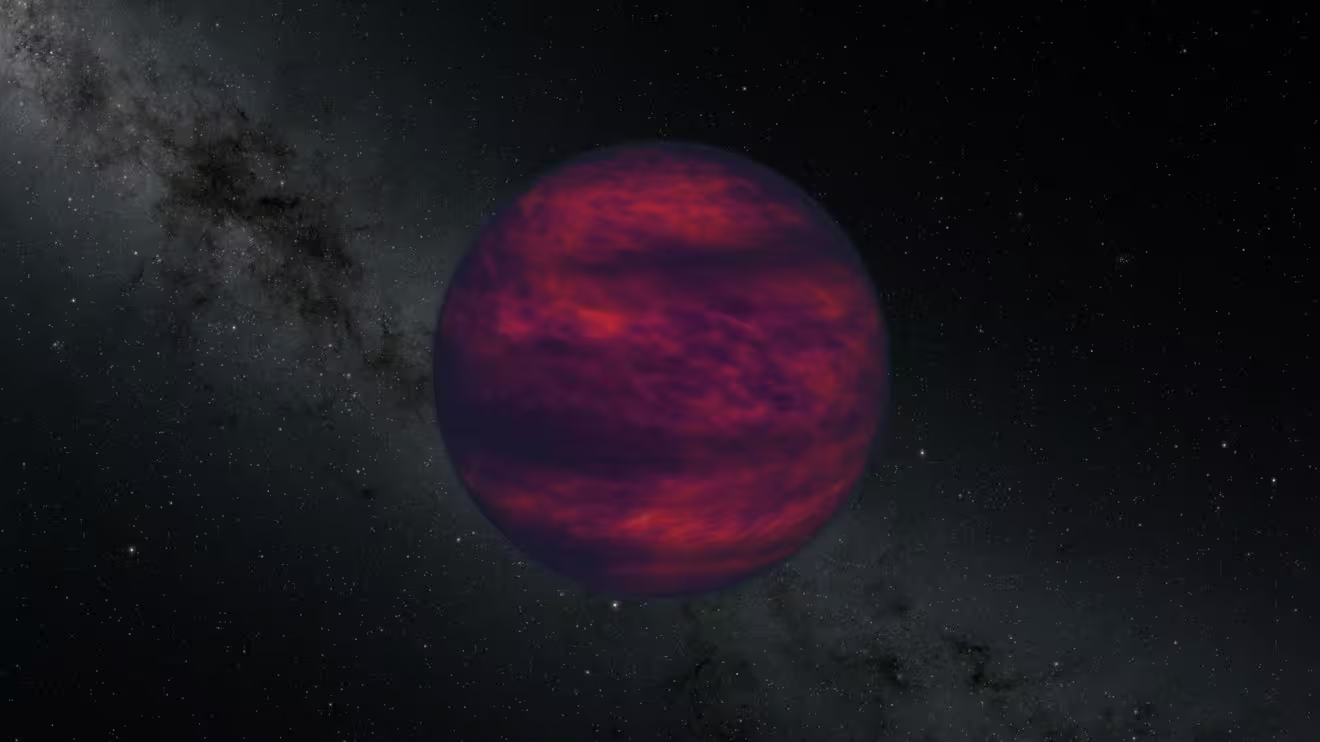
Brown dwarfs form through the gravitational collapse of gas clouds, mirroring the birth of a star, yet they lack the mass required to trigger the hydrogen fusion that keeps stars like our Sun burning bright. Instead, they exist in a state of eternal cooling, slowly fading as they release the heat left over from their formation. Because they do not rely on nuclear fusion, they bear a striking resemblance to gas giants like Jupiter and Saturn, featuring intricate atmospheres and shifting cloud systems.
Unlike planets tethered to a host star, many brown dwarfs wander the galaxy in total isolation. This independence makes them ideal subjects for studying atmospheric physics without the interference of a nearby sun. While they were first spotted in the 1990s, they have remained elusive due to their faint infrared glow, which typically demands extensive, time-consuming observations to analyze effectively.
“They’re kind of goth,” said Zafar Rustamkulov, lead author of the study and a researcher at Caltech’s IPAC. “Unlike stars, free-floating brown dwarfs are completely independent celestial objects that will fade into eternity alone. We’re still learning how complex they are.”
Molecular Fingerprints in the Deep Infrared
The latest study, published in The Astrophysical Journal, examines 37 brown dwarfs across a vast temperature gradient. The hottest samples soar to roughly 4,000 degrees Fahrenheit (2,200 degrees Celsius), while the coldest hover near minus 10 degrees Fahrenheit (minus 20 degrees Celsius). This spectrum allows scientists to observe how chemistry shifts as an object moves from a star-like state toward one more characteristic of a cold planetary environment.
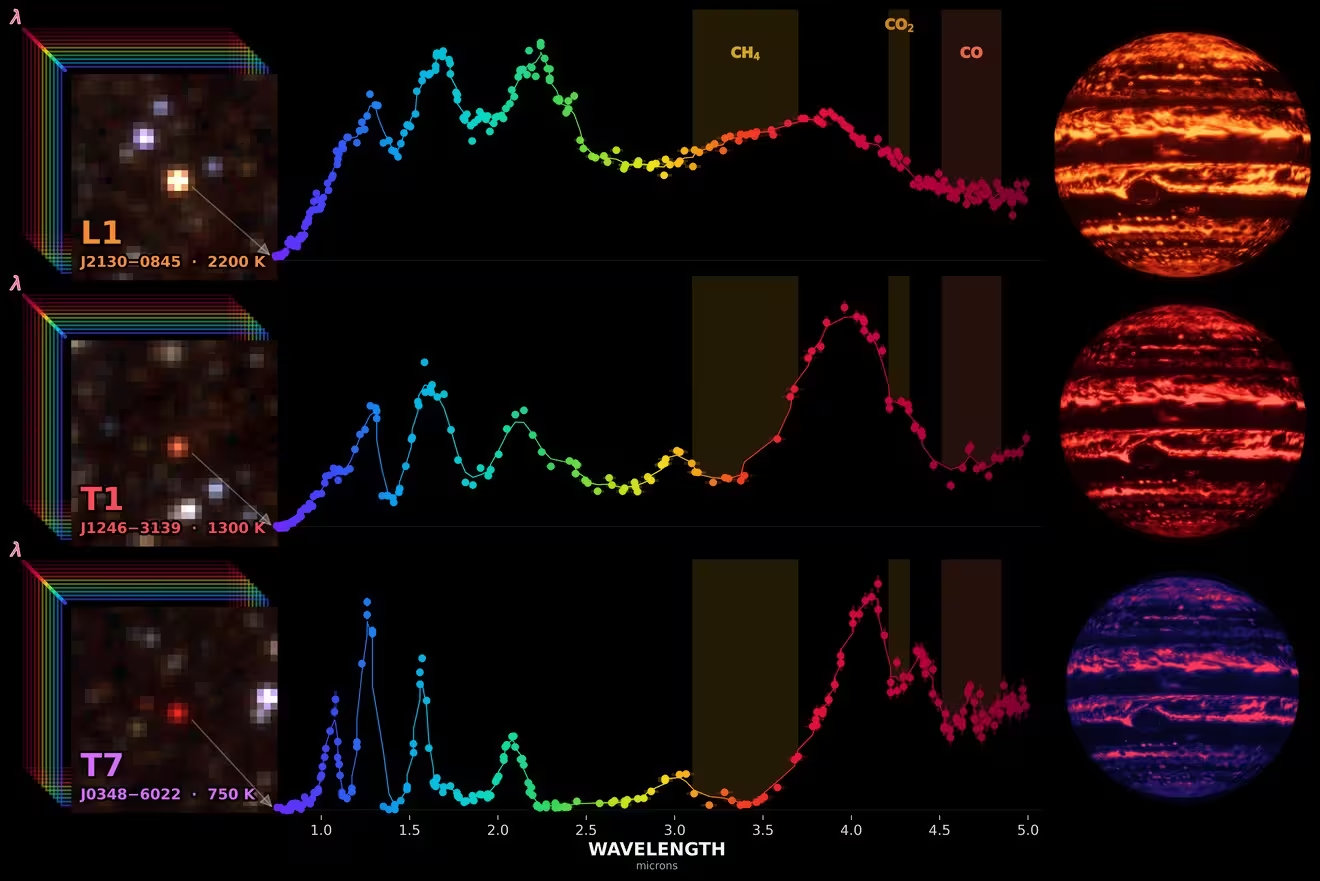
By splitting light into 102 distinct spectral bands, NASA’s SPHEREx telescope identified the clear signatures of water vapor, carbon dioxide, carbon monoxide, and methane. These findings are vital, as these molecules are also fundamental to the chemistry of gas giants, providing a valuable point of comparison for planetary science.
“We’re seeing the signatures of these molecules and how they change from object to object across the entire temperature regime,” said study coauthor J. Davy Kirkpatrick, a scientist at Caltech’s IPAC. “Our paper concentrated on just three dozen, but we have thousands more that we are in the process of analyzing. I really want to see what bounds the universe places on the variety of brown dwarfs.”
Breaking the Barrier of Earth’s Atmosphere
A primary advantage of SPHEREx is its vantage point in orbit. Terrestrial telescopes are often hindered by Earth’s atmosphere, which absorbs critical infrared light, particularly at wavelengths associated with water vapor. By operating from space, SPHEREx captures a clear view of these “blocked” wavelengths, allowing it to peer into the deep, red clouds of these objects with unprecedented clarity.
With the ability to collect approximately 3,600 images daily, the mission is creating a massive survey of the sky. While the James Webb Space Telescope and the Spitzer Space Telescope have provided deep dives into specific targets, SPHEREx offers a bird’s-eye view, enabling researchers to look for patterns across a massive population rather than focusing on isolated outliers.
The Mystery of Cloud Evolution
The most striking result from the mission involves the unpredictability of cloud behavior. As brown dwarfs cool, their atmospheric composition undergoes significant shifts, often leading to the formation of methane-rich layers. However, the data show that current models are struggling to reconcile these transitions.
Even when two brown dwarfs share a similar temperature, their spectral signatures can be vastly different. This suggests that factors beyond temperature—such as gravity, unique atmospheric composition, and distinct evolutionary histories—play a much larger role in determining an object’s appearance than scientists previously anticipated.
These findings have implications that extend well beyond the study of brown dwarfs. Because the atmospheres of giant exoplanets often mirror the conditions found on these “failed stars,” refining these atmospheric models is a necessary step in our efforts to characterize distant worlds orbiting other stars.
Looking Toward a Larger Sample
As the mission progresses, the current dataset of 37 objects will likely grow into the thousands. This expansion will allow astronomers to move from simple case studies to a statistical understanding of how these dark worlds evolve over time. By acting as “accidental meteorologists,” the team hopes to decode the complex weather systems that govern these objects, eventually turning the bizarre chaos of brown dwarf atmospheres into a predictable science.
This article has been fact checked for accuracy, with information verified against reputable sources. Learn more about us and our editorial process.
Last reviewed on .
Article history
- Latest version
Reference(s)
- Rustamkulov, Zafar., et al. “SPHEREx 0.75–5 μ m Spectra for a Sequence of Nearby Brown Dwarfs.” The Astrophysical Journal, vol. 1009, no. 2, September 28, 2026, pp. 185 American Astronomical Society, doi: 10.3847/1538-4357/ae9d66. <https://iopscience.iop.org/article/10.3847/1538-4357/ae9d66>.
Cite this page:
- Posted by Farah Siddiqui