Farmers Mistook Giant Bones For Rocks and Discovered Australia’s Largest Dinosaur
A chance discovery on a farm has led to a decade-long paleontological mystery, revealing that a prehistoric giant was hiding in plain sight all along.
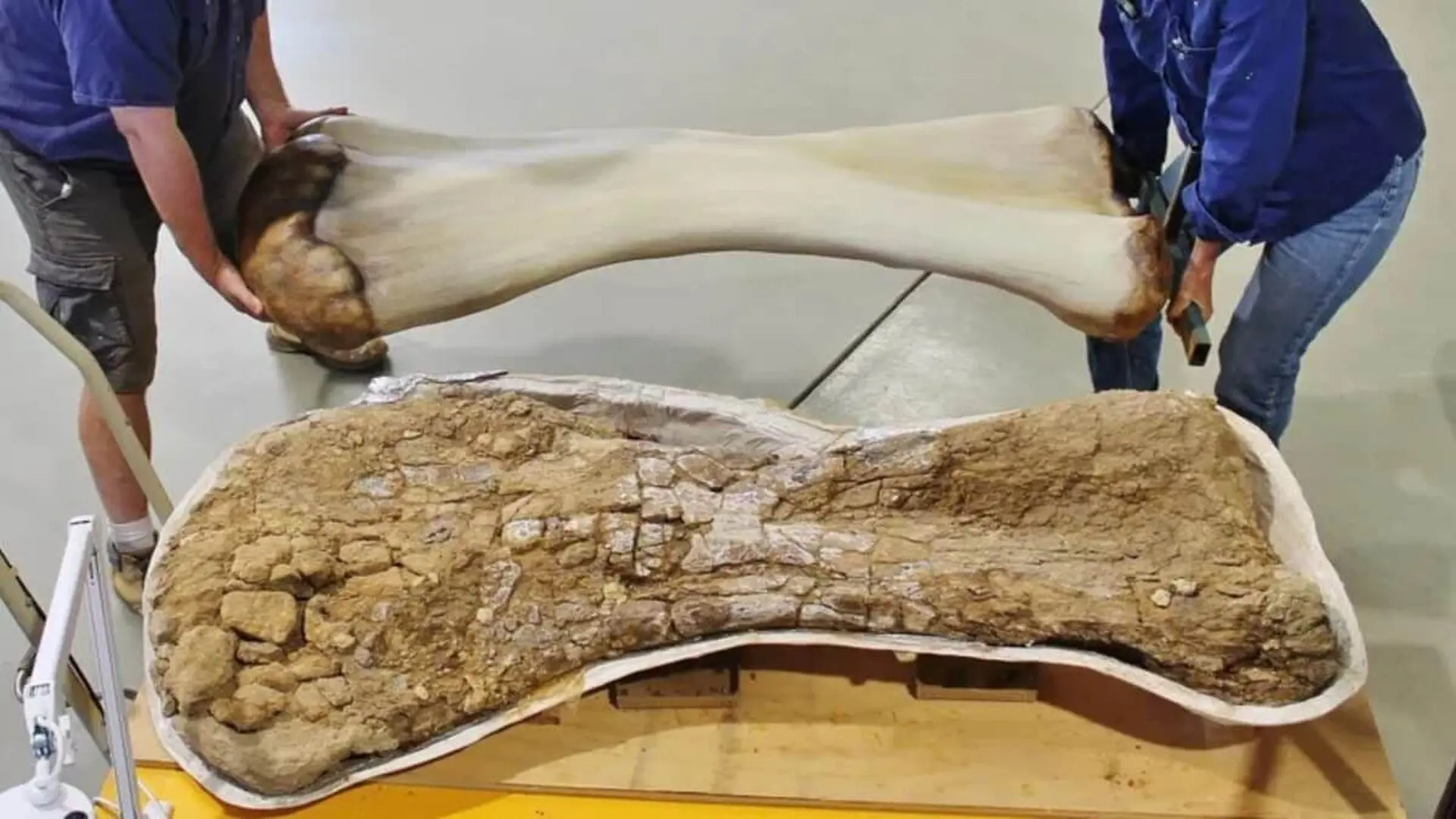
What began as a routine day for Queensland farmers Robyn and Stuart Mackenzie—navigating their sprawling cattle and sheep property on motorbikes—eventually led to the identification of Australia’s largest dinosaur. Mistaking what appeared to be dark, protruding rocks for geological debris, the couple stumbled upon the fossilized remains of a colossal creature that has since been officially recognized as a new species: Australotitan cooperensis.
This massive animal, affectionately dubbed “Cooper,” ranks among the largest dinosaurs ever identified globally. The discovery, which originated from findings first hinted at by their son Sandy in 2004, has fundamentally shifted the understanding of prehistoric life in the Australian outback.
Anatomy of a Southern Titan
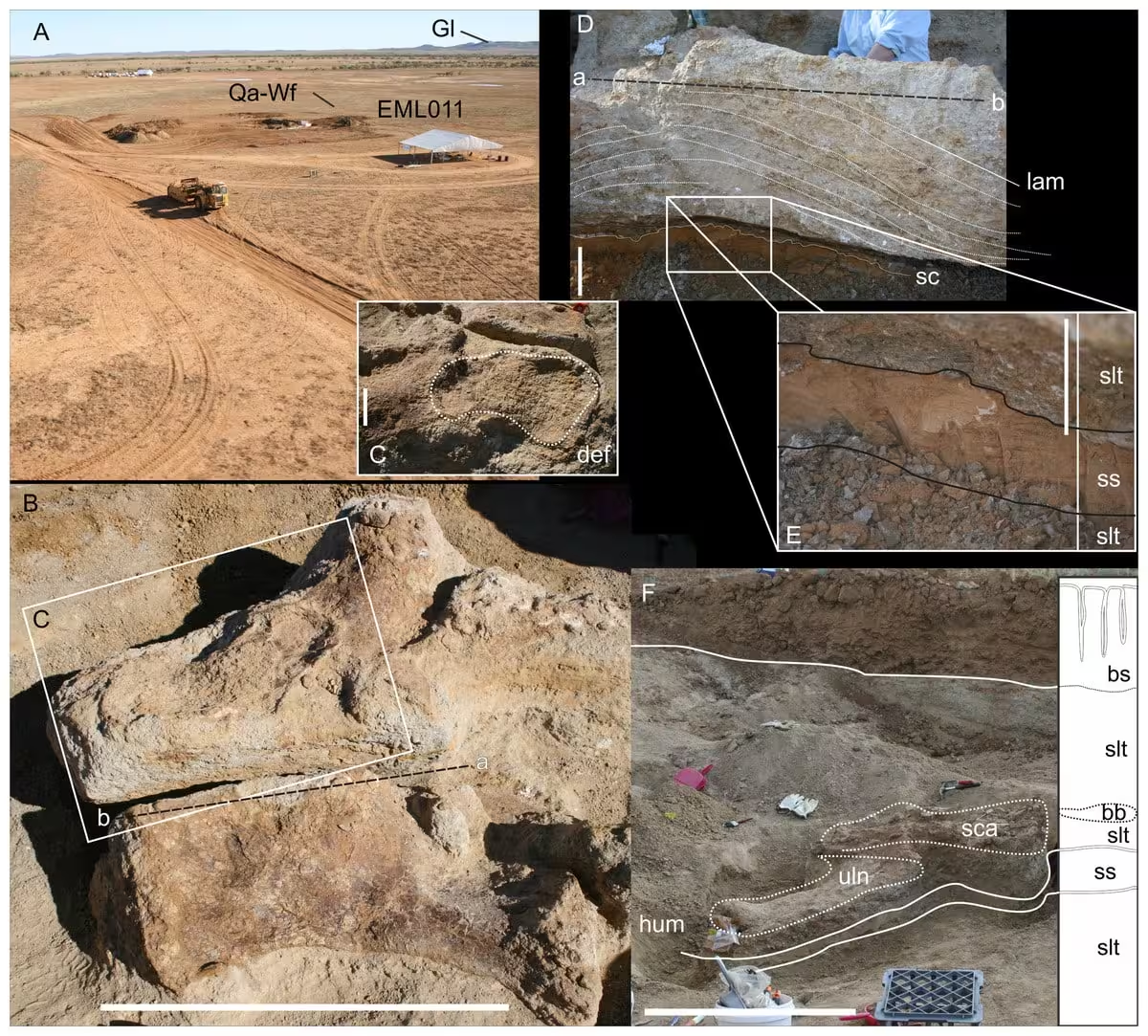
Australotitan cooperensis belongs to the titanosaur family, a group of long-necked, herbivorous sauropods that dominated landscapes from the late Jurassic through the Cretaceous period. Based on the skeletal remains recovered from the Eromanga Basin—which include remarkably preserved shoulder blades, limbs, and pelvic structures—paleontologists estimate the creature reached staggering proportions. Standing roughly two stories high and spanning 25 to 30 meters (82 to 98 feet) in length, the titan likely weighed approximately 70 tons, rivaling the dimensions of a standard basketball court.
Deciphering a Giant
The formal classification of Cooper was a grueling, decade-long endeavor involving experts from the Queensland Museum and the Eromanga Natural History Museum. The process, documented in the journal PeerJ, was hindered by the sheer scale of the fossils, which required heavy machinery like forklifts for extraction, and the fragile state of the bones. Paleontologist and co-author Scott Hocknull emphasized the intensity of the work, noting that the team had to meticulously clean, prepare, and cross-reference the specimens against known global species.
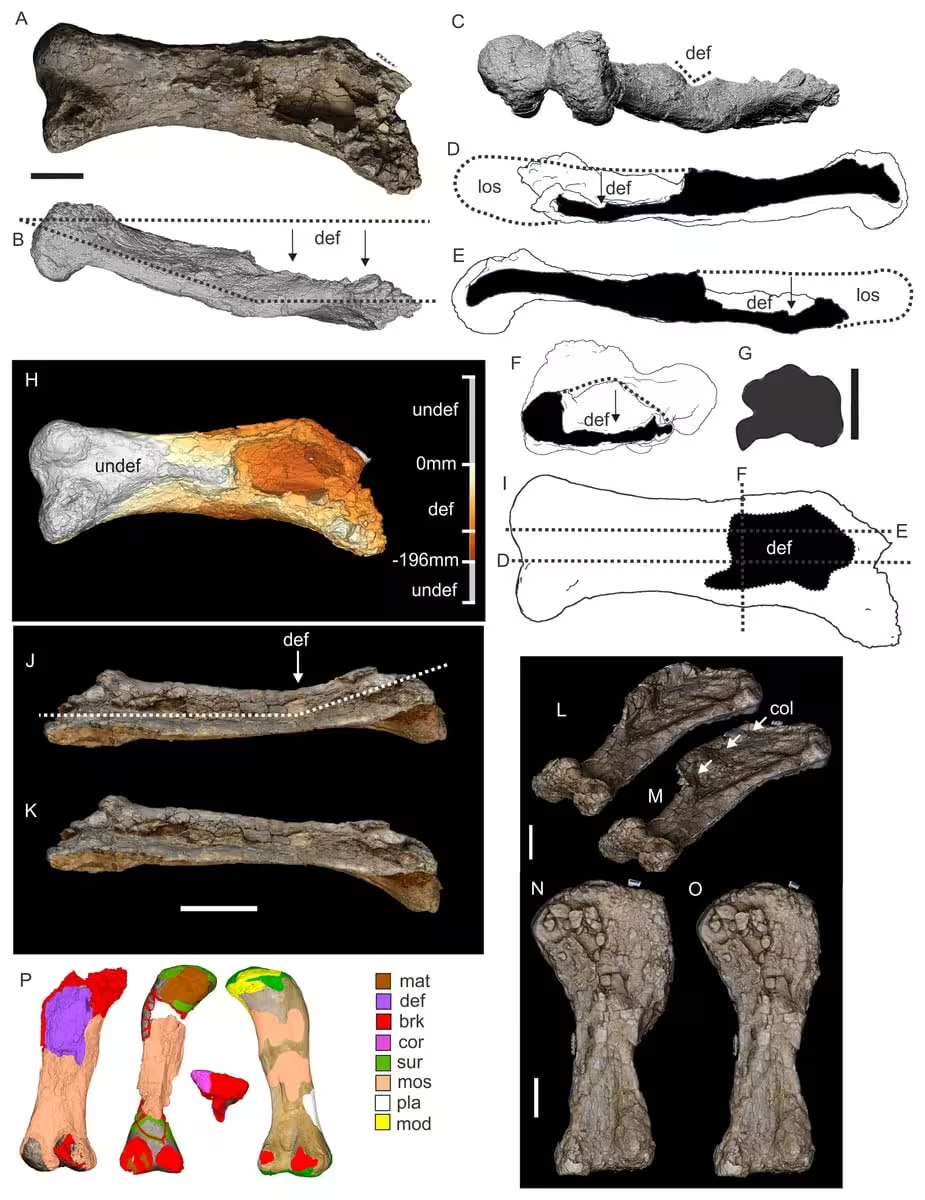
To overcome the limitations of working with such heavy and delicate material, the team utilized advanced 3D scanning technology to facilitate comparative analysis. Geological dating of the surrounding sediment helped establish the creature’s place in time, while unusual crush marks on the fossilized remains have led researchers to speculate that the giant may have been trampled by other sauropods in its environment.
Community Impact and Future Prospects
The discovery has transformed the town of Eromanga. Robyn Mackenzie has since transitioned into a field paleontologist and served as a co-author on the study, and the family played a central role in the establishment of the Eromanga Natural History Museum in 2016. According to Queensland Museum Network CEO Jim Thompson, the find highlights the vital role of landowners in identifying paleontological sites, as Australia continues to emerge as a global hotspot for megafauna research.
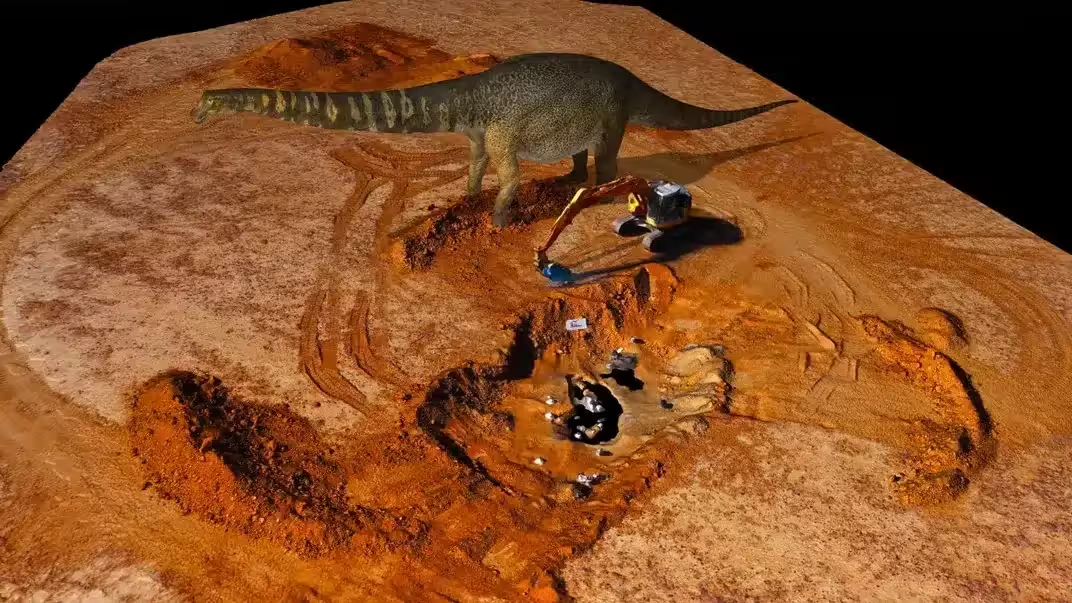
“We’ve found a couple of small theropod dinosaurs in Australia… but it wouldn’t have bothered Australotitan, which suggests there is a very large predatory dinosaur out there somewhere. We just haven’t found it yet.”
This article has been fact checked for accuracy, with information verified against reputable sources. Learn more about us and our editorial process.
Last reviewed on .
Article history
- Latest version
Reference(s)
- <https://peerj.com/articles/11317/>.
- “Dr Scott Hocknull - Staff profiles | Queensland Museum.” <https://www.museum.qld.gov.au/collections-and-research/staff-profiles/dr-scott-hocknull>.
Cite this page:
- Posted by Hassan Raza