Supermassive Black Holes May Actually Be Fueling Star Birth In Galaxies Instead Of Destroying It
New observations suggest that active supermassive black holes play a key role in shaping star formation across their host galaxies.
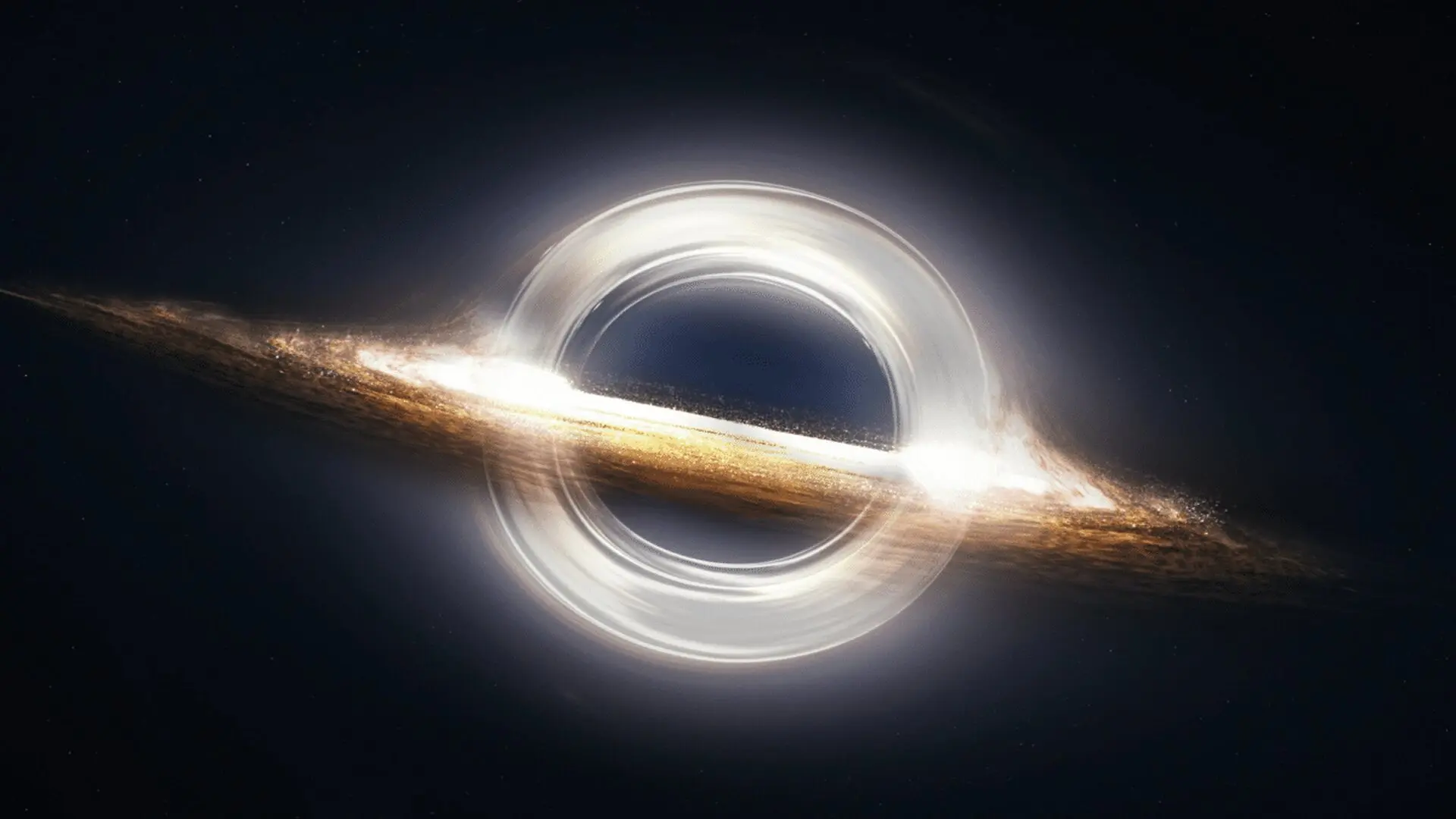
Active Galactic Nuclei May Foster Rather Than Hinder Star Formation
A new investigation into nine nearby galaxies suggests that supermassive black holes at the hearts of galaxies play a more nuanced role in cosmic evolution than previously understood. While traditional models of active galactic nuclei (AGN) focus on their capacity to suppress star formation by heating or ejecting interstellar gas, new findings published in The Astrophysical Journal reveal that these energetic objects may actually stimulate the birth of new stars.
The research suggests a dynamic interplay where black holes not only consume matter but also actively reorganize the galactic environment through radiation, high-speed winds, and shock waves.
Mapping Galactic Energy Dynamics
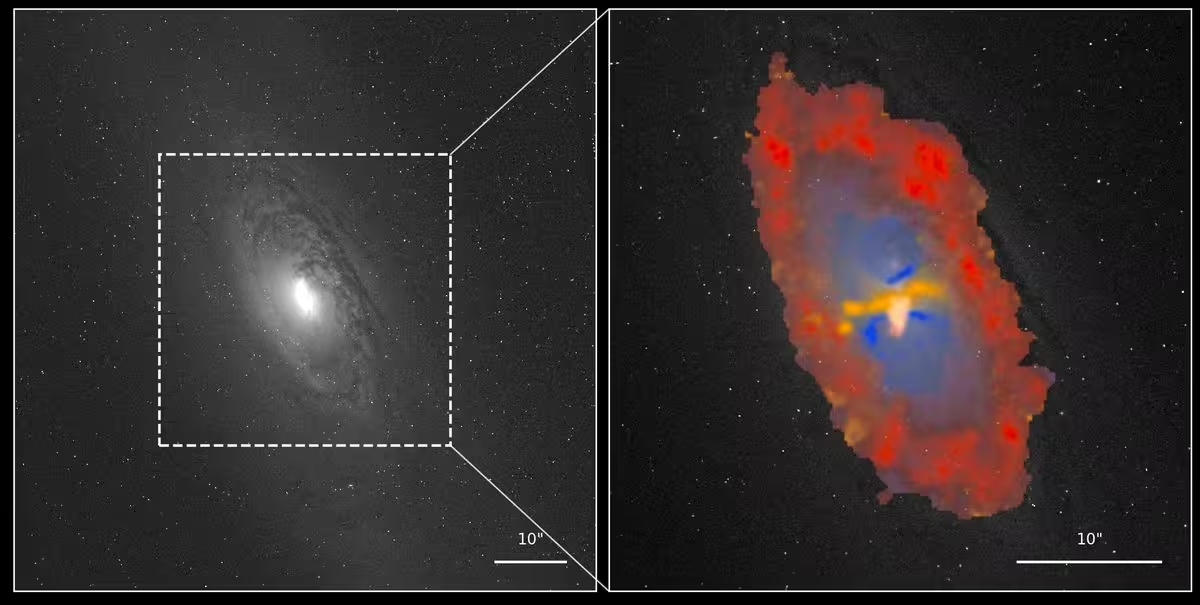
To untangle the complex relationship between central black holes and their host galaxies, researchers utilized the VLT/MUSE instrument to construct high-resolution, three-dimensional maps. This technical capability allowed the team to distinguish between three primary drivers of galactic activity: radiation originating from the black hole, the process of star formation, and shock waves generated by violent outflows.
Peixin Zhu, an astronomer at the Center for Astrophysics | Harvard & Smithsonian, explained that the research highlights a reciprocal relationship between matter intake and energy expulsion. “Once we resolved them, we could see that they not only accrete things, but they also eject things,” Zhu noted. “The injection and accretion are linked with each other.”
Geometric Patterns of Stellar Birth and Shock Waves
Across the sample of nine galaxies, the researchers identified distinct structural trends. They observed star-forming rings and arcs located between 0.8 and 6 kiloparsecs from the galactic center. These structures appear to be hotspots for stellar development, existing in areas influenced by the central black hole’s activity.
Furthermore, the data highlighted the presence of ionized gas cones, which provide a window into how radiative energy is distributed from the galactic core. Perhaps most intriguing was the consistent geometric alignment of shock waves. In all nine galaxies, these shocks were found to propagate in a direction perpendicular to the primary outflows driven by the black hole.
“The most interesting phenomenon about shocks is that they always go perpendicular to where the black hole’s injected outflows go,” Zhu said. “It is very common, and we see it consistently appearing across all nine galaxies.”
Reframing Galactic Feedback
By integrating their observations with sophisticated theoretical models—developed with contributions from Lisa Kewley of the Center for Astrophysics | Harvard & Smithsonian and Ralph Sutherland of the Australian National University—the researchers concluded that AGN feedback is not a singular, destructive force. Rather, it is a persistent cycle of material exchange.
The team bolstered their findings using Chandra X-ray observations to confirm the sources of energy within the galaxies. This data suggests that the influence of supermassive black holes extends far beyond their immediate vicinity, fundamentally shaping the conditions for star formation across vast distances.
“We’re seeing that black holes are not just consuming material at the centers of galaxies, but they’re actively reshaping their surroundings,” said Lisa Kewley. “This work helps us understand a complex feedback cycle that plays an important role in galaxy evolution.”
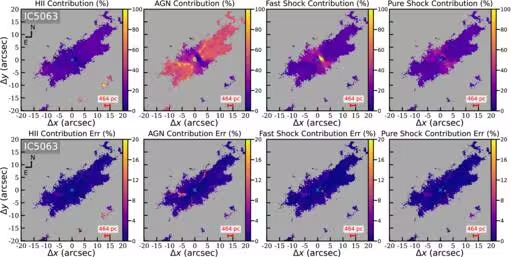
As astronomers continue to refine their understanding of these processes, this study marks a significant shift in how we perceive the impact of supermassive black holes. By differentiating between various energetic outputs, scientists are gaining a clearer view of how these massive objects act as architects of the galaxies they inhabit, influencing the formation of stars over billions of years.
This article has been fact checked for accuracy, with information verified against reputable sources. Learn more about us and our editorial process.
Last reviewed on .
Article history
- Latest version
Reference(s)
- Zhu, Peixin., et al. “Common Excitation Patterns of Star Formation, Active Galactic Nuclei, and Shocks in Seyfert Galaxies.” The Astrophysical Journal, vol. 1009, no. 1, September 14, 2026, pp. 30 American Astronomical Society, doi: 10.3847/1538-4357/ae9956. <https://iopscience.iop.org/article/10.3847/1538-4357/ae9956>.
Cite this page:
- Posted by Farah Siddiqui