Mercury Is Shrinking More Than We Thought and Scientists Finally Know Why
New research analyzing decades-old NASA data has uncovered a hidden clue about Mercury’s past that could reshape our understanding of how the planet formed.
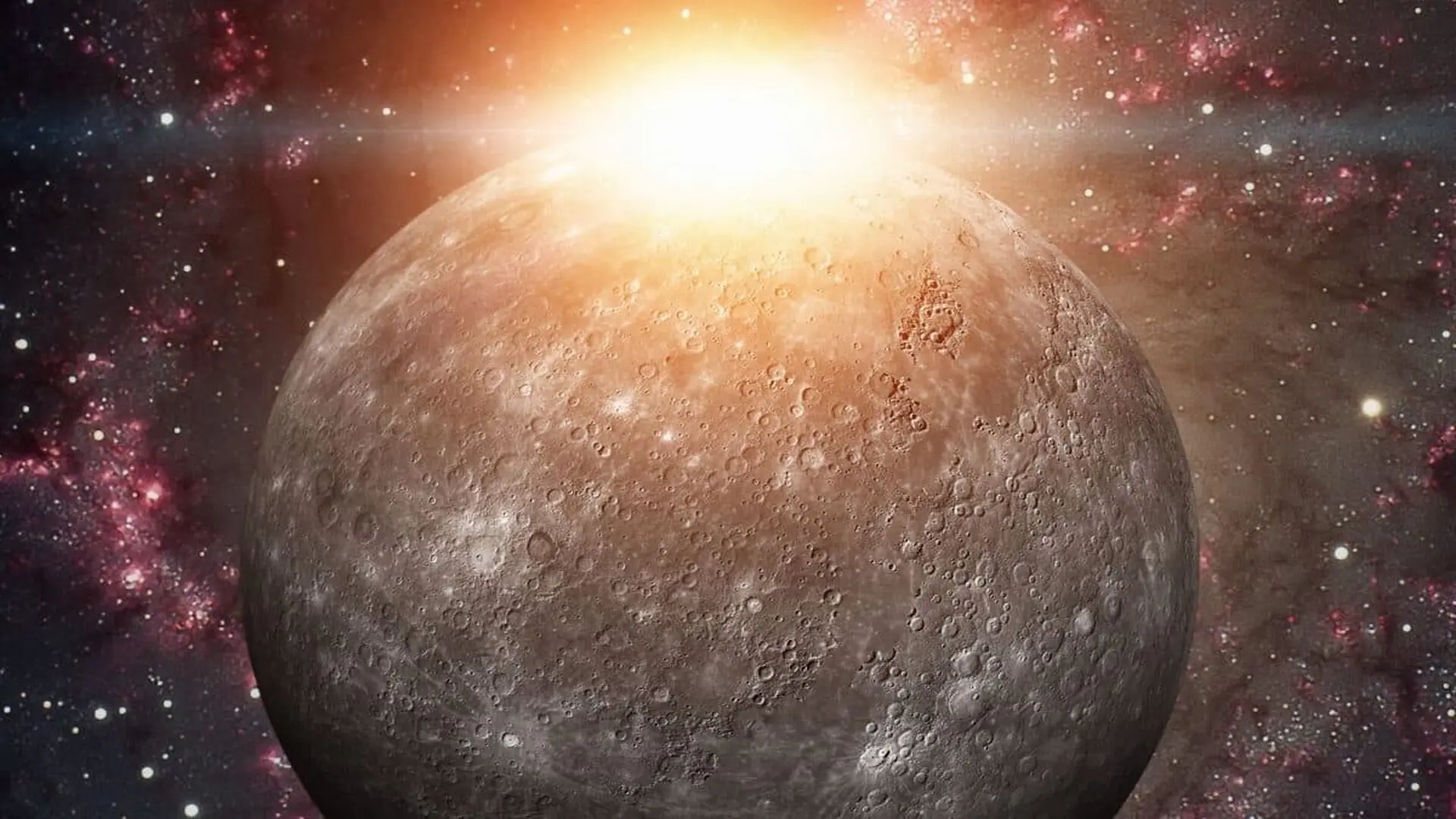
New research suggests Mercury has undergone significantly more contraction than previously estimated, offering planetary scientists a fresh window into the thermal history and formative years of our solar system’s smallest planet.
According to findings published in Geophysical Research Letters, the innermost planet may have shrunk by an additional 10% to 30% beyond earlier calculations. This revised figure indicates that Mercury’s diameter has decreased by nearly 12 miles (19 kilometers) since it first took shape.
Mercury remains a planetary outlier, possessing a massive metallic core relative to its overall volume. Because its internal structure is so distinct, mapping the extent of the planet’s contraction is essential for determining how it cooled and evolved over billions of years.
Geological Evidence Obscured by Cosmic Impacts
Planetary scientist Gaku Nishiyama of the German Aerospace Center, who led the investigation, notes that measuring global contraction is a primary method for tracking Mercury’s evolutionary path. “Because Mercury’s evolution is driven by its cooling, the amount of contraction—an indicator of the extent of cooling—is one of the most important observables that can be compared to models for estimating its evolution scenario,” he explained.
“Because Mercury’s evolution is driven by its cooling, the amount of contraction — an indicator of the extent of cooling — is one of the most important observables that can be compared to models for estimating its evolution scenario,” he said.
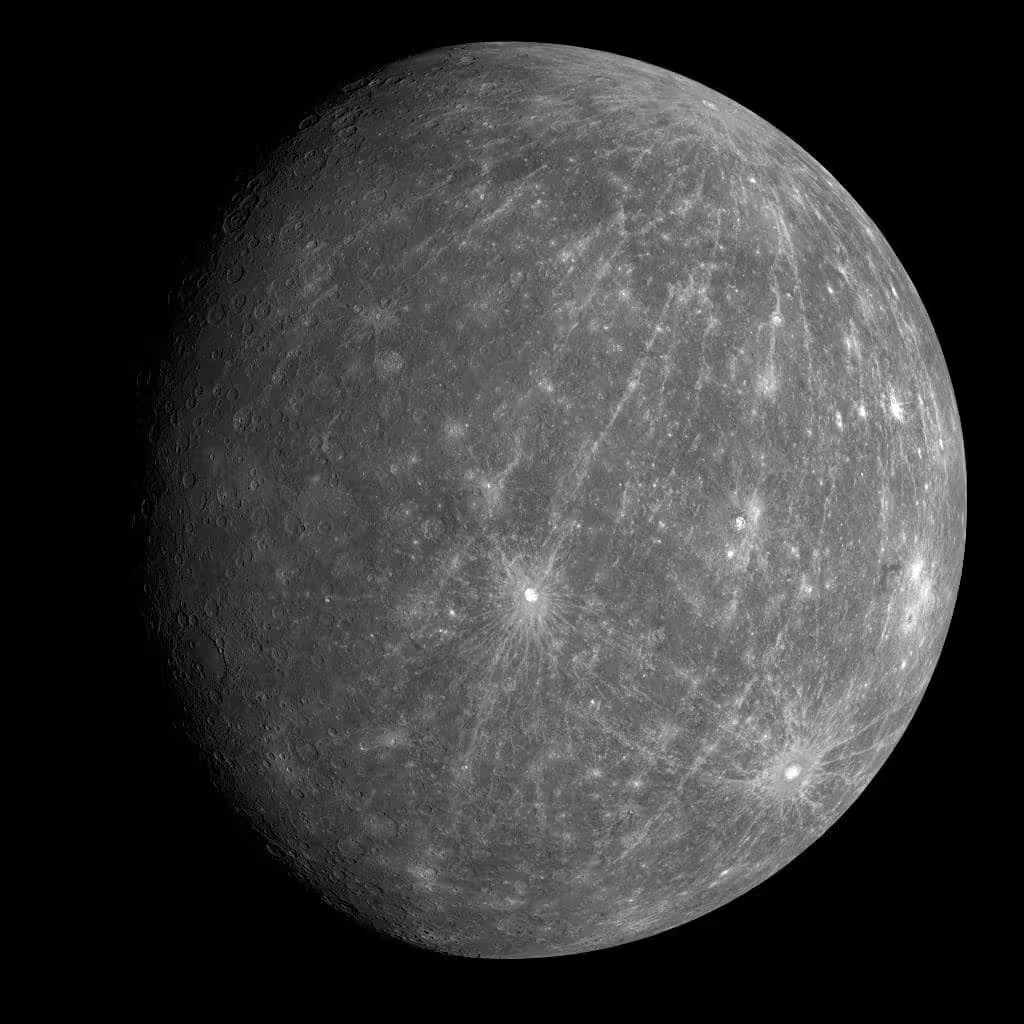
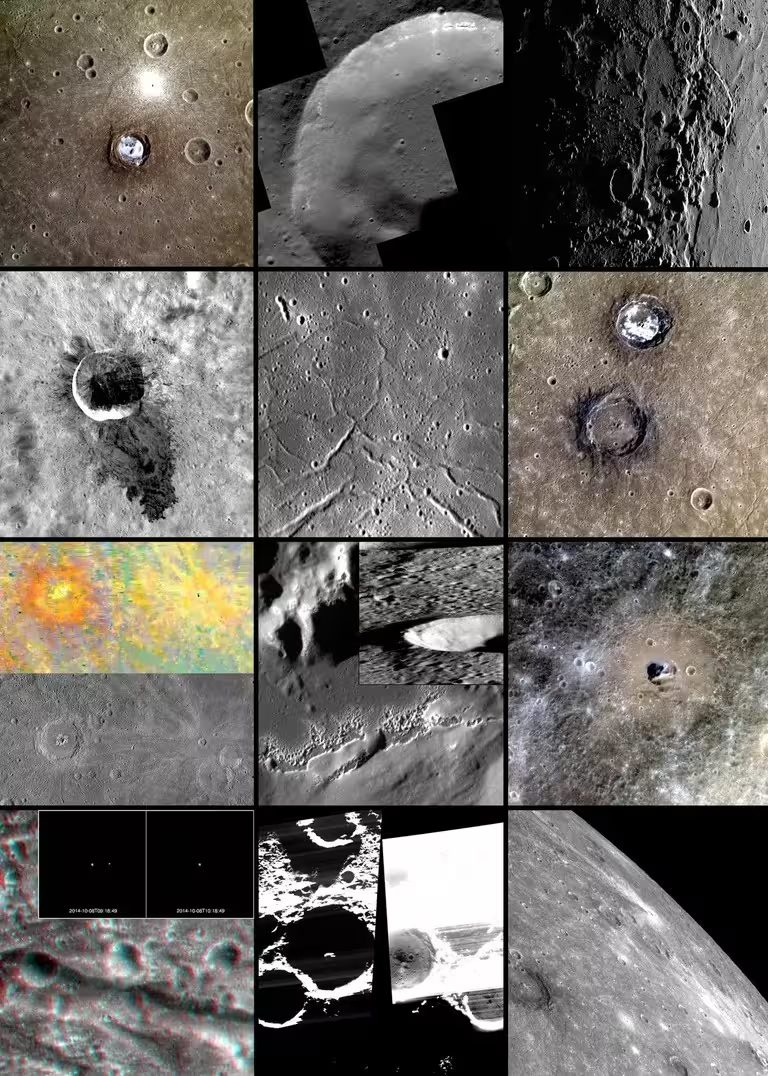
The challenge in quantifying this shrinkage lies in the planet’s chaotic surface, which has been reshaped by eons of asteroid impacts. Each collision leaves behind craters and debris fields, effectively burying the subtle geological wrinkles that mark the planet’s gradual cooling.
To bypass this interference, the research team analyzed data collected by NASA’s MESSENGER spacecraft during its 2011 to 2015 mission. By cross-referencing maps of contraction-linked geological formations with surface roughness data, they discovered that areas with higher impact density often appeared to have fewer signs of shrinking. This suggests that previous estimates of Mercury’s contraction were likely conservative, as thick layers of impact debris have masked the true extent of the planet’s structural shift.
Decoding the Secrets of the Interior
The physics behind Mercury’s contraction are deeply tied to its chemical makeup. According to the American Geophysical Union, a more pronounced shrinkage implies that the planet’s core may be larger than previously assumed, potentially containing fewer light elements like silicon. Understanding these internal dynamics allows researchers to reconstruct the conditions present during the solar system’s infancy.
“The interior of Mercury would reflect its formation,” Nishiyama said, explaining that the planet’s interior could reveal information about how the solar system developed.
Next Steps in Planetary Exploration
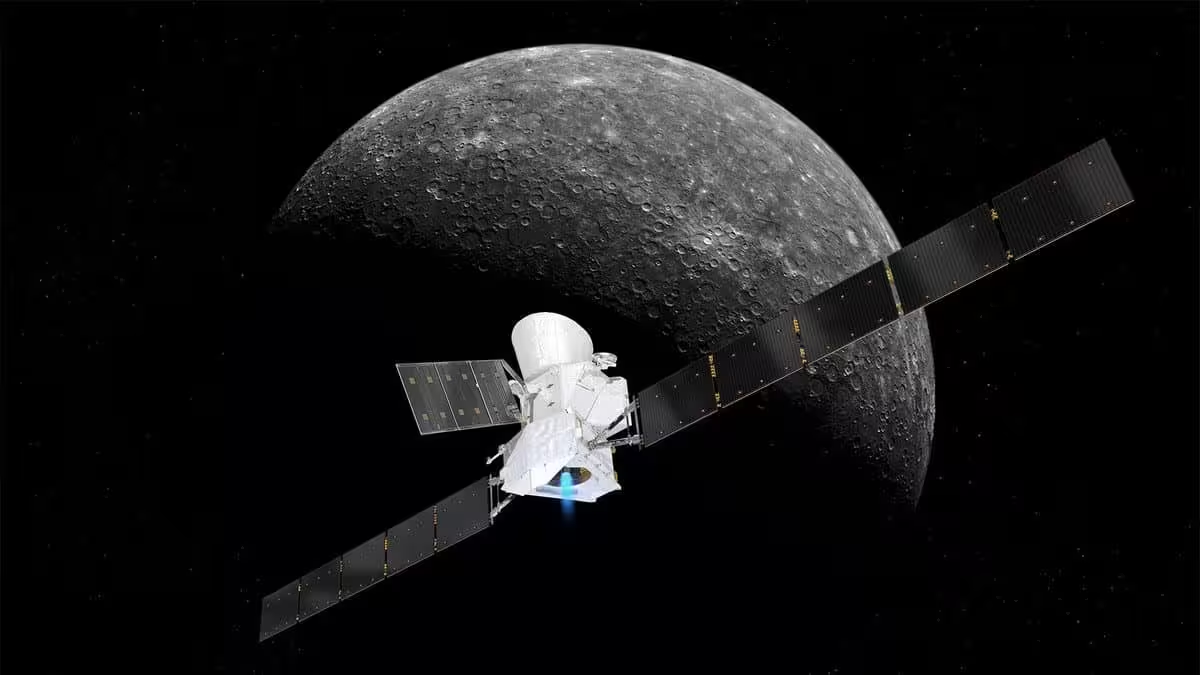
The next phase of discovery will likely come from the European Space Agency’s BepiColombo mission. Now in its orbital arrival phase after an eight-year transit, the probe is equipped with advanced instrumentation designed to provide higher-resolution data than the MESSENGER mission could achieve.
BepiColombo is tasked with identifying smaller surface features—such as scarps and ridges—that were previously obscured or lacked sufficient detail. Utilizing precise laser altimetry, the mission will map the topography of Mercury with unprecedented clarity, potentially putting the debate over the planet’s contraction to rest.
“Stay tuned for future topography measurements by BepiColombo,” Nishiyama added. “Future data from laser altimetry on BepiColombo will collect more information on planetary contraction by measuring topography more precisely.”
This article has been fact checked for accuracy, with information verified against reputable sources. Learn more about us and our editorial process.
Last reviewed on .
Article history
- Latest version
Reference(s)
- Nishiyama, G.., et al. “Underestimation of Planetary Contraction Due To Obscuration by Surface Roughness: The Case of Mercury.” Geophysical Research Letters, vol. 53, no. 17, September 10, 2026 American Geophysical Union (AGU), doi: 10.1029/2026GL124067. <https://agupubs.onlinelibrary.wiley.com/doi/10.1029/2026GL124067>.
- Cermak, Alicia. “MESSENGER - NASA Science.”, December 21, 2017 NASA <https://science.nasa.gov/mission/messenger/>.
- “Mercury is shrinking more than we thought - AGU Newsroom.”, September 10, 2026 AGU Newsroom <https://news.agu.org/press-release/mercury-is-shrinking-more-than-we-thought/>.
- “BepiColombo.” <https://www.esa.int/Science_Exploration/Space_Science/BepiColombo>.
Cite this page:
- Posted by Farah Siddiqui