NASA Curiosity Rover Hits Major Milestone With Stunning New View From Mars Mountain Slope
NASA’s Curiosity rover has reached a new peak on Mars, capturing a stunning panoramic view that showcases the massive scale of its journey up Mount Sharp.
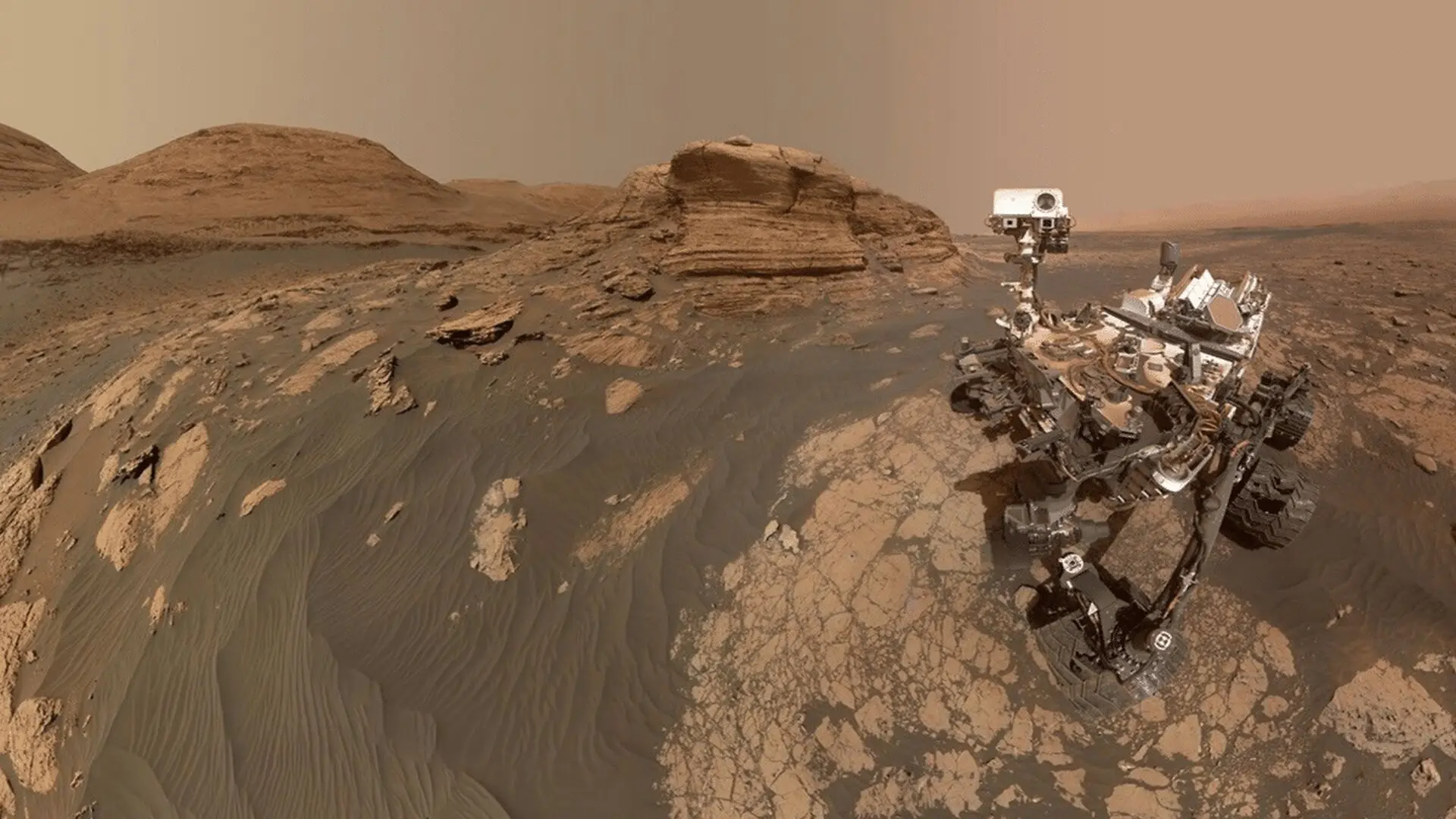
More than a decade into its mission, NASA’s Curiosity rover has officially cleared a major topographical hurdle. On August 26, 2026—marking Sol 4,996 of its Martian trek—the robotic explorer reached an elevation of one kilometer (0.62 miles) above the floor of Gale Crater. To commemorate this achievement, the rover captured a sweeping panoramic view of the vast landscape it has spent years navigating.
A Strategic Ascent Through Martian History
The journey to this milestone has been anything but a straight line. Since touching down in August 2012, Curiosity has navigated a complex path of rocky terrain and sedimentary deposits. Rather than a direct climb, the rover has followed a winding route shaped by the need to investigate high-priority scientific targets while traversing the lower foothills of Mount Sharp, a five-kilometer-tall peak at the center of the crater.
By ascending these layers, Curiosity is effectively reading a geological timeline of Mars. Mount Sharp serves as a preserved record of the planet’s shifting environmental conditions over billions of years, offering scientists a window into how the Martian climate evolved.

Mapping the Red Planet in High Definition
The newly released perspective, captured on Sol 5,006, is a composite of 95 individual frames taken by the rover’s Mast Camera (Mastcam). This instrument provides critical color imaging, allowing researchers to analyze surface textures and geological structures in high detail. To make the imagery more intuitive for human study, NASA processed the colors to mimic Earth-like lighting conditions, bridging the gap between the alien environment of Mars and familiar terrestrial geology.
The panorama does more than showcase the distance traveled; it highlights the immediate, granular work still underway. In the foreground, a distinct sand ridge is cut through by a trench created by Curiosity’s own wheel. This unintentional excavation provides a cross-section of the surface, offering scientists an unvarnished look at the sediment layers and grain sizes hidden beneath the ridge’s exterior.
Uncovering Evidence of Past Environments
These fine-scale observations are essential for understanding the dynamic forces still at work on Mars. Surface winds continue to reshape the planet, moving particles and shifting dunes. By studying the internal structure of the sand ridge, researchers hope to determine whether the formation was built up through continuous deposition or during episodic bursts of environmental change.
The broader goal remains anchored in the mission’s original mandate: determining whether ancient Mars was habitable. Having previously uncovered evidence of ancient lake systems and the chemical conditions necessary for microbial life, Curiosity’s continued climb up Mount Sharp remains vital. Each layer of sediment the rover passes represents a different chapter in Martian history, helping scientists piece together how the planet transitioned from a water-rich world to the arid landscape observed today. NASA continues to use these data points to refine models of ancient Martian environmental shifts.
This article has been fact checked for accuracy, with information verified against reputable sources. Learn more about us and our editorial process.
Last reviewed on .
Article history
- Latest version
Reference(s)
- Alanis, Rafael. “NASA’s Curiosity Looks Back After Reaching Elevation Milestone - NASA Science.”, October 7, 2026 NASA <https://science.nasa.gov/photojournal/nasas-curiosity-looks-back-after-reaching-elevation-milestone/>.
Cite this page:
- Posted by Karan Das