NASA’s New Space Telescope Is About To Take Direct Images Of Distant Alien Worlds
NASA’s Roman Space Telescope will use advanced coronagraph technology to capture direct images of exoplanets, revolutionizing our search for other worlds.
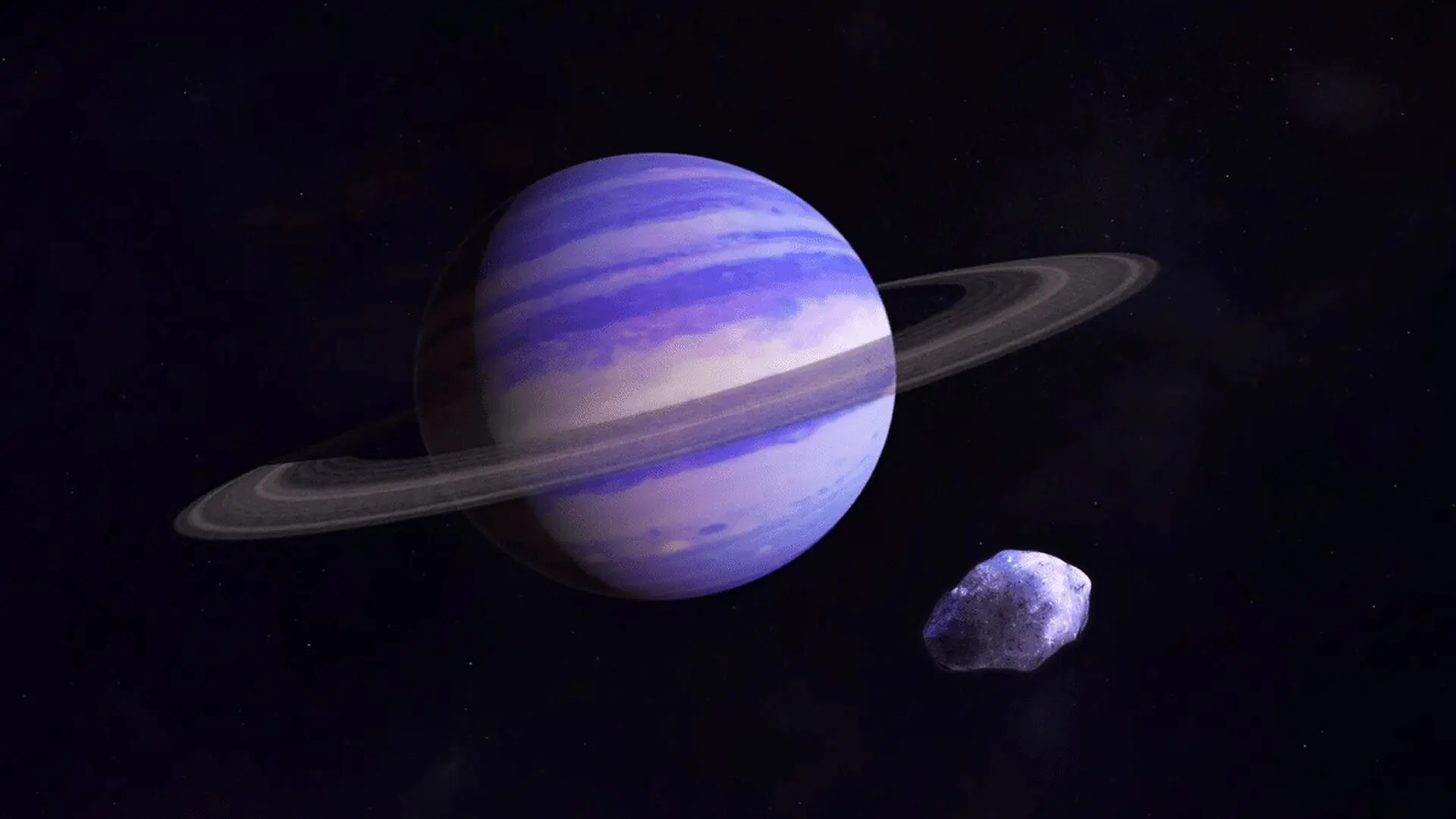
NASA’s Nancy Grace Roman Space Telescope has embarked on a mission to fundamentally alter our understanding of the cosmos by attempting to directly image planets orbiting distant stars. While traditional astronomy has relied on detecting the gravitational or light-blocking influence of exoplanets, this new observatory is equipped with a sophisticated coronagraph, a specialized instrument capable of suppressing the blinding glare of host stars to reveal the faint, orbiting worlds hidden in their shadows.
Beyond Indirect Detection
For decades, the search for exoplanets has been dominated by indirect methods, such as measuring a star’s slight wobble or detecting the periodic dimming as a planet transits across its surface. These techniques have successfully cataloged thousands of worlds, ranging from colossal gas giants to rocky terrestrial planets. However, direct imaging offers a transformative leap, enabling scientists to capture the light emitted or reflected by the planets themselves. This shift allows for the analysis of a planet’s atmospheric composition, temperature, and environment rather than merely inferring its existence.

The primary hurdle remains the extreme contrast between a star and its planets, where the star can outshine its companions by billions of times. To overcome this, the Roman Space Telescope utilizes an advanced coronagraph system, integrating high-precision masks and sensors. “The Roman Space Telescope is carrying the most advanced coronagraph that humanity has ever put into space,” explains program scientist Dominic Benford.
Engineering Unprecedented Precision
The success of the mission hinges on the telescope’s ability to maintain extreme optical stability from deep space. Central to this capability are its deformable mirrors, which perform real-time adjustments to correct for minute optical distortions. These components are engineered to react with precision on the scale of an atom, effectively scrubbing the stellar interference that would otherwise drown out the faint signal of a distant world.

Beyond its immediate scientific goals, the coronagraph serves as a crucial technological proving ground. By testing these systems in the harsh environment of space, researchers are validating the architecture required for future, even more ambitious observatories. “These deformable mirrors are a real engineering feat,” notes instrument scientist Vanessa Bailey. “They can be commanded with the precision approaching the size of an atom, and this is what really allows us to make this transformative performance.”
Paving the Way for the Habitable Worlds Observatory
The lessons learned from Roman will directly influence the development of the upcoming Habitable Worlds Observatory. One critical aspect of this research involves mapping the dust debris fields around nearby stars, which can obscure potential Earth-like planets. By cataloging these environments, the Roman mission will help astronomers prioritize the most promising targets for future, high-resolution searches for life.
“We can study how dusty these nearby systems are and understand whether any of them might have too much dust for us to be able to observe an Earth-like planet in the future,” Bailey adds. As the mission gathers data, it will not only refine our understanding of planetary system architecture but also establish the technical roadmap for answering the profound question of whether we are alone in the universe.
This article has been fact checked for accuracy, with information verified against reputable sources. Learn more about us and our editorial process.
Last reviewed on .
Article history
- Latest version
Cite this page:
- Posted by Karan Das