Hayabusa2 Just Pulled Off a Historic Laser Experiment During a High Speed Asteroid Flyby
Hayabusa2 has achieved the first successful laser ranging experiment during an asteroid flyby, marking a major milestone for deep-space navigation.
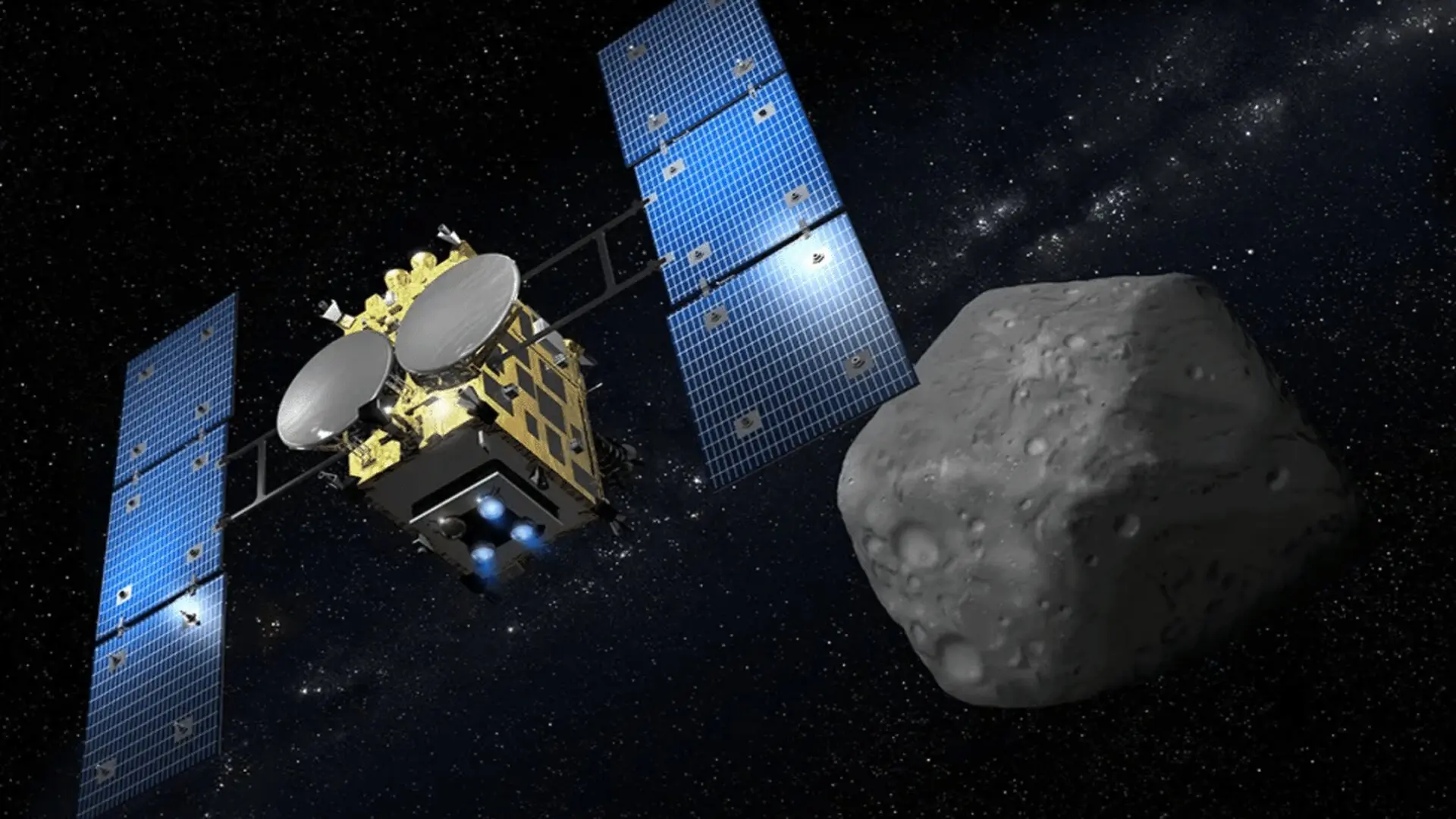
Japan’s Hayabusa2 spacecraft has successfully completed the first-ever laser ranging experiment during an asteroid flyby, establishing a critical new benchmark for deep-space exploration. The Japan Aerospace Exploration Agency (JAXA) confirmed that the probe, traveling at high velocity, managed to precisely measure its distance to a target object using an onboard laser system.
This milestone occurred on July 5, 2026, during the spacecraft’s encounter with asteroid Torifune, a highlight of the ongoing Hayabusa2 Extended Mission. By demonstrating the ability to capture accurate spatial data while moving at extreme speeds, the mission team has provided a blueprint for future near-Earth asteroid (NEA) characterization, navigation, and planetary defense.
High-Speed Precision: Testing LIDAR at the Edge of Space
The feat relied on the Light Detection and Ranging (LIDAR) technology integrated into the Hayabusa2 probe. The specific instrument, the LIDAR laser altimeter (LALT), was adapted from heritage technology previously utilized on the Kaguya lunar orbiter, repurposed here for the rigors of asteroid flybys.
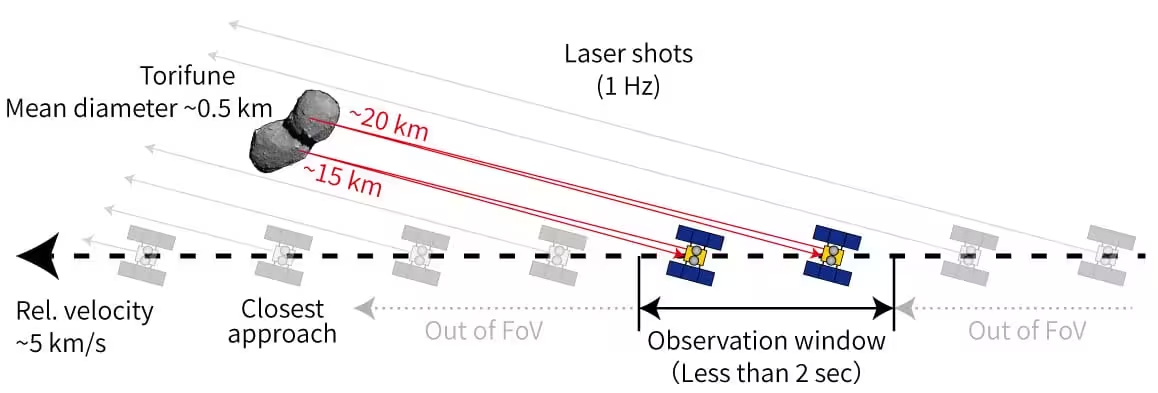
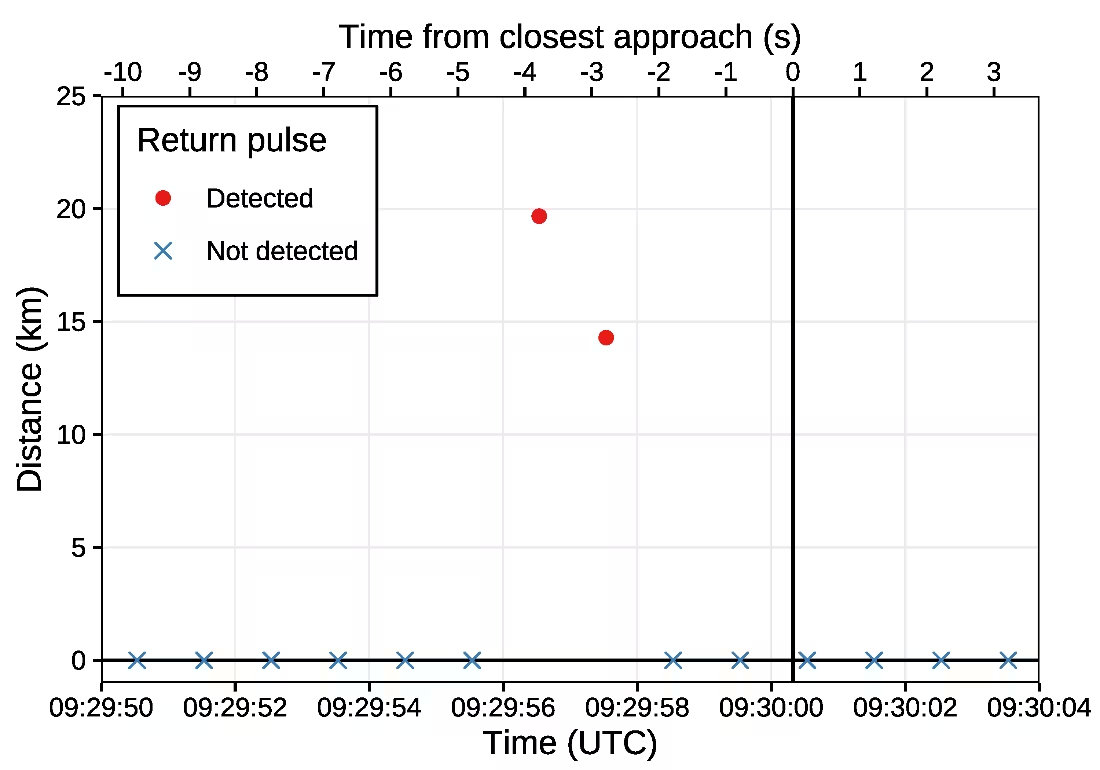
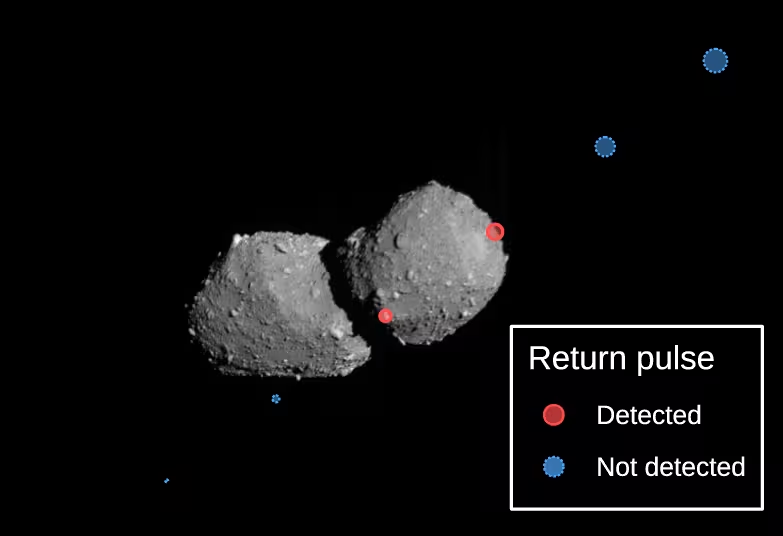
During the encounter with Torifune, the LALT instrument fired two pulses at the asteroid. The first measurement was recorded from a distance of approximately 20 kilometers, followed by a second reading from about 15 kilometers away, just seconds before the spacecraft zoomed past the target.
The technical challenge of this operation cannot be overstated. With Hayabusa2 moving at roughly 5.3 kilometers per second—or approximately 18,000 kilometers per hour—the margin for error was razor-thin. A slight miscalculation in timing, positioning, or orientation could have resulted in the laser missing the asteroid entirely. According to the laser beam parameters, the pulses illuminated surface areas measuring roughly 30 meters and 23 meters across, requiring the team to account for complex background signal interference while maintaining a high-speed trajectory.
Paving the Way for Multi-Target Exploration
As noted in the official JAXA announcement, this successful test validates a new operational paradigm. While the LALT instrument previously served as a primary tool during the detailed study of asteroid Ryugu, its application during a high-speed flyby demonstrates that existing hardware can be effectively repurposed to maximize scientific output from extended missions.
This methodology opens doors for future exploration architectures that involve visiting multiple asteroids in a single journey. By using rapid laser ranging to determine the size, shape, and precise location of objects in real-time, spacecraft can gather high-value reconnaissance data without needing to enter long-term orbits around every target.
Advancing Global Planetary Defense Strategies
Beyond the immediate scientific gains, this technique has profound implications for planetary defense. Standard imaging captures the appearance of an asteroid, but precise distance measurements are required to refine orbital models and predict future trajectories with high confidence.
When integrated with terrestrial tracking data, laser ranging provides an essential reference point that reduces uncertainty in calculating where an asteroid has been and where it is going. For space agencies monitoring near-Earth objects that pose potential collision risks, this improved precision is a vital component in assessing and mitigating future hazards.
As Hayabusa2 continues its voyage, the lessons learned from the Torifune flyby will likely influence the design of future robotic missions, making them more agile and capable of performing sophisticated scientific measurements under the most challenging deep-space conditions.
This article has been fact checked for accuracy, with information verified against reputable sources. Learn more about us and our editorial process.
Last reviewed on .
Article history
- Latest version
Reference(s)
- “JAXA | Asteroid explorer Hayabusa2 achieves world-first laser ranging during asteroid flyby.” JAXA | Japan Aerospace Exploration Agency <https://global.jaxa.jp/press/2026/07/20260730-2_e.html>.
Cite this page:
- Posted by Karan Das