5.5 Million Solitary Bees Discovered Beneath New York Cemetery After 90 Years
A century‑old bee colony thrives beneath a New York cemetery; scientists warn its sudden loss could have far‑reaching ecological and economic impacts.
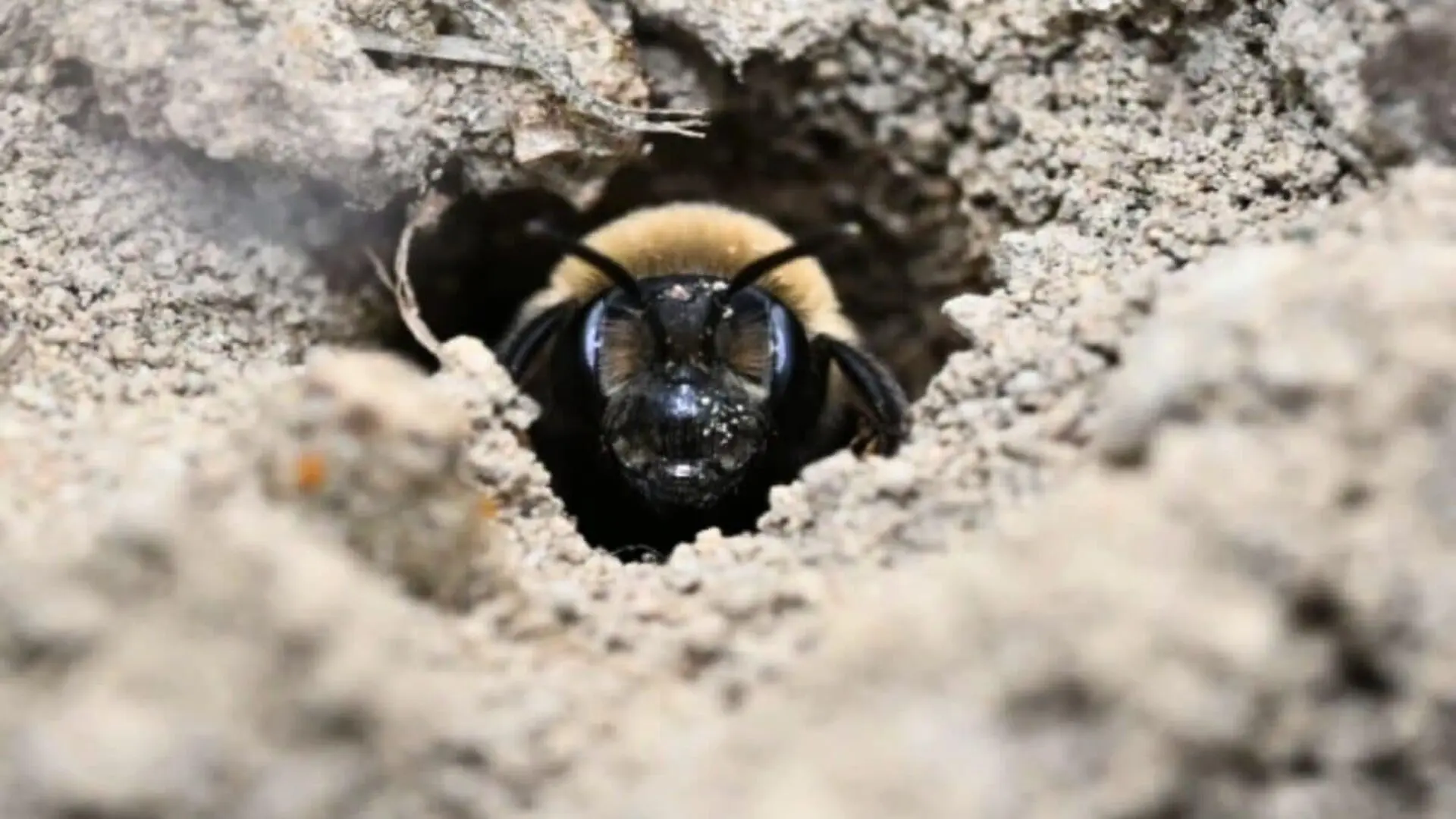
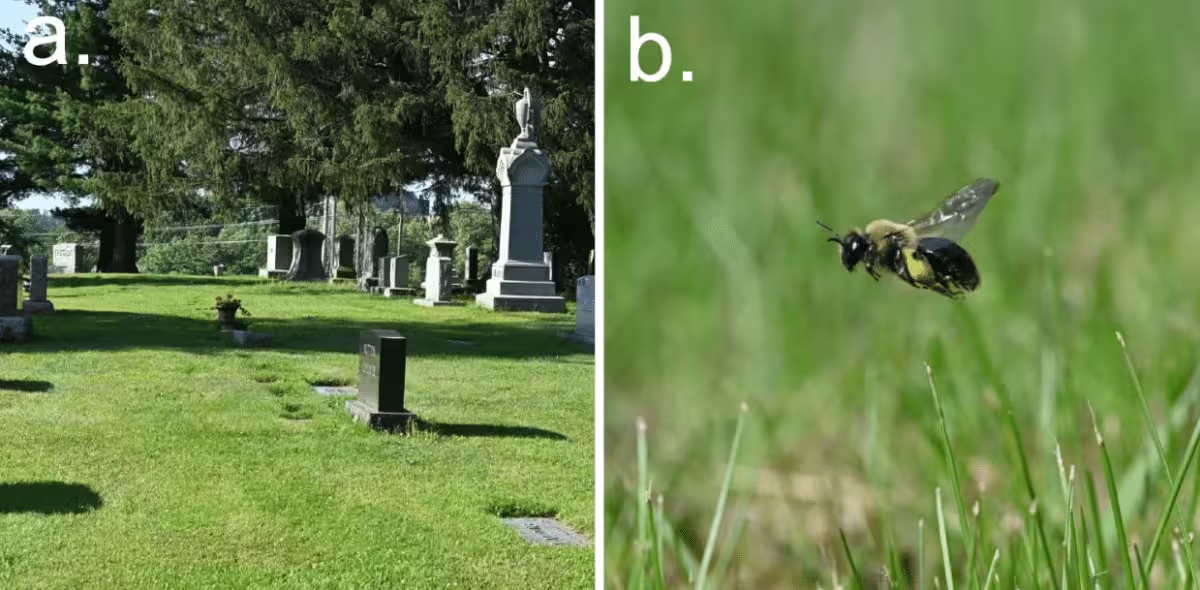
During a 2022 commute, a Cornell University laboratory employee passed through a historic burial site and noticed a jar brimming with bees emerging from the soil. The collection sparked a scientific investigation that revealed one of the world’s largest known concentrations of ground‑nesting bees: roughly 5.5 million individuals of the regular mining bee (Andrena regularis) living beneath East Lawn Cemetery in Ithaca, New York.
The findings, published in Apidologie, show that specimens of A. regularis have been recorded at the cemetery as early as 1935, implying a continuous presence for nine decades or more. Researchers deployed emergence traps—small mesh tents covering the ground with funnels leading to collection jars—to monitor bees as they rose each spring. From 30 March to 16 May 2023, the team captured 3 251 insects representing 16 species, with the regular mining bee overwhelmingly dominant.
What draws countless solitary miners to a single burial ground
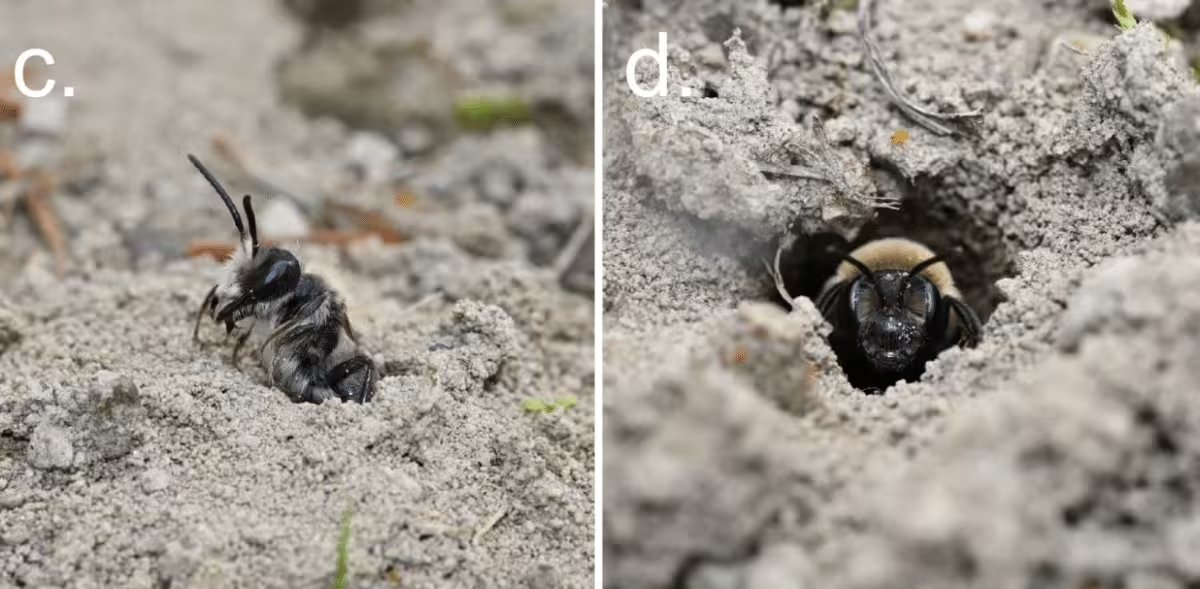
Unlike social honeybees, regular mining bees live alone. Each female excavates a private tunnel 10–22 cm deep, creates four or five brood cells, and stocks them with pollen and nectar. There is no queen or shared hive; the cemetery hosts a massive assemblage of independent nests, each built by a single bee over successive generations.
The site’s appeal lies in its soil composition and low disturbance. East Lawn’s substrate is a sandy loam containing about 66.5 % sand, a texture favored by A. regularis for digging. Pesticide applications are minimal, the area is mowed but otherwise left untouched, and no paving interrupts the ground—conditions that Cornell entomologist Bryan Danforth, senior author of the study, says are essential for long‑term ground‑nesting success.
Counting an underground swarm: methods and estimates
Before any bees emerged in 2023, researchers positioned ten emergence traps across the nesting zone. During peak emergence they visited the devices daily, gathering every insect that rose through the soil.
The traps recorded an average density of 853 bees per square metre, though individual captures varied widely, reflecting the patchy distribution typical of dense Andrena aggregations. Applying this density to the entire 6 500‑square‑metre area produced an estimated population of 5.56 million, with confidence limits ranging from 3.1 million to 8.0 million.
In agricultural terms, the underground colony equals roughly 140 to 270 honeybee hives per hectare. Commercial apple growers in New York typically place only two to three honeybee colonies per hectare, highlighting the potential pollination capacity of this solitary bee population.
The bee’s role in nearby apple orchards
Cornell Orchards lies about 600 m from the cemetery. Surveys conducted there between 2008 and 2015 identified A. regularis as the most frequent flower visitor, surpassing managed honeybee colonies. Female regular mining bees carry nearly pure apple pollen and make frequent contact with the reproductive parts of Malus blossoms, making them effective pollinators during the early bloom period.
The species overwinters as an adult—a relatively rare trait among bees—and emerges early enough each spring to coincide with apple flowering. Despite this importance, ground‑nesting bees remain poorly studied; the most recent comprehensive biological description of A. regularis dates back to 1978. Roughly 75 % of all bee species nest in the ground, yet research efforts focus heavily on social species such as honeybees.
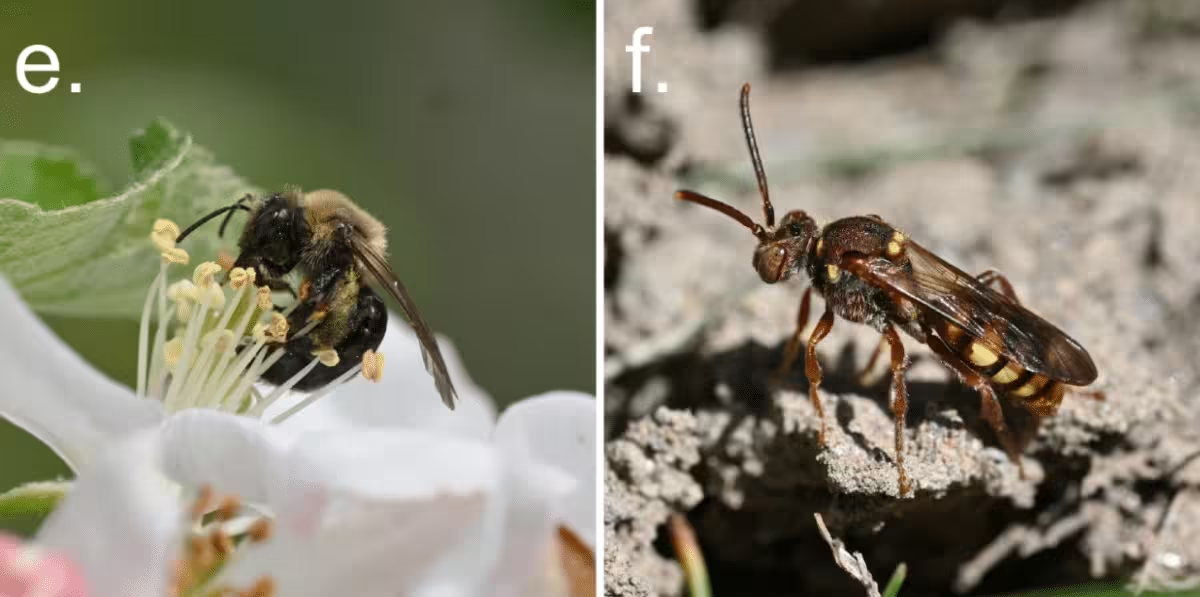
The emergence data also revealed a pronounced protandry pattern: males surfaced first during warm days above 20 °C, followed by females a few days later. This timing aligns both sexes with the flowering of early‑blooming Rosaceae. Traps also captured the primary brood parasite, the cuckoo bee Nomada imbricata, which lays its eggs inside the provisions of Andrena nests. Parasitism at East Lawn was only 1.4 %, well below the 6.7 % average reported across 52 studies of solitary bee parasites, and the sex ratio of emerging adults was skewed toward females, suggesting a healthy population in the preceding season.
Following the discovery, Danforth’s team launched a ground‑nesting bee citizen‑science initiative to gather observations worldwide. If a colony of this magnitude remained undocumented for decades near a major research university, similar aggregations may exist beneath other undisturbed urban or suburban sites, such as parks, roadside verges, and old lawns that appear unremarkable from the surface.
This article has been fact checked for accuracy, with information verified against reputable sources. Learn more about us and our editorial process.
Last reviewed on .
Article history
- Latest version
Reference(s)
- Hoge, Steven T.., et al. “Emergence dynamics and host-parasite associations in a large aggregation of Andrena regularis (Hymenoptera: Apoidea: Andrenidae).” Apidologie, vol. 57, no. 2, April 13, 2026 Springer Science and Business Media LLC, doi: 10.1007/s13592-026-01256-6. <https://link.springer.com/article/10.1007/s13592-026-01256-6>.
- “Pollinator Habitat in Log Landings: Wild Bees.” US Forest Service Research and Development <https://research.fs.usda.gov/nrs/understory/pollinator-habitat-log-landings-wild-bees>.
- <https://www.gnbee.org/>.
Cite this page:
- Posted by Zara Tariq