Scientists Just Discovered a Vast Ocean Trapped 700 Km Beneath Earth’s Surface
Researchers might have identified the hidden ocean that exists beyond the reach of any map, concealed deep beneath Earth’s surface.
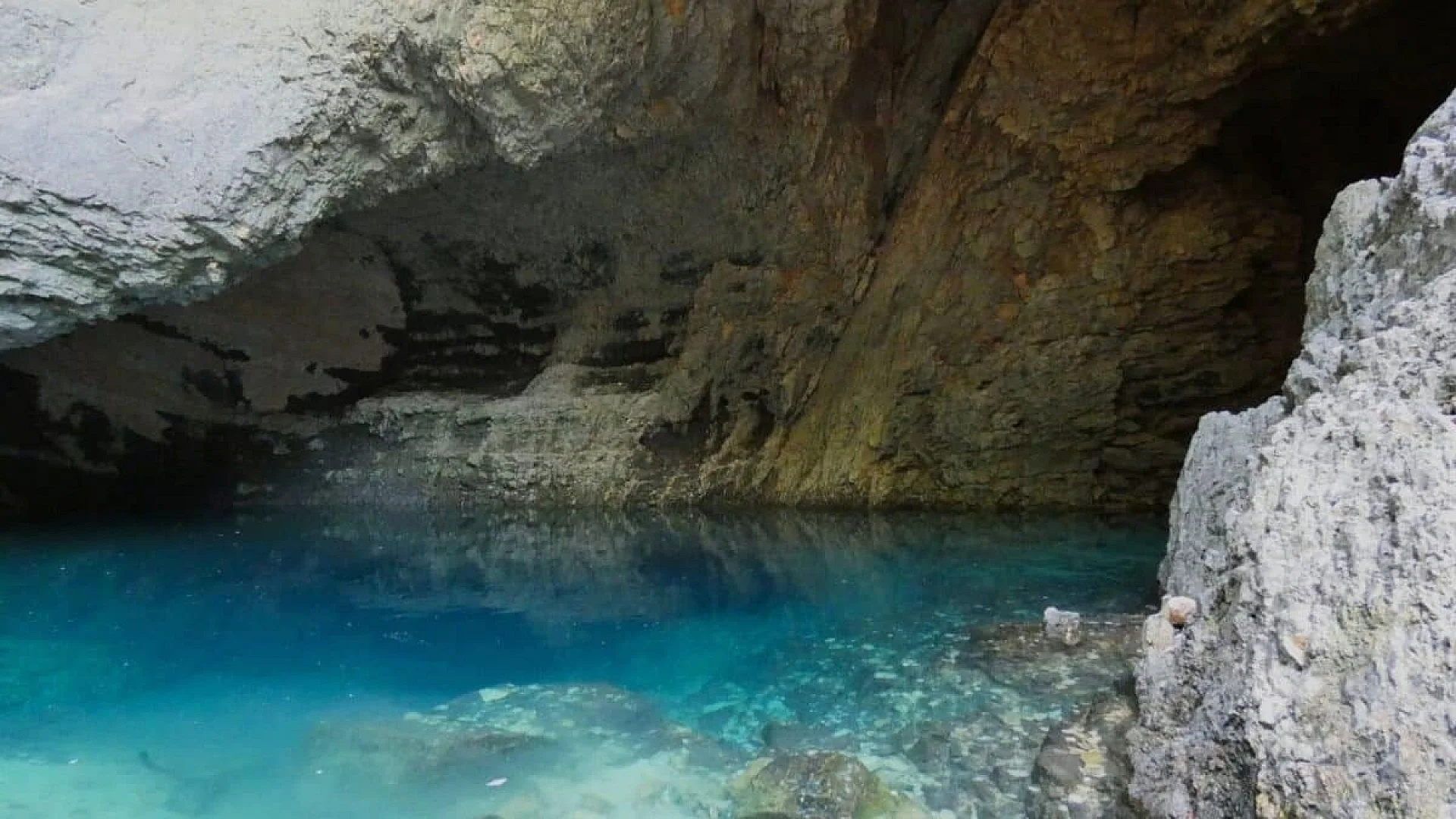
Scientists have made a groundbreaking discovery of a massive reservoir of water buried approximately 700 kilometers beneath the Earth’s surface. This enormous water reserve is estimated to hold three times the volume of all the world’s oceans combined, and it is trapped within deep mantle rock, making it inaccessible and invisible to the naked eye.
The findings suggest that a significant portion of the Earth’s water may have originated from within the planet itself, rather than being delivered by comets or asteroids that collided with the early Earth. This theory could also explain why ocean levels have remained relatively stable over hundreds of millions of years, despite the movement of continents and changes in climate.
Understanding how water behaves deep within the Earth’s mantle can provide valuable insights into the planet’s geology and the longevity of the oceans we know today.
Unlocking the Secrets of Water Trapped in Ringwoodite
The water is not freely flowing but is instead bound within ringwoodite, a rare blue mineral that is stable under the extreme pressures found in the mantle’s transition zone, which spans approximately 410 to 660 kilometers in depth. According to a study published in Science, the mineral absorbs water at the molecular level, creating a sponge-like effect that enables the mantle to store enormous volumes of water.
Steven Jacobsen, a researcher from Northwestern University who led the study, explained that the team used over 2,000 seismographs across the United States and analyzed waves from more than 500 earthquakes to determine where the water is trapped. By mapping the areas where the waves slowed down, the researchers were able to identify the presence of water-rich ringwoodite.
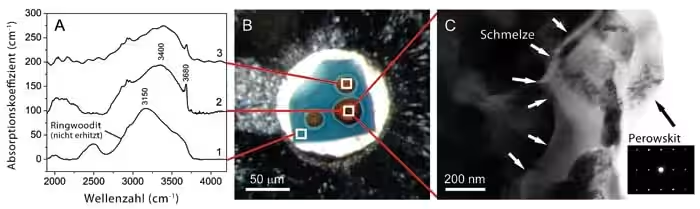
Jacobsen also noted that this discovery serves as strong evidence that a significant portion of the Earth’s water originated from within the planet, and that this deep reservoir helps maintain the stability of the oceans over time.
“We should be grateful for this deep reservoir,” Jacobsen said. “If it wasn’t there, it would be on the surface of the Earth, and mountain tops would be the only land poking out.”
Extending the Water Cycle Far Below the Surface
This discovery has significant implications for our understanding of the water cycle. Water from the oceans is drawn down into the mantle at subduction zones, where minerals like ringwoodite absorb some of it. Over millions of years, some of that water is released back to the surface through volcanoes and mantle upwelling, maintaining the stability of the oceans.
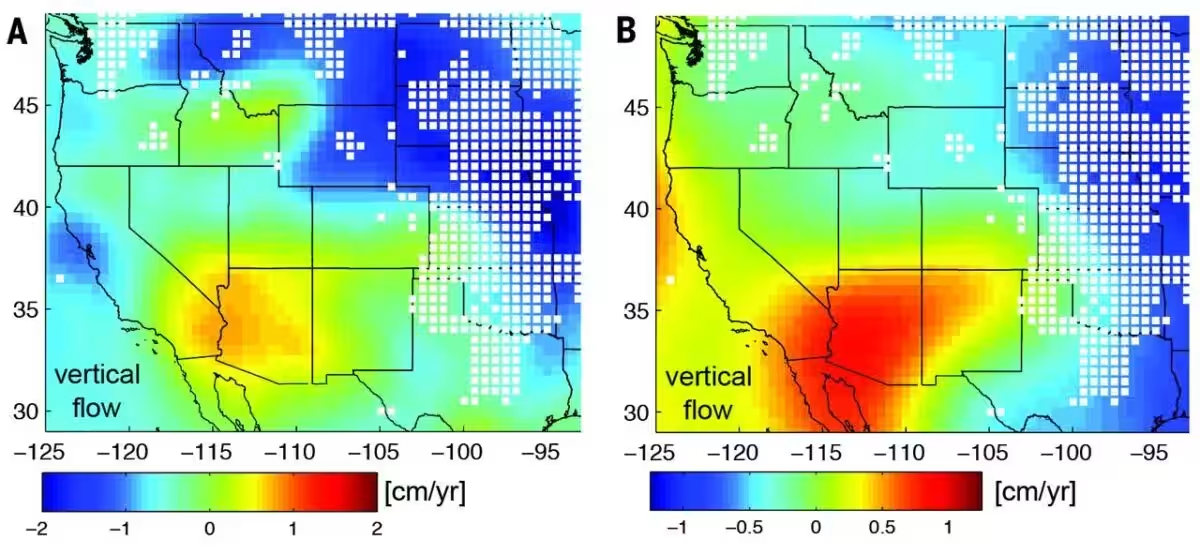
Jacobsen explained that this cycle demonstrates that the Earth has a water system far larger than what we see in clouds, rivers, and seas. It also helps explain why liquid water has endured for billions of years, supporting life on Earth while planets like Mars and the Moon lost theirs long ago.
Unraveling the Mysteries of the Earth’s Water Cycle
Most current seismic evidence comes from beneath North America, but researchers now aim to examine other regions to determine whether water-rich ringwoodite is common worldwide or concentrated in specific zones. They also hope to refine estimates of how much water the transition zone holds and how quickly it cycles in and out.
These insights are crucial for models of the Earth’s formation, plate tectonics, and ocean stability over deep time. Each recorded earthquake offers a window into the planet’s hidden interior, revealing a vast, ancient system that has quietly shaped life on Earth.
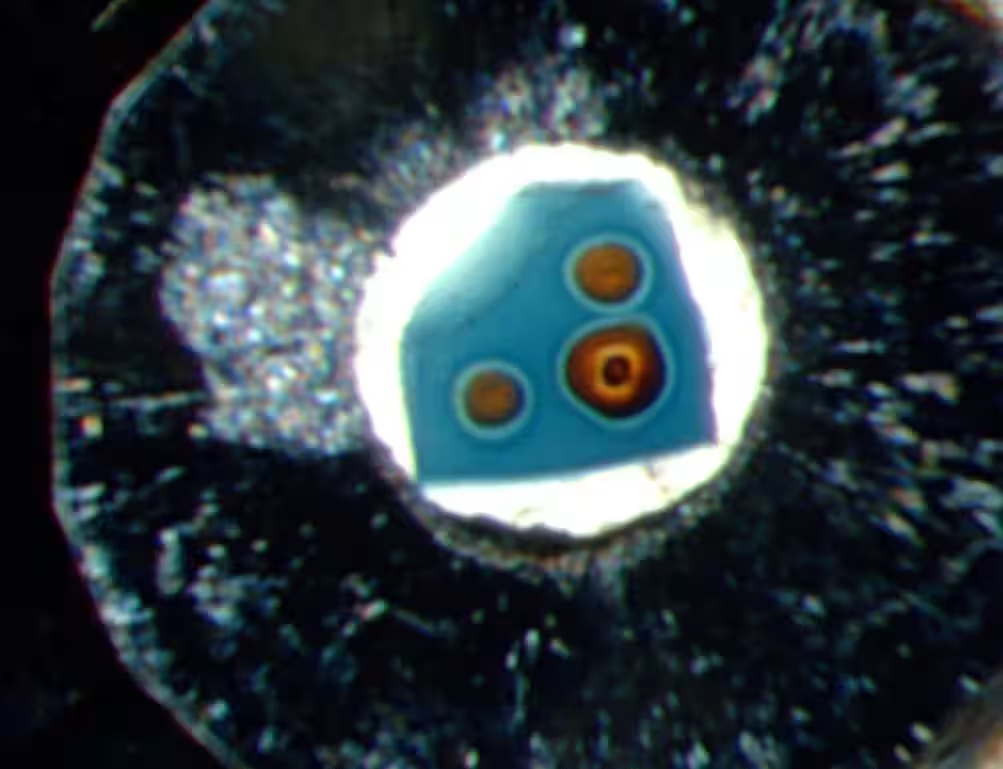
While humans cannot access this water, its existence helps explain why our oceans have endured for billions of years and why the Earth continues to support a global ocean and thriving ecosystems.
This article has been fact checked for accuracy, with information verified against reputable sources. Learn more about us and our editorial process.
Last reviewed on .
Article history
- Latest version
Cite this page:
- Posted by Karan Das