Scientists Found Fossil Pollen That Revealed a Hidden Nile Channel That Helped Build the Great Pyramid
Under the arid dunes encircling the Great Pyramid, researchers unearthed remnants of a long-lost watercourse that has nearly disappeared from memory.
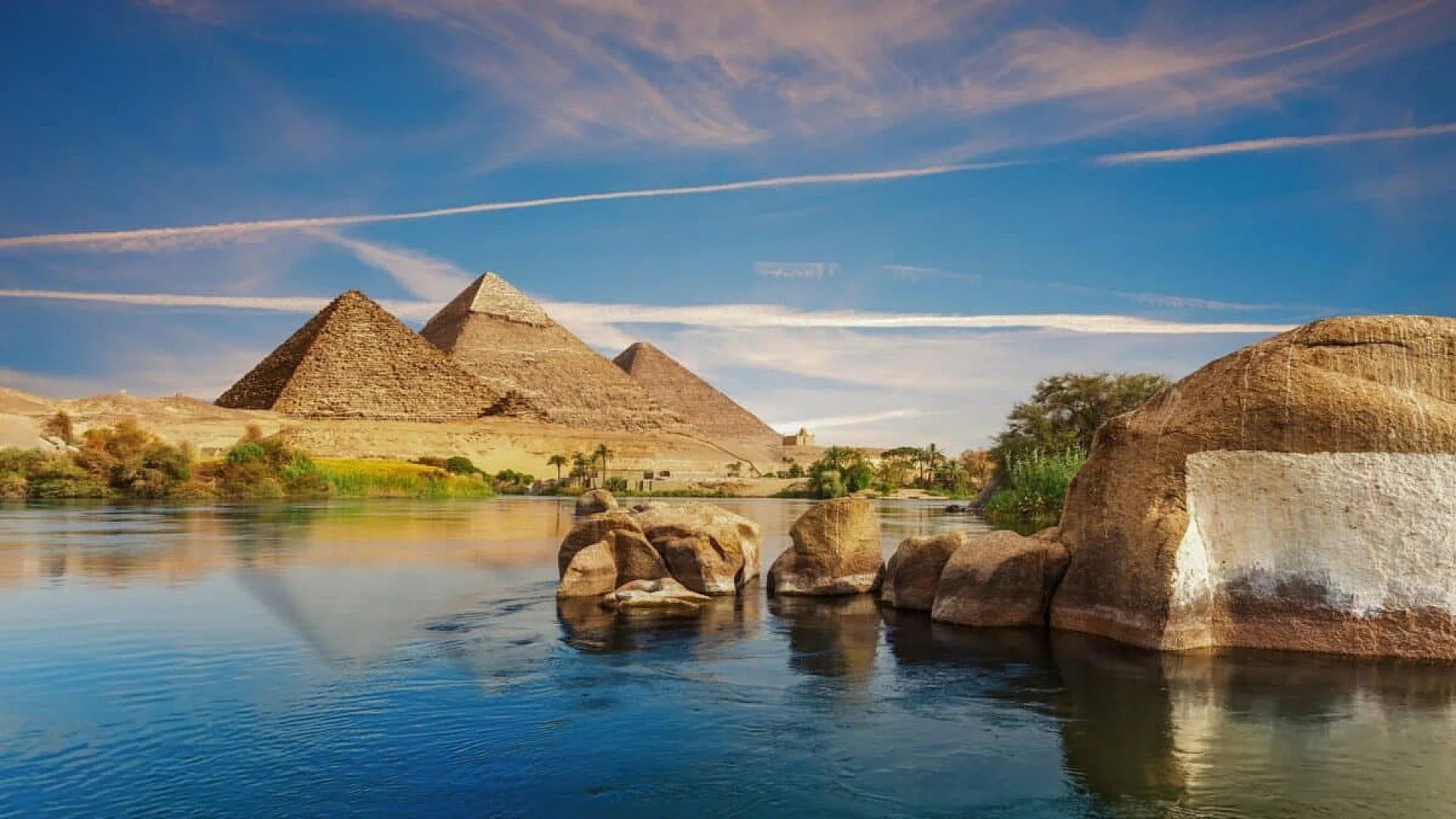
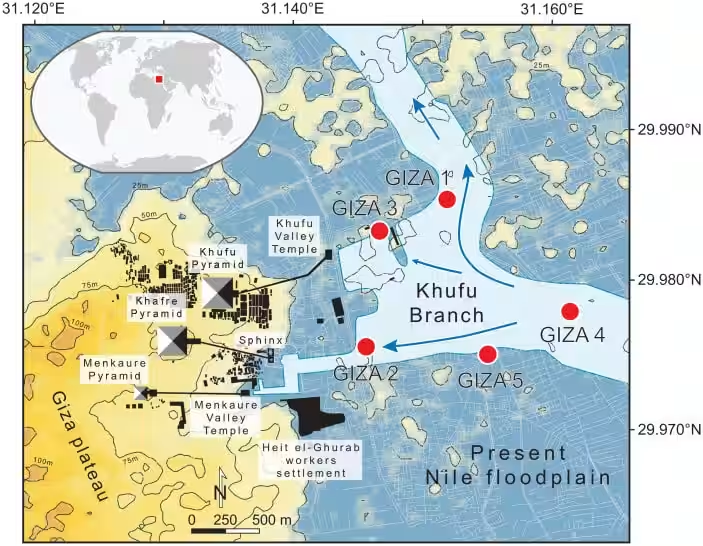
A long-forgotten offshoot of the Nile River may have made the construction of the Great Pyramid of Giza significantly easier than many people have imagined. Researchers studying ancient pollen and sediment near Giza have discovered evidence that a waterway known as the Khufu branch once flowed close to the pyramid complex.
The study, published in Proceedings of the National Academy of Sciences, comes from a team of researchers from France, China, and Egypt. Their work focuses on reconstructing the ancient landscape around Giza thousands of years ago, back when the region looked very different from the dry environment seen today.
The question of how ancient Egyptians moved enormous limestone and granite blocks has fascinated researchers for decades. Today, the Nile sits more than four miles from the pyramids, which makes the logistics seem almost impossible at first glance. The new study suggests that during the reigns of Khufu, Khafre, and Menkaure, the river was much closer to the construction site.
Ancient Pollen Reveals Hidden Landscape
To understand what the area looked like thousands of years ago, the researchers analyzed fossilized pollen grains preserved in sediment around Giza. Those tiny traces revealed the kinds of plants that once grew there and gave scientists clues about the presence of water.
According to the study, the sediment contained pollen from flowering grasses similar to the ones still found along the Nile today. The team also identified marsh plants, which usually grow beside stable bodies of water and take time to develop.
“Paleoecological analyses have helped to reconstruct an 8,000-year fluvial history of the Nile in this area, showing that the former waterscapes and higher river levels around 4,500 years ago facilitated the construction of the Giza Pyramid Complex,” the researchers wrote.
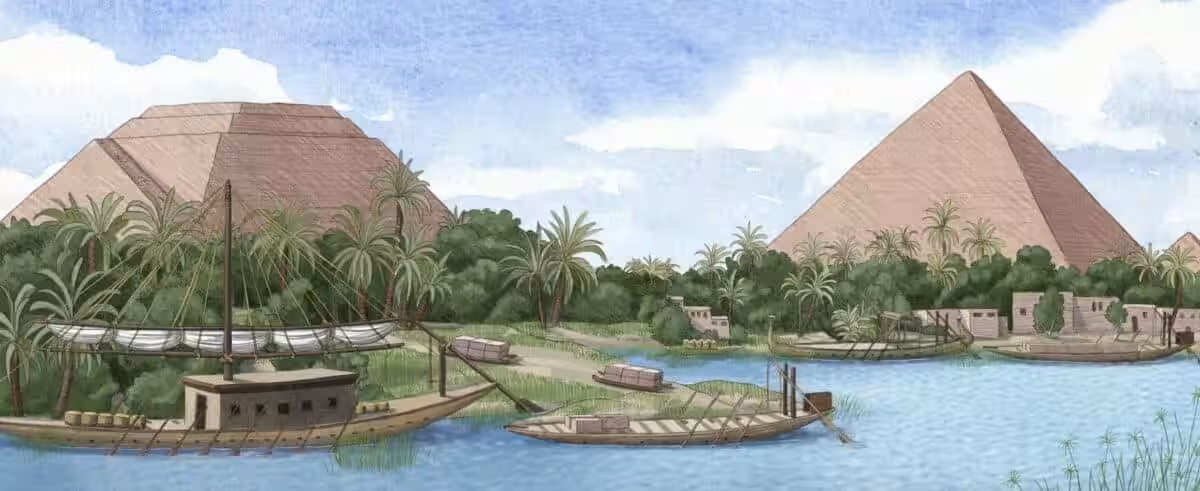
The findings also suggest that the pyramids originally overlooked an active branch of the Nile rather than standing isolated in a dry desert environment. That detail changes how the site may have looked during the Old Kingdom period.
Khufu Branch May Explain Pyramid Transport
The study focused on the Khufu branch because researchers believe it connected to the Pyramid Harbor complex near Giza. If that was the case, the river branch could have served as a direct transport corridor for stone blocks and other building materials.
According to the researchers, the branch remained navigable during the construction of the major pyramids. The Great Pyramid itself originally reached around 455 feet in height and was built using limestone, granite, and mortar.
The exact history of this waterway had remained unclear before now. By studying vegetation patterns linked to river activity, the team was able to track changes in water levels over thousands of years. The idea that Egyptians used waterways to move materials is not entirely new, though this research adds another layer of environmental evidence.
The River Disappeared Over Centuries
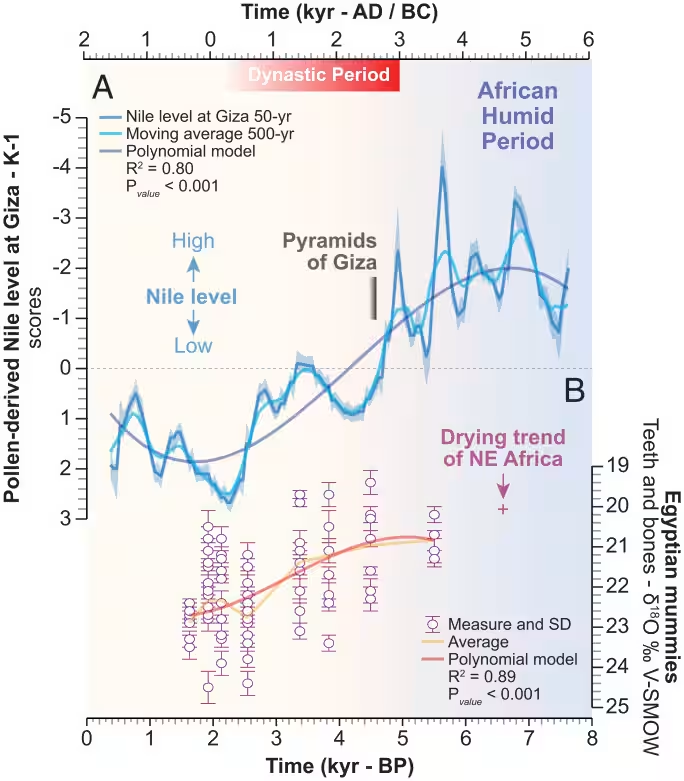
Researchers also examined how the region became increasingly dry over time. As reported in the research, the landscape began changing after the African Humid Period, a wetter climatic phase that once supported higher Nile water levels across East Africa.
“After a high-stand level concomitant with the African Humid Period, our results show that Giza’s waterscapes responded to a gradual insolation-driven aridification of East Africa, with the lowest Nile levels recorded at the end of the Dynastic Period,” explained the authors.
Also ReadScientists Uncover a 100-Foot Dinosaur Fossil So Heavy It Cracked the Road Beneath During Transport
Researchers say this long climate shift, caused by changes in solar radiation, slowly reduced Nile water levels over hundreds of years. Other studies based on animal bones and teeth point to the same environmental changes in the region. Over time, the Khufu branch dried up completely, leaving behind only small traces of the waterway that may once have helped move materials for the pyramids.
This article has been fact checked for accuracy, with information verified against reputable sources. Learn more about us and our editorial process.
Last reviewed on .
Article history
- Latest version
Reference(s)
- Sheisha, Hader., et al. “Nile waterscapes facilitated the construction of the Giza pyramids during the 3rd millennium BCE.” Proceedings of the National Academy of Sciences, vol. 119, no. 37, August 29, 2022 Proceedings of the National Academy of Sciences, doi: 10.1073/pnas.2202530119. <https://www.pnas.org/doi/abs/10.1073/pnas.2202530119>.
Cite this page:
- Posted by Hassan Raza