While Concrete Drains Energy and Cement, Scientists Created a Building Material That Uses an Enzyme to Turn Co₂ Into Stone-Like Minerals in Just Hours
Scientists have developed a material powered by enzymes that converts carbon dioxide into solid minerals. This innovative substance is robust, sets quickly, and actively reduces atmospheric carbon levels.
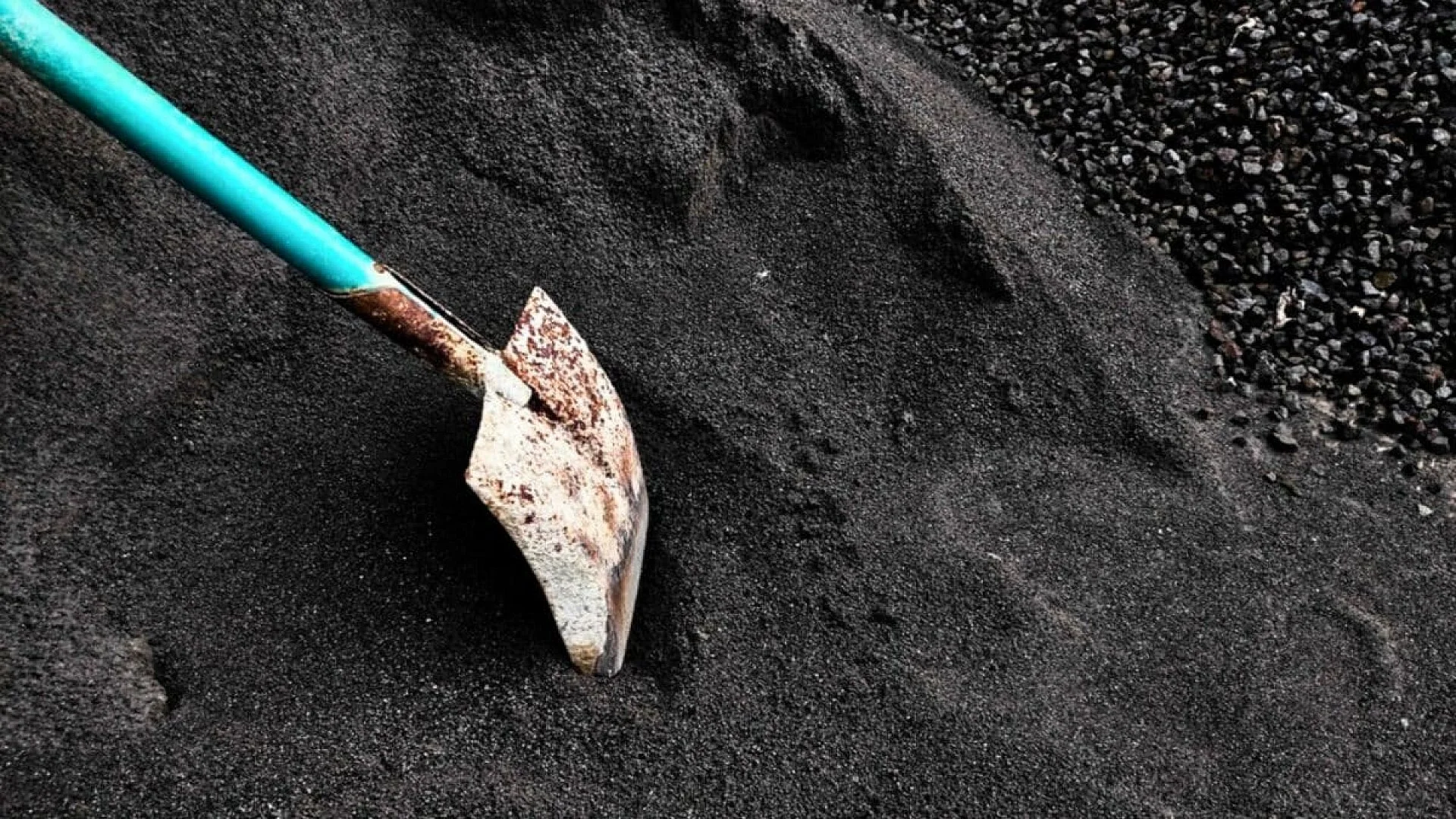
A cubic meter of conventional concrete releases approximately 330 kilograms of carbon dioxide into the atmosphere. In stark contrast, the novel material developed by engineers at Worcester Polytechnic Institute captures more than 6 kilograms of CO₂ during production and solidifies into a strong, durable material within hours, rather than weeks.
The material, known as enzymatic structural material or ESM, was detailed in a study published in the journal Matter. It utilizes an enzyme to accelerate a reaction that converts carbon dioxide into solid calcium carbonate minerals, which then form the structural framework of the finished product.
“Concrete is the most widely used construction material globally, and its production is responsible for nearly 8% of global CO2 emissions,” stated Nima Rahbar, the Ralph H. White Family Distinguished Professor and head of the Department of Civil, Environmental, and Architectural Engineering at WPI, who led the research team. “Our team has developed a practical, scalable alternative that not only reduces emissions but also captures carbon.”
The Enzyme Triggers a Mineralization Reaction
At the heart of the process lies the enzyme carbonic anhydrase. This enzyme catalyzes the combination of water and CO₂ to form carbonic acid, which then precipitates with calcium to produce solid calcite crystals.
The researchers combined these mineral particles using a capillary suspension technique that incorporates a carbon-rich scaffold. Following thermal curing under mild conditions, the process yields a hydrophobic carbon backbone that stabilizes the calcium carbonate and bonds sand particles at an optimized porosity.
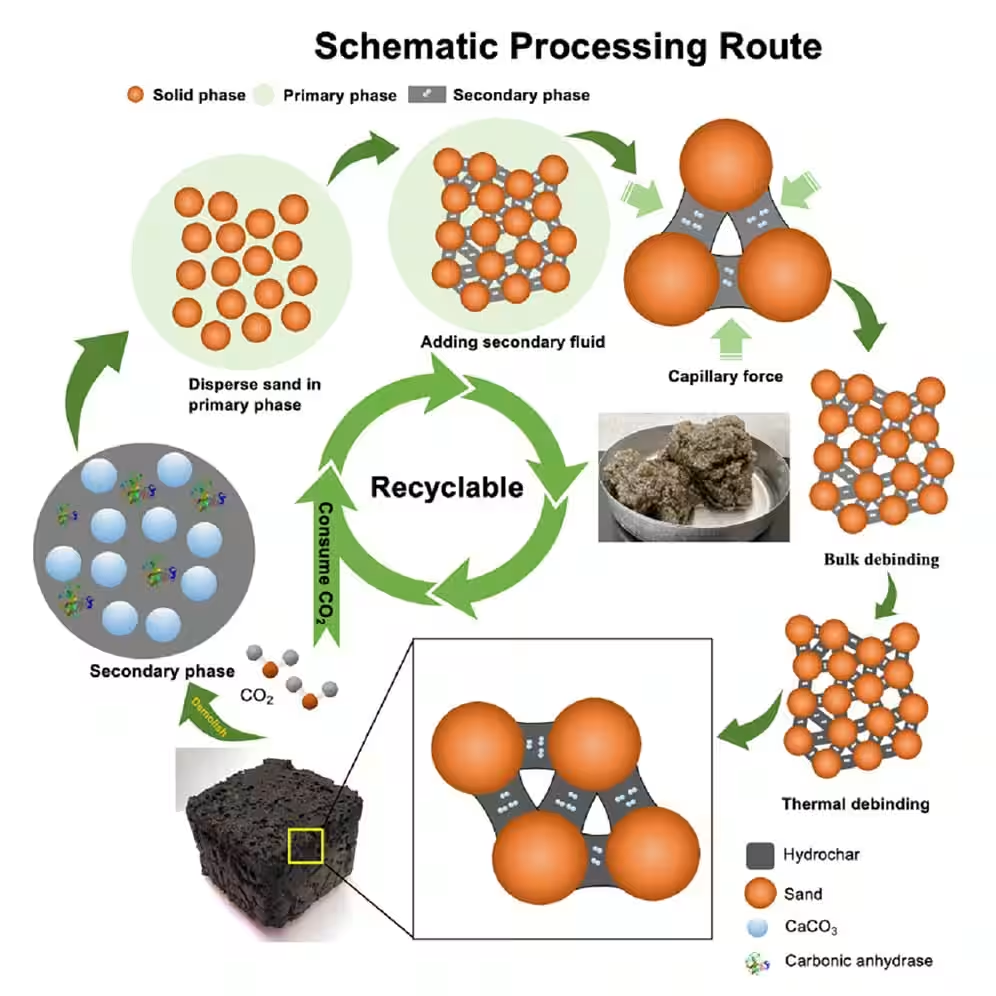
The result is a ternary composite material that can be molded into structural shapes and solidifies in hours. Traditional concrete, by contrast, requires high-temperature clinker production and can take 28 days to fully cure.
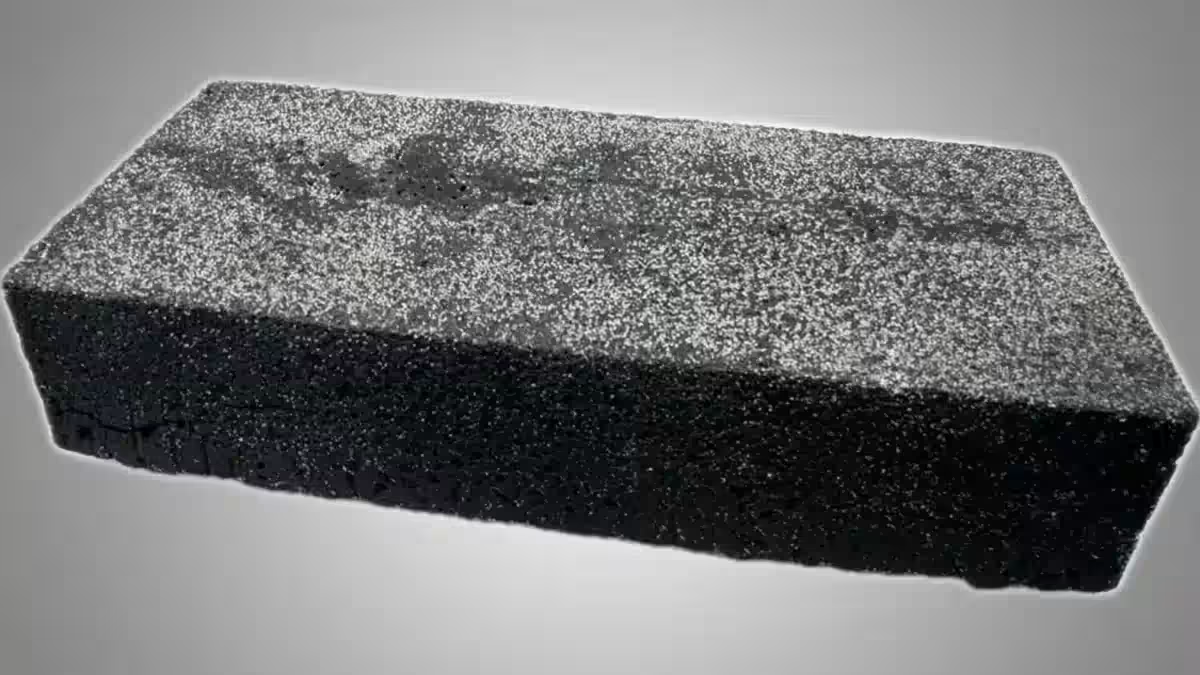
The team reported that ESM achieves an average compressive strength of 25.8 megapascals, surpassing the minimum strength threshold for structural concrete. The material also maintained high water stability with only minimal strength reduction under humid conditions.
A Stark Difference in Carbon Accounting
The carbon differential between ESM and conventional concrete is among the most striking aspects of the research. According to the study, producing one cubic meter of ESM sequesters 6.1 kilograms of CO₂.
Conventional concrete production emits approximately 330 kilograms of CO₂ per cubic meter. The researchers cited life cycle assessments indicating that producing a single cubic meter of concrete also consumes 1,579 megajoules of energy.
The building and construction sector accounts for 40 percent of global energy consumption and 33 percent of greenhouse gas emissions, the study noted, citing a World Economic Forum report. Concrete’s contribution to construction-related emissions remains disproportionate due to clinker’s high-temperature processing requirements.
“If even a fraction of global construction shifts toward carbon-negative materials like ESM, the impact could be substantial,” Rahbar said, according to WPI’s announcement of the research.
Potential Early Applications
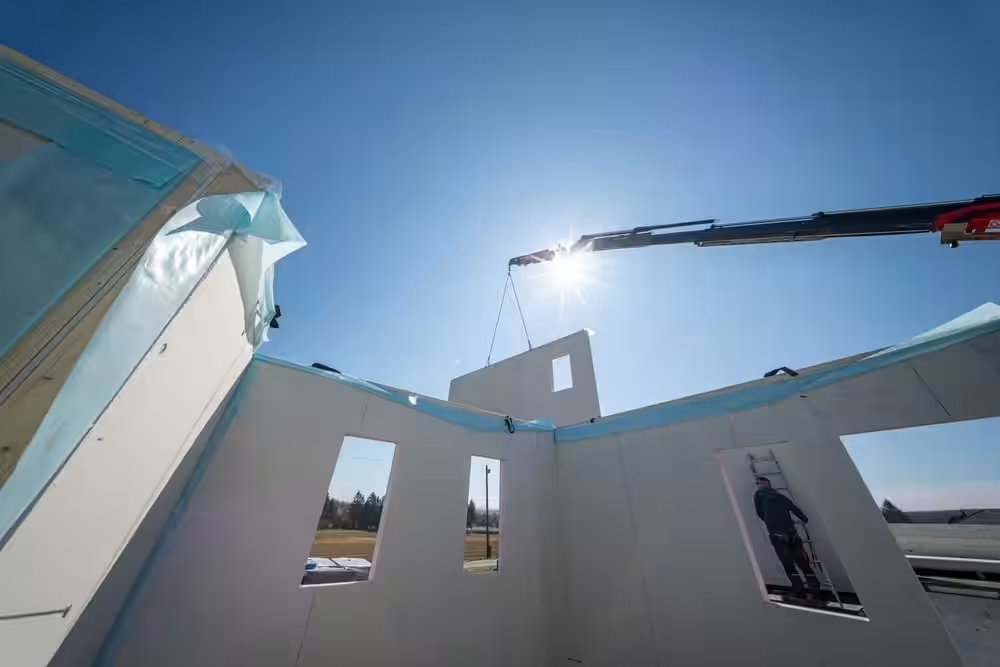
The researchers pointed to several near-term applications that align with the material’s rapid curing, tunable strength, and recyclability. Possible uses include roof decks, wall panels, and modular building components.
Because ESM can be produced with low energy and renewable biological inputs, the team suggested it could also support affordable housing and climate-resilient construction. Lightweight structural parts manufactured quickly could accelerate rebuilding after extreme events, making it relevant for post-disaster reconstruction.
The material is also repairable. The authors stated that this feature could lower long-term construction costs and reduce the volume of construction waste sent to landfills.
Laboratory Promise, Not Yet a Construction Product
The study clearly indicates that ESM has not left the laboratory. The paper states that future work must address large-scale production, long-term durability, and further improvements in mechanical properties.
The researchers provided no cost data, no manufacturing timeline, and no results from real-world structural testing. While the compressive strength exceeds the minimum for structural concrete, it remains below many conventional formulations used in load-bearing infrastructure. The team described continued development toward reinforced applications as a goal, not a current achievement.
The research team at WPI has demonstrated a working laboratory-scale process that transforms CO₂ into solid minerals using an enzyme-driven reaction. The material cures in hours rather than weeks and carries a carbon-negative footprint.
The scientific mechanism is documented. The environmental arithmetic is laid out. What remains is the engineering work of proving it can be made reliably, affordably, and at volumes that matter to a global construction industry that pours billions of tons of concrete every year.
This article has been fact checked for accuracy, with information verified against reputable sources. Learn more about us and our editorial process.
Last reviewed on .
Article history
- Latest version
Reference(s)
- Wang, Shuai., et al. “Durable, high-strength carbon-negative enzymatic structural materials via a capillary suspension technique.” Matter, vol. 9, no. 3, March 1, 2026, pp. 102564 Elsevier BV, doi: 10.1016/j.matt.2025.102564. <https://www.sciencedirect.com/science/article/abs/pii/S2590238525006071>.
- “Carbon-Negative Building Material Developed at Worcester Polytechnic Institute Published in Matter.” WPI <https://www.wpi.edu/news/carbon-negative-building-material-developed-worcester-polytechnic-institute-published-matter>.
- “This new building material pulls carbon out of the air.” ScienceDaily <https://www.sciencedaily.com/releases/2026/01/260121034148.htm>.
Cite this page:
- Posted by Hassan Raza