Webb Spots Record-Breaking Pair of Massive Quasars Lighting Up the Cosmic Dawn
JWST has discovered a record-setting pair of quasars from the cosmic dawn, potentially marking the closest duo of black holes ever found in the early universe.
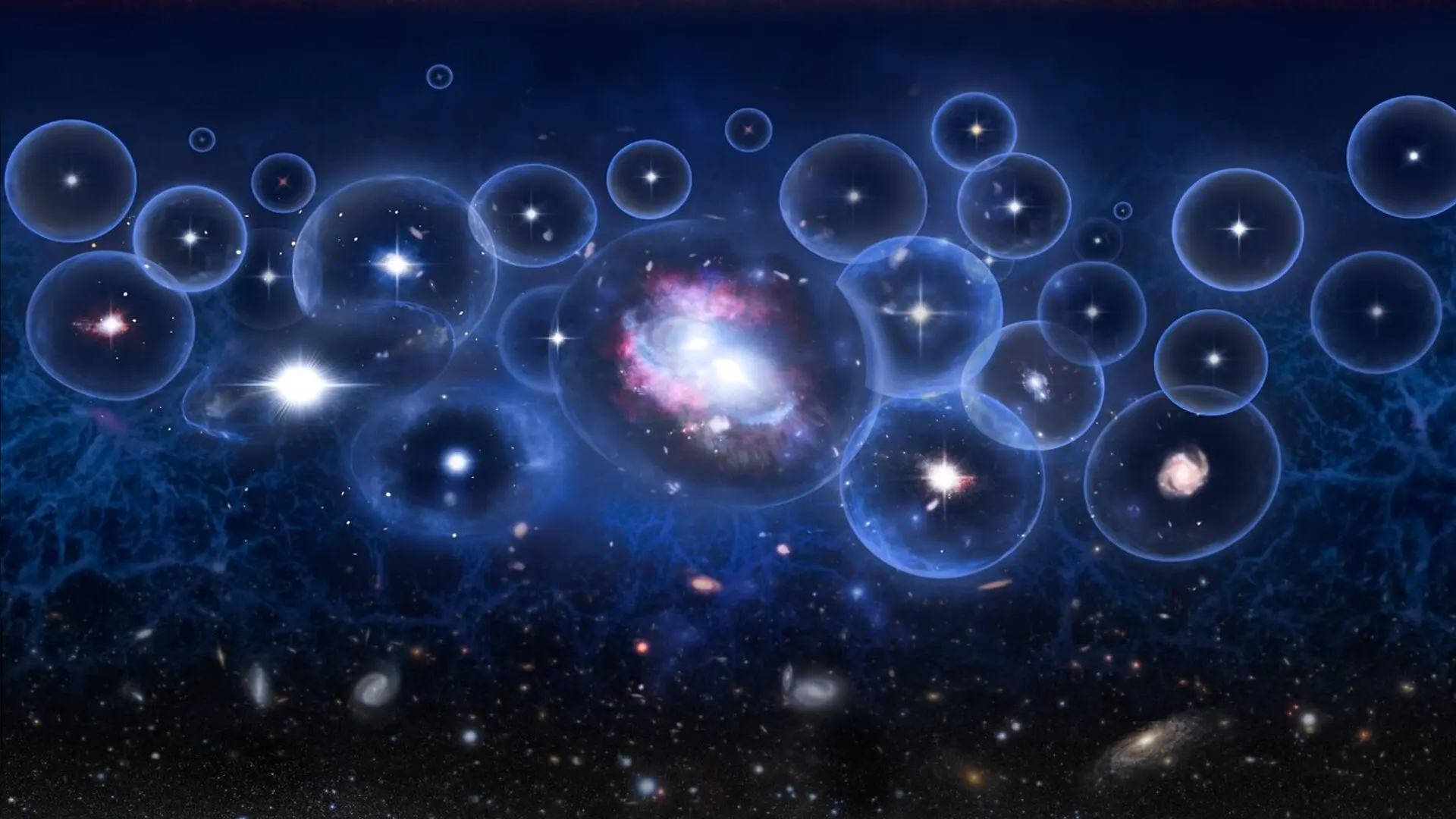
Astronomers have identified a pair of exceptionally luminous quasars dating back to the cosmic dawn, roughly 900 million years after the Big Bang. This discovery, centered on the system designated J1602+4228AB, provides a rare look at the intense activity of supermassive black holes during the universe’s infancy.
- Webb and Gemini North observed two quasar-like sources as they appeared about 900 million years after the Big Bang.
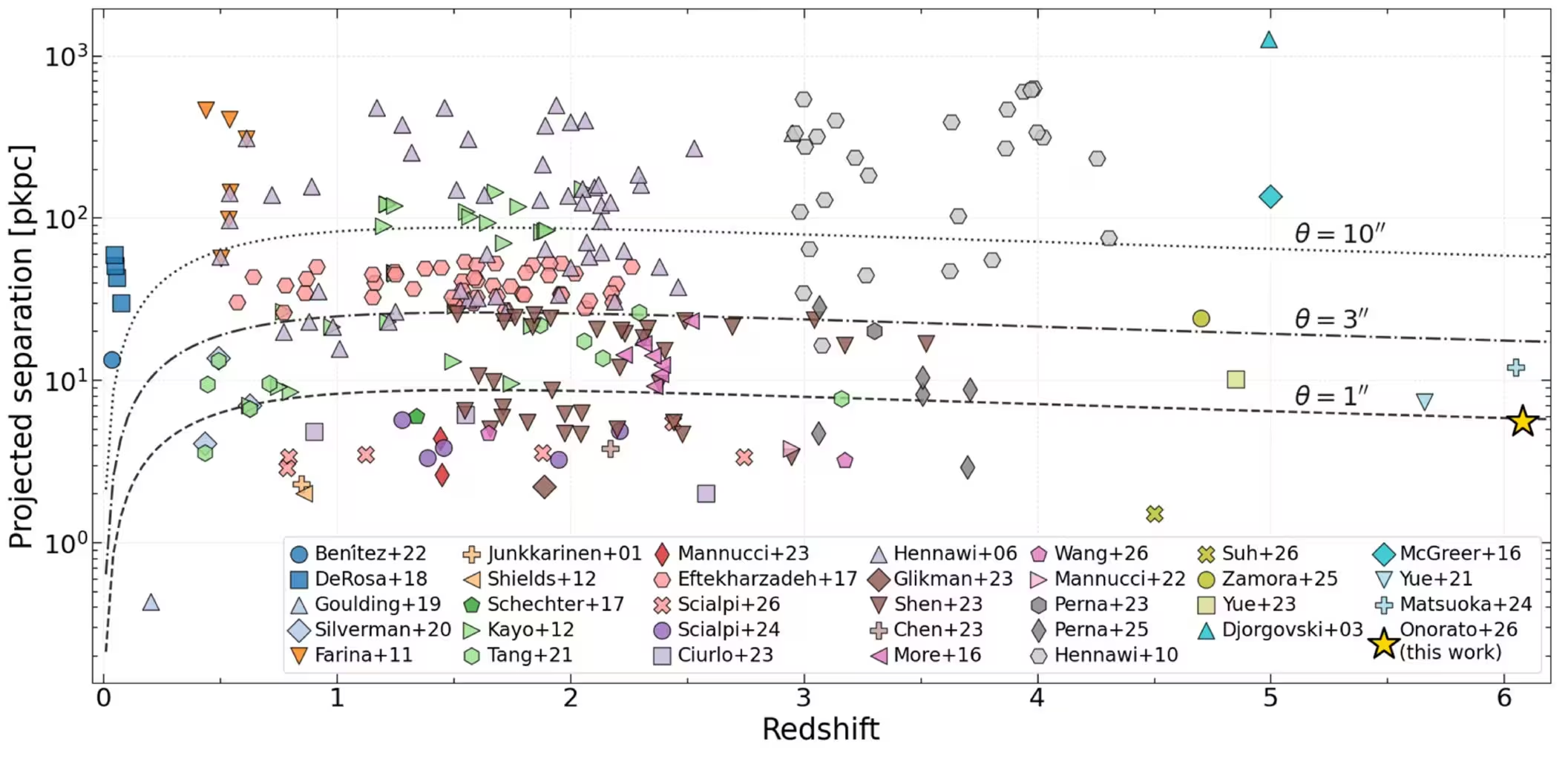
- The sources are about 18,100 light-years apart in projection. If they are distinct quasars, they form the closest known pair from that era.
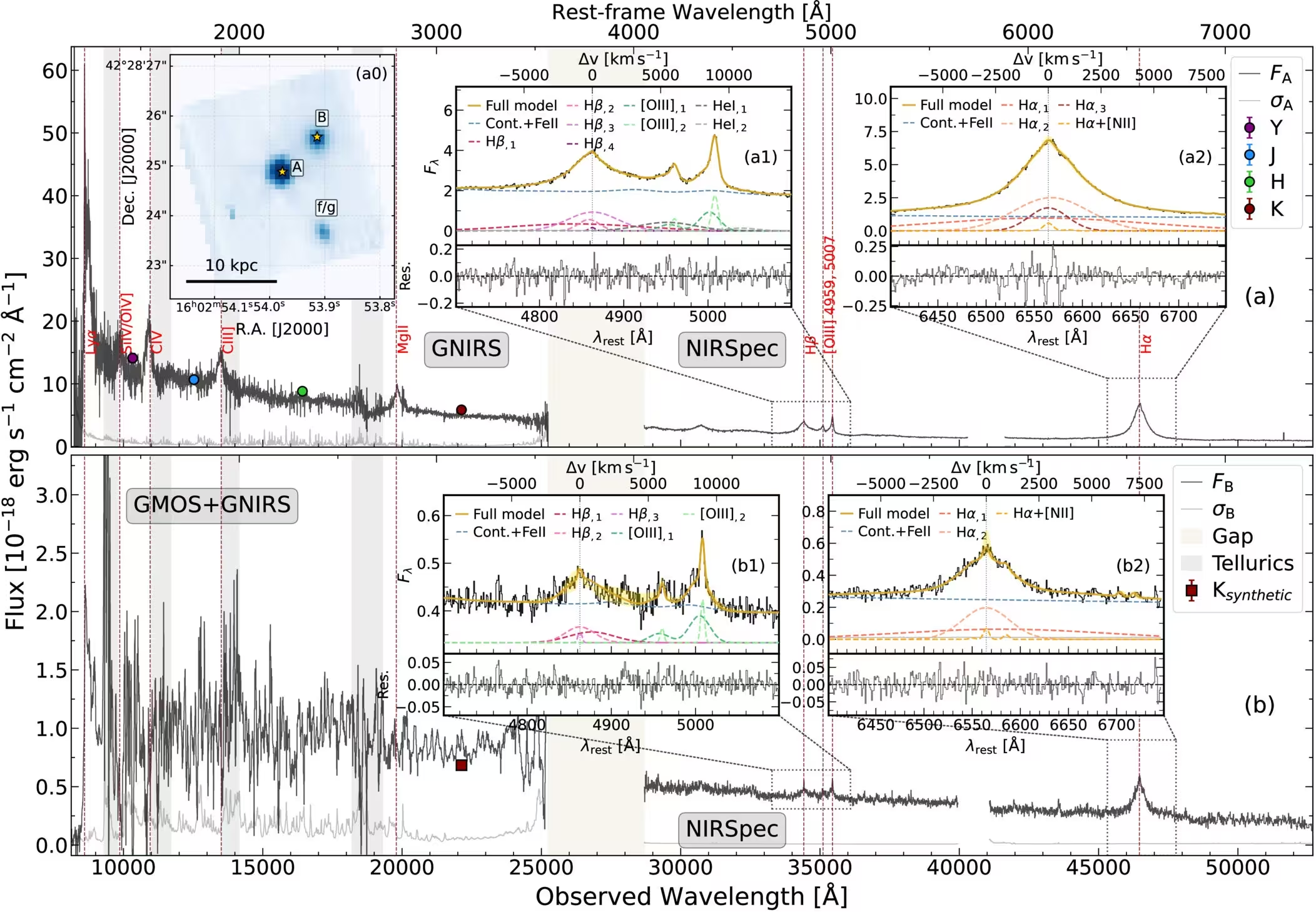
- Differences in their spectra favor two separate sources, although the team could not definitively rule out a gravitational lens.
The system, officially named Nāpōwawāʻenakaulua, was uncovered by a team led by Silvia Onorato of NSF NOIRLab. The findings, published in The Astrophysical Journal Letters, highlight a projected separation of approximately 18,100 light-years. If confirmed as a binary system, these two objects would constitute the most distant compact quasar pair ever documented, situated in a region of space that would comfortably fit within the Milky Way.
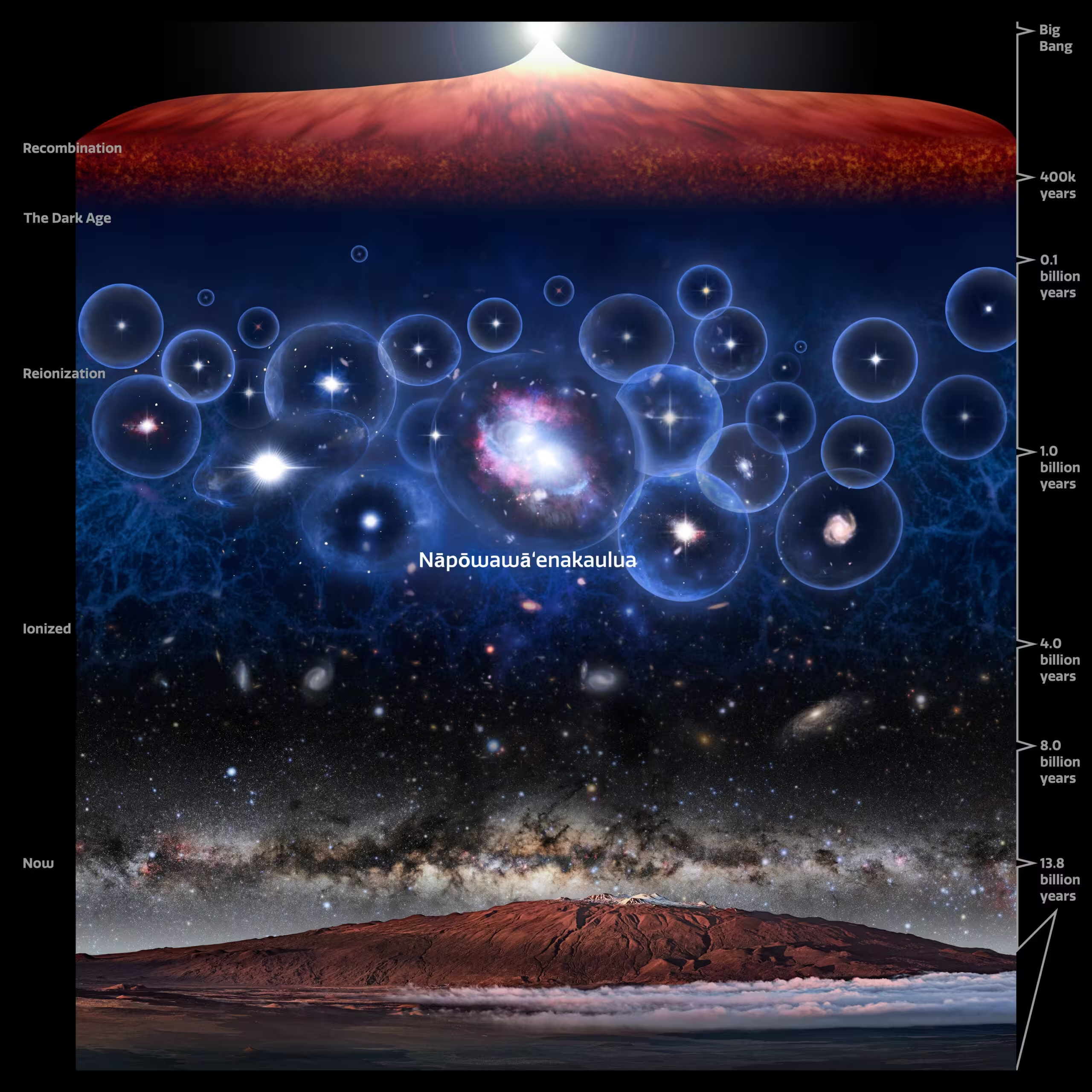
Unmasking the Cosmic Pair
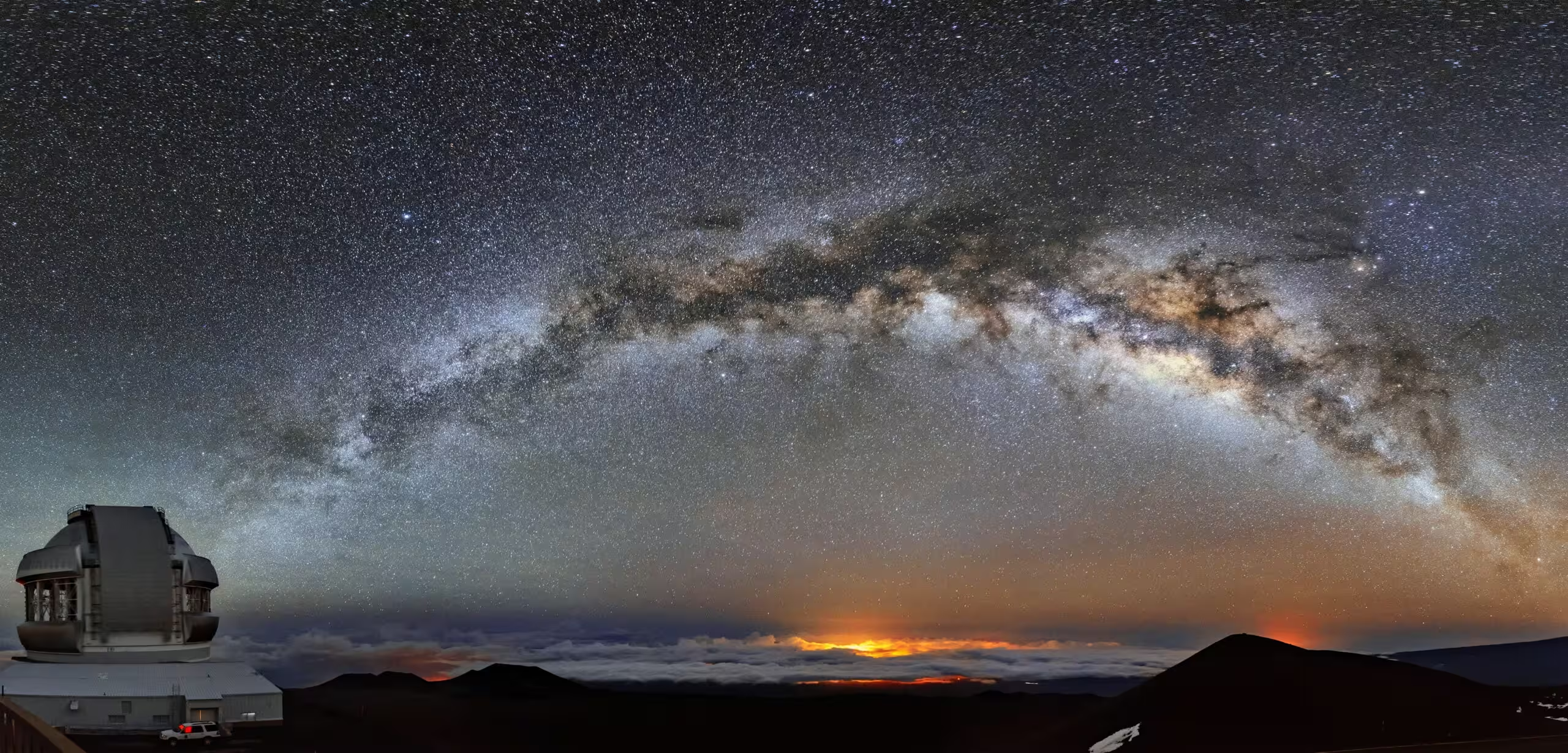
The identification process involved the Aether survey, a project utilizing the James Webb Space Telescope (JWST) to peer at 200 quasars across varying epochs. During a visual inspection, researchers noticed a faint neighbor near the primary target, J1602+4228A. To distinguish whether this was a genuine companion or a visual trick, the team utilized the near-infrared capabilities of the Gemini North telescope on Maunakea.
By collecting detailed spectra from both objects, the researchers could analyze the light signatures, including oxygen emission lines. Differences in these lines between the two sources provided crucial evidence for the existence of two distinct active galactic nuclei rather than a single source duplicated by a foreground gravitational lens.
If they are indeed two separate objects, their calculated masses—estimated at 1.5 billion and 400 million solar masses—pose significant questions for current cosmological models. Growing such massive black holes so quickly in the early universe remains a primary challenge in astrophysics, suggesting these objects may have existed in an unusually dense, gas-rich environment that facilitated rapid accretion.
Implications for Early Galactic Evolution
The discovery offers a unique laboratory for studying how black holes influence their hosts during the era of galaxy formation. Interaction between galaxies often drives gas toward their centers, fueling black holes and triggering the brilliant output associated with quasars. Understanding whether these two quasars share a common origin or were triggered by the same environmental factors is now a key research priority.
While the team noted a potential foreground galaxy that could theoretically induce lensing, the distinct spectral characteristics observed make a physical pair the more likely explanation. Future deep-field imaging and more complex lens modeling are expected to clarify the nature of the surroundings and confirm whether these black holes are truly in the process of a long-term cosmic dance.
Broadening the Search
Nāpōwawāʻenakaulua—a name chosen through a collaborative effort with the ʻImiloa Astronomy Center and Ka Haka ʻUla O Keʻelikōlani—stands as a new benchmark for researchers seeking to identify similar systems. The discovery demonstrates that even with highly sensitive equipment, quasars can easily mask nearby companions, potentially causing astronomers to underestimate the frequency of binary black hole systems in the early universe.
As telescopes like Webb continue to survey the deep reaches of space, finding more of these compact, early-universe pairs will be vital. Such samples will help determine if this system is an extreme outlier or if the early universe was populated with more of these energetic, dual-black-hole structures than previously assumed.
Exploring Related Research
This article has been fact checked for accuracy, with information verified against reputable sources. Learn more about us and our editorial process.
Last reviewed on .
Article history
- Latest version
Reference(s)
- “NOIRLab / NSF National Optical-IR Astronomy Research Laboratory.” <https://noirlab.edu/>.
- Onorato, Silvia., et al. “Nāpōwawā‘enakaulua : A Close Quasar Pair at Cosmic Dawn in the Aether Survey.” The Astrophysical Journal Letters, vol. 1011, no. 2, November 10, 2026, pp. L59 American Astronomical Society, doi: 10.3847/2041-8213/aeb11f. <https://doi.org/10.3847/2041-8213/aeb11f>.
Cite this page:
- Posted by John Williams