Rare Iron Found In Chang’e-6 Samples Could Reveal The Moon’s Hidden Magnetic Past
Rare iron structures discovered in Chang’e-6 lunar samples may reveal vital clues about the Moon’s mysterious and ancient magnetic environment.
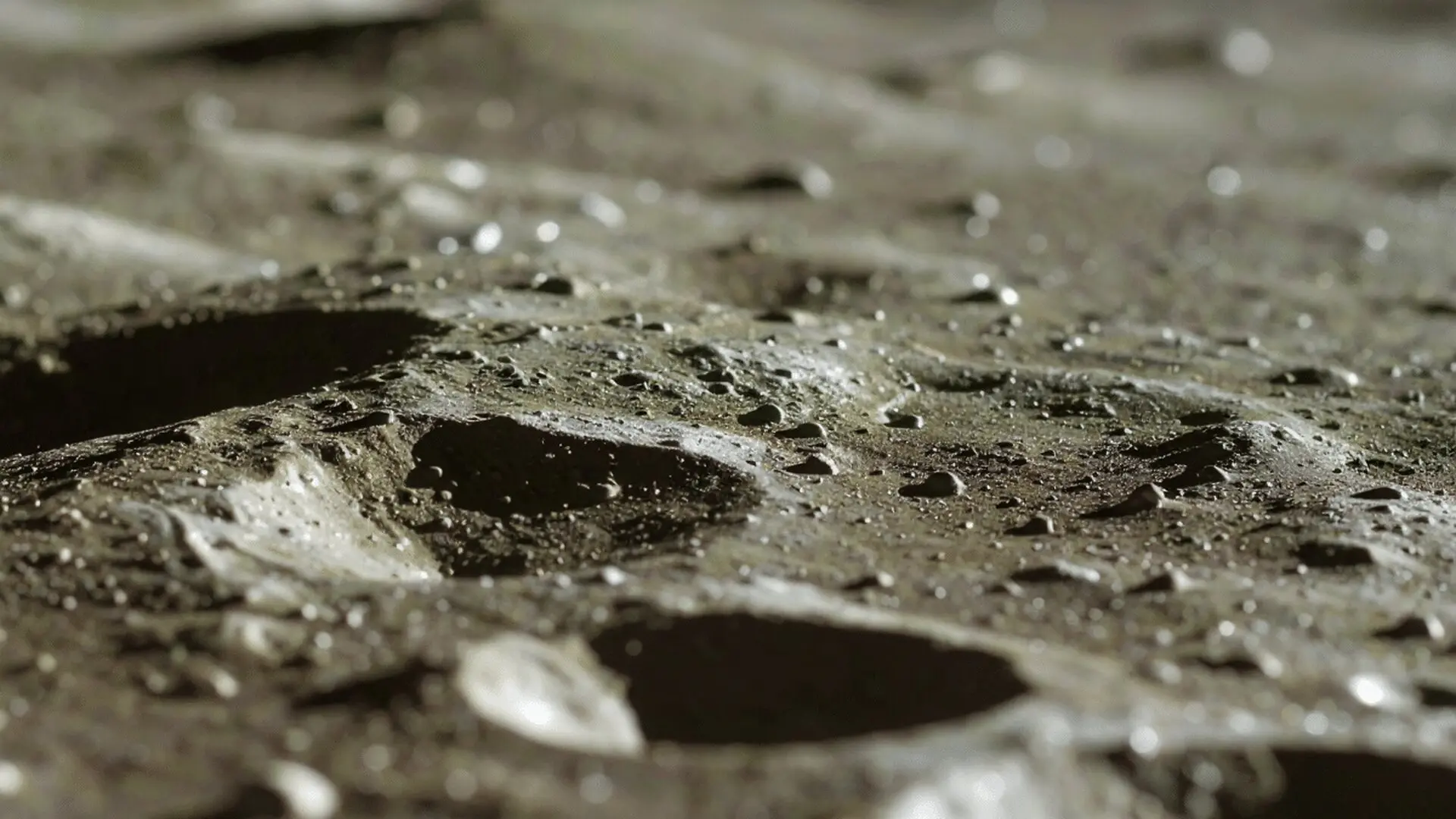
Researchers analyzing material brought back by China’s Chang’e-6 mission have uncovered a rare, previously undetected form of iron embedded within the lunar soil. According to a study published in the Proceedings of the National Academy of Sciences, this discovery offers a unique window into the moon’s long-lost magnetic history.
The team identified metallic iron in a face-centered cubic phase, known as γ-Fe, trapped inside microscopic impact-glass particles. While this structure is common in specific industrial settings on Earth, its presence in natural lunar samples is unprecedented. It serves as a physical record of the high-energy, high-pressure environments created by ancient meteorite impacts on the lunar surface.
Unearthing Magnetic Evidence from the Moon’s Far Side
A research collective led by Professor Du Haifeng at the Chinese Academy of Sciences (CAS) High Magnetic Field Laboratory in Hefei conducted the analysis. The samples, sourced from the moon’s far side, provided the scientists with fresh material that differs significantly from the regions sampled by previous Apollo-era missions.
The researchers believe these tiny glass-encased iron grains act as “magnetic fossils.” While the moon currently lacks a global magnetic field, scientific consensus suggests it possessed one in the distant past. These newly discovered structures may have locked in the magnetic signatures present during the violent impact events that forged them, allowing scientists to reconstruct environmental conditions from billions of years ago.
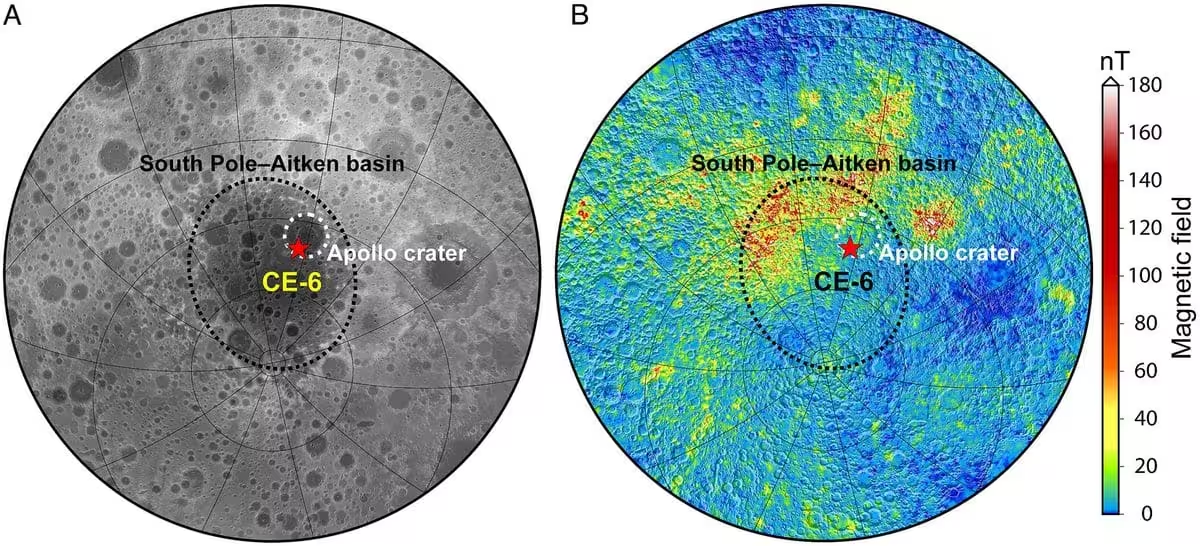
Decoding Ancient Lunar Environments
The ability to extract data from such infinitesimal features demonstrates the power of modern spectroscopic and imaging technologies. Dr. Li Long, a researcher at the laboratory, noted that these microscopic records provide an essential path toward clarifying the moon’s ancient geological and magnetic evolution.
By applying advanced techniques like off-axis electron holography, the team was able to map the magnetic domain states of these iron nanoparticles. These maps reveal how the particles responded to magnetic fields, effectively serving as a diagnostic tool for understanding the lunar interior’s state during the moon’s formative eras.
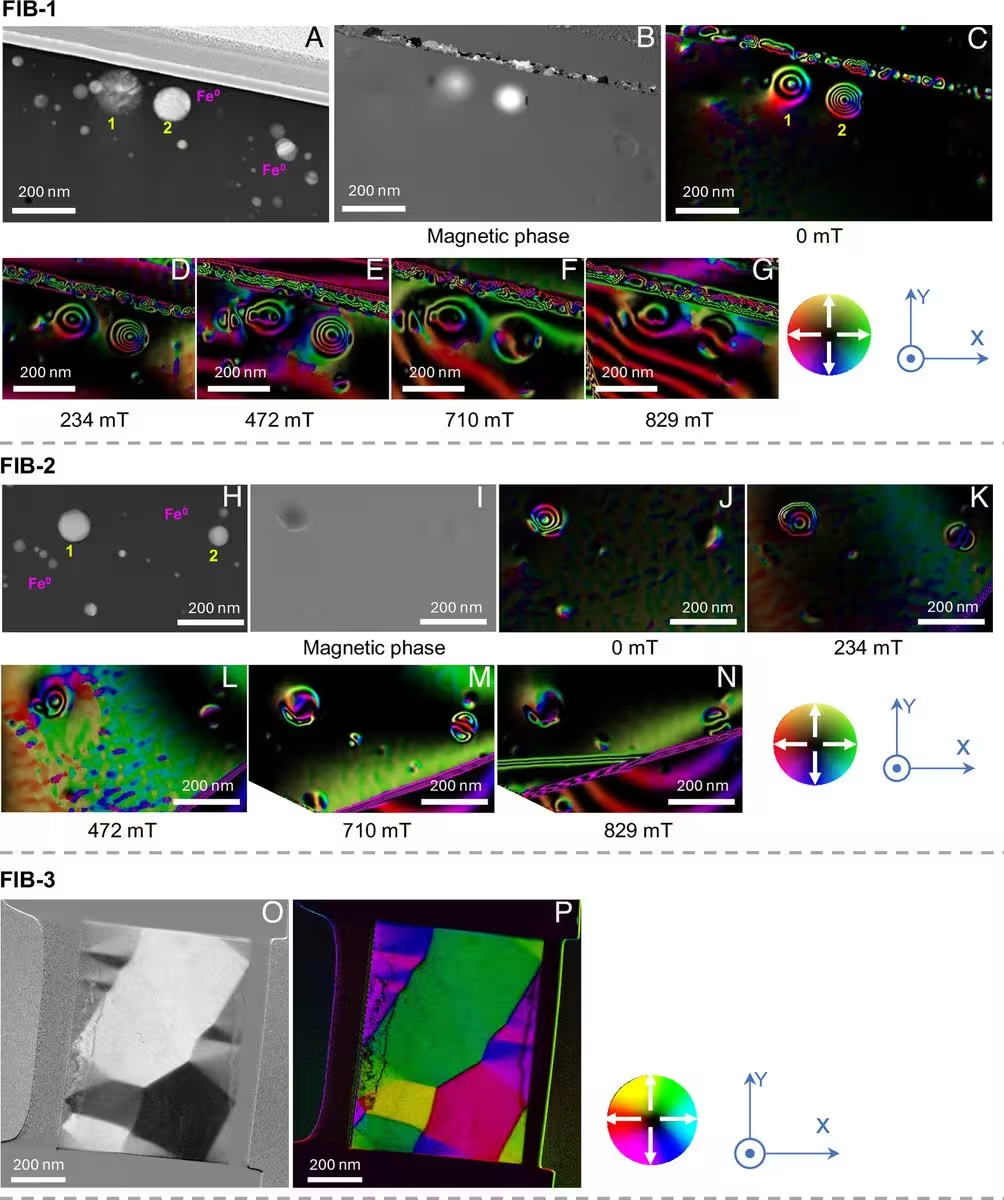
Expanding the Frontier of Lunar Science
The Chang’e-6 samples have opened a new chapter in lunar exploration. Because this material was recovered from a previously unexplored section of the lunar far side, it provides unique insights that were unavailable to earlier lunar missions. The discovery of γ-Fe is just one example of the vast amount of information contained within these samples, ranging from volcanic history to mineralogical formation.
As the scientific community continues to dissect the returned regolith, the focus remains on identifying further magnetic signatures and correlating them with known impact craters and geological periods. Every granular discovery brings researchers closer to assembling a complete narrative of how Earth’s satellite evolved from a dynamic, volcanic body into the quiet, cratered world observed today.
This article has been fact checked for accuracy, with information verified against reputable sources. Learn more about us and our editorial process.
Last reviewed on .
Article history
- Latest version
Reference(s)
- Liu, Pengfei., et al. “Magnetic vortex state of natural lunar γ-Fe.” Proceedings of the National Academy of Sciences, vol. 123, no. 38, September 16, 2026 National Academy of Sciences, doi: 10.1073/pnas.2608395123. <https://www.pnas.org/doi/10.1073/pnas.2608395123>.
Cite this page:
- Posted by Zara Tariq