Hidden Cave Deposits Reveal the Secrets of a Once Green and Rainy Sahara
Evidence hidden deep within an ancient cave reveals the surprising history of the Sahara, confirming the desert wasn’t always the arid landscape we know.
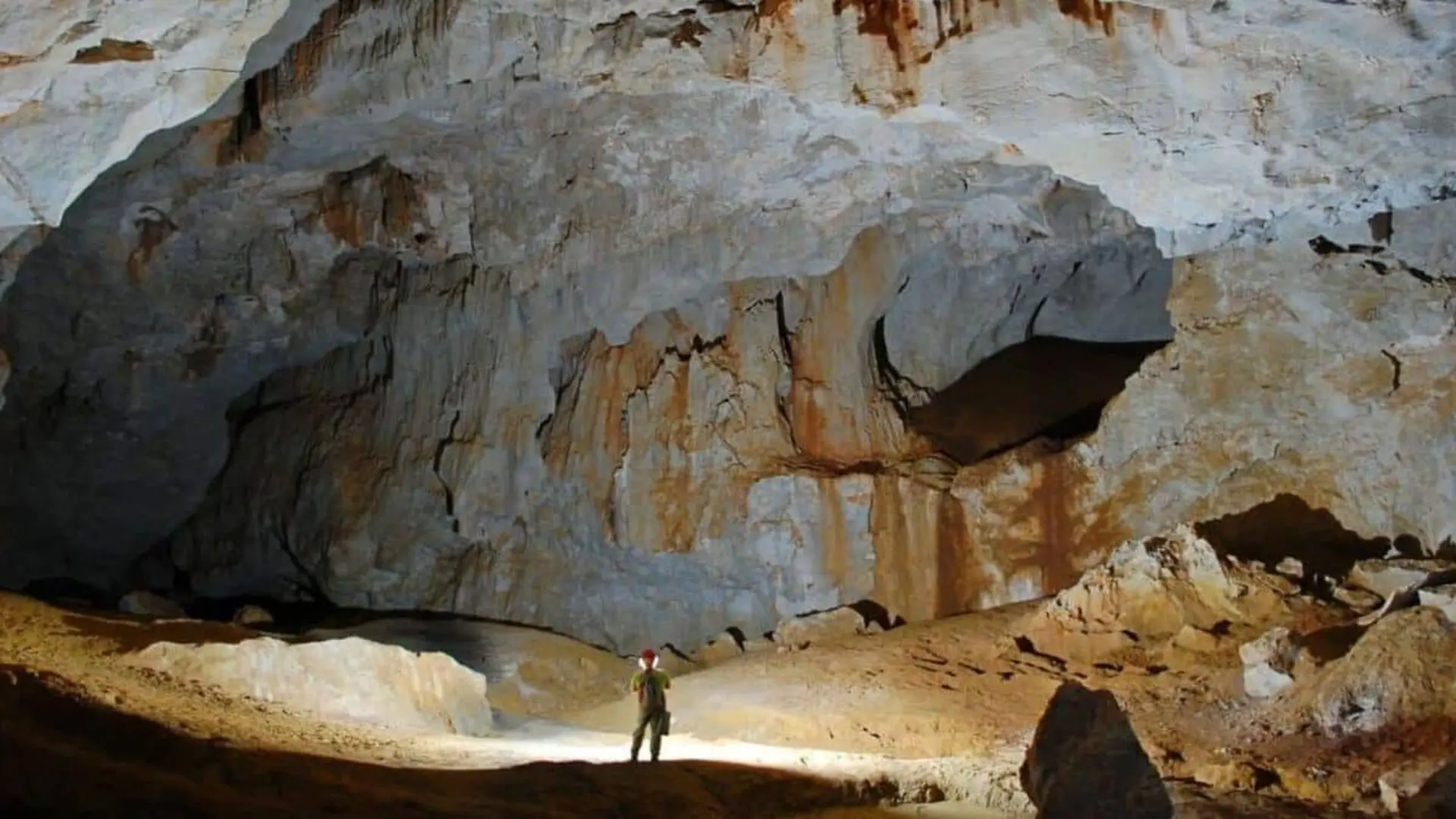
The Sahara Desert, today recognized as the world’s most expansive hot desert, was once a significantly different landscape defined by lush environments and human activity. New research examining mineral deposits within caves in southern Morocco has provided definitive evidence that this arid expanse experienced periods of substantial rainfall thousands of years ago.
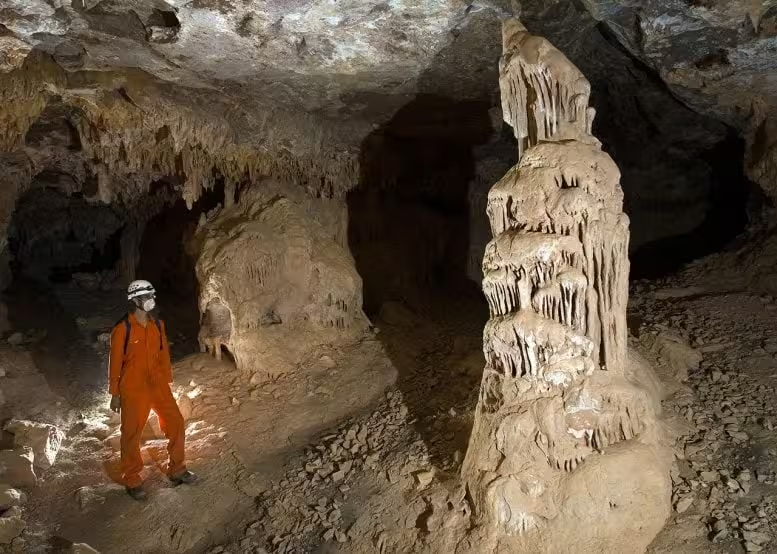
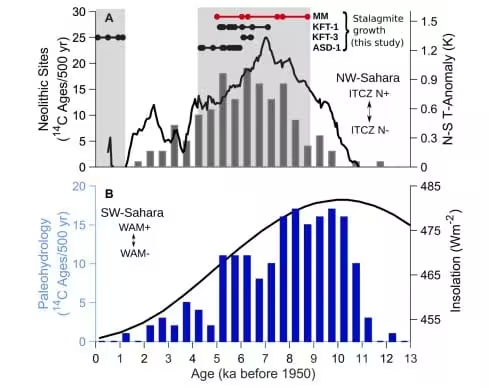
Geological records recovered from deep underground are rewriting the timeline of the North African climate. By analyzing small fragments of stalagmites—mineral pillars that form over millennia as water drips into subterranean chambers—scientists have uncovered a historical narrative of the region dating back to the Holocene epoch. According to a study published in Earth and Planetary Science Letters, these mineral archives indicate that the Sahara received regular precipitation between 8,700 and 4,300 years ago.
Geological Clues to Ancient Rainfall
Stalagmites serve as highly precise climate proxies. As rainwater filters through the soil and into cave systems, it deposits minerals layer by layer. These layers trap chemical markers that allow researchers to reconstruct past environmental conditions. To unlock this data, the research team utilized fragments weighing as little as 0.25 grams, employing uranium-thorium dating to establish a precise chronology for when these formations were active.
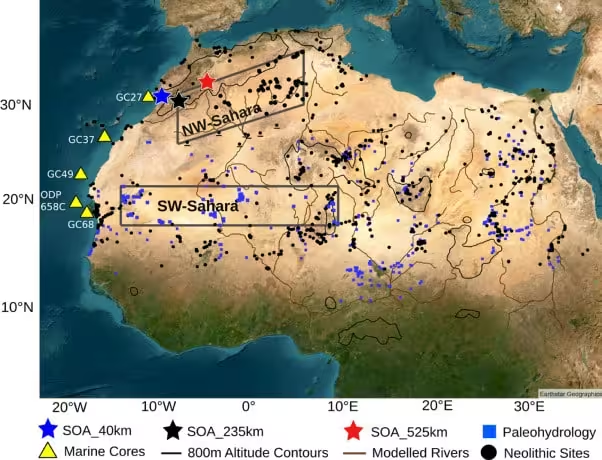
The investigation went beyond simply confirming the presence of water; the team analyzed oxygen isotope ratios to determine the source of the moisture. Their findings suggest the influence of tropical plumes—massive atmospheric currents capable of transporting humidity from tropical zones into subtropical regions. This represents a significant discovery, marking the first time these meteorological systems have been linked to precipitation patterns in the northwestern Sahara.
Human Migration and the Humid Sahara
The existence of this “Green Sahara” had profound implications for human populations. Archaeologists have documented a surge in Neolithic settlements south of the Atlas Mountains that correlates precisely with the humid period identified by the cave records. As the environment transformed into a more hospitable landscape, it enabled pastoral societies to thrive, providing the necessary vegetation and water sources to sustain livestock across terrain that is now virtually impassable.
Reflecting on the study, researcher Sam Hollowood highlighted the surprising volume of historical data contained within such small geological samples. The team is now working to further quantify the intensity of these ancient rainfall events to better understand the climate dynamics of the era.
“It has been exciting experiencing how much we can learn from small pieces of limescale that form underground,” Hollowood noted.
Co-author Dr. Julia Barrott, who participated in the original fieldwork in 2010, emphasized the harmony between the geological and archaeological findings. The alignment between the chemical signatures trapped in the stalagmites and the known distribution of ancient human sites confirms a broader, synchronized shift in the region’s climate and social landscape.
“It was exciting to find and explore caves in southern Morocco during my fieldwork in 2010. And it is very rewarding that our measurements and interpretations fit so well with archaeological and environmental records from the wider region,” said Dr. Barrott.
This article has been fact checked for accuracy, with information verified against reputable sources. Learn more about us and our editorial process.
Last reviewed on .
Article history
- Latest version
Reference(s)
- “Redirecting.” <https://linkinghub.elsevier.com/retrieve/pii/S0012821X24006277>.
Cite this page:
- Posted by Zara Tariq