Huge New Clawed Dinosaur Discovered in China Reveals Bizarre Evolutionary Secrets
A nearly complete skeleton unearthed in China reveals a unique species, offering scientists fresh insights into the evolutionary history of ancient animals.
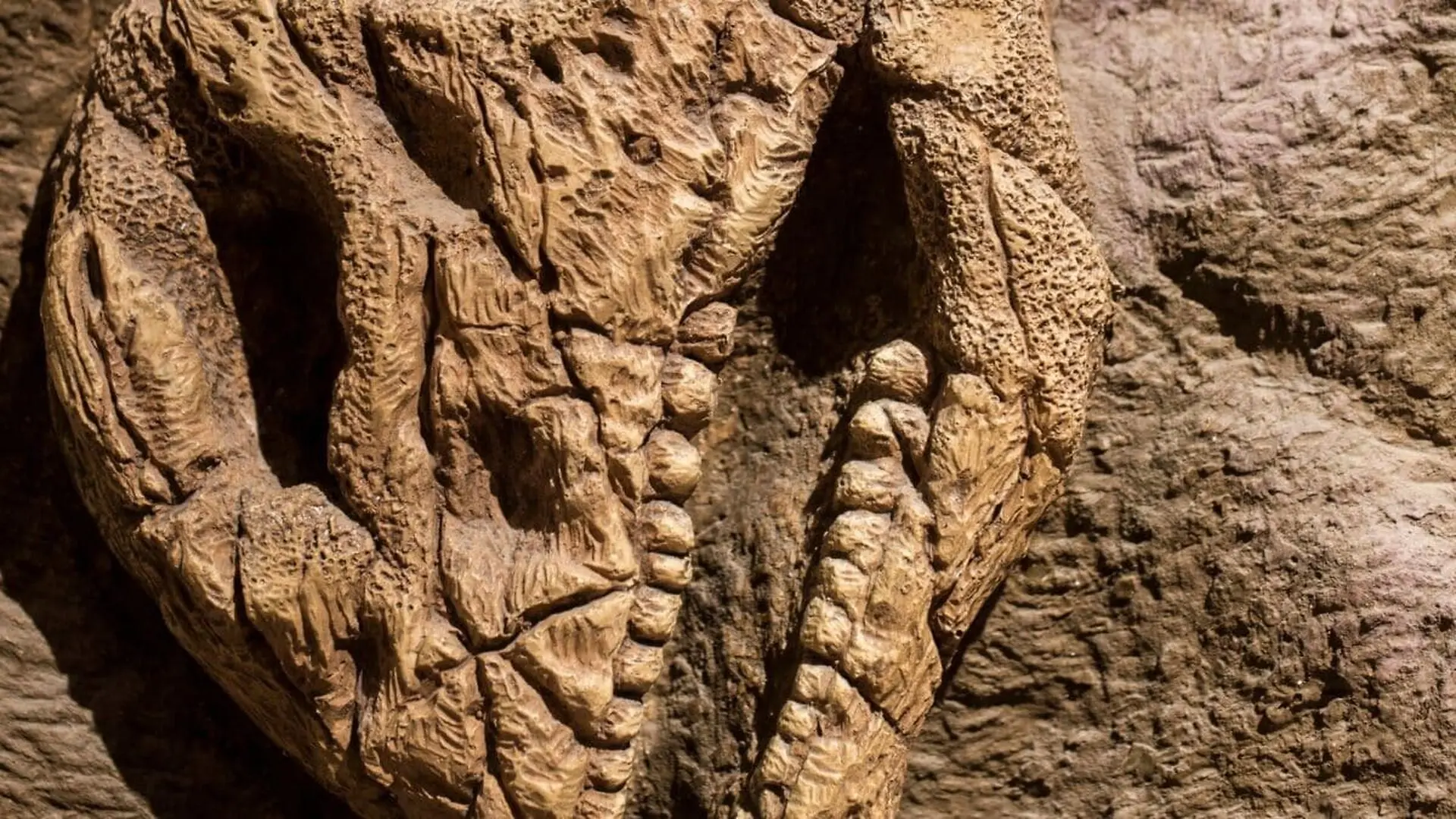
Paleontologists have identified a new species of therizinosaur, an enigmatic group of herbivorous dinosaurs defined by their massive claws, discovered within the fossil-rich deposits of northeastern China. The new species, Kayrasaurus changliensis, now stands as the largest therizinosaur ever recovered from the Jehol Biota, a region renowned for its exceptional preservation of feathered dinosaurs.
Therizinosaurs occupy a paradoxical branch on the theropod family tree, sharing a common ancestry with apex predators like Tyrannosaurus rex while having evolved to subsist entirely on plants or a specialized mixed diet. Their morphology is a striking collage of traits, featuring diminutive heads and long necks paired with leaf-shaped teeth and elongated manual claws, all set upon a frame that otherwise resembles a standard predatory dinosaur.
A research team led by Dr. Xing Xu of the Chinese Academy of Sciences’ Institute of Vertebrate Paleontology and Paleoanthropology and Yunnan University notes that this physiological blend has historically complicated the classification of these creatures. Their findings, published in the Journal of Systematic Palaeontology, provide fresh insight into this evolutionary puzzle.
A Remarkably Intact Specimen
Excavated from the Yixian Formation in Liaoning province, a site famous for its numerous feathered dinosaur specimens, this new find is distinguished by its high level of preservation. The recovery includes a largely intact skull, a significant rarity given the usually fragmentary state of therizinosaur remains.
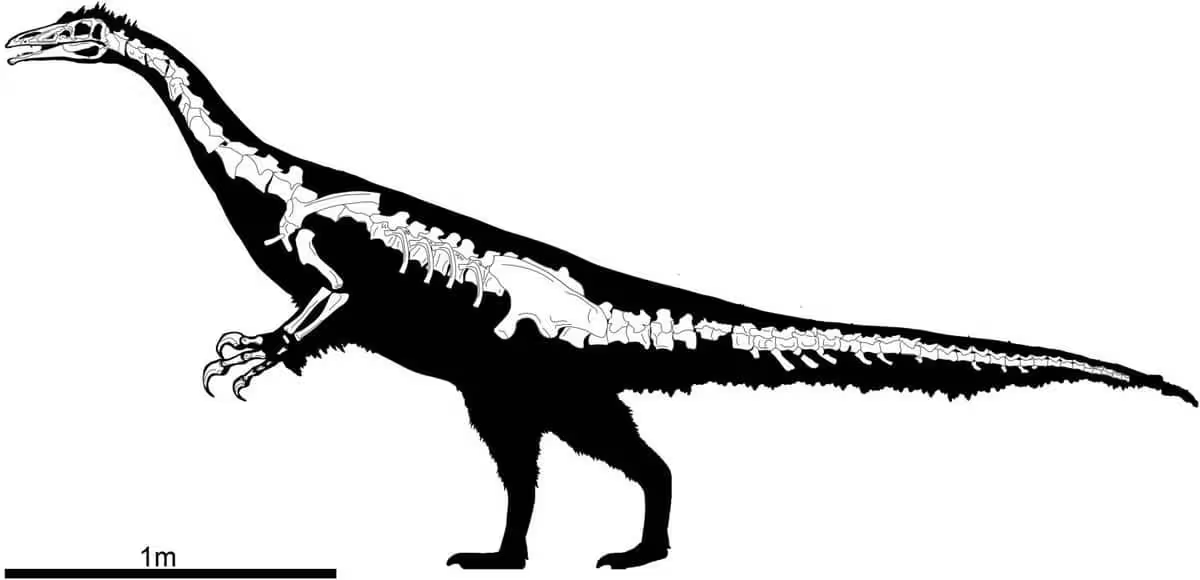
Estimated at roughly 3.6 meters (approximately 11 feet) in length, the specimen is significantly larger than Beipiaosaurus, which previously held the title of the largest Jehol therizinosaur. With a body mass estimated between 117 and 274 kilograms (260 to 600 pounds), the animal is classified as a subadult, suggesting that fully grown members of the species may have reached even more impressive dimensions.
Unique Evolutionary Adaptations
Kayrasaurus changliensis is marked by several distinct anatomical features. Most notably, its lower jaw contains more than 45 teeth, the highest count documented in any known member of this group. Furthermore, its neck vertebrae are disproportionately long compared to the vertebrae of the back, an adaptation likely suited to browsing at varied heights rather than ground-level grazing. The creature also possesses a unique, upward-curving “lip” on its manual claws, an unusual trait not observed in its closest relatives.
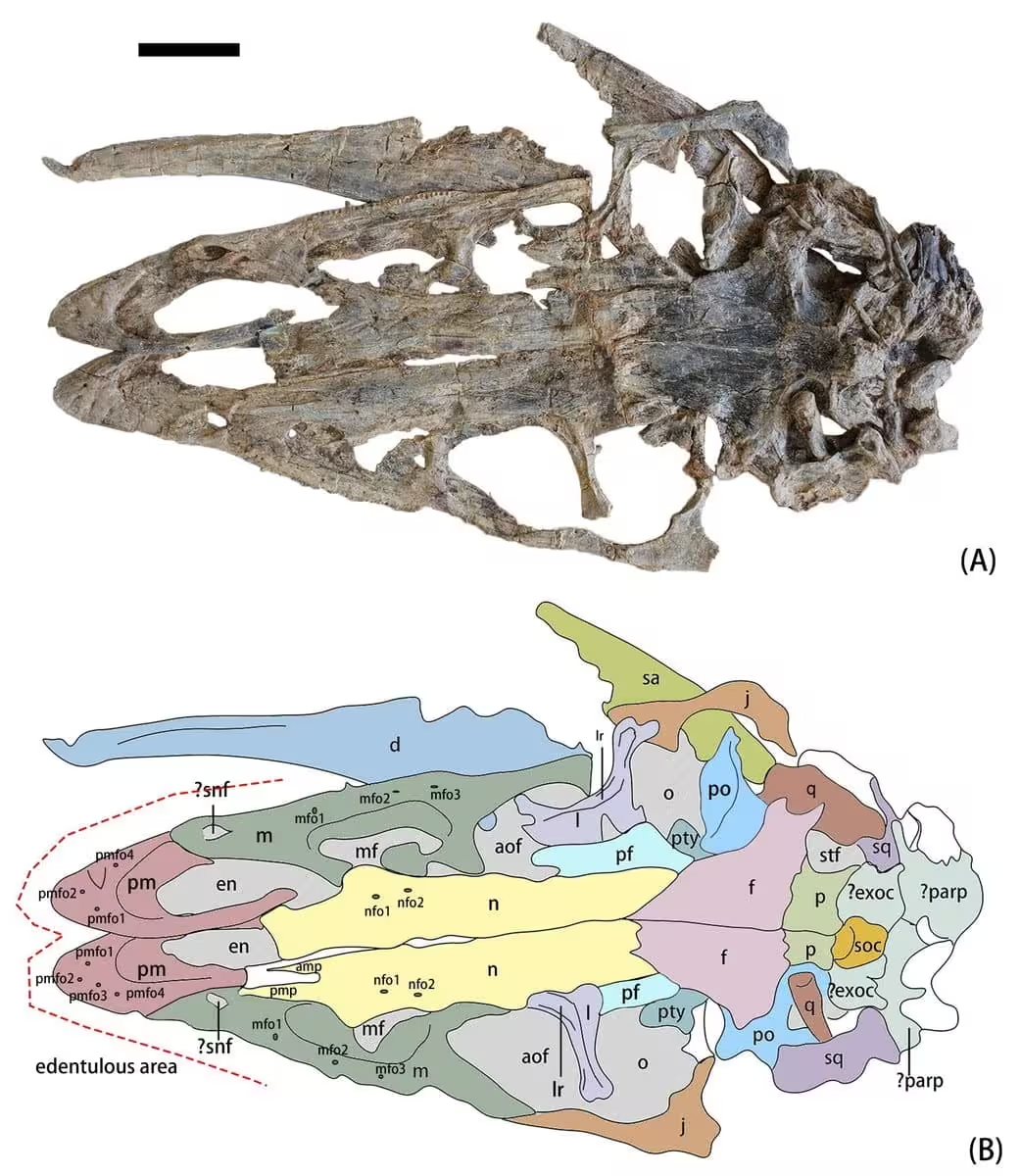
“As the largest therizinosaurian yet known from the Jehol Biota, Kayrasaurus changliensis bridges morphological gaps between previously described taxa,” the researchers stated.
Ecological Specialization in the Cretaceous
The researchers conducted a comparative analysis of Kayrasaurus against other Jehol therizinosaurs, including Beipiaosaurus, Jianchangosaurus, and Lingyuanosaurus. Their results suggest a split in evolutionary strategies. Kayrasaurus and Beipiaosaurus exhibit sturdier, more robust builds and jaws optimized for heavy oral processing. In contrast, Jianchangosaurus and Lingyuanosaurus possess more gracile frames, which imply a reliance on speed and maneuverability.
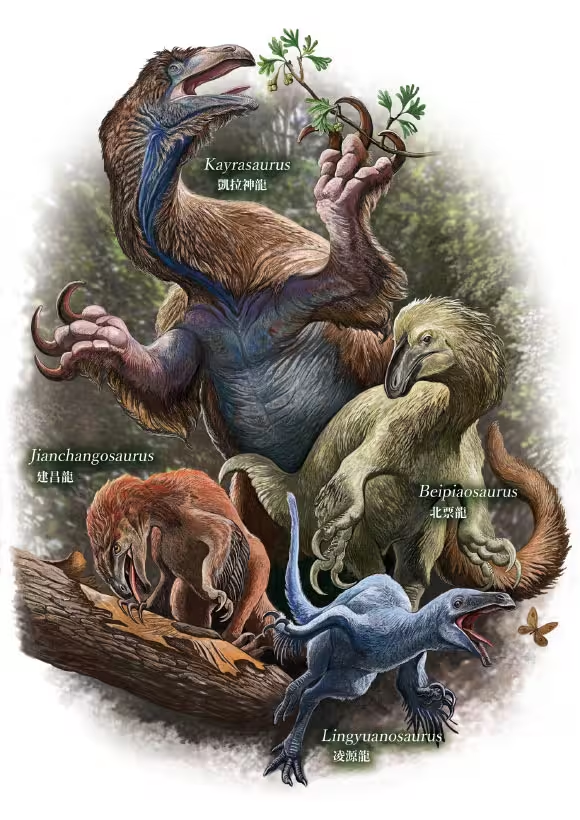
The study proposes that these distinct morphologies point toward separate ecological niches within the same environment. While the team highlights this as a preliminary conclusion, they emphasize that further fossil discoveries are essential to fully clarify how these diverse therizinosaurs coexisted and partitioned resources in their prehistoric habitat.
This article has been fact checked for accuracy, with information verified against reputable sources. Learn more about us and our editorial process.
Last reviewed on .
Article history
- Latest version
Reference(s)
- Liao, Chun-Chi., et al. “A new therizinosaur from the Early Cretaceous Jehol Biota and ecomorphological patterns among early therizinosaurians.” Journal of Systematic Palaeontology, vol. 24, no. 2, September 10, 2026 Informa UK Limited, doi: 10.1080/14772019.2026.2710287. <https://www.tandfonline.com/doi/full/10.1080/14772019.2026.2710287>.
Cite this page:
- Posted by Zara Tariq