Archaeologists Uncover Lost Queen and Hundreds of Ancient Burials at Saqqara
After 4,000 years buried in Egyptian sands, a fallen obelisk has finally revealed the identity of a woman whose name was long lost to history.
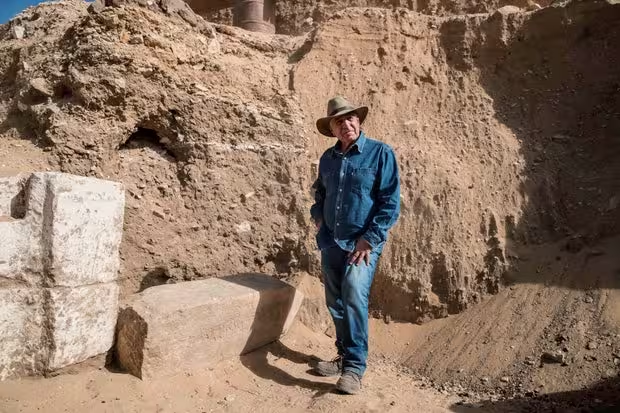
For over four millennia, an identity remained lost to the shifting sands of Saqqara. A weathered obelisk, toppled at the threshold of a crumbling temple, bore a name that had vanished from the annals of history. It was not until 2010 that a team led by noted Egyptologist Zahi Hawass began to unravel the mystery, uncovering a small, anonymous pyramid nestled near the tomb of King Teti, the inaugural ruler of Egypt’s Sixth Dynasty.
While the architectural site clearly served as the final resting place of a royal woman, the interior offered no immediate clues to her identity. It took a decade of meticulous excavation within the funerary temple to secure the missing piece of the puzzle. Inscriptions recovered from the temple walls, mirroring those on the fallen obelisk, finally identified the figure as Queen Neit, a consort of Teti who held power between approximately 2323 and 2291 BC. Speaking to CBS News in 2021, Hawass admitted that the monarch had been entirely unknown to the modern archaeological record until this discovery.
An Architectural Mystery Resolved
King Teti’s immediate funerary landscape was already known to host the pyramids of his other queens, Iput I and Khuit. The third structure, uncovered by Hawass’s team, had long been the subject of speculation, with researchers initially wondering if it belonged to the king’s mother. The breakthrough came through the examination of the temple’s layout and its associated mud-brick storehouses, which were designed to hold ritual offerings. The discovery of the queen’s name finally restored her to her place in the Old Kingdom dynasty.
Because ancient Egyptian hieroglyphs captured only consonants, the queen’s name appears in various transliterations—including Neit, Neith, and Naert—but the consensus confirms her presence in the historical narrative. Excavations at the site remain active; as recently as November 2025, the expanding cemetery complex was presented to visiting dignitaries, including King Philippe of Belgium, as a testament to the site’s ongoing importance.
A Necropolis Reclaimed by Time
The significance of the site extends far beyond Queen Neit. Deep within the bedrock surrounding Teti’s pyramid, researchers identified 22 burial shafts containing remains from the New Kingdom, specifically the 18th and 19th Dynasties (circa 1550 to 1186 BC). This discovery was unexpected, as it suggests that the veneration of King Teti persisted for more than a thousand years after his death, turning the area into a highly desirable location for later generations to be buried.
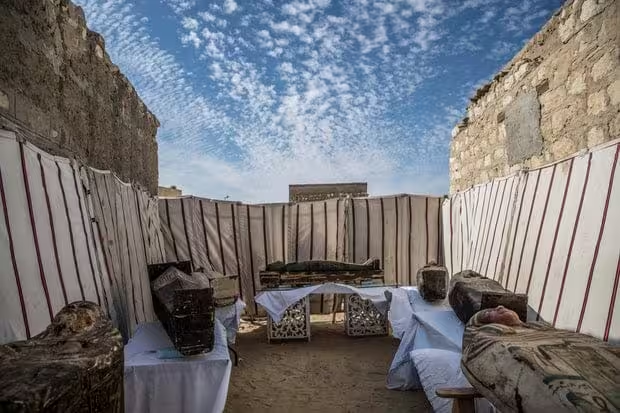
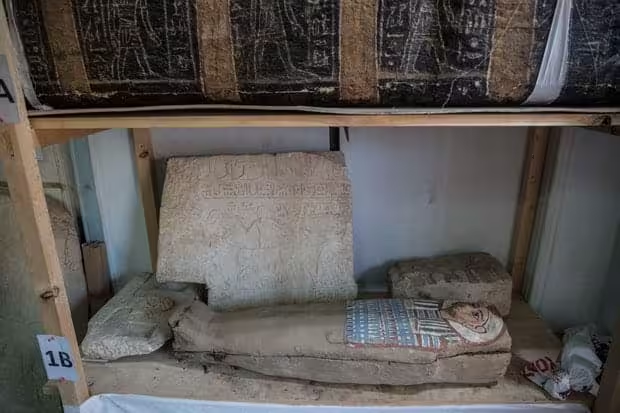
The sheer scale of the discovery is profound. By late 2022, excavations had yielded nearly 300 coffins, many of which were intricately decorated with scenes from the Book of the Dead. These texts were essential spiritual maps, designed to assist the deceased in navigating the challenges of the afterlife.
Treasures of the Underworld
The funerary goods recovered from the shafts provide an intimate glimpse into the lives and aspirations of these ancient individuals. Among the artifacts were boards for the strategy game Senet, model boats, and statues honoring deities like Osiris and Ptah-Sokar. Hawass highlighted the discovery of a soldier still clutching a bronze axe, a poignant reminder of the personal items deemed necessary for eternity.
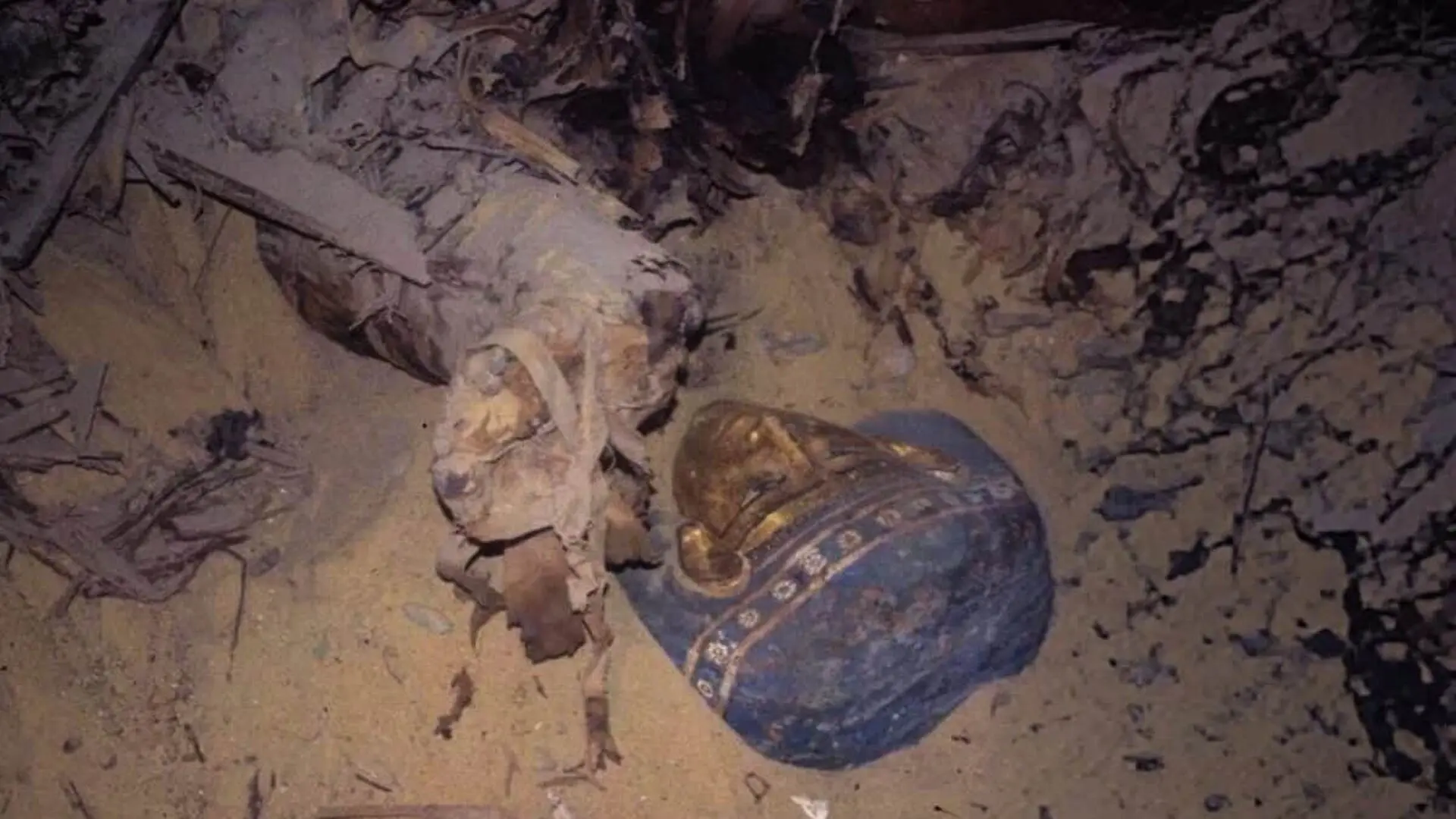
The condition of the burials varied, with some mummies demonstrating remarkable preservation. One burial contained a woman adorned with a solid gold mask, while another set of remains provided bioarchaeological evidence of familial Mediterranean fever, an inherited inflammatory disorder. A limestone stela belonging to an official named Khaptah offered further historical context; it depicted him and his wife with their six children, bearing names that align with the royal family of Ramesses II, which helps establish a timeline for the site’s use.
The Legacy of Pwkhaef
Perhaps the most evocative find was a four-meter-long papyrus scroll containing Chapter 17 of the Book of the Dead, inscribed with the name Pwkhaef. This name also appeared on a wooden coffin and several shabti figurines—small, symbolic servants intended to labor for the deceased in the next world.
While the broader details of Pwkhaef’s life remain largely unknown, the archaeological record has successfully preserved his name across multiple funerary objects. More than three millennia after his interment beneath the shadow of Teti’s monument, his identity has been reclaimed, ensuring that his final journey through the underworld remains marked by his own name.
This article has been fact checked for accuracy, with information verified against reputable sources. Learn more about us and our editorial process.
Last reviewed on .
Article history
- Latest version
Reference(s)
- Shawkat, Ahmed. “4,200-year-old queen's identity among remarkable new finds in Egypt.”, January 19, 2021 CBS News <https://www.cbsnews.com/news/saqqara-tomb-egypt-4000-year-old-queen-neit-id-remarkable-archaeology-discoveries/>.
- Nalewicki, Jennifer. “Hundreds of mummies and pyramid of an unknown queen unearthed at Saqqara.”, November 16, 2022 Live Science <https://www.livescience.com/ancient-egypt-mummies-tombs-king-tut>.
Cite this page:
- Posted by Zara Tariq