NASA’s Artemis II Mission Created Unprecedented Ionospheric Disturbances Over North America
Scientists have detected three mysterious atmospheric disturbances during Artemis II, sparking new concerns about the future reliability of GPS technology.
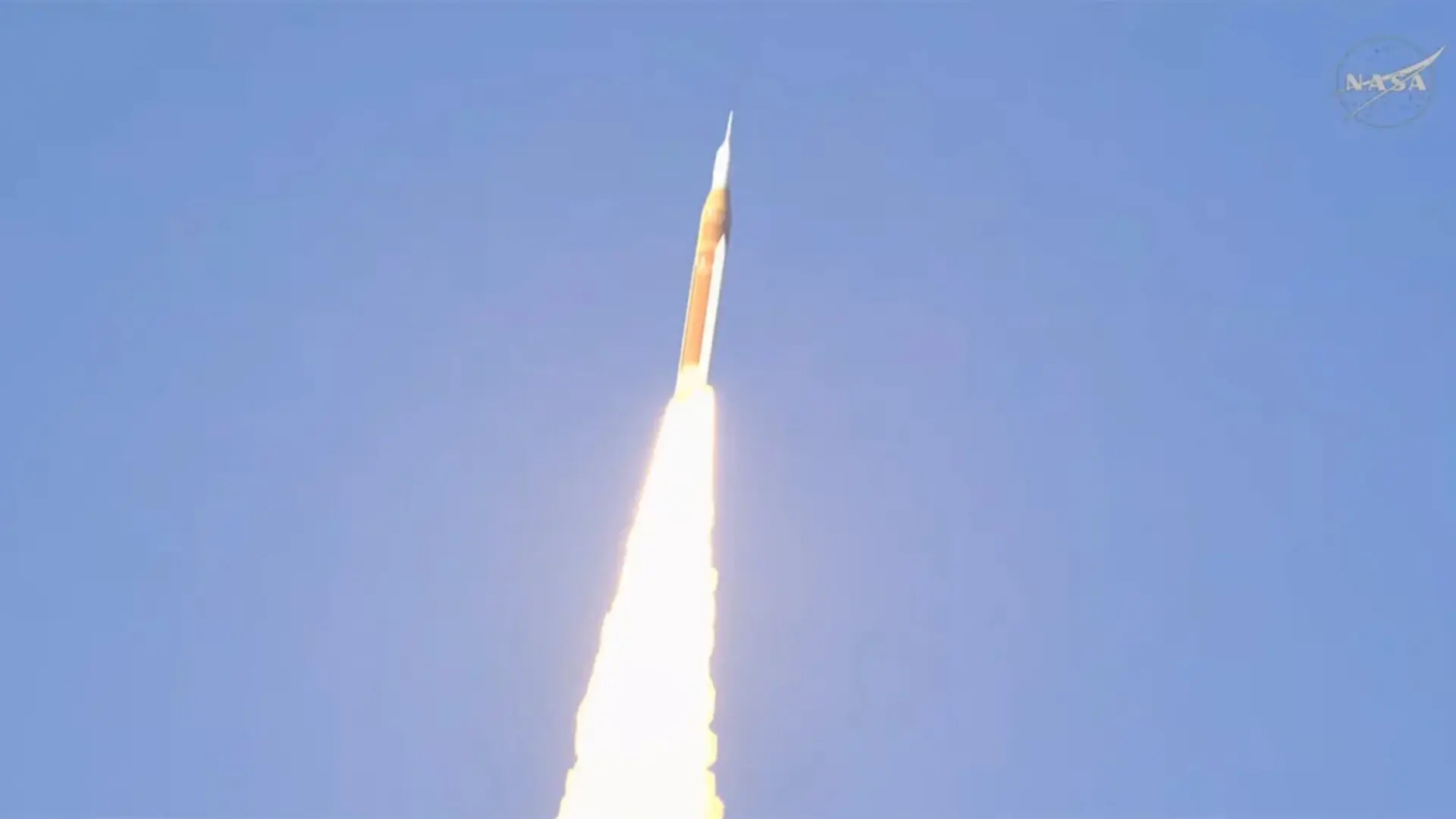
NASA’s Artemis II mission, which carried four astronauts on a landmark lunar circuit in April 2026, left a lasting imprint on the planet that had nothing to do with its primary objectives. Beyond its successful demonstration of deep-space hardware, the mission triggered three significant disturbances in Earth’s ionosphere, one of which rippled across a massive portion of North America. These findings are now prompting experts to reassess the long-term impact of heavy-lift rocket maneuvers on the satellite-dependent infrastructure that powers modern life.
The ionosphere is a critical layer of the upper atmosphere, defined by its concentration of charged particles that regulate the behavior of radio waves and navigation signals. Researchers from National Cheng Kung University in Taiwan identified that the most intense disruptions did not occur during the initial ascent from Florida, but rather during critical orbital adjustments as the spacecraft prepared for its journey to the Moon.
Atmospheric Ripples from Deep-Space Maneuvers
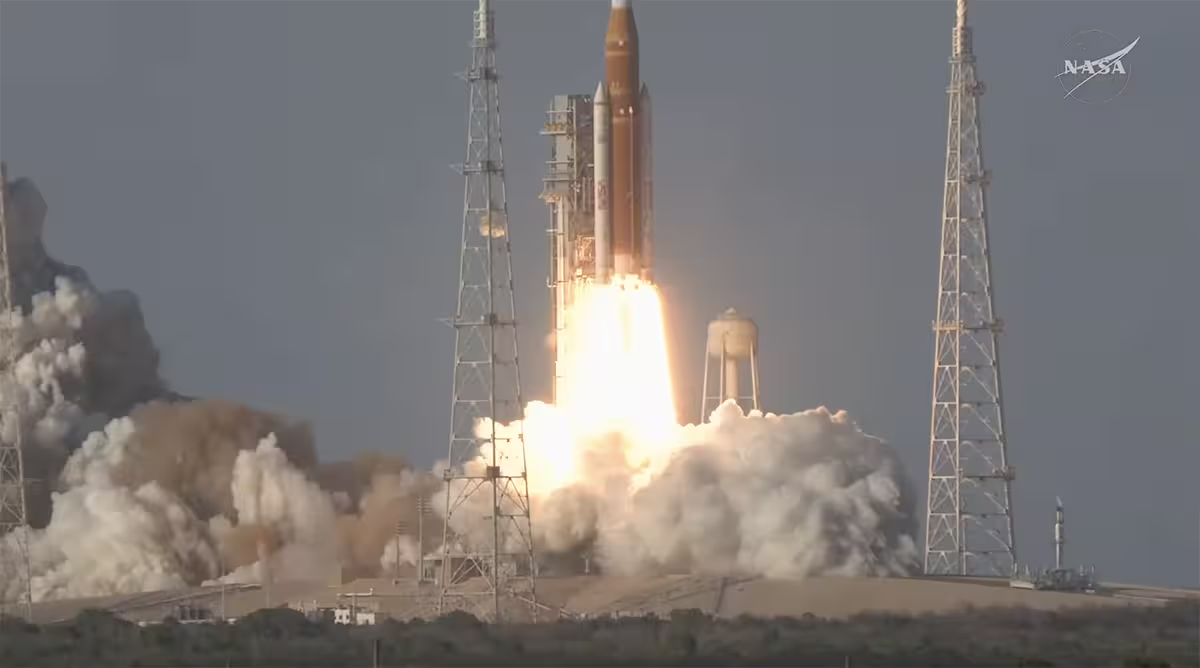
According to the study, published in Geophysical Research Letters, the mission sequence produced three distinct atmospheric signatures. The first was tied to the liftoff of the Space Launch System (SLS) rocket, which generated expected acoustic and gravity waves. However, a significant escalation occurred roughly one hour after launch during an apogee raise maneuver. This burn caused shock waves to sweep across 50 degrees of longitude, creating a large-scale displacement in the ionospheric plasma.
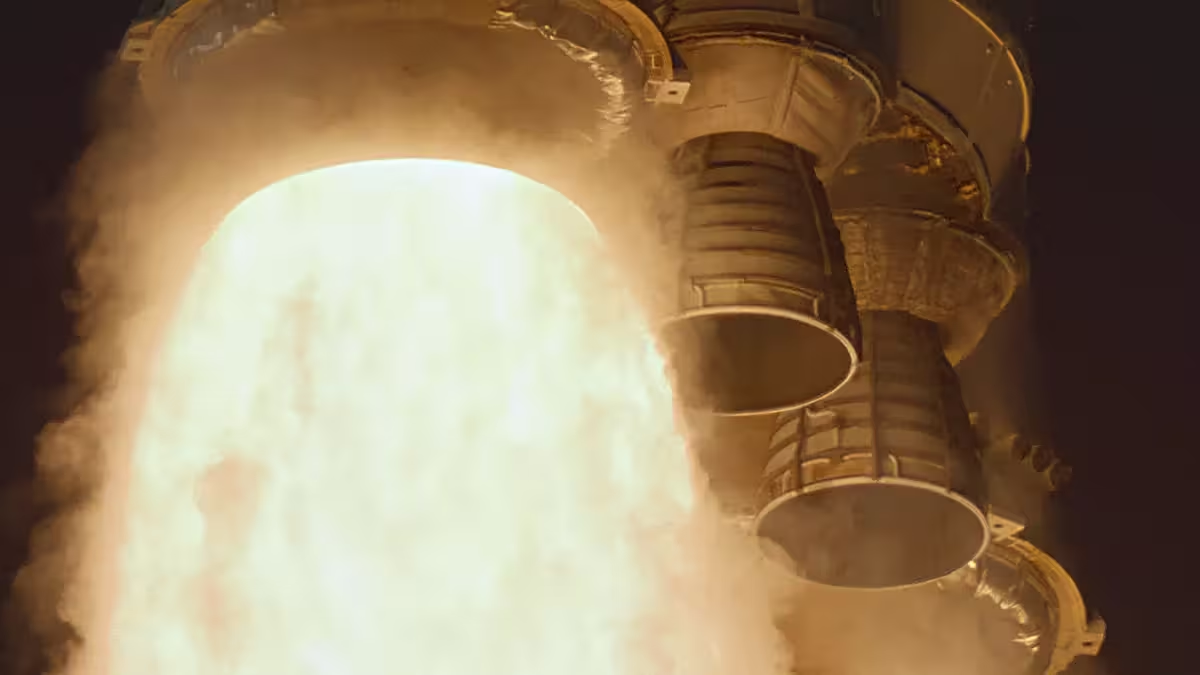
A final disturbance followed about 25 hours later, during the trans-lunar injection burn that propelled the crew toward their destination. The researchers, including those led by scientist Lin, noted the unprecedented nature of these recurring, localized disturbances during a single interplanetary mission. As space exploration accelerates toward Mars and back to the Moon, such orbital maneuvers are expected to become increasingly common, necessitating a better understanding of their atmospheric consequences.
Navigation Risks in an Automated World
The potential for these disturbances to interfere with global positioning systems (GPS) is a primary concern. Because GPS relies on the precise timing of signals traveling through the ionosphere, any sudden shift in electron density can introduce latency or errors. While the Artemis II disturbances did not cause widespread navigational failures, researchers warn that the trend toward more powerful propulsion and frequent launches could pose real-world challenges for technologies that require high-precision data.
Modern society is deeply integrated with satellite navigation, from routine smartphone usage to autonomous transportation and precision agriculture. “A positioning error of a couple of meters is enough to cause an autonomous car to change lanes,” Lin noted in comments reported by Space.com. Although the actual impact on a vehicle depends on the sophistication of its internal sensor suite, the study underscores a growing need for engineers to factor in space-weather-like interference created by human activity.
Looking Toward a Busy Launch Future
The Artemis II mission has provided a valuable dataset for atmospheric scientists, highlighting that the ionosphere is not just susceptible to solar activity but also to the industrial maneuvers of human space flight. While the research is currently in the preprint stage and requires further peer review, it serves as a critical baseline for future mission planning.
Moving forward, the goal is to develop more accurate forecasting models that can predict how specific engine burns at varying altitudes will interact with the upper atmosphere. By monitoring these events, space agencies may be able to better protect critical communication and positioning networks, ensuring that the push for deep-space exploration does not inadvertently compromise the vital infrastructure operating back on Earth.
This article has been fact checked for accuracy, with information verified against reputable sources. Learn more about us and our editorial process.
Last reviewed on .
Article history
- Latest version
Reference(s)
- , doi: 10.22541/essoar.15006449/v1. <https://essopenarchive.org/doi/full/10.22541/essoar.15006449/v1>.
- Pultarova, Tereza. “NASA's Artemis II moon launch tore a hole in Earth's upper atmosphere so huge it disrupted GPS signals.”, November 4, 2026 Space <https://www.space.com/space-exploration/launches-spacecraft/nasas-artemis-ii-moon-launch-tore-a-hole-in-earths-upper-atmosphere-so-huge-it-disrupted-gps-signals>.
Cite this page:
- Posted by John Williams