Woman Stumbles Upon Massive 900 Year Old Medieval Coin Hoard In Czech Field
A glimmer of silver in a plowed field has led to the discovery of a long-lost medieval fortune, revealing hidden history buried beneath the soil.
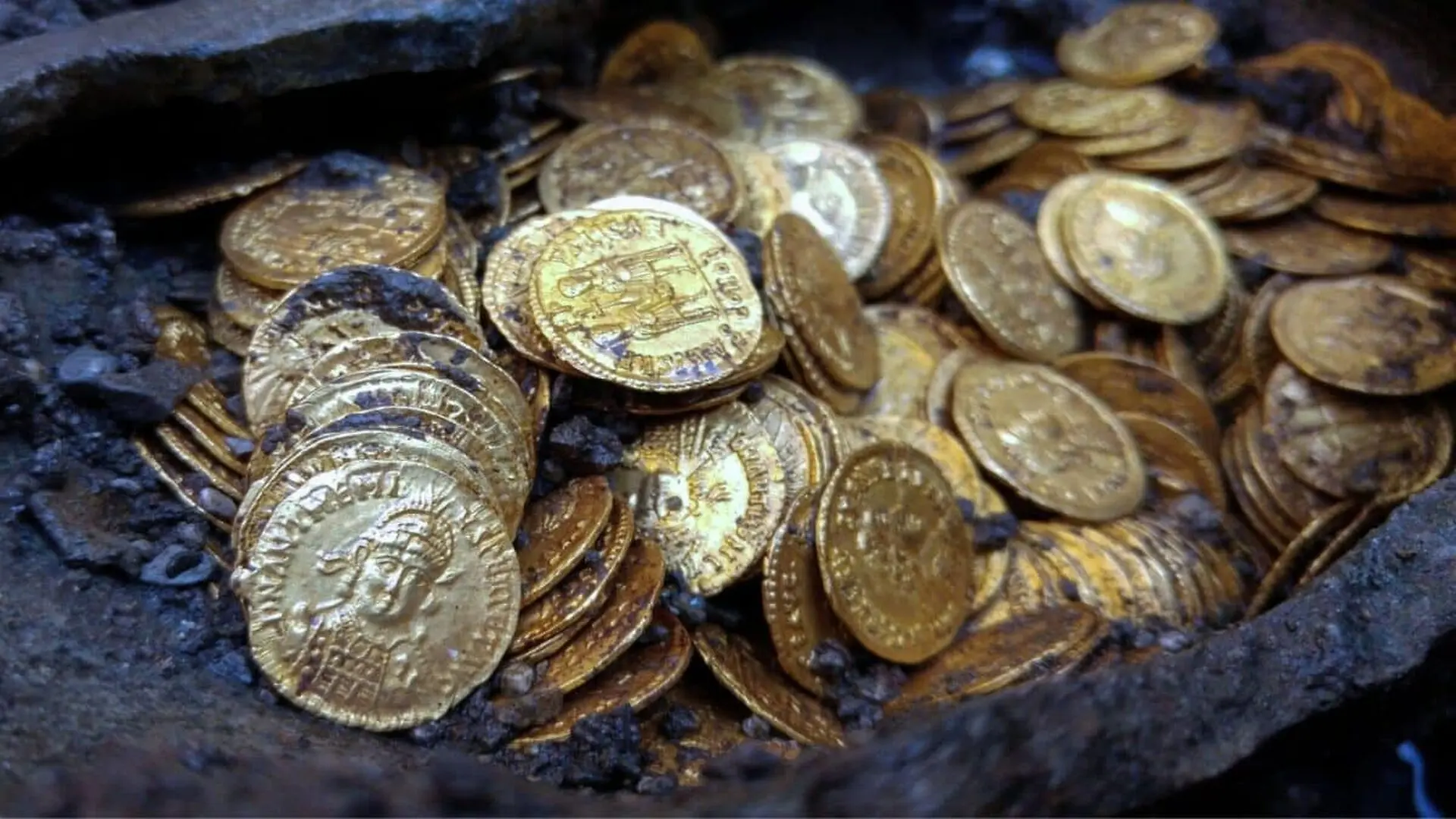
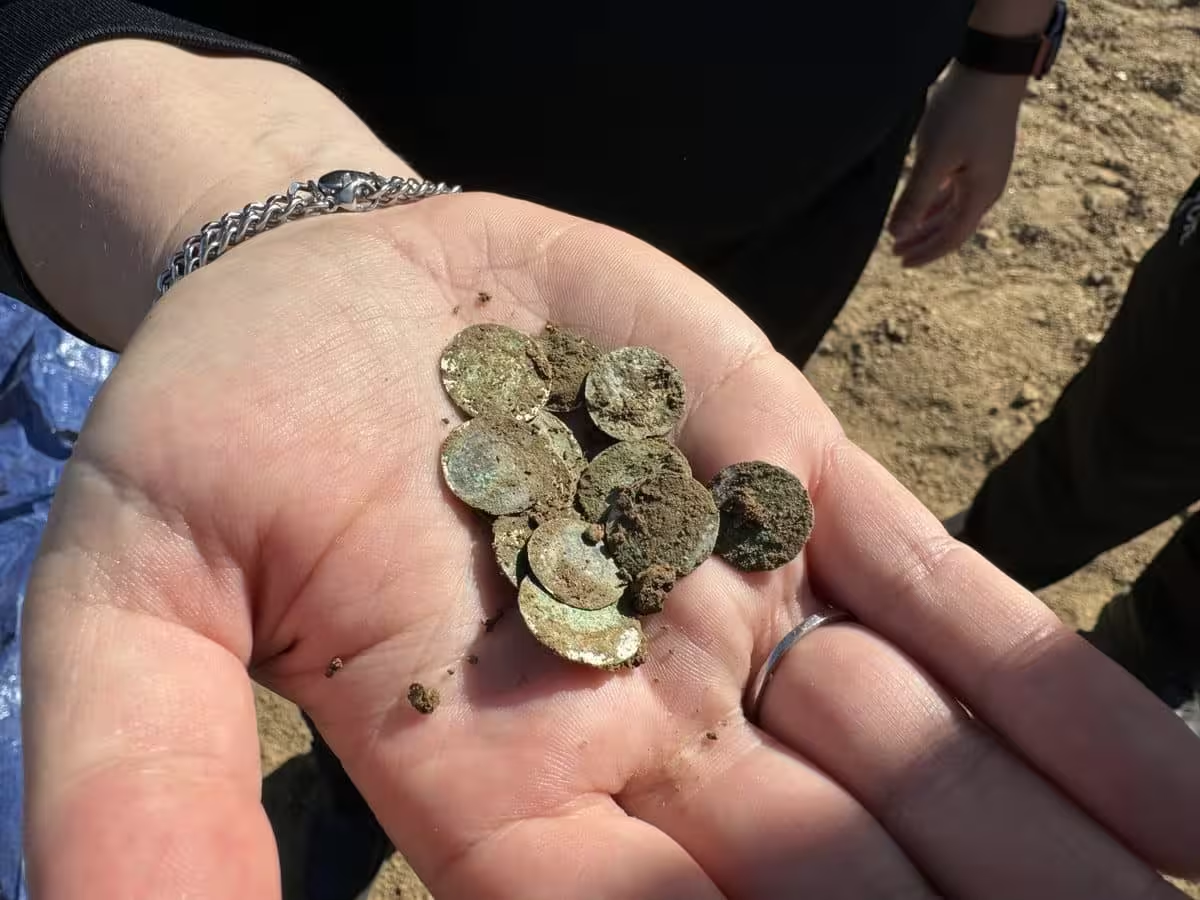
Archaeologists in the Czech Republic have unearthed a massive cache of medieval wealth, discovering more than 2,150 silver denarii buried in a field near Kutná Hora. The hoard, which represents the largest collection of its kind ever recovered in the region, was found after a local resident noticed a glint of metal in freshly plowed soil and alerted experts.
A team from the Institute of Archaeology of the Czech Academy of Sciences in Prague spearheaded the recovery, utilizing metal detectors and geodetic mapping to record the precise location of every coin as they were unearthed. While the ceramic vessel that once secured the fortune had been largely destroyed by agricultural activity, the base of the container remained intact, confirming the coins were originally stored as a single, deliberate deposit.
Historical Insight into the Přemyslid Dynasty
Initial assessments by researchers and the Czech Museum of Silver indicate the coins were minted in Prague during the late 11th and early 12th centuries. The collection features currency issued under three distinct rulers of the Přemyslid dynasty: Vratislaus II, Břetislav II, and Bořivoj II. This dating suggests the cache was hidden away during the first quarter of the 12th century, a period defined by intense power struggles within the Bohemian ruling family.
Archaeologists suspect the instability of the era may explain why the owner never returned for the money. Given the strategic nature of the routes near Kutná Hora, the area was frequently traversed by competing armies. Experts, including archaeologist Filip Velímský, have hypothesized that the hoard could have functioned as a war chest, intended for military payroll or as plundered loot that was hastily hidden and abandoned during a period of conflict.
Advanced Metallurgical Analysis Underway
Though the coins derive their design from Roman currency traditions, their composition is an alloy of silver, copper, and lead. Lenka Mazačová, director of the Czech Museum of Silver, notes that the silver itself was likely imported, as local mining had not yet reached its peak. Researchers intend to use spectral analysis and X-ray imaging to verify the metal’s geographic origin, providing a clearer view of Bohemia’s early medieval trade networks.
While assigning a modern monetary value is impossible due to the lack of historical data regarding purchasing power at that time, Velímský notes that for an individual living in the 12th century, such a sum would have represented a life-changing amount of wealth, comparable to a modern lottery win.
Future Preservation and Exhibition
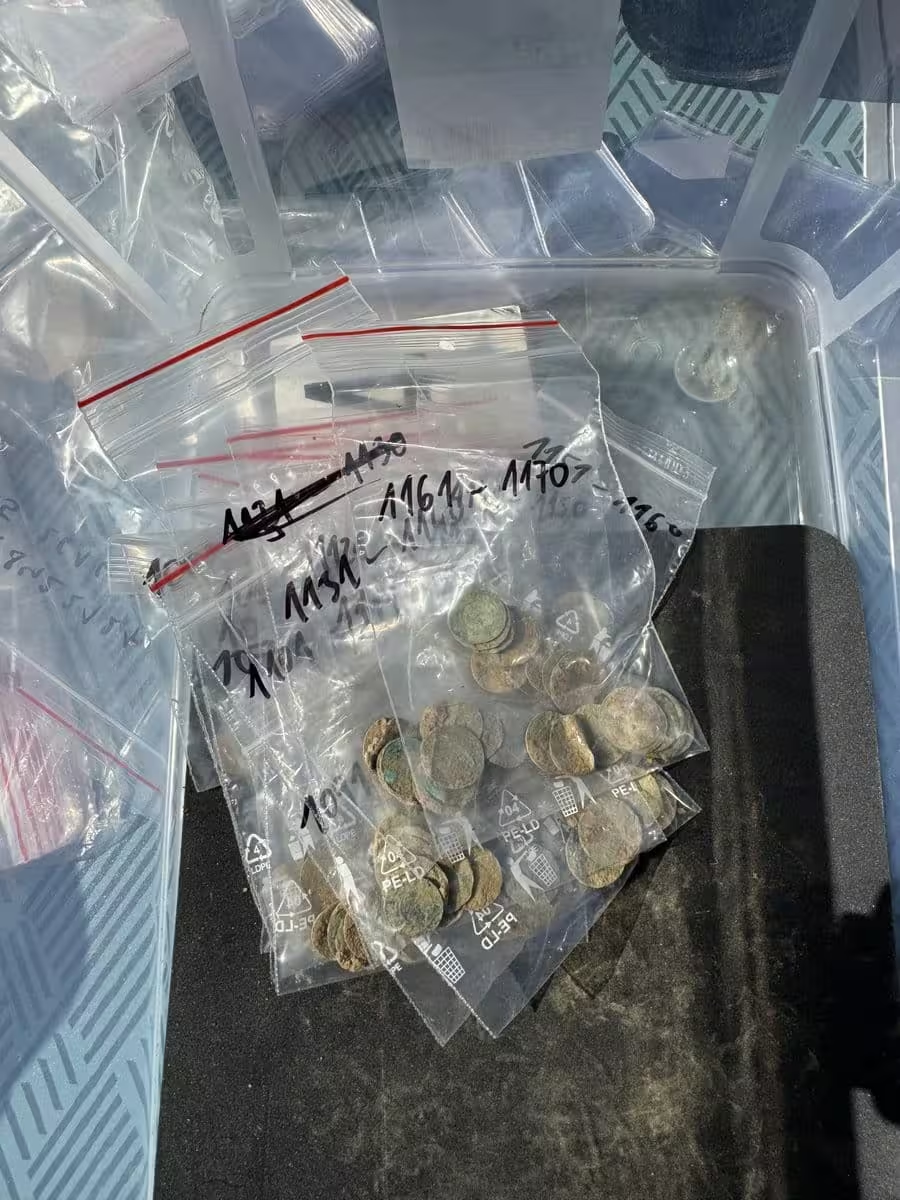
The collection has been transferred to the Czech Museum of Silver, where staff will oversee a rigorous process of cleaning, cataloging, and photographing each piece. This work is part of a broader effort to prepare the collection for public display in the museum’s minting gallery.
This discovery adds a significant chapter to the history of Kutná Hora, a city that would eventually become one of the most prominent silver-mining hubs in medieval Europe. The hoard serves as a rare material link to the foundational, yet volatile, years of the Bohemian state.
This article has been fact checked for accuracy, with information verified against reputable sources. Learn more about us and our editorial process.
Last reviewed on .
Article history
- Latest version
Reference(s)
- <https://www.arup.cas.cz/cz/>.
- “Czech Museum of Silver in Kutná Hora | České muzeum stříbra Kutná Hora.” <https://www.cms-kh.cz/eng/homepage>.
- “Over 2,000 silver coins from the 12th century discovered near Kutná Hora - Akademie věd České republiky.” <https://www.avcr.cz/en/media/press-releases/Over-2000-silver-coins-from-the-12th-century-discovered-near-Kutna-Hora/>.
Cite this page:
- Posted by Zara Tariq