Divers Discover Intact 2400 Year Old Shipwreck Filled With Hundreds Of Ancient Artifacts
Divers have discovered an ancient shipwreck dating back to before Alexander the Great off a Greek island, following a tip from a private citizen.
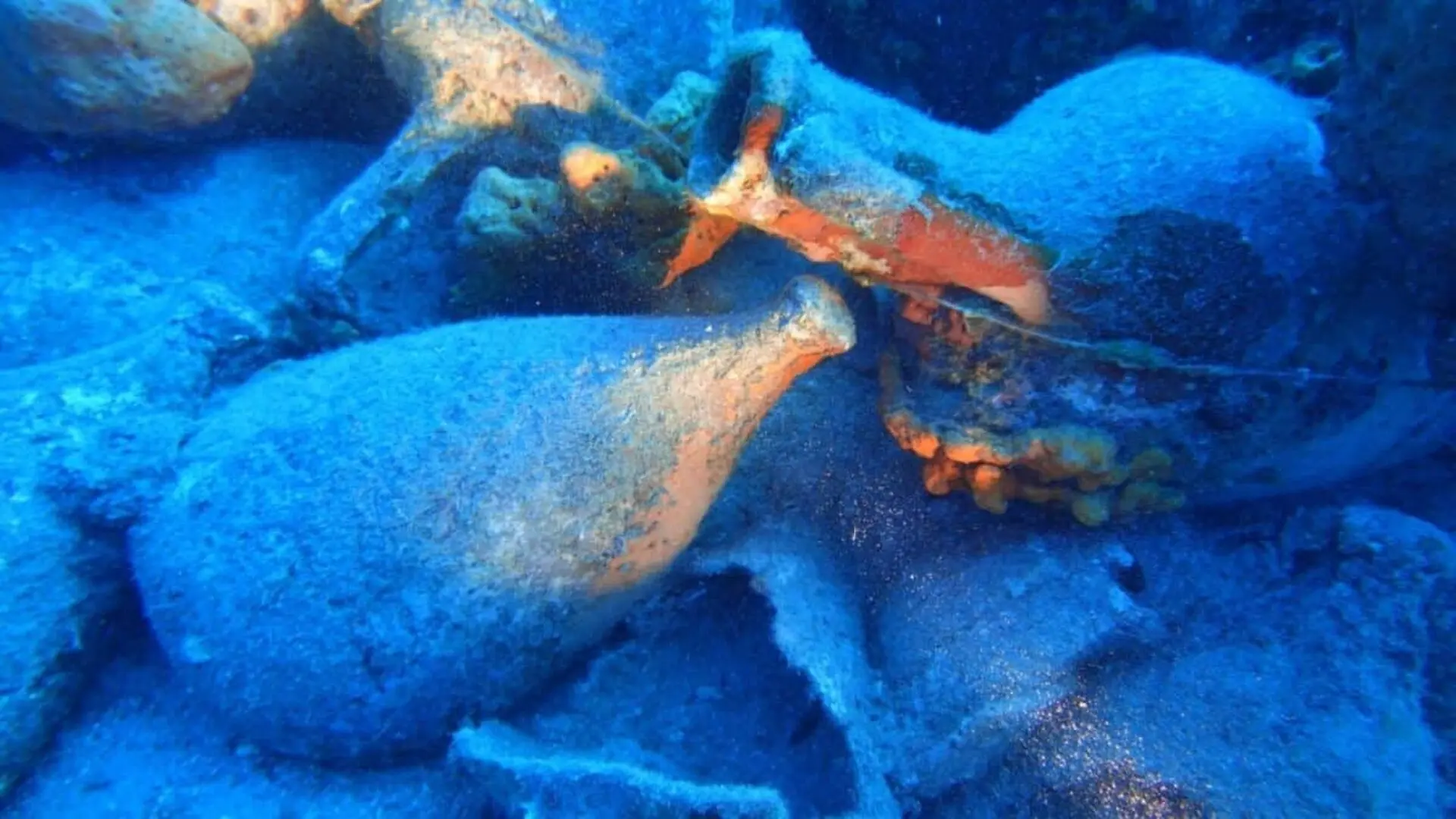
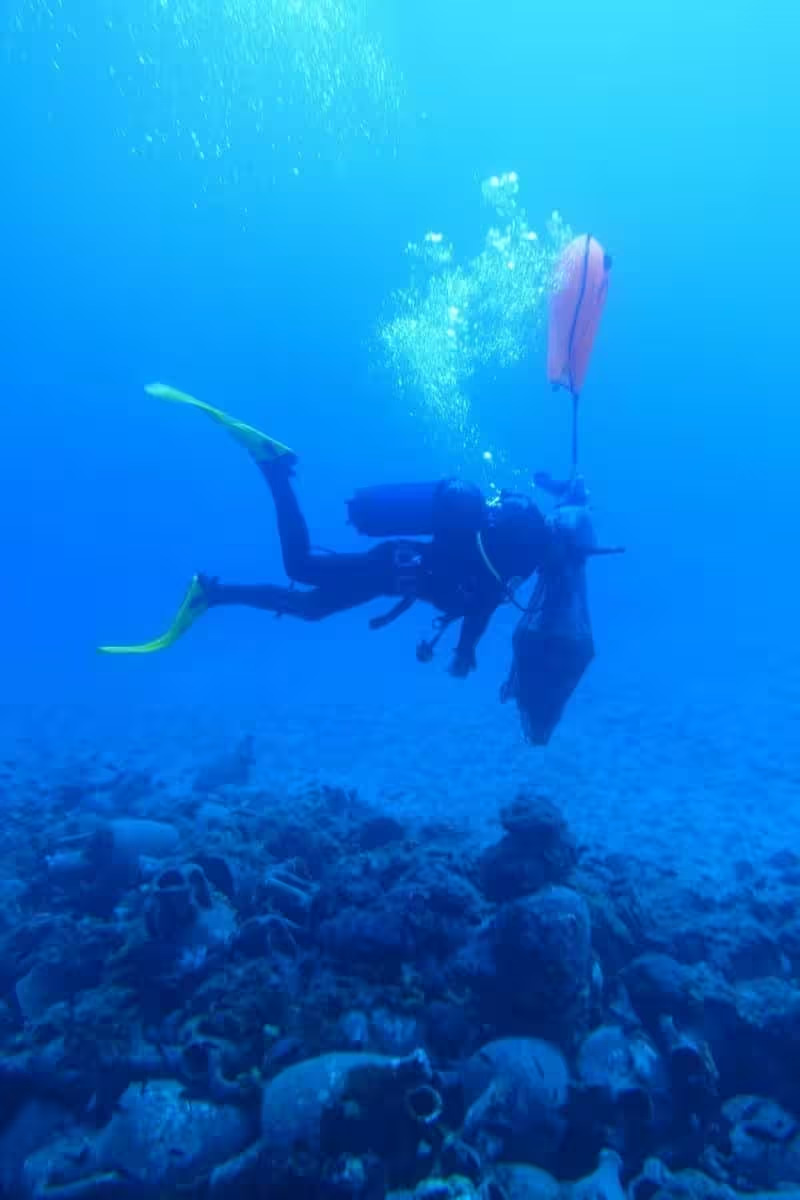
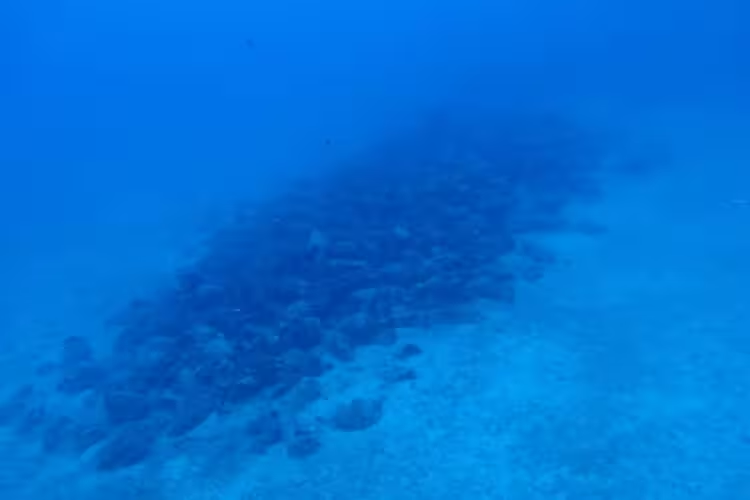
An underwater archaeological team has confirmed the discovery of an ancient merchant vessel resting off the coast of the Greek island of Andros. The wreck, located at depths between 39 and 44 meters, holds a significant cargo of intact pointed-base amphorae that researchers have dated to the transition between the late 5th and early 4th century BC.
The discovery came to light following a report from a civilian, which prompted an investigation by the Ephorate of Underwater Antiquities under the Greek Ministry of Culture. A specialized team, comprising an archaeologist, a conservator, and a diving technician, conducted an initial in-situ assessment of the site, which lies on a sandy seafloor characterized by variable visibility.
A Diverse Commercial Manifest
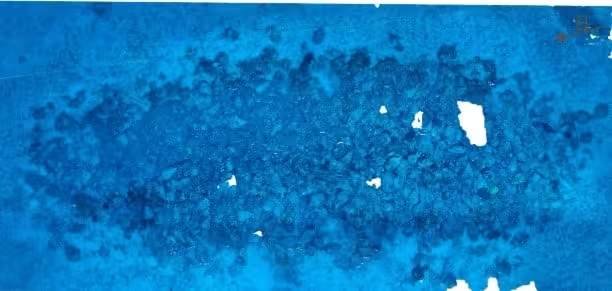
The ship’s cargo appears to have been a collection of standardized ceramic containers used for the maritime transport of wine, oil, and salted goods. Preliminary surveys indicate that between 600 and 650 amphorae remain at the site. While this represents a medium-sized load compared to other Mediterranean wrecks containing over a thousand vessels, the variety of the cargo is of particular interest to historians.
Divers identified three distinct types of containers, suggesting the vessel was aggregating goods from multiple regional centers. These include slender Mende amphorae from the Chalkidiki peninsula, bulbous examples from the island of Skopelos, and the rarer Solokha 2 type associated with the Bosporus region. According to reports from LaBrujulaVerde, this collection provides a rare window into the economic connectivity between the northern Aegean, the Sporades, and the Pontic areas during the late Classical period.
Technological Clues and Historical Context
The chronology of the wreck, falling between the end of the Peloponnesian War and the rise of Thebes, has been established through the stylistic evolution of the ceramic rims and handles. Beyond the pottery, the Hellenic Ministry of Culture confirmed the recovery of a lead anchor shank, a signature piece of naval technology from the era, along with several stones that likely served as ship ballast.
While the hull of the vessel remains largely obscured by sediment, a few wooden fragments have been identified beneath the cargo. The amphorae themselves, despite their age, show remarkable structural integrity, allowing for further scientific examination.
Future Research Initiatives
Under the guidance of underwater archaeologist Evangelistis Dionysios, the team has already secured representative samples of each amphora type for physicochemical analysis. These laboratory tests are expected to clarify the precise origins of the clays, the techniques used during firing, and the specific contents originally stored within the vessels.
To preserve the site, authorities have placed it under surveillance and restricted access to unauthorized personnel. The recovered items are currently undergoing a slow desalination process at the Ministry of Culture’s conservation labs, as officials prepare for future excavation campaigns to better understand the architecture of the ship itself.
This article has been fact checked for accuracy, with information verified against reputable sources. Learn more about us and our editorial process.
Last reviewed on .
Article history
- Latest version
Cite this page:
- Posted by Zara Tariq