Hidden for 1,700 Years, This Massive Roman Gold Mining Network Beneath the Spanish Pyrenees Has Finally Been Confirmed
Ancient gold mining activity hidden for 1,700 years discovered in the Pyrenees
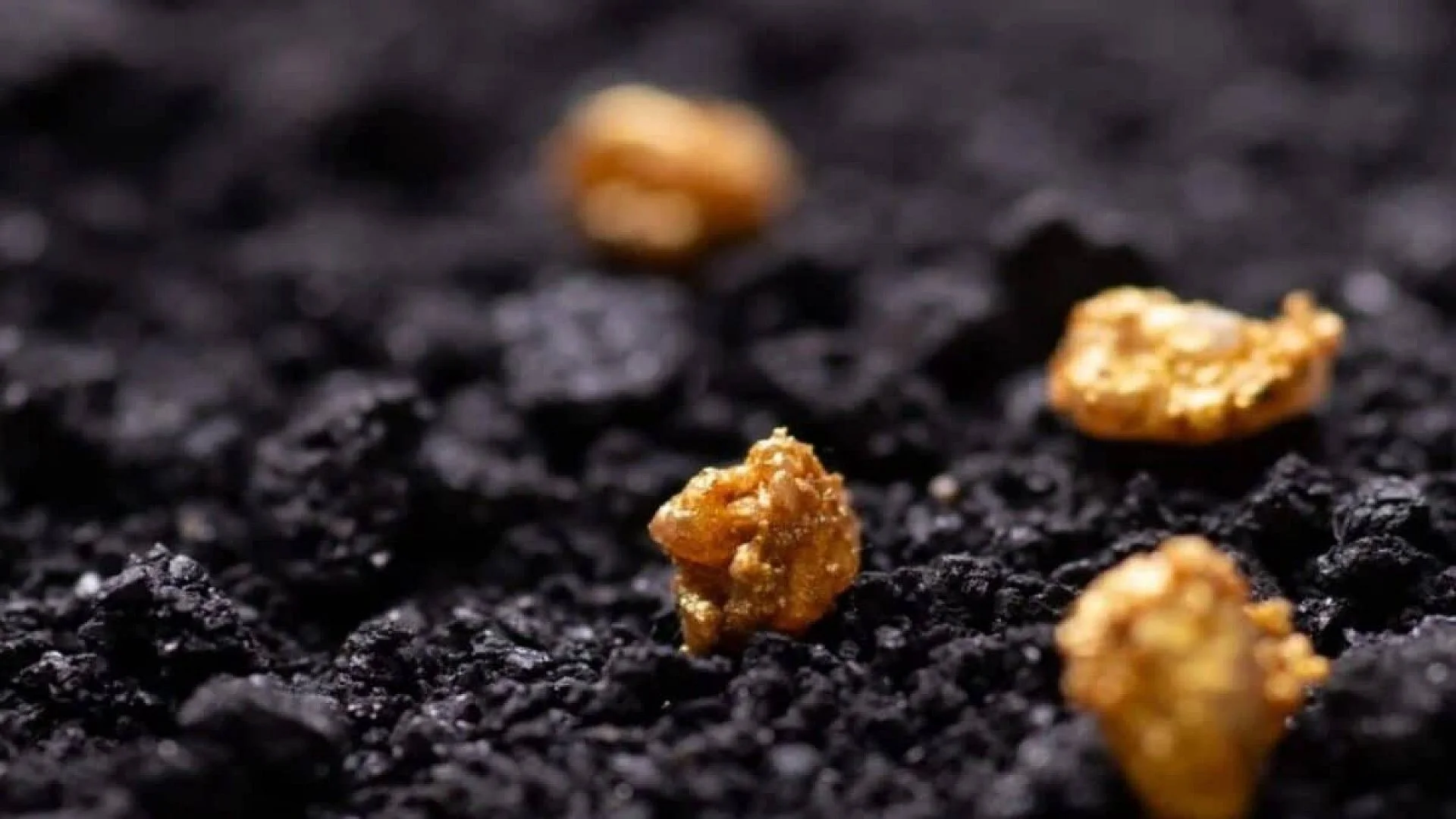
A recent investigation has finally verified that a remote valley in the Spanish Pyrenees was reshaped by Roman gold‑mining activities. The breakthrough comes from the identification and dating of a centuries‑old hydraulic reservoir that lay concealed beneath thick layers of sediment.
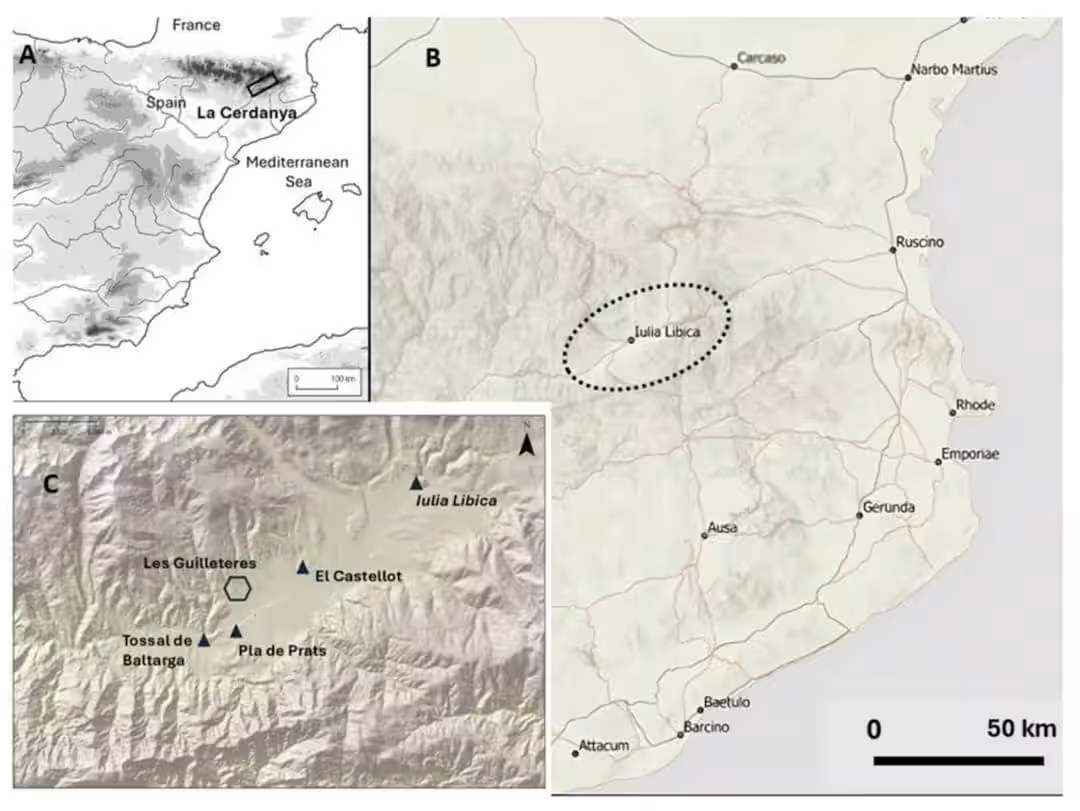
The archaeological site, called Guilleteres d’All, is situated in the Cerdanya Valley of northeastern Spain. From a distance the terrain appears as a typical rugged mountain range, but closer inspection reveals a network of narrow trenches, artificially cut slopes and a massive circular hollow roughly 300 metres across, features that cannot be explained by natural erosion alone.
Research teams from the University of A Coruña and the University of Barcelona have presented the most compelling proof to date that Roman engineers operated a sophisticated gold‑extraction system here almost two millennia ago, relying on advanced water‑management techniques.
Engineered Waterworks Carved the Mountain
The investigators describe the visible cuts and the large circular pit as remnants of a hydraulic mining complex. Instead of digging directly for ore, Roman miners directed large volumes of water onto ancient sediment layers, breaking them apart and flushing the material downstream so that fine gold particles could be separated from the soil and gravel.
Such a process demanded a carefully planned arrangement of channels, reservoirs and distribution structures. Water was channeled onto the gold‑bearing deposits, where its force carried away the surrounding matrix, enabling workers to collect the dispersed metal.
Although the scale does not match the famed Las Médulas complex, the study estimates that roughly two million cubic metres of earth were moved at Guilleteres d’All, leaving a lasting imprint on a landscape that still rises to nearly 2 900 metres.
Dating the Hidden Reservoir Locks the Chronology
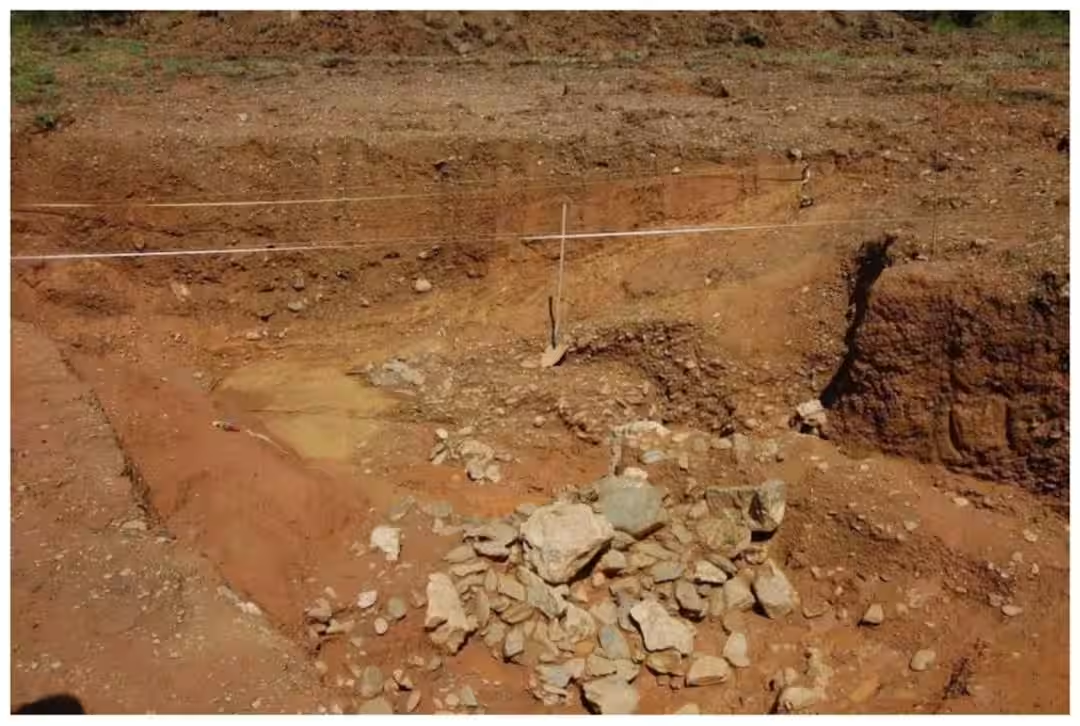
Excavations carried out between 2010 and 2022 uncovered an ancient water reservoir buried beneath accumulated sediment. The structure, measuring about 4.5 metres across and 1.5 metres deep, featured a retaining dam constructed from large stone blocks, a design intended to regulate the flow of water used in mining.
Fine sediments that settled at the bottom of the tank provided the material needed for chronometric analysis. Researchers applied optically stimulated luminescence (OSL) dating to quartz grains from two samples taken from the reservoir floor, establishing a terminus for the mining operation.
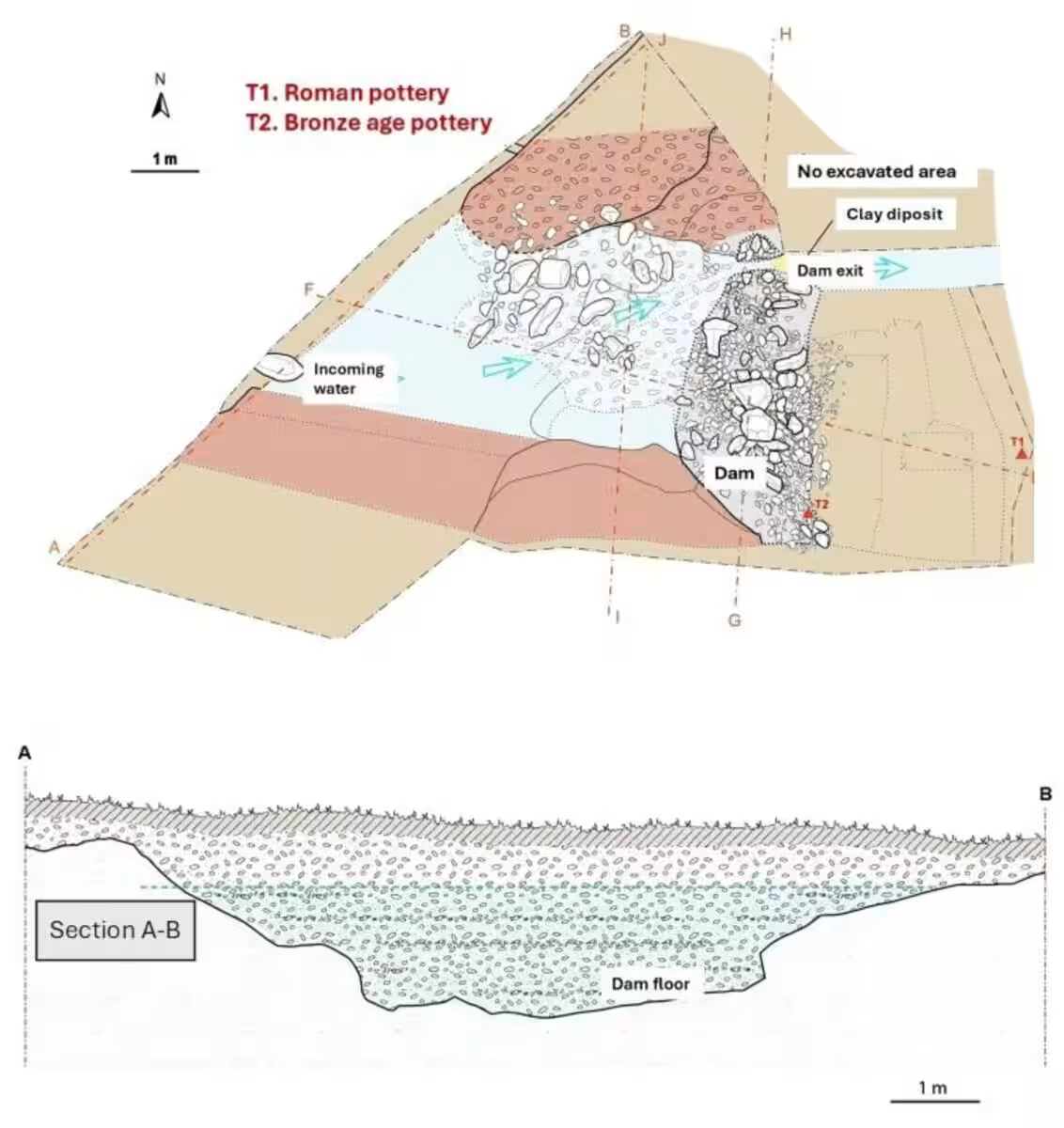
The OSL results indicate that the hydraulic system fell out of use sometime between the late second century and the early third century CE. While this does not pinpoint the exact start of mining, it firmly situates the activity within the Roman period.
Literary Accounts and Nearby Finds Support the Roman Narrative
The mining complex lies close to the ancient settlement of Iulia Libica, known today as Llívia, the only confirmed Roman city in this segment of the Pyrenees. The authors of the study suggest that the town may have overseen the extraction and processing of local mineral resources.
Classical writers had already hinted at the region’s wealth. Pliny the Elder described the Pyrenees as a source of gold, and the poet Martial mentioned gold from the vicinity of Iulia Libica, reinforcing the historical expectation of precious‑metal deposits.
Archaeological evidence bolsters these literary references. A metallurgical workshop uncovered at El Castellot de Bolvir and a 23‑gram gold bracelet recovered from a nearby Roman cemetery both attest to active metalworking and the presence of valuable ore in the area.
The newly obtained dating aligns with evidence that parts of Iulia Libica were also abandoned around the same period, suggesting a coordinated decline of both the settlement and its associated mining infrastructure.
This article has been fact checked for accuracy, with information verified against reputable sources. Learn more about us and our editorial process.
Last reviewed on .
Article history
- Latest version
Cite this page:
- Posted by Zara Tariq