Germany Roadworks Uncover 800 Buried Traces of a Prehistoric Settlement Larger Than Archaeologists Expected
Roadworks in Germany uncover 800 ancient traces hinting at a vast undiscovered settlement
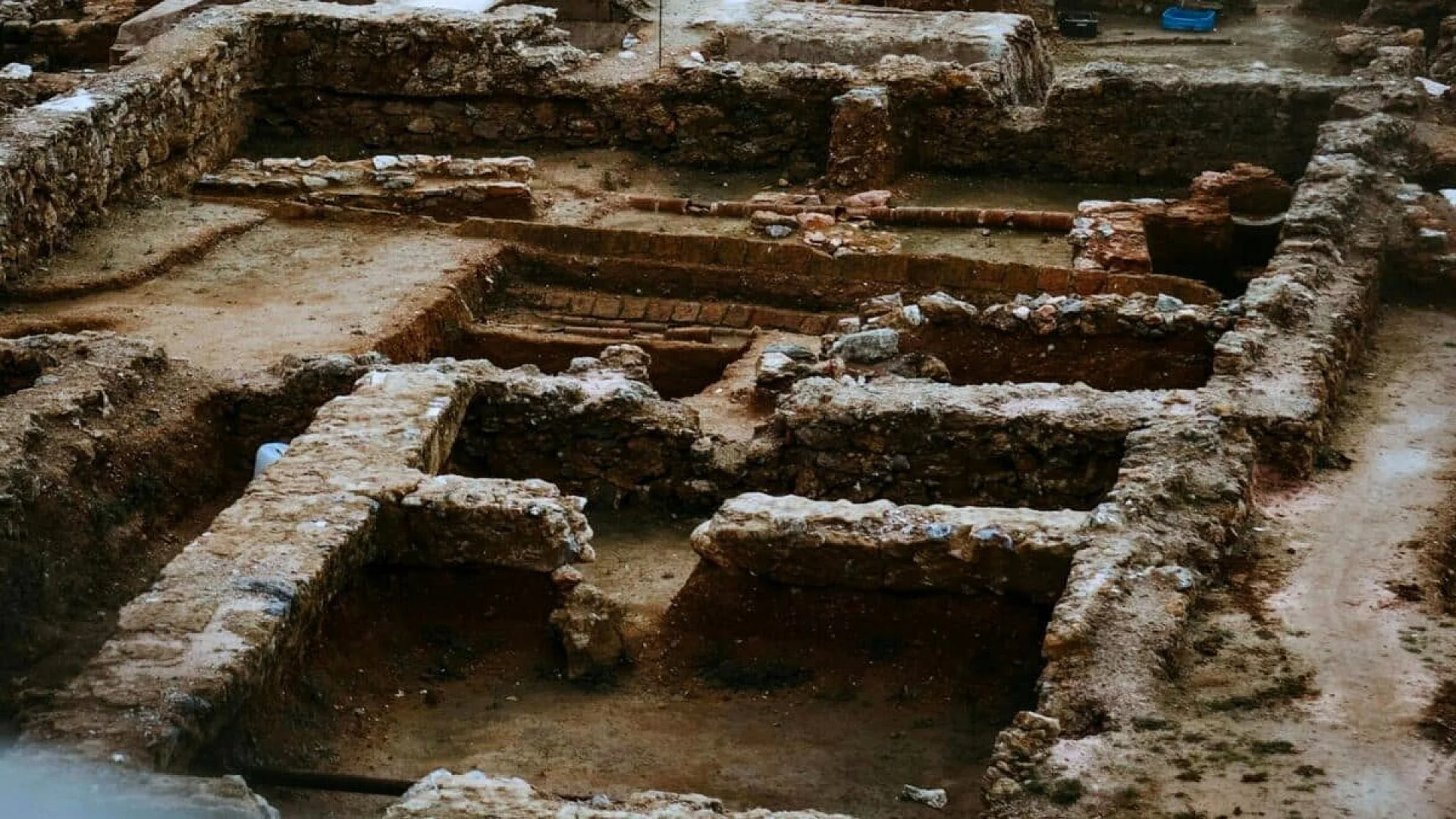
Archaeologists have recorded more than 800 distinct features along the alignment of a forthcoming bypass near Mirow in Germany, turning a routine infrastructure scheme into a significant prehistoric research zone.
The discoveries emerged during preparatory work for the B198 bypass in Mecklenburg‑Vorpommern, where teams examined roughly 15,637 m² of terrain – an area comparable in size to two football pitches, according to the excavation report.
Individually many of the traces appear modest, some merely as dark soil discolorations, yet together they reveal a concentration of ancient activity that may extend well beyond the initially surveyed strip.
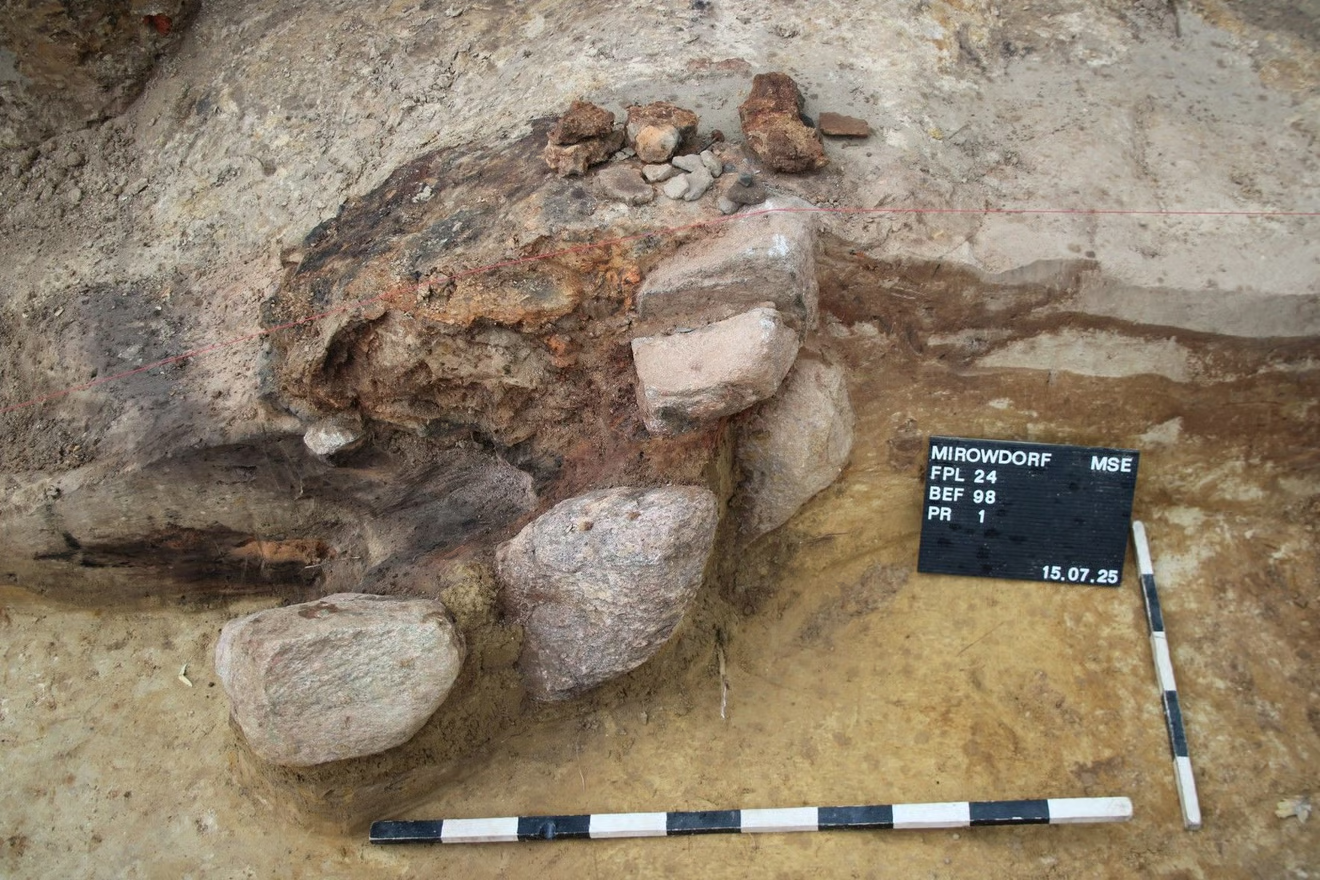
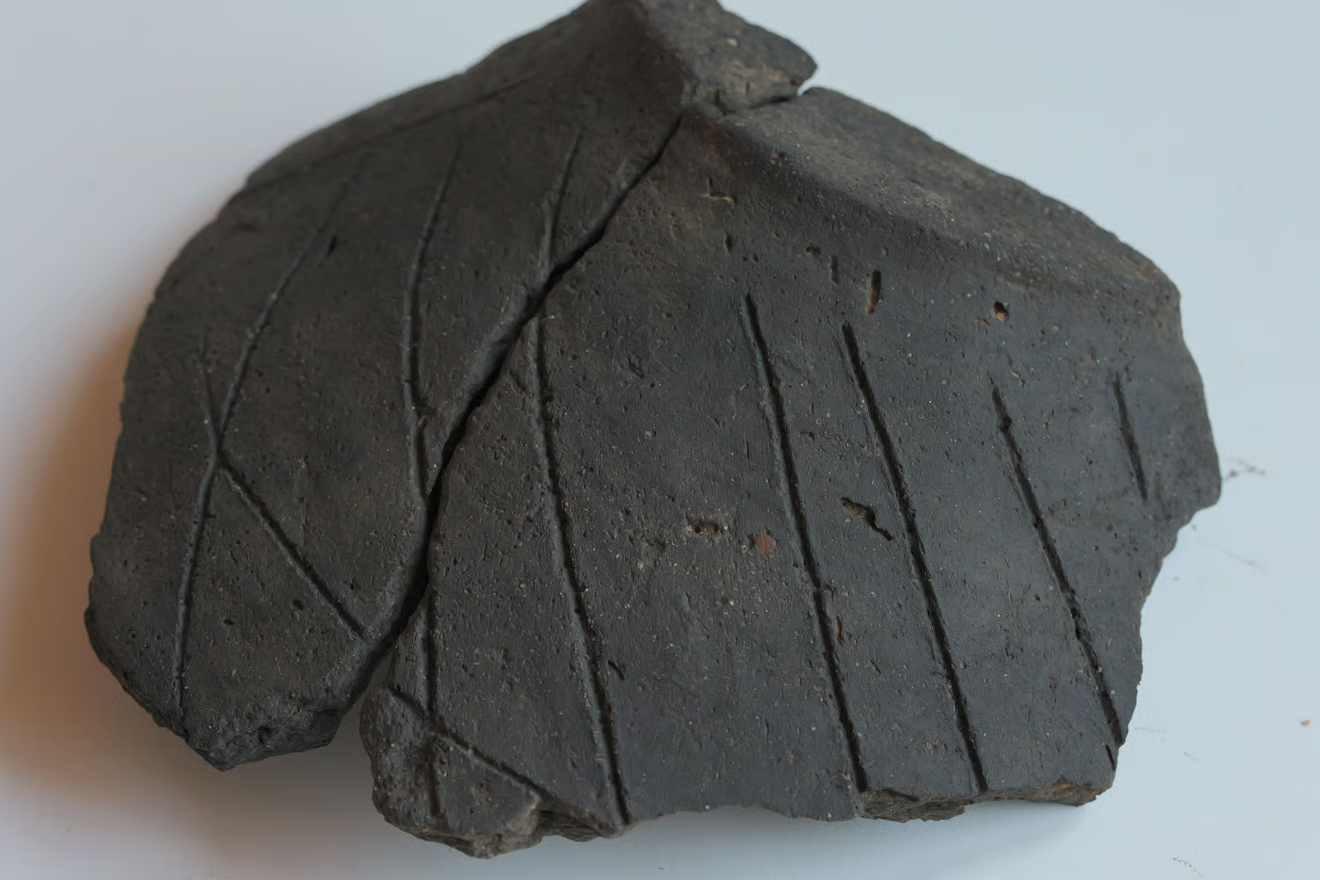
Located between the Schulzensee and Mirower See lakes in the Mecklenburg Lake District, the site near Mirow yielded hearths, cooking pits, pottery sherds, metal artefacts, a possible oven or heating installation, and a pit packed with shell remains. Arkeonews notes that most material dates to the Late Bronze Age (c. 1100–550 BC), with later layers pointing to use in the Pre‑Roman Iron Age.
Modern Roadwork Uncovers Rich Prehistoric Landscape
The finds were not the result of a targeted hunt for a lost settlement; they surfaced because the road project mandated archaeological assessment before construction could proceed.
That context matters. A road corridor typically reveals only a narrow swath of ground. When over 800 buried traces appear within that confined space, it suggests that surrounding areas may also conceal additional remains.
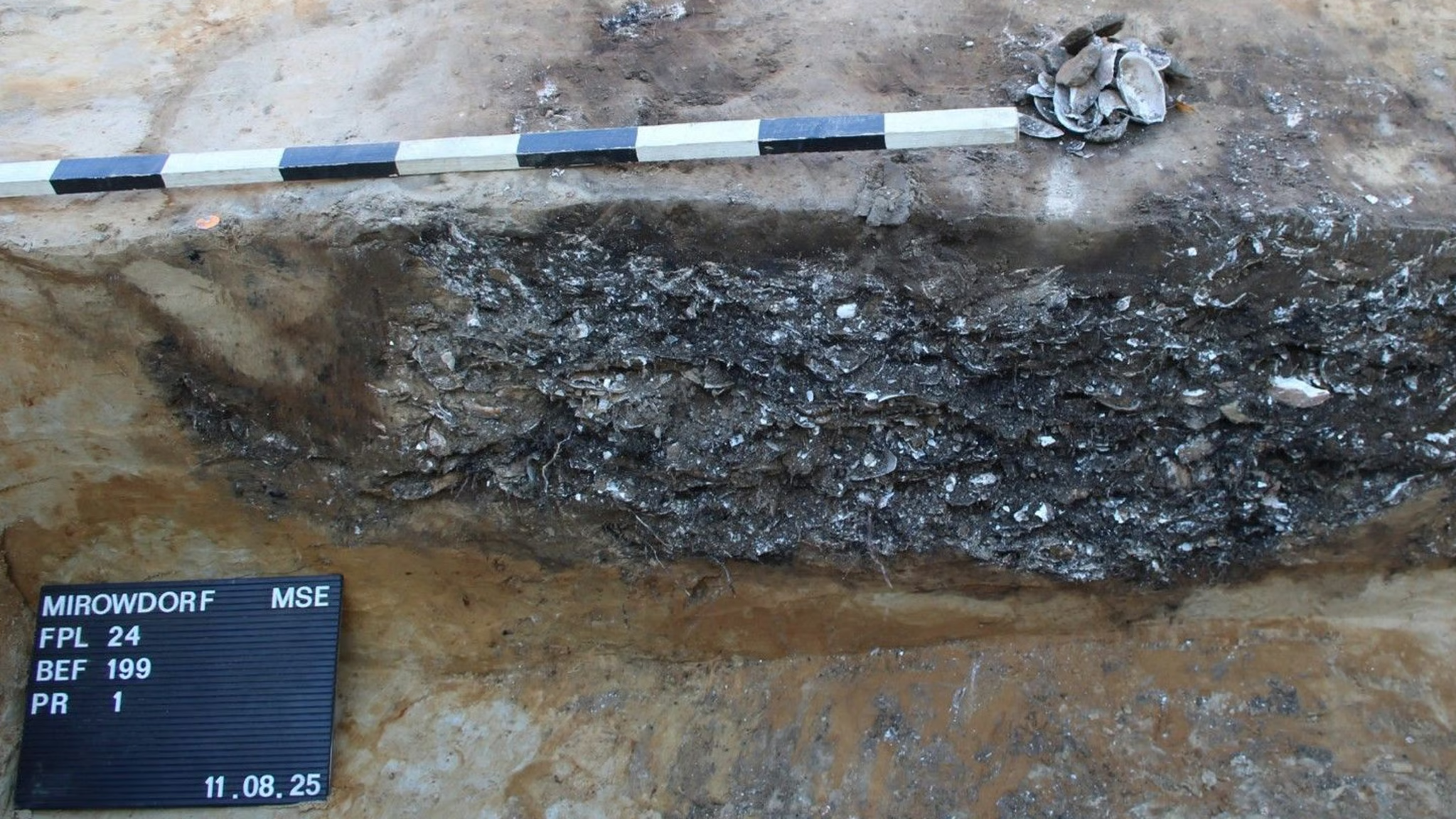
The documented features illustrate fire use, food preparation, pottery handling, and repeated occupation. According to Arkeonews, archaeologist Martin Wagner of AIM‑V Archäologie identified several hearths and cooking pits, together with decorated ceramic fragments from cups and bowls.
These ceramics anchor much of the activity to the Bronze Age. While the evidence does not yet confirm a single, fully mapped settlement, it does demonstrate that the surveyed strip intersected a zone where prehistoric peoples lived, worked, cooked, discarded waste, and returned over successive generations.
Reports temper expectations, describing the discovery as a potential candidate for one of the region’s largest Bronze Age sites, but emphasizing that further excavation is needed to determine whether the separate clusters belong to a unified settlement.
Do the Finds Represent One Extensive Community?
The central archaeological question now focuses on how these features relate across the landscape.
Two excavation sectors between Schulzensee and Mirower See produced comparable evidence of prehistoric activity. Researchers are weighing whether these represent distinct locales or components of a broader settlement area – a determination that remains pending.
If subsequent surveys reveal continuous layers linking the two known zones, the Mirow area could prove considerably larger than the road‑cut segment alone suggests.
Greek Reporter also highlighted the finds as evidence of a prehistoric community in northern Germany, underscoring the significance implied by the sheer number of features uncovered. The careful framing avoids overstatement, noting that the roadworks may have exposed part of a Bronze Age settlement landscape larger than previously recognized.
Shell‑Filled Pit Offers a Glimpse of Daily Life
Among the assemblage, a pit packed with shells stands out for its direct connection to the lakeside environment.
While the exact function of the pit remains uncertain – it could represent food waste or another activity involving shells – its presence ties the site to the surrounding aquatic resources.
Mirow’s setting of lakes, reeds, clay, woods, and arable land would have supported fishing, cooking, construction, pottery production, and modest farming, according to the source descriptions.
Additional artefacts reinforce this picture: hearths and cooking pits indicate repeated fire use; pottery sherds point to domestic activity; charcoal, ash, and possible heating structures suggest food or material processing areas; and metal objects, including a ring from a later phase, indicate occupation beyond a single period.
The later material dates to the Pre‑Roman Iron Age (c. 300–0 BC), implying that the locale remained attractive after the Bronze Age phase.
Local Archaeological Authorities Provide Context
The regional heritage office, Landesarchäologie Mecklenburg‑Vorpommern, oversees cultural heritage protection in the area. Information from the state archaeology page and the AIM‑V website Archäologie in Mecklenburg‑Vorpommern frames the Mirow work within broader local research, although no dedicated press release is linked in the source material.
In sum, the Mirow bypass excavation has revealed a dense cluster of over 800 prehistoric features, encompassing Bronze Age pottery, hearths, cooking pits, metal artefacts, Iron Age remains, and a shell‑filled pit. The outstanding question remains whether the two investigated sectors constitute separate sites or fragments of a single, extensive Bronze Age settlement.
This article has been fact checked for accuracy, with information verified against reputable sources. Learn more about us and our editorial process.
Last reviewed on .
Article history
- Latest version
Reference(s)
- Altuntaş, Leman. “More Than 800 Buried Traces Reveal a Prehistoric Settlement Larger Than Expected Near Germany’s Müritz Lakes.”, May 10, 2026 arkeonews.net <https://arkeonews.net/more-than-800-buried-traces-reveal-a-prehistoric-settlement-larger-than-expected-near-germanys-muritz-lakes/>.
- Zahid, Nisha. “Archaeologists Reveal Vast Prehistoric Community Hidden Beneath Northern Germany.”, May 11, 2026 GreekReporter.com <https://greekreporter.com/2026/05/11/prehistoric-commuity-northern-germany/>.
- “Landesarchäologie.”, April 1, 2026 <https://www.kulturwerte-mv.de/Landesarchaeologie/>.
- “Site is undergoing maintenance.” AIM-V Archäologie in Mecklenburg-Vorpommern GmbH - <https://archaeologie-in-mv.de/>.
Cite this page:
- Posted by Zara Tariq