New Fragment Of World Oldest Peace Treaty Reveals Ancient Rules For Fugitives
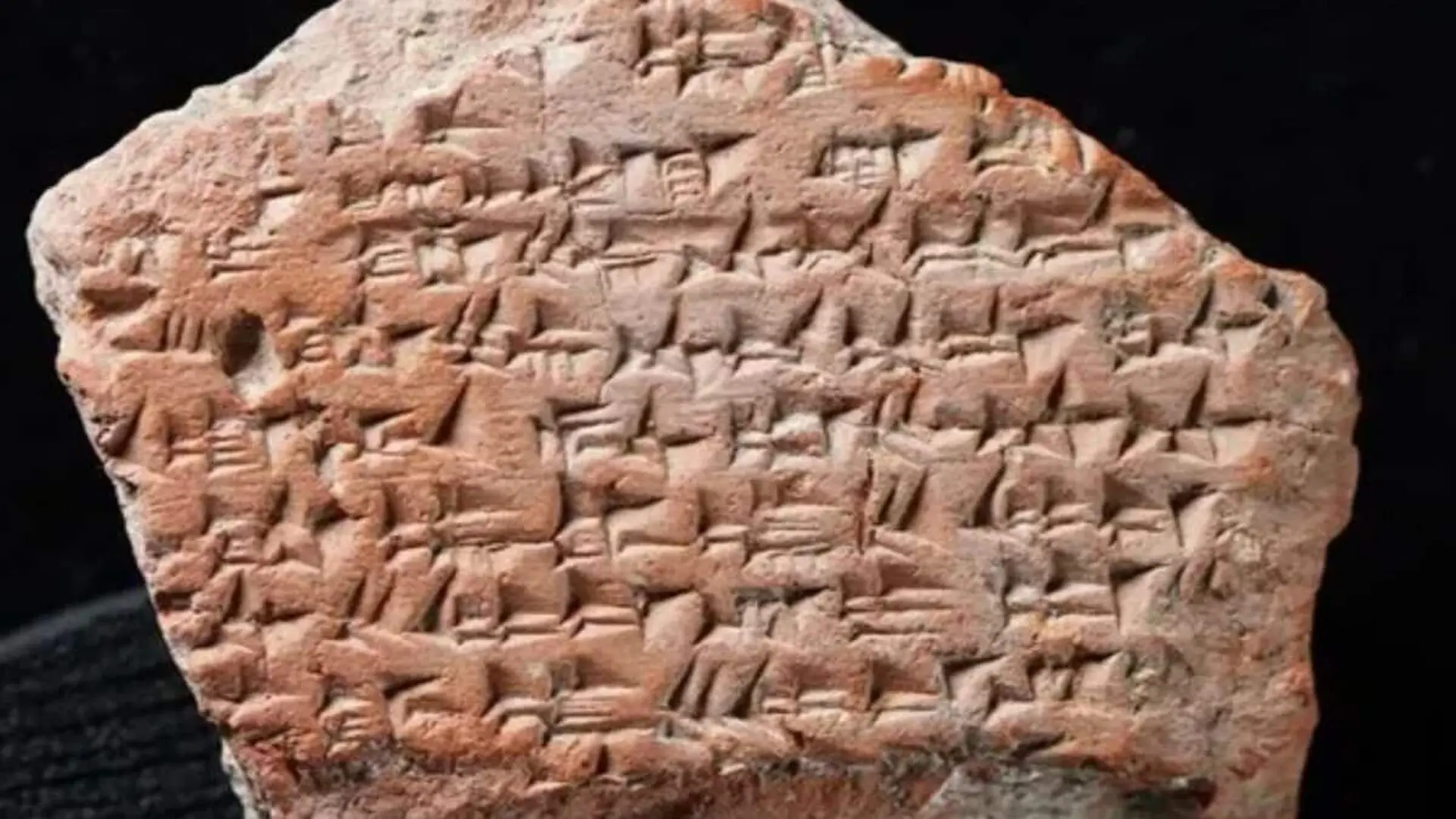
Archaeologists at Hattusha have discovered a fragment of the Treaty of Kadesh, the historic peace agreement between the ancient Egyptian and Hittite empires.
Archaeologists working at the ancient site of Hattusha in Turkey have unearthed a fresh fragment of what is widely considered the world’s oldest recorded peace treaty. The discovery, found within the ruins of the Hittite royal palace at Büyükkale, provides a new physical connection to the historic 13th-century BCE pact between the Hittite Empire and Egypt.
A Diplomatic Relic from the Bronze Age
Following a year of meticulous analysis, experts from the Turkish Ministry of Culture and Tourism confirmed the artifact is a piece of a clay tablet featuring the Akkadian language, the standard diplomatic script of the era. The text relates to the historic agreement finalized by the Hittite king Hattusili III and the Egyptian pharaoh Ramesses II.
The fragment specifically preserves content from articles 12 through 20 of the treaty. These clauses focus on the repatriation of fugitives and deserters who fled across the borders of the two empires. Rather than offering asylum, the treaty functioned as a reciprocal extradition agreement. Crucially, it also established humanitarian protections for those being returned, explicitly forbidding the mutilation of fugitives—specifically banning the removal of eyes, tongues, or limbs—and the destruction of their families’ homes and properties.
Happy International Day of Peace!
The Hittite version of the Egyptian–Hittite peace treaty (Treaty of Kadesh), discovered at Boğazköy (Turkey), 1258 BCE. The Treaty of Kadesh holds the distinction as the world’s first peace treaty. (Istanbul Archeology Museum).
The agreement was forged to conclude years of intense geopolitical tension between the two superpowers, a rivalry famously punctuated by the Battle of Kadesh around 1274 BCE. While Egyptian records long framed the conflict as a definitive victory for Ramesses II, the reality was a strategic stalemate that left the region divided between Egyptian and Hittite spheres of influence.
The resulting Treaty of Kadesh cemented a transition from open warfare to a partnership built on non-aggression and mutual support. Because the original silver tablets used to document the deal have long since vanished, historians have relied on enduring copies: hieroglyphic carvings on Egyptian temple walls and cuneiform clay tablets preserved in the Hittite capital.
Ongoing Excavations at the Imperial Capital
The site of Hattusha, located near modern-day Boğazkale, has been a rich source of historical data since systematic excavations began in 1906. Recognized as a UNESCO World Heritage site, the ancient capital continues to yield artifacts that illuminate the complex administrative life of the Hittite elite.
The announcement of the new find on the International Day of Peace underscored the historical significance of these ancient efforts to codify justice and cooperation. As excavation efforts continue at the site, researchers hope to recover further fragments to complete the surviving clay versions of this foundational document of international diplomacy.
Tariq, Zara. “New Fragment Of World Oldest Peace Treaty Reveals Ancient Rules For Fugitives.” BioScience. BioScience ISSN 2521-5760, 26 September 2026. <https://www.bioscience.com.pk/en/subject/science/a-new-fragment-of-the-worlds-oldest-peace-treaty-has-surfaced-and-it-contains-an-unexpected-clause>.
Tariq, Z. (2026, September 26). “New Fragment Of World Oldest Peace Treaty Reveals Ancient Rules For Fugitives.” BioScience. ISSN 2521-5760. Retrieved September 26, 2026 from https://www.bioscience.com.pk/en/subject/science/a-new-fragment-of-the-worlds-oldest-peace-treaty-has-surfaced-and-it-contains-an-unexpected-clause
Tariq, Zara. “New Fragment Of World Oldest Peace Treaty Reveals Ancient Rules For Fugitives.” BioScience. ISSN 2521-5760. https://www.bioscience.com.pk/en/subject/science/a-new-fragment-of-the-worlds-oldest-peace-treaty-has-surfaced-and-it-contains-an-unexpected-clause (accessed September 26, 2026).