New Mexico Fossil Yields Giant Troodontid Dinevenator After 20 Years of Misclassification
A tiny dinosaur skull fragment reveals surprising new insights into ancient predators, reshaping our understanding of their behavior and evolution.
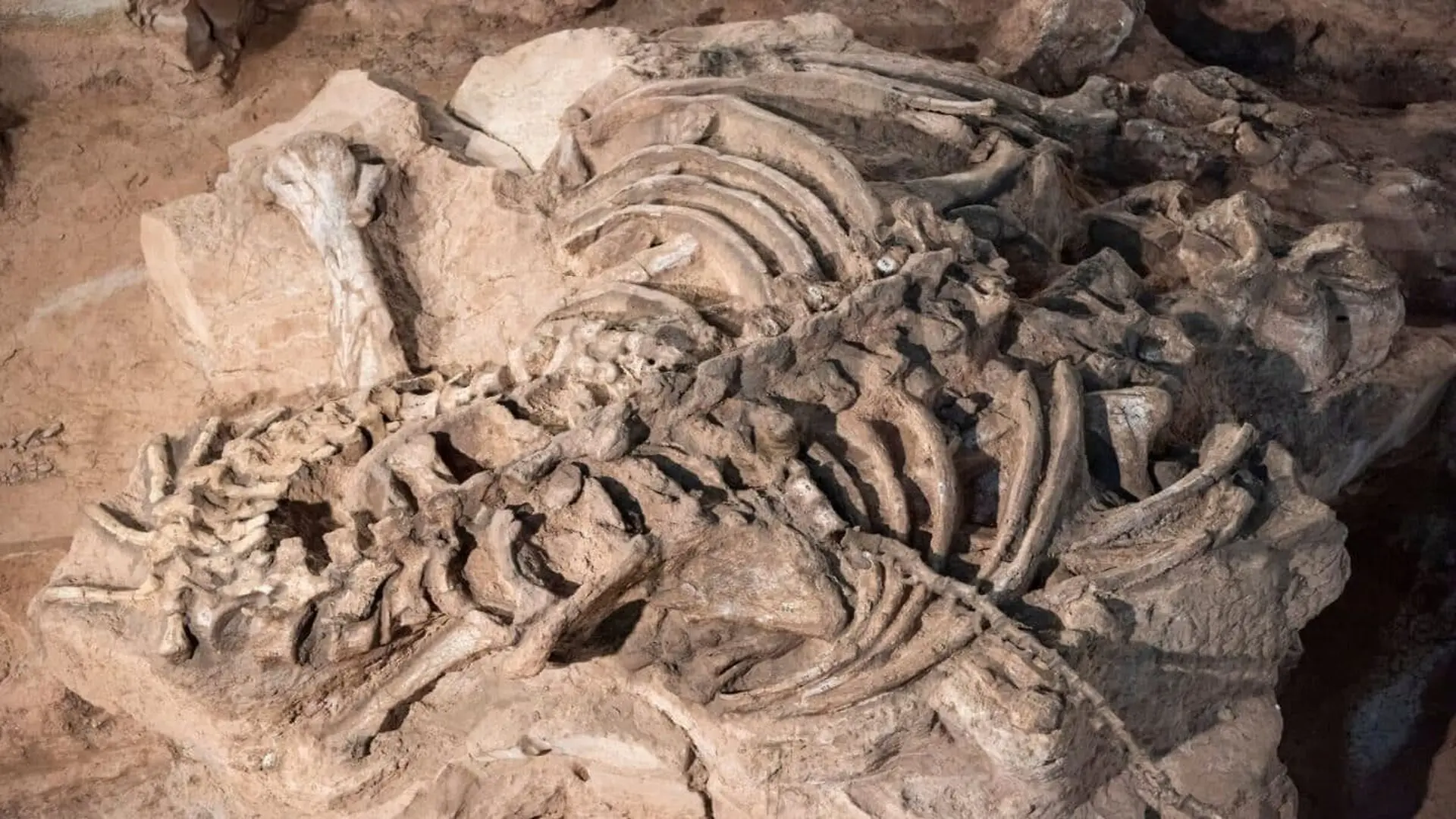
A newly identified dinosaur from New Mexico, dating to roughly 73 million years ago, adds a giant member to the bird‑like troodontid family. The species, dubbed Dinevenator robustus, emerged from a re‑examination of a fossil that has been re‑classified multiple times over the past two decades.
Based on the nearly complete left frontal bone (specimen SMP VP‑1955) uncovered in 2005 from the De‑na‑zin Member of the Kirtland Formation in the San Juan Basin, researchers estimate the animal reached about three metres in length and weighed close to 140 kg, making it one of the largest known troodontids.
The fossil’s taxonomic journey began in 2006 when it was assigned to Saurornitholestes, a dromaeosaurid raptor. Subsequent analyses shifted it to the troodontid clade, yet its exact status remained debated until a 2026 study resolved its identity.
From Misidentification to a New Genus
The shifting interpretations illustrate how paleontology adapts to fresh discoveries. After the initial classification, scientists questioned the dromaeosaurid link, and by 2014 the specimen was tentatively placed within Troodontidae, though some researchers still hesitated to grant it species‑level distinction.
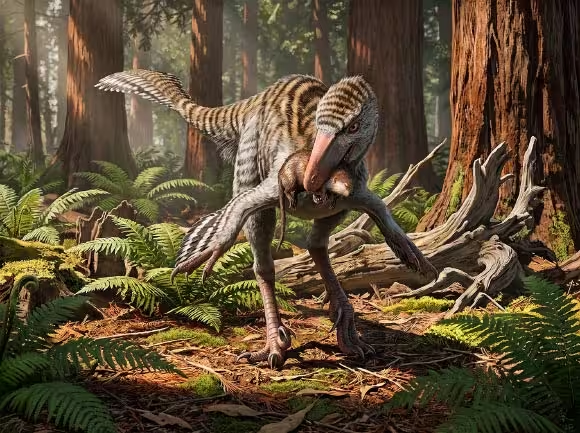
The 2026 investigation, led by Steven E. Jasinski and Robert M. Sullivan, concluded that the New Mexico specimen differed sufficiently from the Mexican troodontid Xenovenator to merit its own genus. Their analysis compared the frontal bone with a range of troodontids and positioned the new taxon within the broader dinosaur family tree.
A Troodontid with an Unusually Stout Skull
The study places Dinevenator robustus among a subset of large‑bodied troodontids characterized by thick cranial roofs, a group that includes Xenovenator espinosai from Mexico and Albertavenator curriei from Canada. Published in Fossil Studies on August 3, the paper reinterprets the dinosaur’s evolutionary relationships, identifying it as the earliest known member of this robust‑skulled lineage.
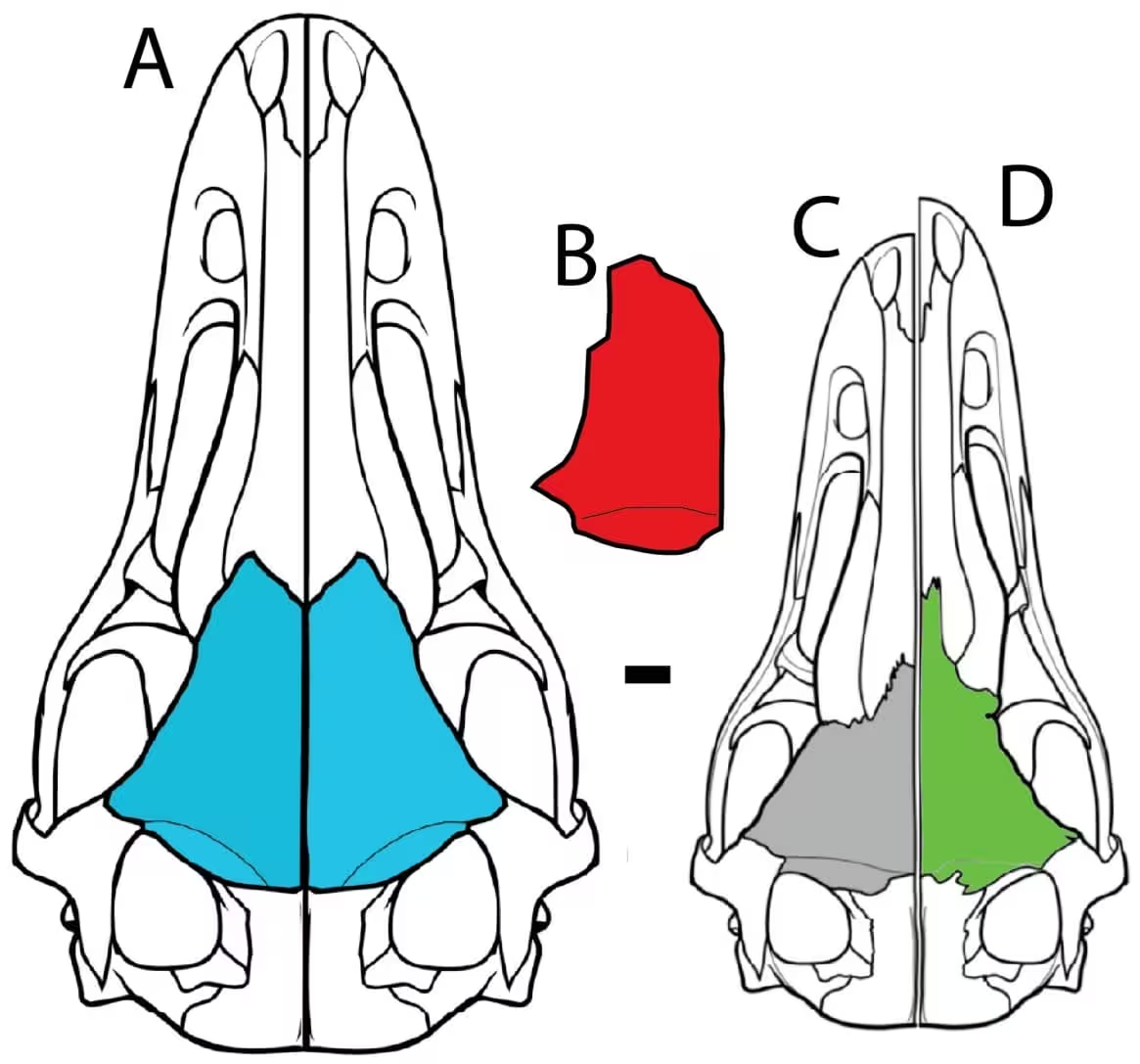
The find broadens our view of Late Cretaceous troodontid diversity, showing that while many members were modest in size, some, like Dinevenator, attained considerable bulk.
“This really helps us get a clearer picture of the diversity in this family of dinosaurs during the Late Cretaceous in North America, and it adds to our knowledge of dinosaurs that once roamed New Mexico,” noted Dr. Steven Jasinski, paleontology curator at the New Mexico Museum of Natural History & Science and professor at Harrisburg University.
San Juan Basin Yields New Insights into Dinosaur Faunas
The San Juan Basin has already produced several endemic species, underscoring the region’s unique paleo‑ecosystems. The presence of a large, thick‑skulled troodontid indicates that North‑American dinosaur populations remained interconnected late in the Cretaceous, with lineages sharing traits across distant locales.
“The recognition of a distinct, large, robust, thick‑skulled troodontid adds to the unique nature of the ancient ecosystems of the San Juan Basin,” the authors wrote.
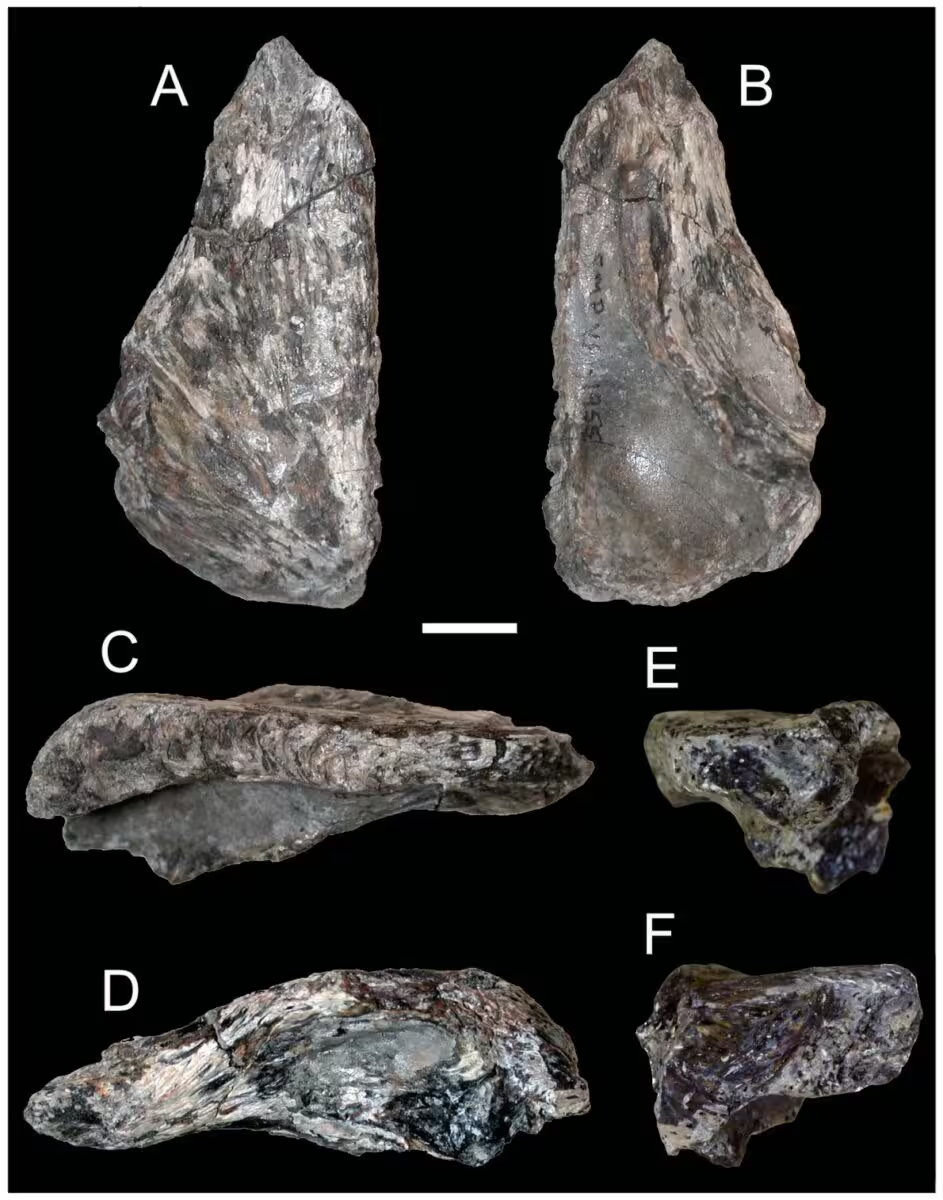
Dr. Anthony Fiorillo, executive director of the New Mexico Museum of Natural History & Science, emphasized that the discovery exemplifies how revisiting old material with new techniques continues to reshape dinosaur science.
This article has been fact checked for accuracy, with information verified against reputable sources. Learn more about us and our editorial process.
Last reviewed on .
Article history
- Latest version
Reference(s)
- <https://www.mdpi.com/2813-6284/4/3/21>.
- <https://www.harrisburgu.edu/about/our-people/faculty-staff/steven-jasinski/>.
- “Anthony Fiorillo.” SMU <https://www.smu.edu/dedman/academics/departments/earth-sciences/people/faculty/fiorillo>.
Cite this page:
- Posted by Zara Tariq