SARS-CoV-2 Enzyme Proves Effective for Removing Protein Purification Tags
Laboratory tests show that a viral protease can cleanly cleave fusion tags across various temperatures and buffer conditions.
Biotechnologists investigating molecular tools for recombinant protein production have found that the main protease from SARS-CoV-2 can efficiently remove purification tags under standard laboratory conditions. The enzyme, known as 3C-like protease or 3CLpro, acts with high sequence specificity and maintains catalytic activity across various temperatures and chemical environments.
Producing functional proteins in bacterial hosts like E. coli often requires adding fusion tags, such as glutathione S-transferase or polyhistidine tracts, to boost protein yield and solubility. However, these extra molecular tags can interfere with the native structure and biological activity of the target protein, making their precise removal necessary. Traditional viral enzymes used for this task, such as tobacco etch virus protease, often suffer from slow catalytic turnover rates.
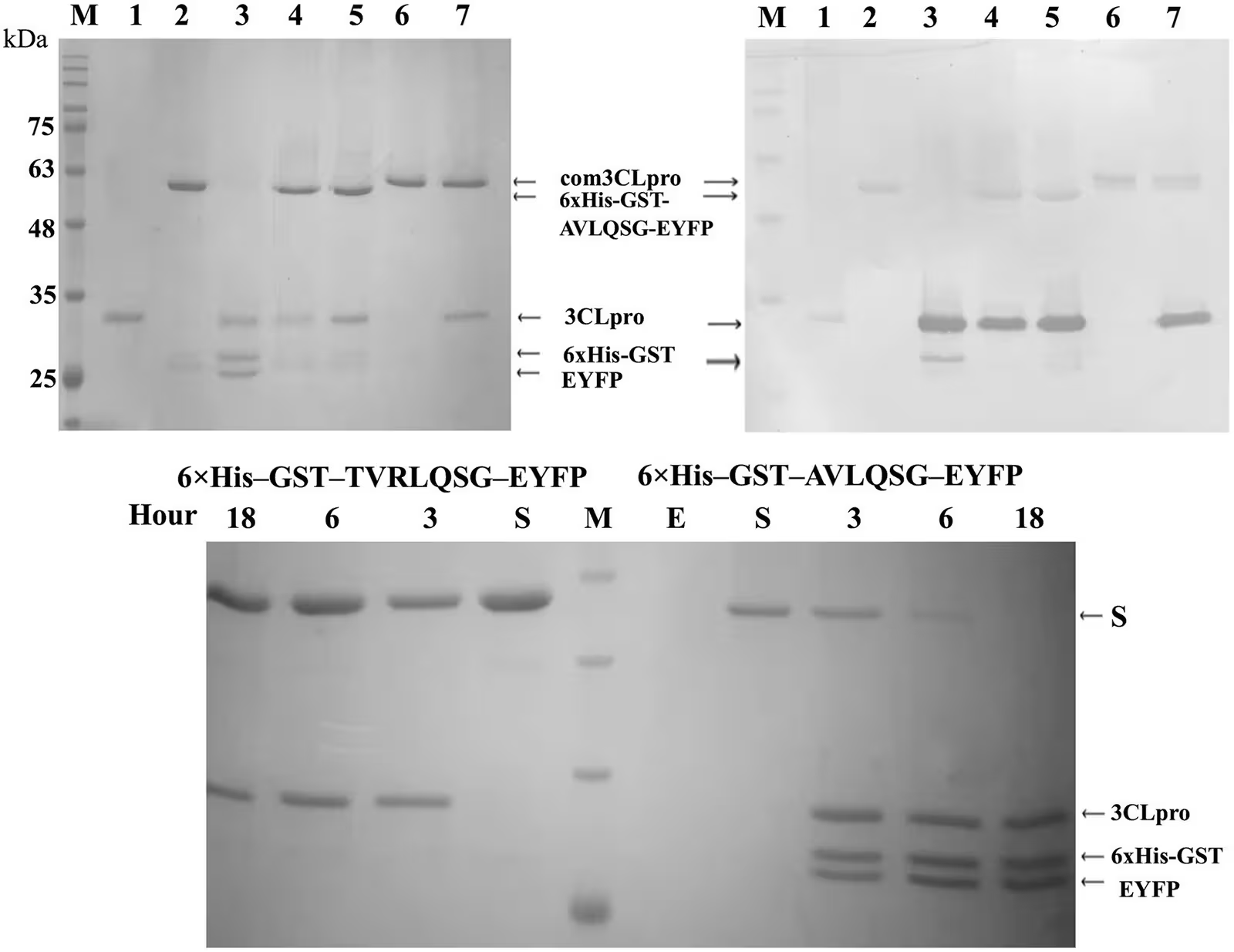
To evaluate whether SARS-CoV-2 3CLpro could serve as a faster alternative, researchers designed a recombinant fusion protein substrate containing the canonical recognition sequence AVLQSG linked to enhanced yellow fluorescent protein. Biochemical assays revealed that the viral protease cleanly cleaved the substrate at the correct site, yielding distinct fragments corresponding to the expected tag and fluorescent protein components. In contrast, variant substrates harboring altered sequences like TVRLQSG remained entirely intact, demonstrating the strict sequence specificity of the protease. The study was published in PLoS One by Hong-Loan T. Nguyen, Tuan-Nghia Phan, and their collaborators at Vietnam National University, Hanoi.
How Chemical Additives and Temperature Affect Protease Performance
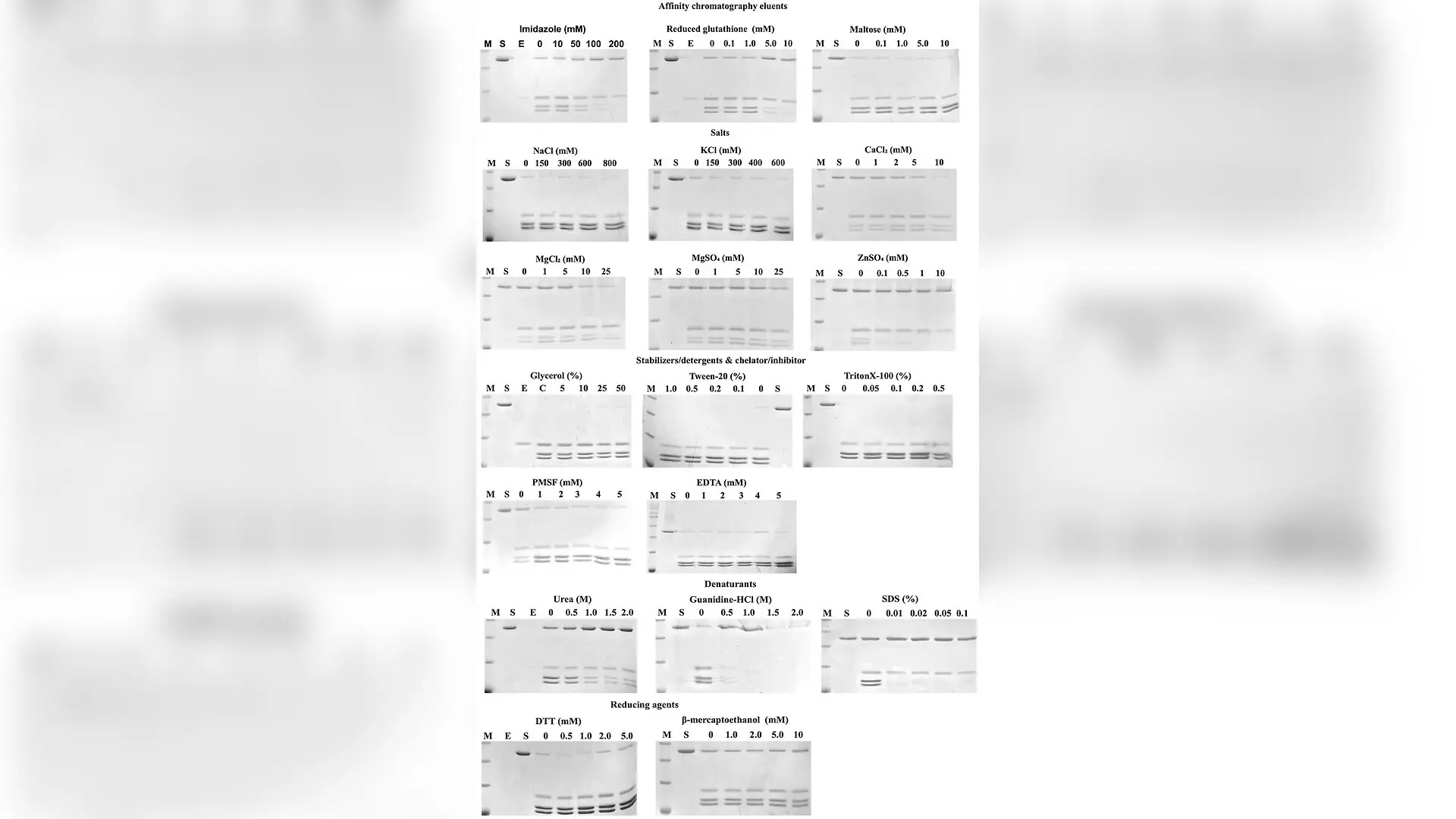
To determine if the enzyme can survive real-world laboratory workflows, the team tested its stability in the presence of common protein purification reagents. The experiments showed that 3CLpro retains robust activity at 4 degrees Celsius and across a broad spectrum of pH levels, peaking near neutral pH 7.0. Common salts like sodium chloride and potassium chloride, along with nonionic detergents such as Triton X-100 and Tween-20, had little to no negative impact on the cleavage efficiency of the enzyme.
Certain compounds even slightly enhanced the reaction, while denaturing chemicals like urea, guanidine hydrochloride, and sodium dodecyl sulfate strongly inhibited the protease by disrupting its folded structure. Zinc ions also suppressed activity, matching previous findings that heavy metals can bind to the catalytic active site of the viral enzyme. These biochemical traits suggest that 3CLpro can operate in cold rooms and tolerate many buffer additives without requiring immediate buffer exchanges.
Flexible Workflows for Laboratory Processing
The research team demonstrated that 3CLpro can be integrated into three distinct purification formats depending on experimental needs. In-solution cleavage allowed the purified fusion protein to be digested directly before passing through a nickel-sepharose affinity column to trap the cleaved tag and the histidine-tagged protease. On-column cleavage immobilized the fusion protein on a glutathione matrix where digestion released the target protein into the liquid phase. Finally, dialysis-coupled cleavage allowed proteolysis and buffer removal to proceed simultaneously overnight at 4 degrees Celsius.
A Modular Expression Vector for Future Applications
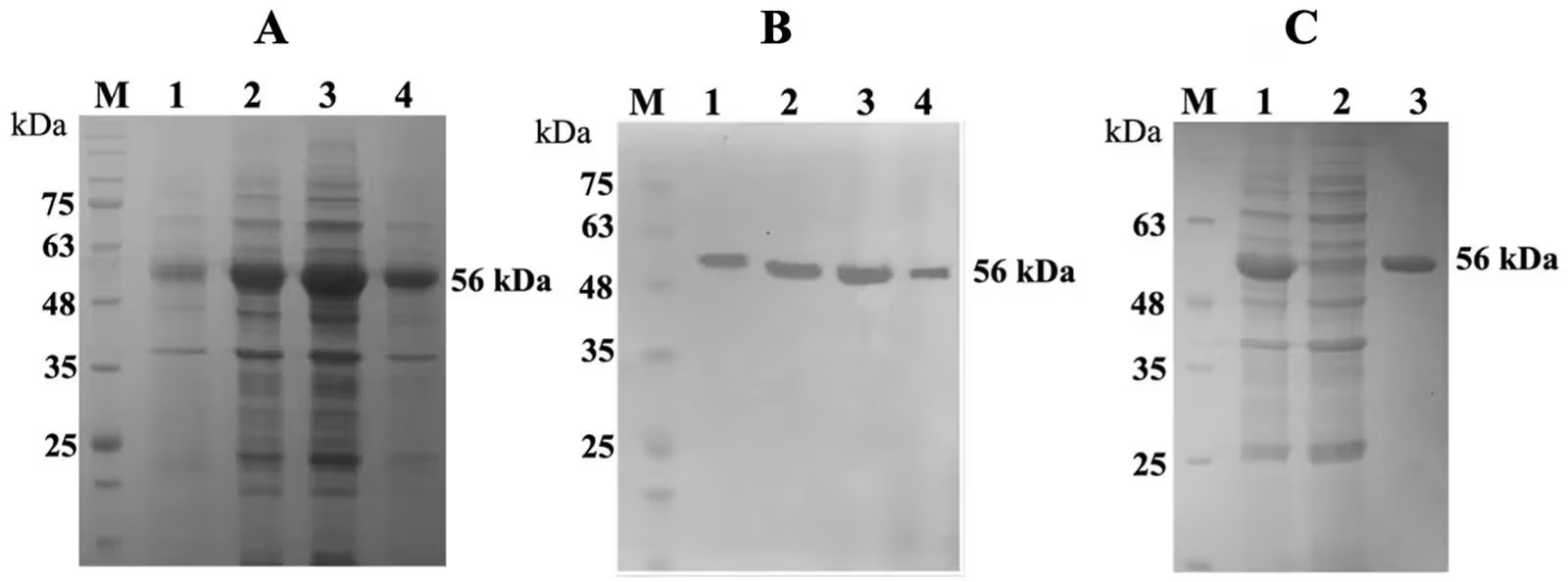
To make the system practical for general laboratory use, the investigators constructed a modular bacterial expression vector designated pET_RPLa. This plasmid places the 3CLpro recognition motif directly between a glutathione S-transferase tag and a multiple cloning site, allowing researchers to insert custom target genes easily. The team validated this platform using the light chain of botulinum neurotoxin serotype A as a challenging model protein.
Following bacterial expression, the toxin fusion protein remained largely soluble and retained its enzymatic ability to cleave SNAP25 cellular substrates. Subsequent treatment with recombinant 3CLpro successfully liberated the functional toxin from its fusion partner. Although these results highlight significant potential for laboratory protein production, future work must establish the economic feasibility of scaling the process and test the enzyme against a broader library of complex human proteins.
The research was published in PloS one on January 1, 2026.
This article has been fact checked for accuracy, with information verified against reputable sources. Learn more about us and our editorial process.
Last reviewed on .
Article history
- Latest version
Reference(s)
- Nguyen, Trung-Duc., et al. “SARS-CoV-2 3CLpro as an efficient endopeptidase for fusion tag removal in recombinant protein production.” PLOS One, vol. 21, no. 11, November 11, 2026, pp. e0362685 Public Library of Science (PLoS), doi: 10.1371/journal.pone.0362685. <https://doi.org/10.1371/journal.pone.0362685>.
Cite this page:
- Posted by Robert Brown