Forgotten Cave Discovery Suggests Ancient Teotihuacan Had a Sophisticated Writing System
Digital imaging reveals hidden red markings in a Mexican cave, suggesting an unexpected and ancient link to a famous civilization.
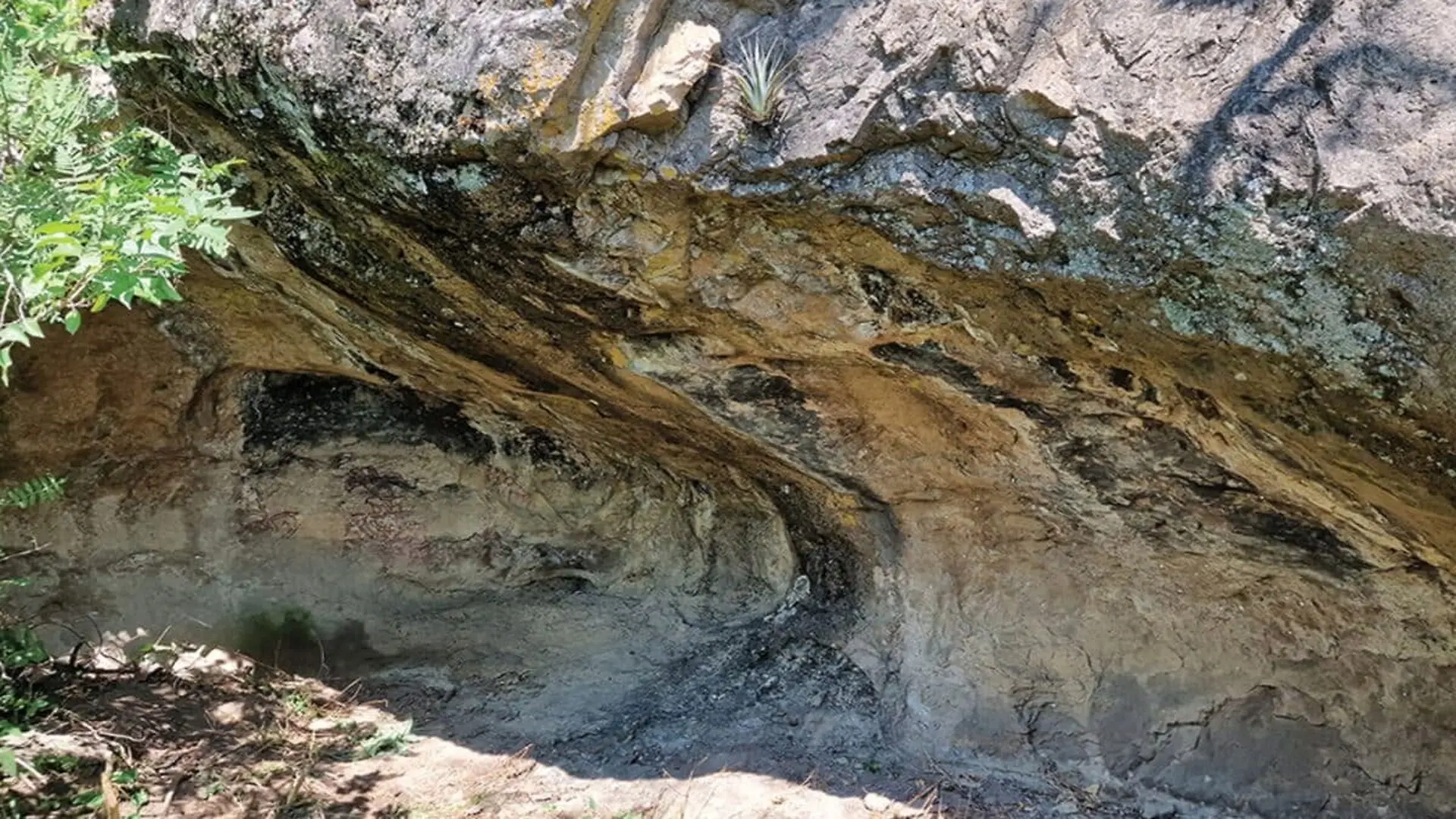
A team of researchers has uncovered new insights into the enigmatic communication methods of Teotihuacan, the influential pre-Aztec metropolis known for its massive pyramids and complex urban layout. By revisiting a shallow cliffside cave in Chalcatzingo, Mexico, scientists used advanced digital imaging to recover three faded, red-pigmented glyphs that had been largely overlooked since their initial documentation in the 1980s.
The discovery, detailed in the journal Antiquity, bolsters the hypothesis that the people of Teotihuacan possessed a sophisticated, functional writing system, rather than relying solely on decorative imagery.
Deciphering Ancient Messages in Cave 19
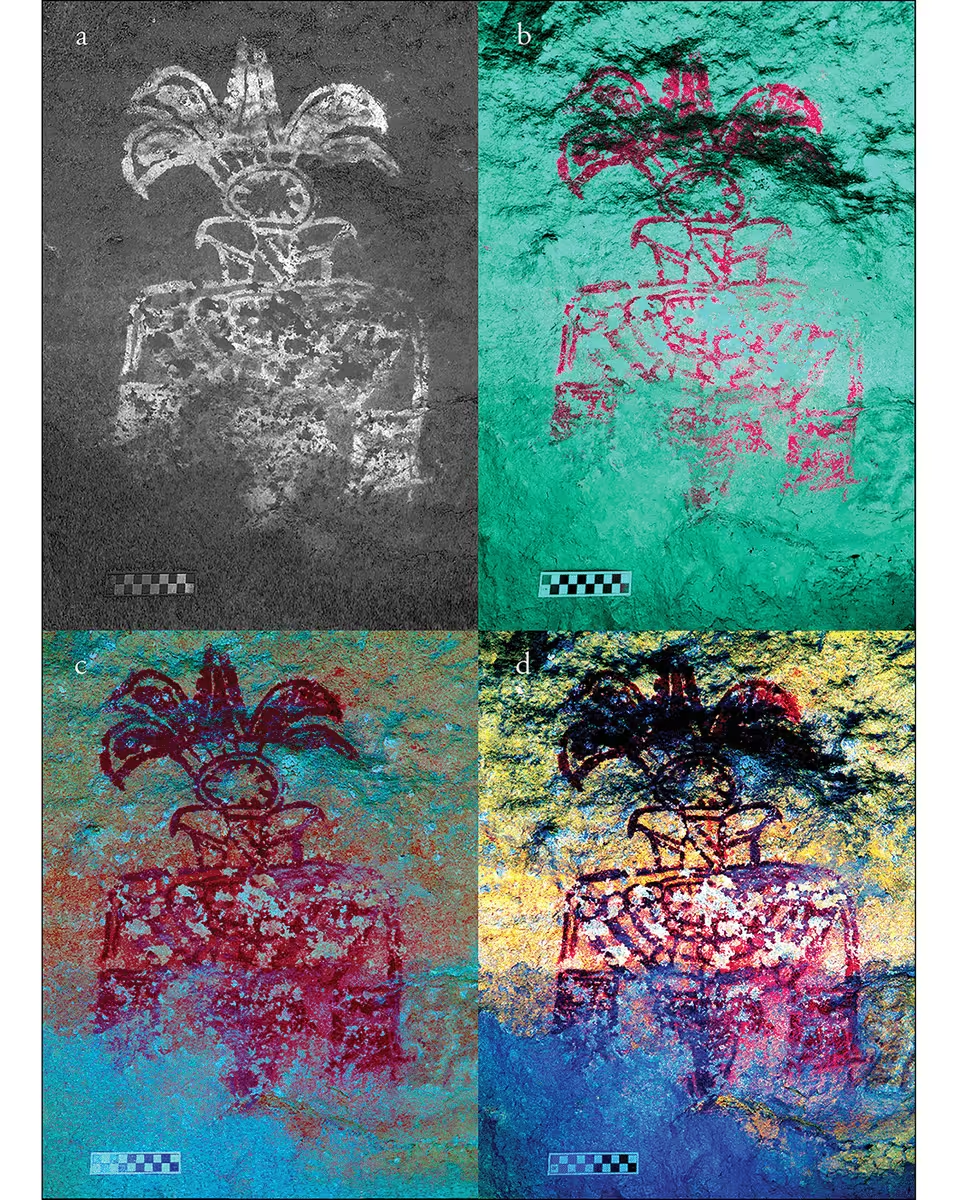
Led by Christophe Helmke of the University of Copenhagen, the research team conducted a comprehensive mapping and photographic survey of the site in 2022. Because the centuries-old pigments had degraded significantly, the team employed digital enhancement software to clarify the iconography, allowing them to compare the symbols against known Teotihuacan artistic conventions.
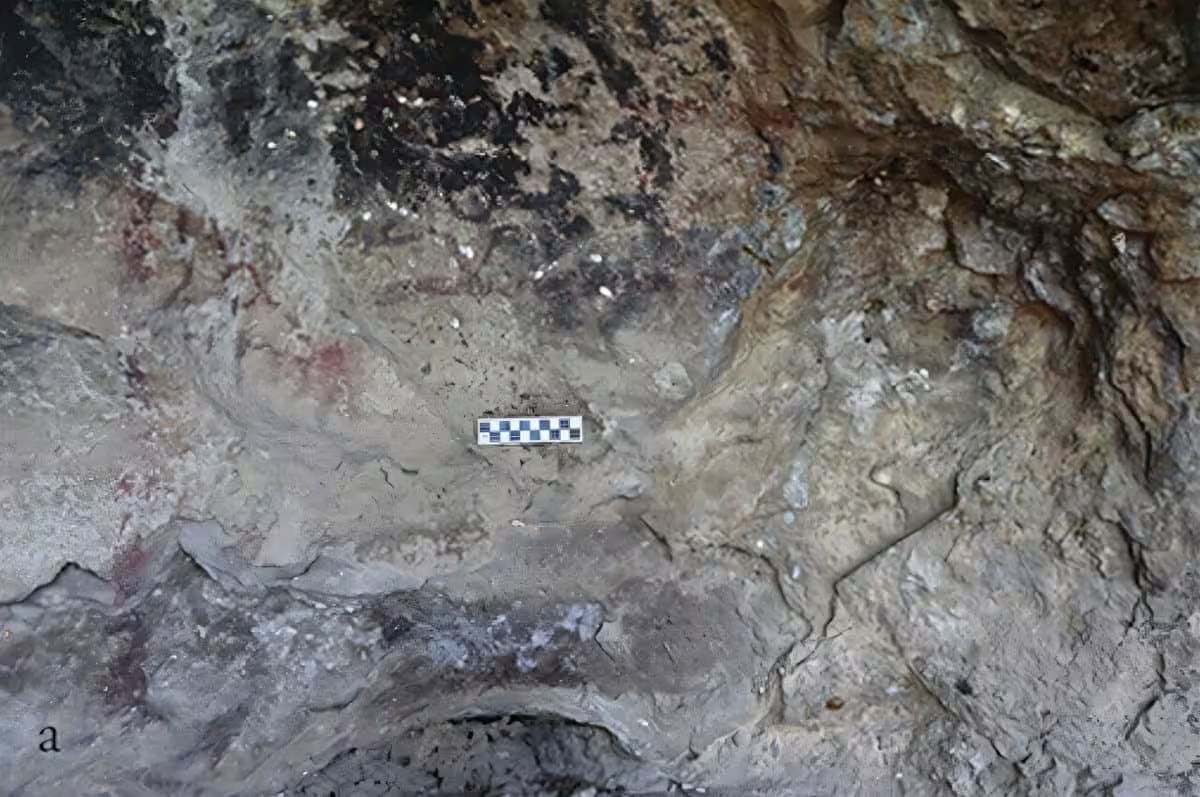
The analysis revealed two distinct linguistic markers. The first depicts a mountain accompanied by speech scrolls, which scholars interpret as a place name: “Singing Mountain.” The presence of this specific identifier, which also appears in murals within the Teotihuacan city center, suggests that this remote cave was a destination for sacred pilgrimages. The second glyph, featuring a combination of a beaded necklace, a cloak, and a pointed dart, appears to represent a specific title associated with the warrior class of the region.
Evidence of Ritualistic Fire
The third and largest painting discovered in the cave features a rectangular frame adorned with star motifs, positioned directly over a natural bedrock shelf. Heavy carbon deposits found on the cave wall and ceiling indicate that this area served as a focal point for intense heat-based ceremonies. Researchers hypothesize that the space was likely used for pyrolytic rituals, such as the burning of incense or the ceremonial destruction of funerary items.
“We therefore hypothesize that this frame and the modified bedrock shelf served as the background and elevated base for a Teotihuacan pyrolytic ritual,” the study authors noted.
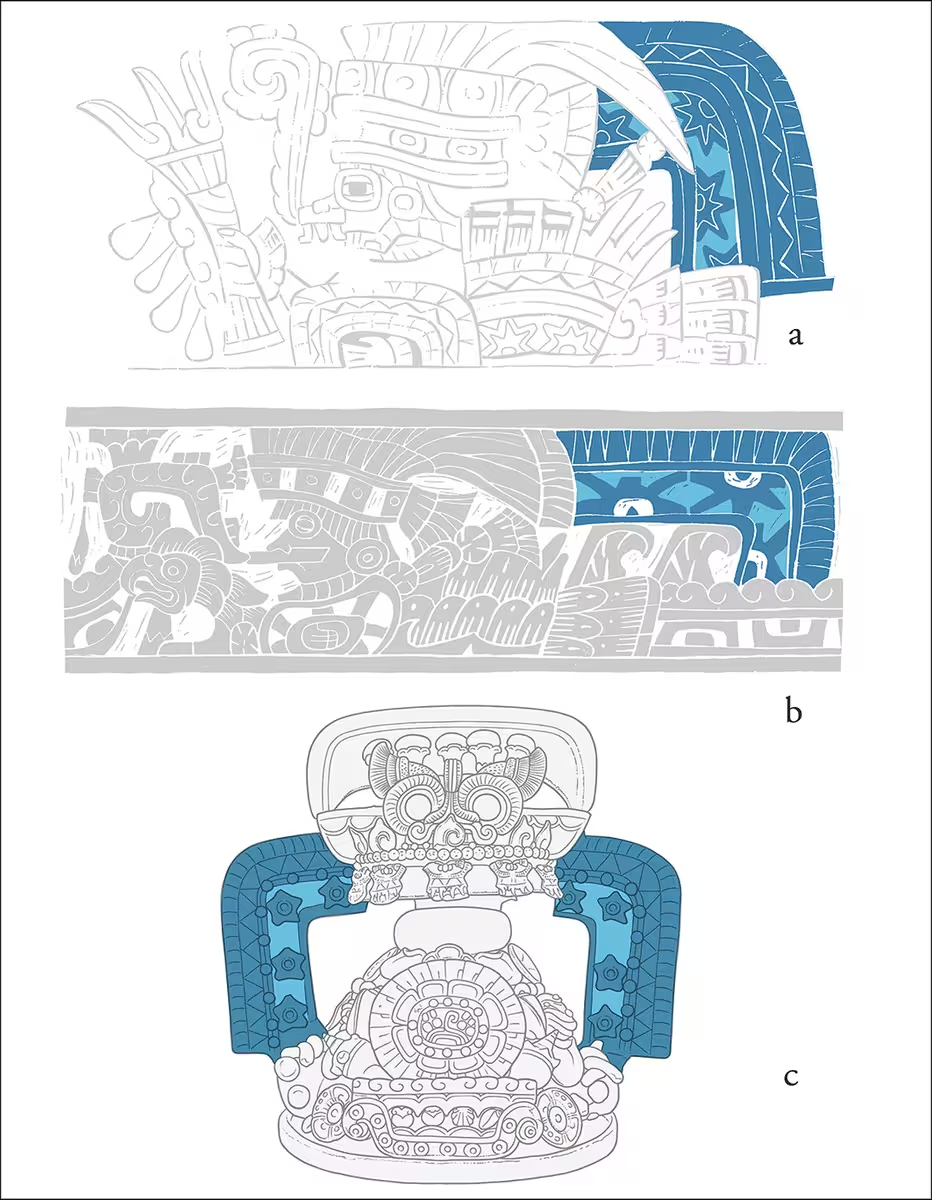
This discovery provides critical evidence for a more expansive understanding of Teotihuacan culture. By demonstrating that their glyphs functioned as a consistent, readable system, the researchers argue that the writing of Teotihuacan can no longer be categorized as a collection of disjointed or purely ornamental symbols. Instead, it appears to be a sophisticated language that held significance far beyond the city’s urban boundaries.
This article has been fact checked for accuracy, with information verified against reputable sources. Learn more about us and our editorial process.
Last reviewed on .
Article history
- Latest version
Reference(s)
- Helmke, Christophe. “Painted Teotihuacan glyphs of Cave 19, Chalcatzingo, Morelos, Mexico | Antiquity | Cambridge Core.”, pp. 1-19. Cambridge Core, doi: 10.15184/aqy.2026.10425. <https://www.cambridge.org/core/journals/antiquity/article/painted-teotihuacan-glyphs-of-cave-19-chalcatzingo-morelos-mexico/536A5E711BB8DFED14BE189F4F1B9259>.
- “Christophe Helmke.” University of Copenhagen Research Portal <https://researchprofiles.ku.dk/en/persons/christophe-helmke/>.
Cite this page:
- Posted by Zara Tariq