New Space Mission Captures Stunning Full View Of Earth’s Northern Lights From Orbit
A joint European-Chinese spacecraft has begun science operations, capturing the northern auroral ring and a dramatic substorm from orbit.
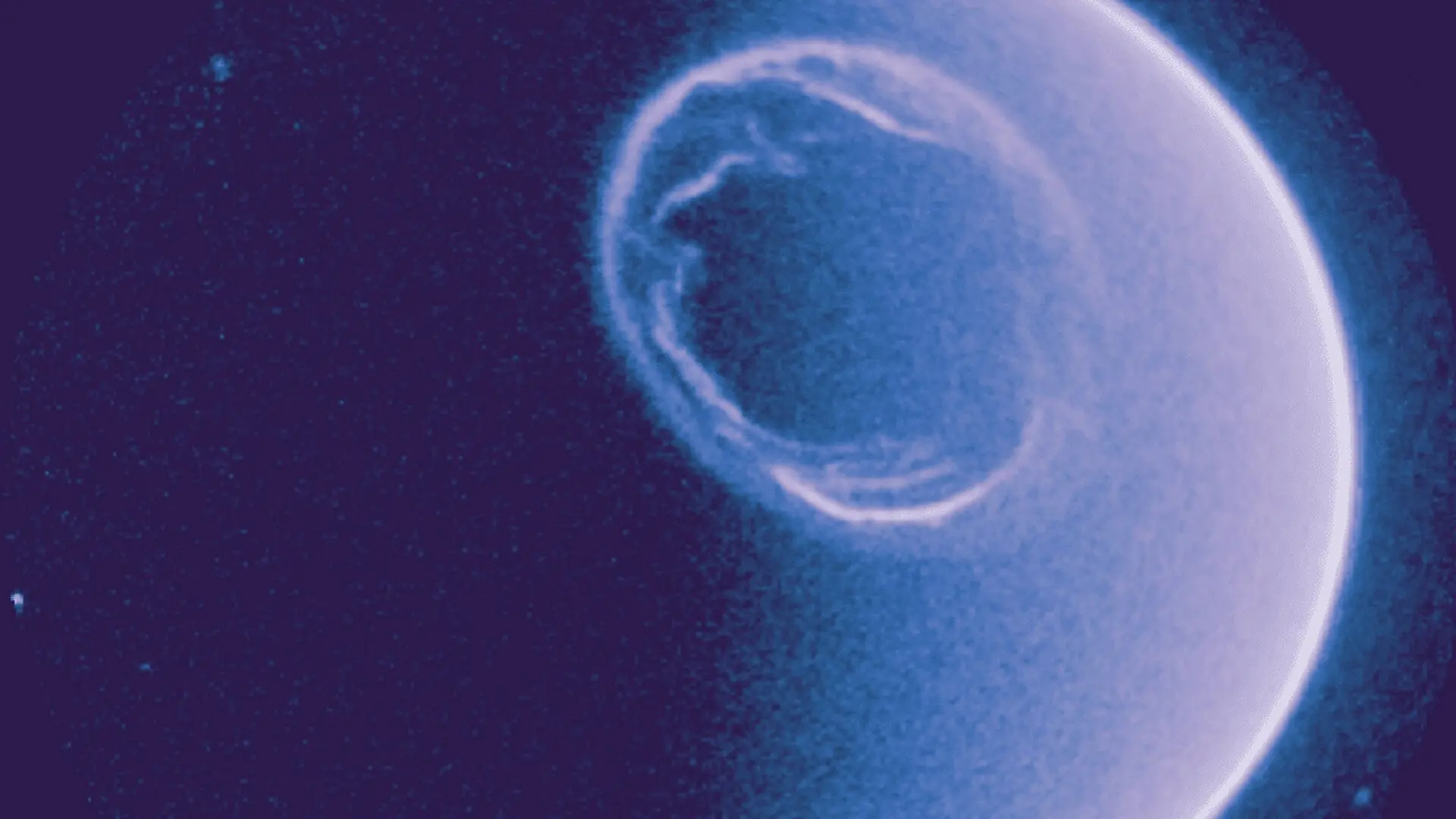
A collaborative mission between Europe and China has captured a rare, comprehensive view of the northern lights from high above Earth, marking a significant milestone in our ability to monitor the planet’s magnetic interaction with the Sun. The Solar wind Magnetosphere Ionosphere Link Explorer (Smile) spacecraft successfully recorded the complete auroral oval in ultraviolet light, providing researchers with an unprecedented look at how solar disturbances shape our atmosphere.
This achievement, announced by the European Space Agency (ESA), occurred during the testing phase of the mission, shortly after the activation of the craft’s onboard imaging equipment. The resulting imagery represents the first time since 2008 that a space-based camera has documented the entire northern auroral ring in the ultraviolet spectrum.
Observing Earth’s Auroral Dynamics from Deep Space
The ultraviolet sequence was captured on July 24, 2026, just two weeks after the ultraviolet imager (UVI) was brought online. Unlike ground-based observations, which are often limited to specific segments of the sky, the UVI instrument offers a planetary perspective. From its position in a distant orbit, the camera can observe the entire ring of light encircling the North Pole, enabling scientists to track how energy influxes alter the auroral region in real time.
The footage documents an auroral substorm, a period of rapid magnetic reconfiguration caused by a surge of solar-wind particles. These charged particles stream continuously from the Sun, but their varying speed and magnetic properties frequently disrupt the space environment surrounding our planet.
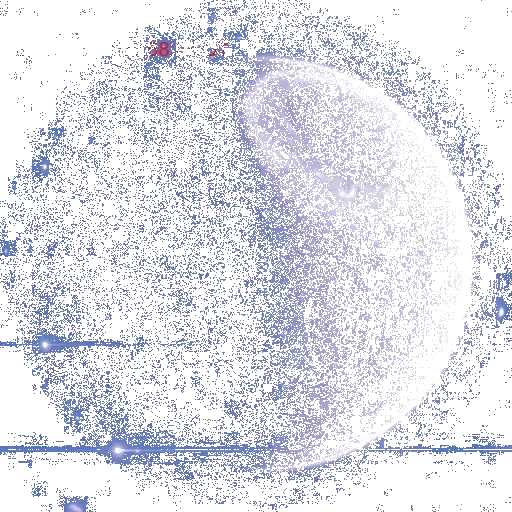
A key strength of the Smile mission is its capacity for endurance. The UVI instrument is capable of 45 hours of continuous recording, a vital feature for studying magnetospheric changes that often evolve over extended periods. By capturing these sequences, scientists can now analyze where auroral activity originates and how the shape of the auroral oval responds to shifting solar conditions.
Transitioning to Full-Scale Scientific Operations
The successful imaging of the auroral oval confirms that the spacecraft has passed its rigorous commissioning period. Following its launch on May 19, 2026, and its arrival in a specialized orbit on June 20, the Smile team spent months verifying systems and calibrating instruments. On September 23, 2026, ESA confirmed that the mission was officially cleared for scientific operations.
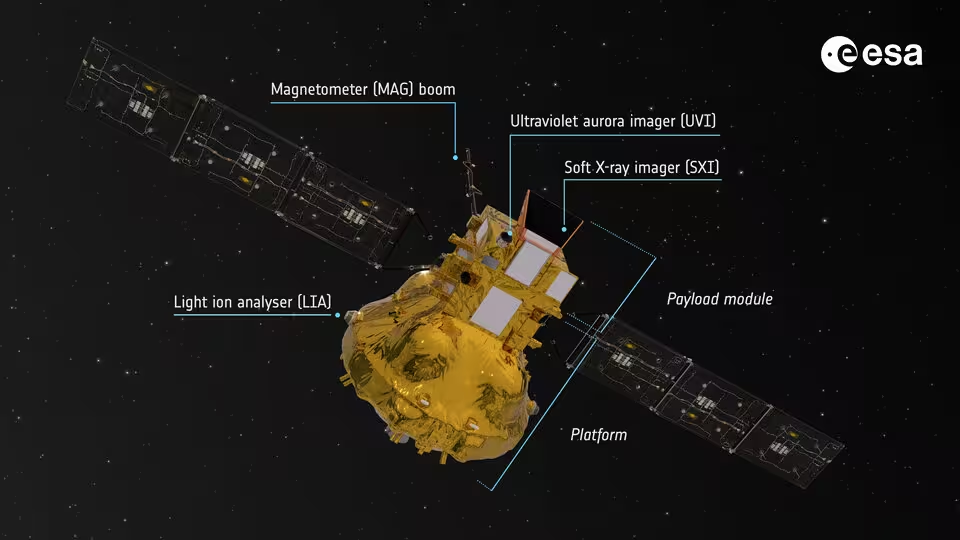
Professor Carole Mundell, ESA Director of Science, praised the achievement, noting that the mission stands as a testament to the dedication of the joint European and Chinese teams. The commissioning process involved the complex deployment of four primary instruments: the soft X-ray imager (SXI), the ultraviolet imager (UVI), the magnetometer (MAG), and the light ion analyser (LIA).
Mapping the Chain of Solar-Terrestrial Interactions
The core objective of Smile is to examine the entire chain of energy transfer from the Sun to Earth. The solar wind, a constant stream of solar particles, interacts with the magnetosphere, the protective magnetic bubble shielding our planet. When this solar wind impacts the magnetopause, it triggers space weather events that can affect navigation, communication, and satellite infrastructure.
By utilizing its suite of four synchronized instruments, Smile allows researchers to move beyond isolated observations. While the UVI tracks the aurora, the magnetometer and ion analyzer measure the conditions of the solar wind in situ, and the SXI provides high-level imaging of the magnetopause. This integrated approach allows for a holistic understanding of how solar pressure and magnetic orientation dictate the behavior of our planet’s upper atmosphere.
This article has been fact checked for accuracy, with information verified against reputable sources. Learn more about us and our editorial process.
Last reviewed on .
Article history
- Latest version
Cite this page:
- Posted by Karan Das