NASA Releases First Test Images From Roman Space Telescope Showing Mysterious Green Rings
NASA’s newest space telescope is ready to reveal the cosmos. We asked over 270 readers what they most hope this groundbreaking mission will discover.
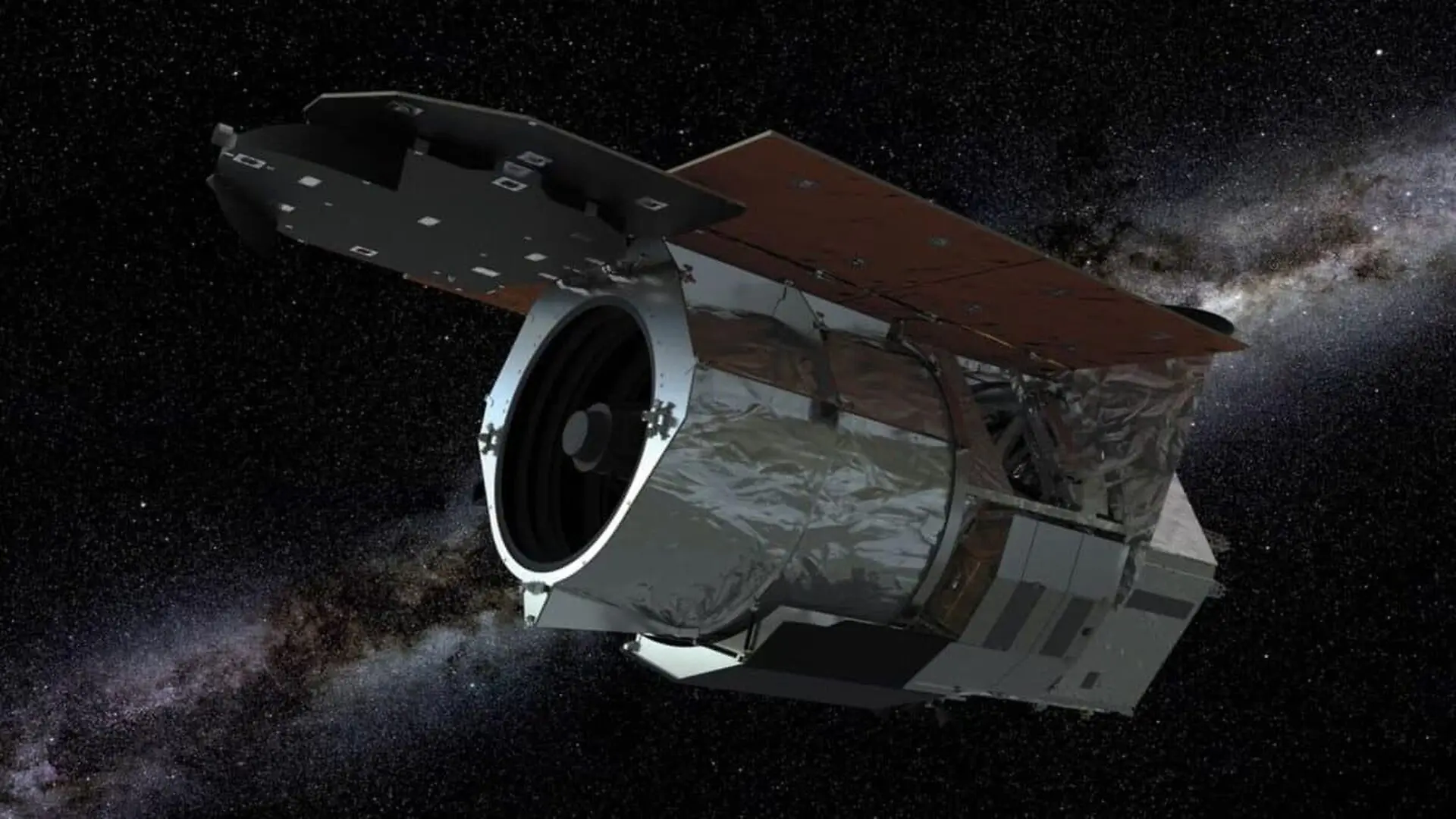
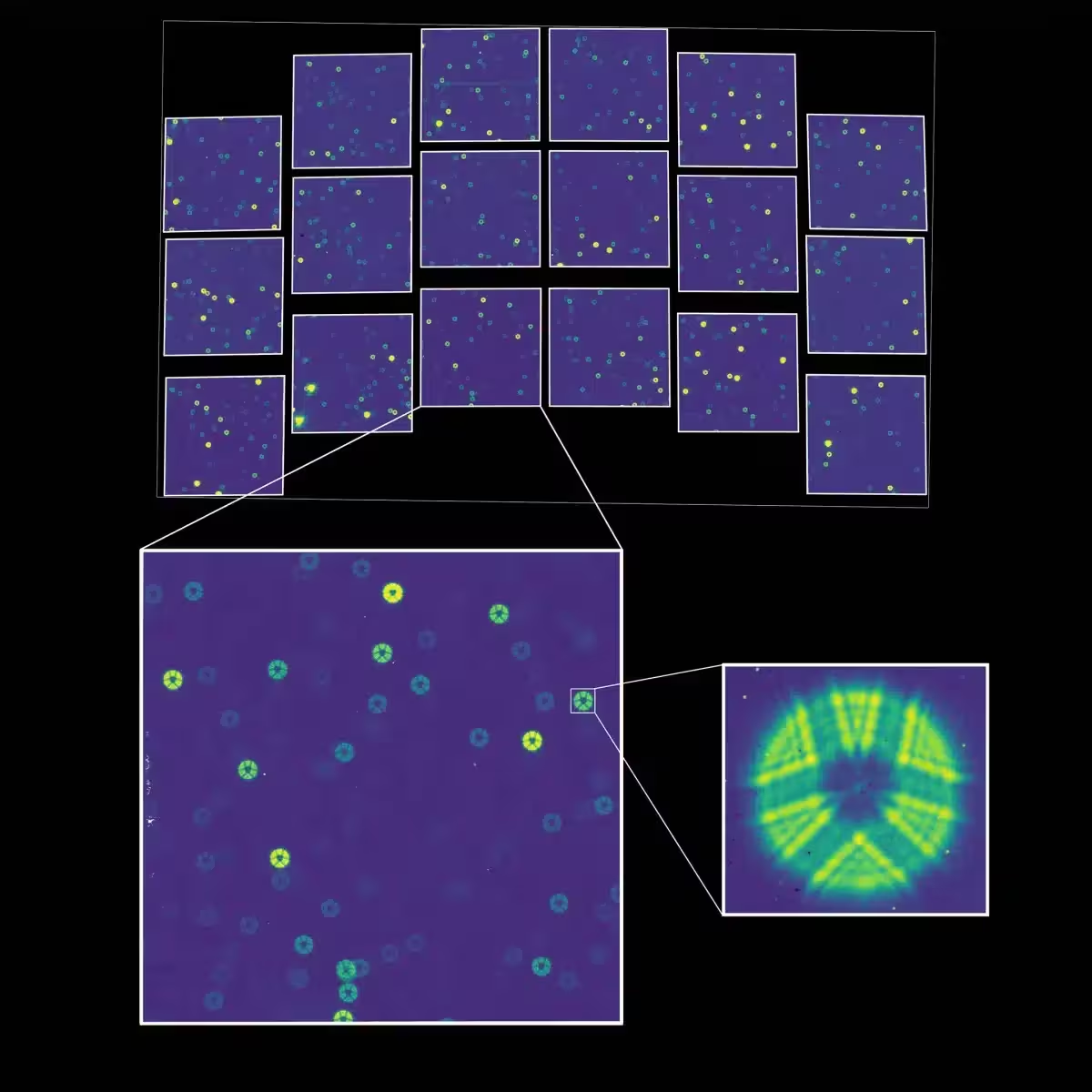
NASA’s Nancy Grace Roman Space Telescope has begun its transit to the second Lagrange point (L2), a stable gravitational harbor located approximately 1.6 million kilometers (1 million miles) from Earth. While the observatory is still navigating toward its destination following its August 30 launch, it has already beamed back preliminary test imagery. These initial frames, which depict star clusters as blurred green rings, serve as functional system checks rather than the high-resolution scientific data expected once the mission enters its full operational phase.
The mission is designed to address two of the most profound mysteries in modern astrophysics: the nature of dark energy and the characterization of exoplanetary systems. As the telescope prepares for its scientific mandate, public interest remains heavily skewed toward the search for life-supporting worlds beyond our solar system.
Engineering a New Window into the Cosmos
The green-tinted, distorted visuals currently circulating are a direct result of the telescope’s Wide Field Instrument—a sophisticated 300-megapixel camera—not yet undergoing full calibration. According to NASA, these test shots are expected to be replaced by imagery possessing clarity comparable to the Hubble Space Telescope. The critical technical advantage of the Roman mission is its sheer field of view; it is engineered to capture a sky area 100 times larger than that of Hubble in a single exposure.
Scientific Priorities and Public Perception
The telescope’s mandate to investigate dark energy resonates strongly with the scientific community and the public alike. Because dark energy and dark matter are believed to constitute the vast majority of the universe’s mass, researchers view the mission as a vital step in bridging a significant gap in fundamental physics. Despite the theoretical importance of dark energy, the allure of finding potentially habitable exoplanets remains the primary draw for many.
Recent polling of over 270 individuals revealed a clear preference among the public: 57% of respondents identified the discovery of habitable exoplanets as their most anticipated mission outcome. In contrast, 27% prioritized the investigation of dark energy, while 9% expressed interest in the imagery primarily for its aesthetic value as desktop wallpapers.
For those interested in exploring space-based photography, further resources can be found through the Space Photo of the Week and Earth from Space series, which offer a curated selection of imagery suitable for various digital displays.
This article has been fact checked for accuracy, with information verified against reputable sources. Learn more about us and our editorial process.
Last reviewed on .
Article history
- Latest version
Reference(s)
- Brill, Jennifer. “Roman and Hubble - NASA Science.”, April 22, 2025 NASA <https://science.nasa.gov/roman-and-hubble/>.
- Balzer, Ashley. “NASA Activates Roman’s Primary Instrument, Checks Out Coronagraph - NASA Science.”, September 15, 2026 NASA <https://science.nasa.gov/blogs/roman/2026/09/15/nasa-activates-romans-primary-instrument-checks-out-coronagraph/>.
Cite this page:
- Posted by Karan Das