Rare Viking Silver Hoard Found in Sweden Offers New Clues About Ancient Rituals
Archaeologists have unearthed a Viking silver hoard beneath a Swedish farm, revealing startling new evidence that rewrites the history of the entire site.
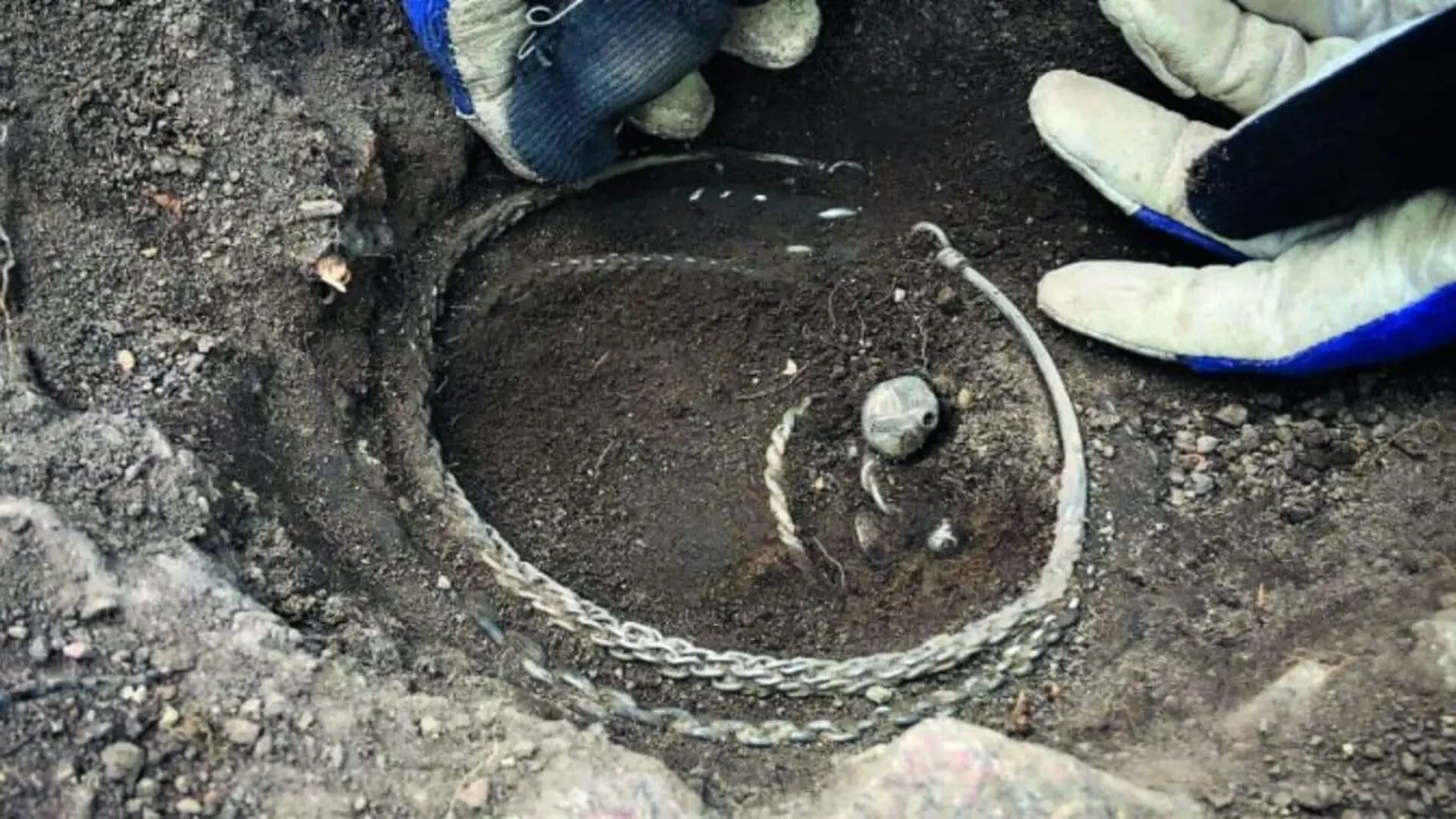
Archaeologists working in Täby, Sweden, have uncovered a significant cache of Viking-era silver, offering a rare window into the ritualistic life and far-reaching trade networks of the late Iron Age. Discovered in 2025 by a team from Arkeologerna, a division of the Swedish History Museum, the hoard includes intricate jewelry, coins of diverse international origin, and remarkably preserved textile fragments.
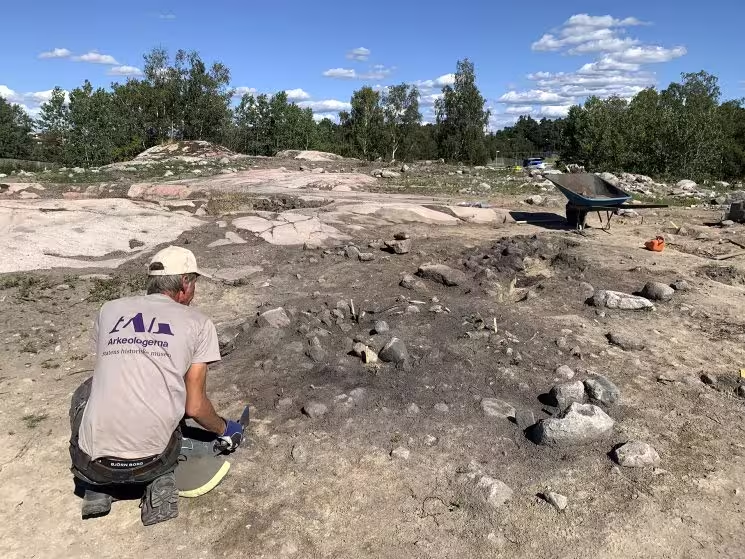
The discovery was made within a larger settlement site spanning roughly 500 to 1050 A.D., which encompasses the foundations of 34 distinct buildings and a nearby burial ground. In total, researchers recovered approximately 1,450 artifacts from the site, painting a detailed picture of a community that was deeply integrated into regional and continental exchange systems.
A Ritualistic Deposit at a Deserted Farmstead
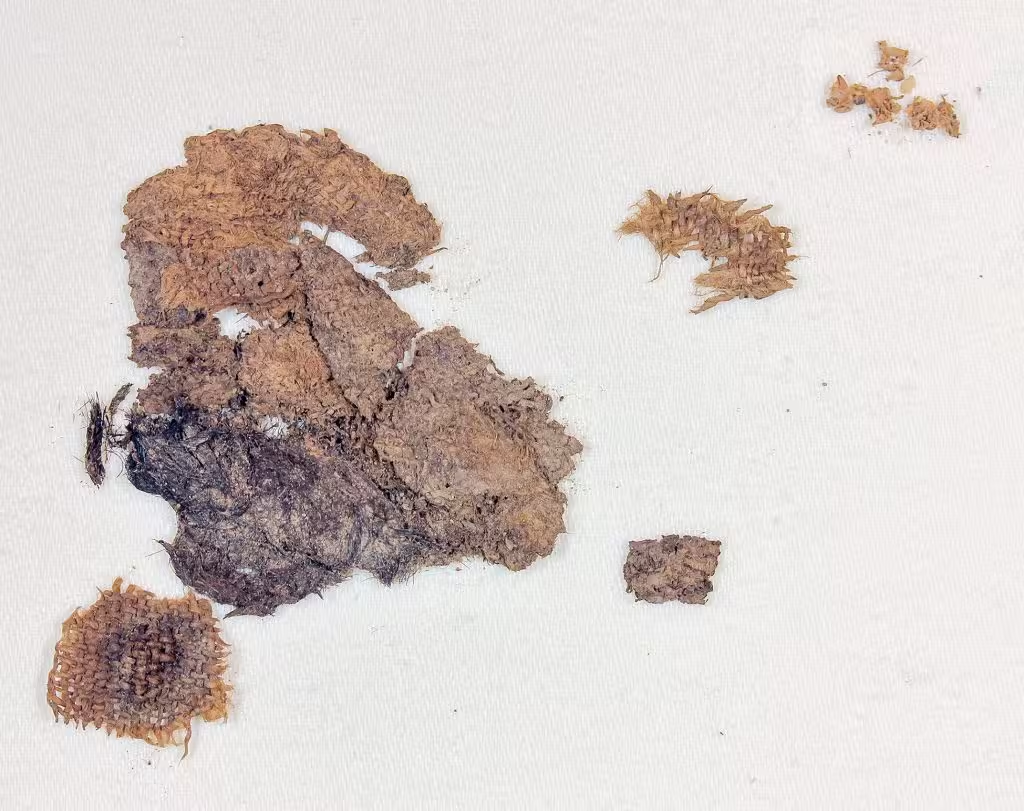
The silver collection was found tucked away beneath a hollow block near one of the older farm structures, suggesting the act was ceremonial rather than a simple attempt to secure valuables. The hoard was contained within a rare linen bag featuring silk detailing, an organic material that typically decays but survived here due to the antimicrobial properties of silver ions leaching from the treasure.
Analysis of the bag’s contents revealed traces of pollen from medicinal plants and grains, further supporting the theory that the cache served a ritual purpose. Project manager John Hamilton noted that the find is particularly compelling due to its direct spatial relationship with the farm’s burial site. Researchers hypothesize that the deposit may have coincided with the abandonment of the farm, potentially serving as a final tribute to a high-ranking individual.
Global Trade Routes Etched in Silver
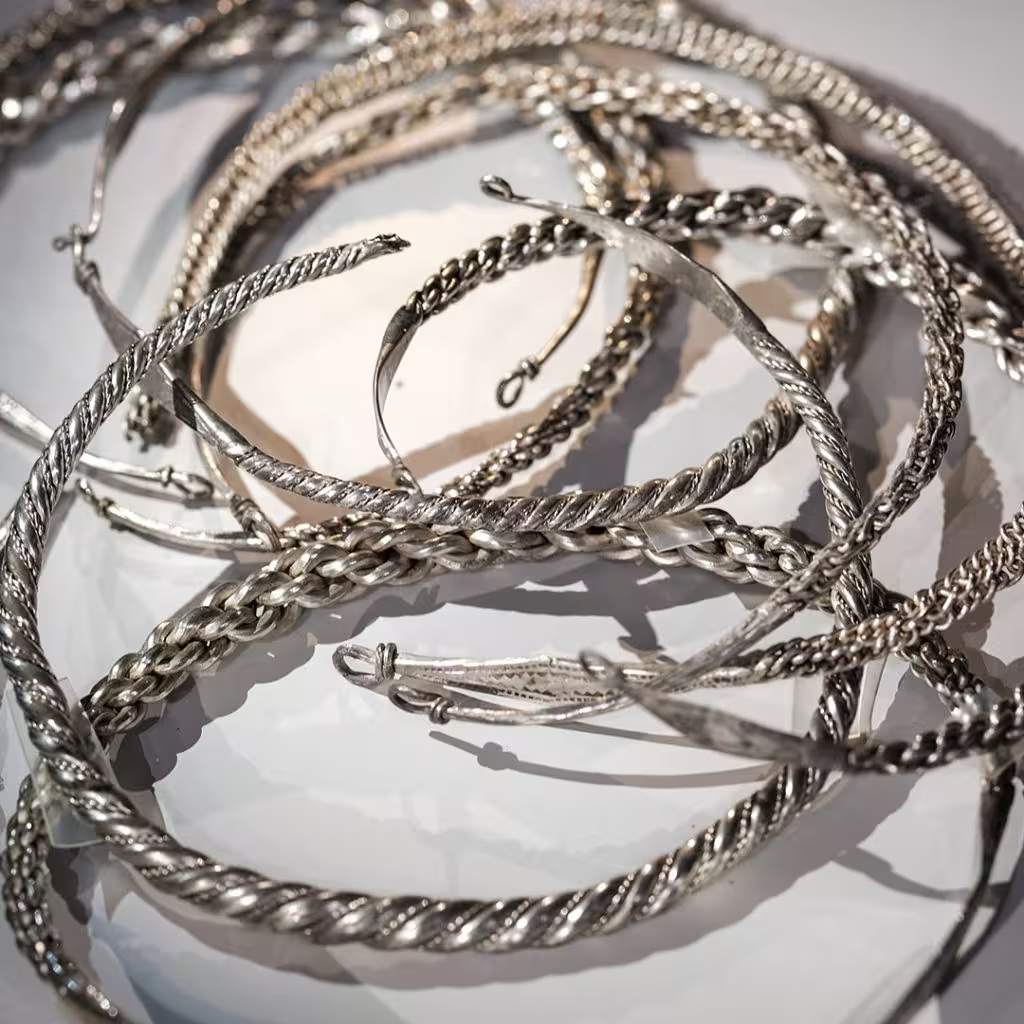
Among the items recovered, a necklace crafted from 12 silver coins minted between 904 and 997 A.D. stands out for its geographical diversity. These coins provide tangible evidence of the Viking Age Viking Age reach, originating from as far as Persia, as well as Bavaria, Bohemia, Normandy, and England. The eclectic mix reinforces the hoard as a composite of wealth gathered from vast trade routes.
The site’s international character is further underscored by the recovery of pottery fragments. While crafted from local clay, the vessels were fashioned in styles typical of regions across the Baltic Sea, hinting at the possibility that foreign settlers established roots at this Swedish homestead.
Unveiling a Sacred Domestic Space
The excavation uncovered a dual-purpose site, serving both as a residence and a location for burial. Of the five graves identified, three contained coffins, while two were associated with cremation rites. Laboratory analysis of the remains indicated a mix of biological kin and non-relatives, suggesting a complex social structure within the household.
Hamilton emphasized the uniqueness of the silk-trimmed container, describing the fabric as an exclusive import. This, combined with the presence of silver arm and neck rings, cements the site as a location of status and specialized practice. Despite these insights, the specific identity of the individuals who curated this collection remains an enduring mystery, as the link between the foreign-style pottery and the owners of the silver has yet to be definitively proven.
This article has been fact checked for accuracy, with information verified against reputable sources. Learn more about us and our editorial process.
Last reviewed on .
Article history
- Latest version
Reference(s)
- “John Hamilton.” <https://arkeologerna.com/medarbetare/john-hamilton/>.
- “PM: Ny rapport om en vikingatida gård, gravar och unik silverskatt i Täby.” <https://arkeologerna.com/bloggar/undefined/pm-ny-rapport-om-en-vikingatida-gard-gravar-och-unik-silverskatt-i-taby/>.
Cite this page:
- Posted by Vikram Desai