Archaeologists Uncover 2,500 Year Old Etruscan Ritual Well Filled With Mysterious Treasures
Archaeologists have discovered a mysterious object at the bottom of a 2,000-year-old well, marking a find unlike anything previously recorded in history.
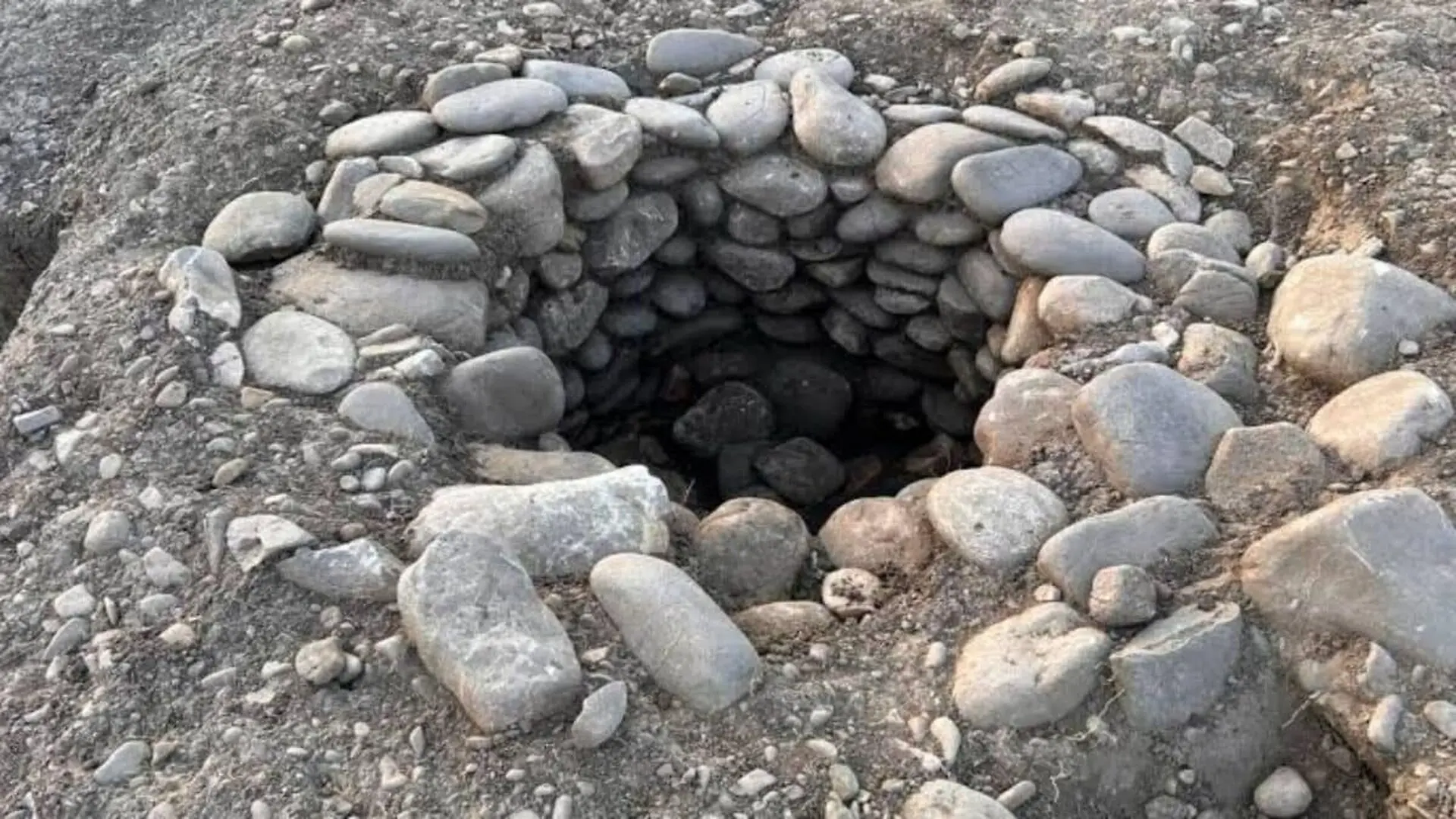
Archaeologists working near Bologna, Italy, have uncovered a 2,500-year-old ritual well that offers a rare glimpse into the spiritual life of the Etruscan civilization. Located at the site of the ancient city of Kainua, the structure contained a cache of bronze artifacts and two human skeletons, suggesting a long history of ceremonial use spanning from an inaugural opening to a final, ritualized closure.
The discovery, which dates back to the early fifth century B.C., was unearthed on the outskirts of modern Bologna. The well sits in close proximity to a sanctuary dedicated to Uni, the Etruscan mother-goddess of fertility, marriage, and birth—a figure who would later be integrated into the Roman pantheon as Juno. Because the well remained submerged in an oxygen-deprived environment for two millennia, the bronze items retrieved from the depths have retained a remarkable level of preservation, including much of their original luster.
Votive Offerings and Sacred Metalwork
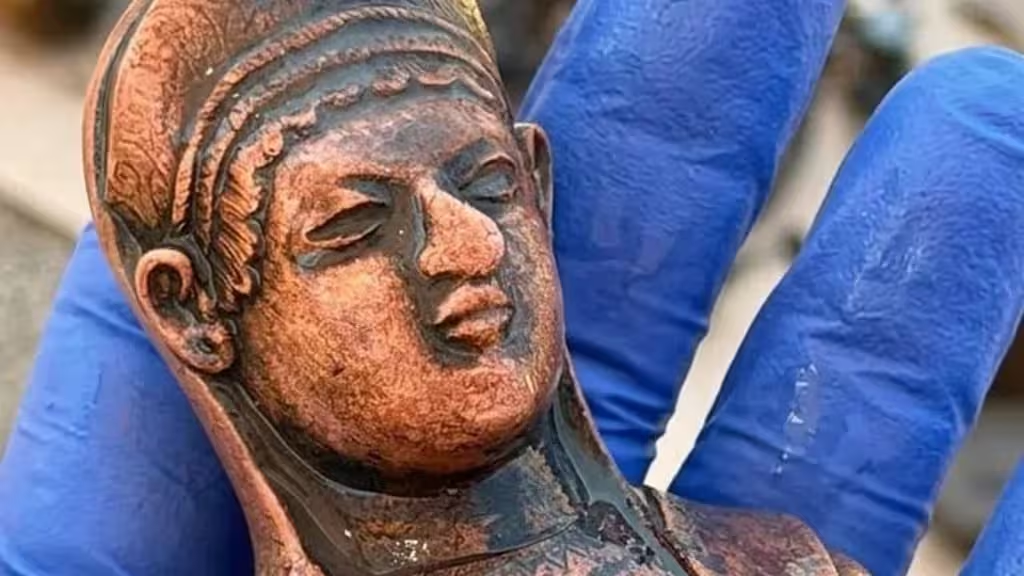
Among the items recovered from the bottom of the well were two fragmented bronze statuettes depicting draped female figures. According to Elisabetta Govi, an archaeologist at the University of Bologna who directed the excavation, these figurines were likely left by young women as offerings at the sanctuary. The deliberate breaking of these figures is a practice well-documented in Etruscan religious tradition.
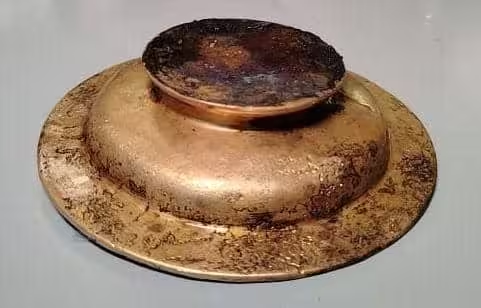
In addition to the figurines, the team found a bronze plate that Govi noted as a unique discovery; while its design mirrors known Etruscan ceramic forms, no other bronze version has been documented to date. The combination of these artifacts has allowed researchers to firmly place the well’s construction in the late sixth or early fifth century B.C.
The Symbolic Language of Water
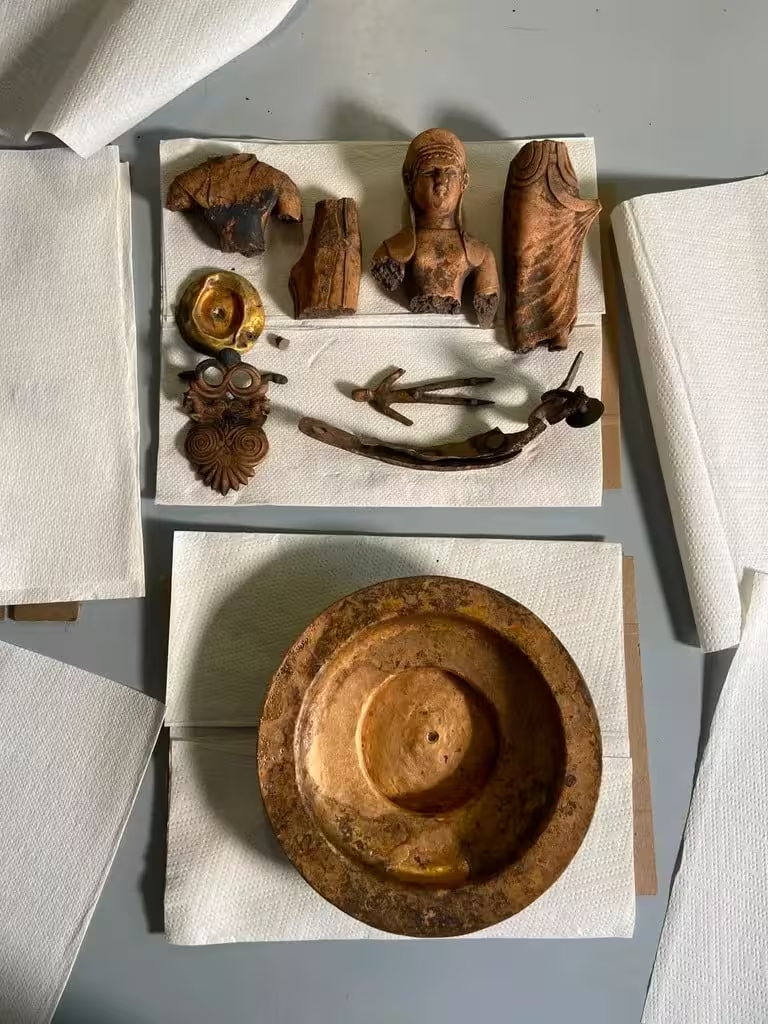
For the Etruscans, bronze held significant spiritual value. Govi explained that the transformation of raw copper and tin into bronze was perceived as a regenerative act, mirroring the life-giving properties of Uni herself. The location of the well next to a sanctuary indicates it was not a standard water source but rather a site dedicated to public religious rites.
“That is, it had a special function, not just for the collection of water, but evidently for the collection of water in relation to ceremonies, rites, to religious life that took place nearby in the sanctuary of the goddess Uni,” Govi explained.
Human Presence in the Ritual Cycle
The recovery of two human skeletons—one male and one female—within the well adds a complex layer to the site’s history. While these remains were found in a context that suggests a formal “closing” of the ritual site, Govi stated that initial findings do not point to human sacrifice. To better understand these individuals and their relationship to the well, the research team is preparing for a series of advanced scientific tests, including DNA sequencing and carbon-14 dating, beginning in September.
This article has been fact checked for accuracy, with information verified against reputable sources. Learn more about us and our editorial process.
Last reviewed on .
Article history
- Latest version
Reference(s)
- “Elisabetta Govi — University of Bologna — Home Page.” <https://www.unibo.it/faculty/elisabetta.govi>.
- <https://www.famsf.org/learn-engage/read-watch-listen/who-were-the-etruscans>.
Cite this page:
- Posted by Vikram Desai