Why Divers Keep Risking Their Lives on the Mount Everest of Shipwrecks 70 Years Later
Divers still risk everything to explore the 70‑year‑old Andrea Doria wreck, salvaging artifacts the ocean hasn’t claimed.
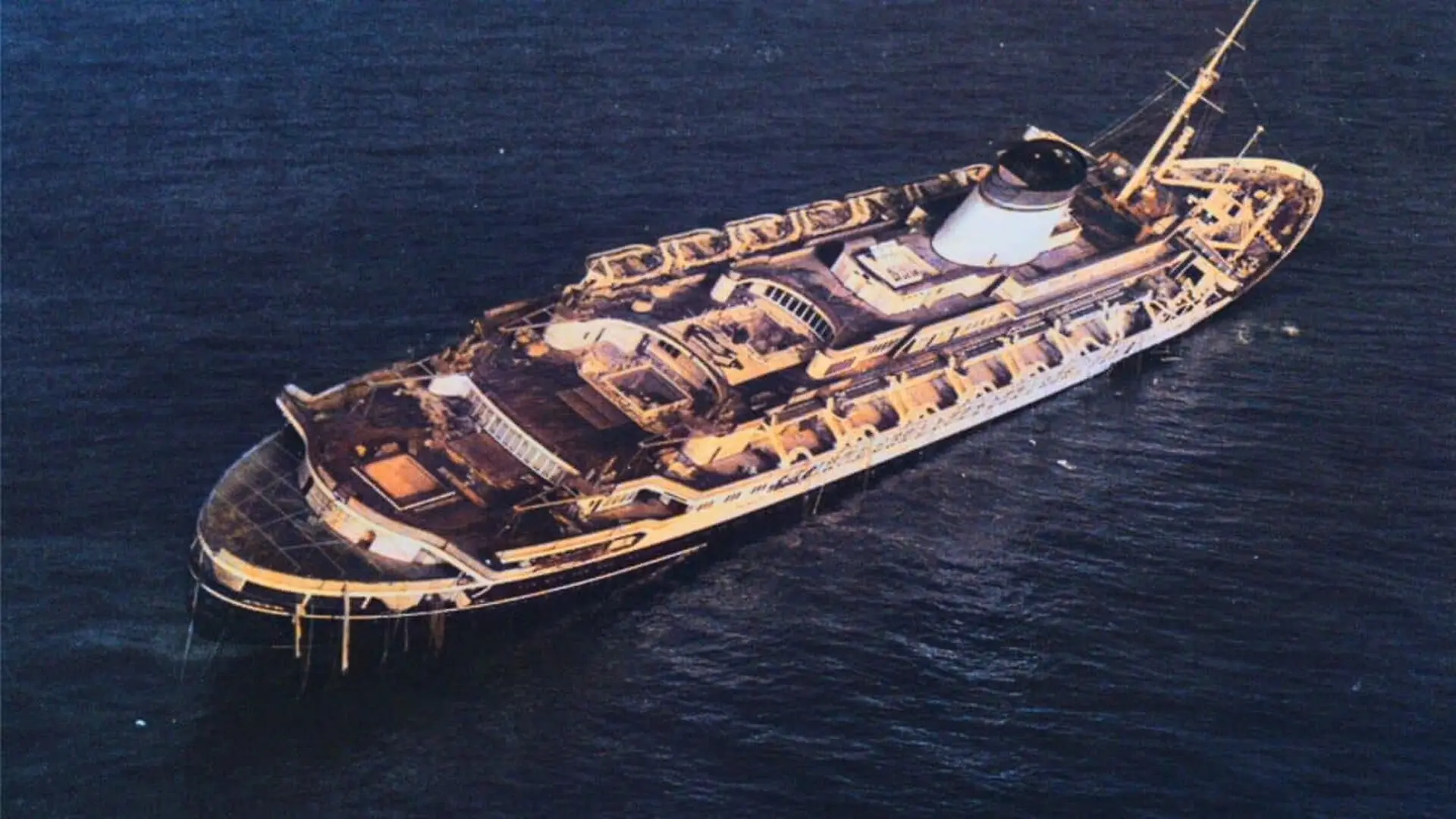
More than seven decades after the Italian ocean liner Andrea Doria slipped beneath the Atlantic, a new wave of divers is racing against time to document the fragile remains and retrieve artifacts before the ship succumbs entirely to the ocean’s relentless forces. Eighteen lives have already been claimed in the pursuit of this submerged landmark.
The 700‑foot vessel rests on its starboard side roughly 50 miles south of Nantucket, with the ocean floor positioned 250 feet beneath the surface—well beyond the reach of conventional recreational diving. Strong currents, limited visibility, near‑freezing water and strict decompression protocols make each descent a technical challenge, while the interior of the wreck is riddled with collapsing passages, loose metalwork and thick layers of silt.
Over the years the structure has altered dramatically. Whole decks have given way, sections of the bow and stern have broken off, and the ship has shed about 30 feet of height, unveiling compartments that were once inaccessible to divers.
A Fateful Night at Sea: How the Andrea Doria Met the Stockholm
On July 17 1956 the liner departed Genoa for New York carrying 1,706 passengers and crew. Eight days later, as it approached the end of its 101st transatlantic run, the ship entered a dense fog bank and collided with the outbound M/S Stockholm.
Radar readings left both captains with conflicting expectations about how to pass one another. At 11:05 p.m., Captain Piero Calamai ordered a modest four‑degree turn to port; two minutes later, Stockholm’s third officer Johan‑Ernst Carstens‑Johannsen commanded a 20‑degree turn to starboard. By 11:10 p.m. the vessels finally saw each other’s lights and attempted emergency maneuvers.
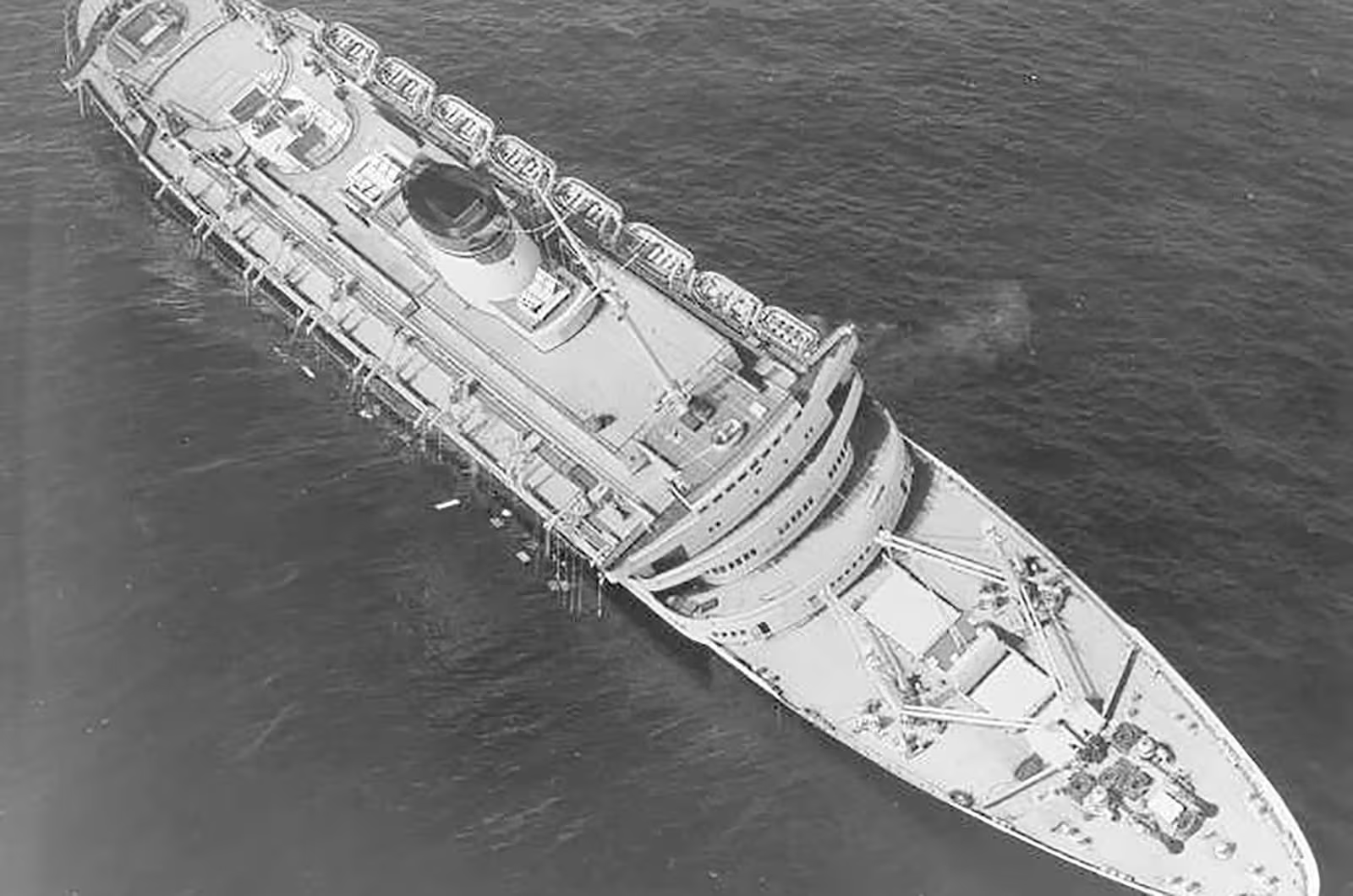
The Stockholm’s reinforced bow struck the Andrea Doria’s starboard side at 18.5 knots, driving roughly 40 feet into the hull and breaching seven of the liner’s eleven decks just aft of the bridge. The impact claimed 46 passengers on the Andrea Doria and five crew members on the Stockholm. Remarkably, the liner remained buoyant for almost eleven hours, allowing nearby ships to rescue survivors before it sank shortly after 10 a.m. the following morning.
Within hours of the disaster, pioneers Peter Gimbel and Joseph Fox descended in basic wetsuits and a handheld camera, laying the groundwork for future explorations. Gimbel’s subsequent missions recovered the life‑size bronze statue of Admiral Andrea Doria in 1964, and a three‑ton safe in 1981—though the anticipated treasure trove of diamonds turned out to be a modest cache of cash and traveler’s checks.
Navigating a Submerged Everest: The Perils of Deep‑Water Diving
The wreck earned a reputation as the “Mount Everest of diving,” a moniker reflecting both the extreme depth and the hazards inside the corroded hull. Between 1992 and 1999, eight divers lost their lives while attempting to penetrate its interior.
Rising roughly 80 feet from the seabed, the site subjects divers to six‑to‑eight times atmospheric pressure, accelerating gas consumption and raising the risk of nitrogen narcosis, oxygen toxicity and decompression illness. Inside, explorers must contend with sideways stairways, decaying metal frameworks, dangling wires and clouds of silt that can instantly obscure vision.
In 1996, Steve Gatto and Tom Packer became the first to reach the engine room. While documenting gauge panels, Gatto experienced narcosis and relied on a strobe light he had previously installed to locate his exit route.
The advent of mixed‑gas diving—replacing part of the nitrogen with helium—mitigated some of the narcotic effects, but introduced new complexities. Divers now must juggle multiple gas cylinders and meticulously plan decompression stops; a single mix‑up can prove fatal.
Gatto, who has logged over 250 descents to the Andrea Doria, warns that some participants “substitute technology for experience,” underscoring the need for seasoned judgment in such an unforgiving environment.
2025 Recovery: Uncovering a Giant Gyrocompass
On July 11 2025, diver Chris Ogden descended to a depth of 230 feet and discovered the circular top of a five‑foot‑tall brass gyrocompass repeater, a navigation instrument once mounted on the port bridge wing. His partner, Joe Mazraani, had located the same piece moments earlier.
The device lay entombed beneath a tangle of debris, fishing nets, cables and fragments of the collapsing hull. With only forty minutes allotted per dive, the team spent three outings clearing obstacles, ultimately amassing a pile of rubble roughly eight feet high, ten feet long and five feet wide.
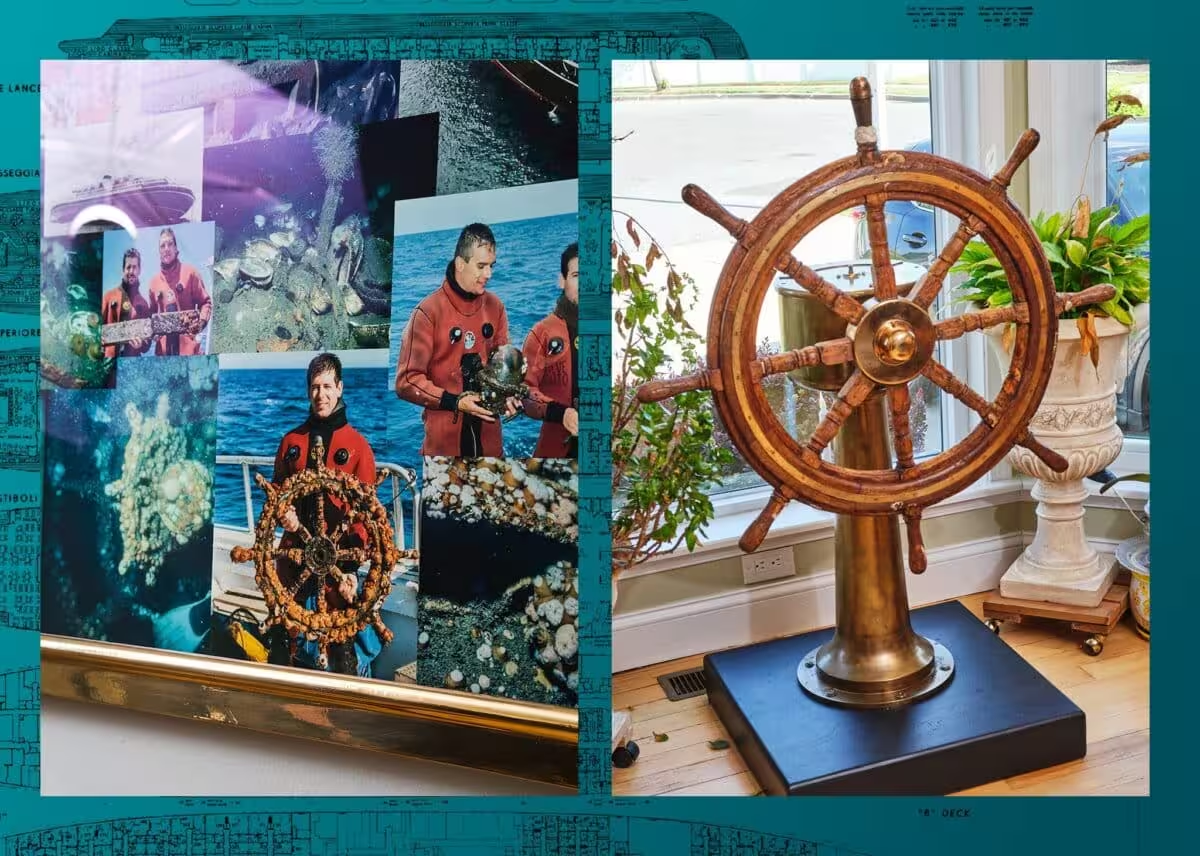
With one dive remaining, the pair tipped the instrument onto its side, secured it to a 500‑pound lift bag, and released the air. The gyrocompass burst free of the surrounding wreckage and surged to the surface in under a minute. Although largely intact, its face—bearing the degree markings—was missing, and a rope tied around the device indicated that another diver had accessed it previously.
Tragically, Mazraani died unexpectedly on July 29 2025 after suffering a medical emergency while exploring an unrelated wreck near Georges Bank, about 200 miles off Cape Cod; his memorial featured a sounding of the Andrea Doria’s foghorn. Shortly thereafter, diver‑filmmaker Al Giddings revealed that he possessed the missing face of the gyrocompass in his home, having seen it during a 1968 expedition.
Artifacts, Salvage Rights and Museum Exhibits
Since 2010, the organization Atlantic Wreck Salvage has conducted annual missions aboard the D/V Tenacious, retrieving items such as the ship’s foghorn in 2017. The group restores recovered pieces and makes them viewable to the public, though the practice remains contested among heritage professionals who argue that artifacts should either stay in situ or be handled exclusively by archaeologists.
Veteran diver John Moyer, together with Tom Packer and Steve Gatto, holds salvage rights to the Andrea Doria. In the 1990s, Moyer and fellow diver Gary Gentile recovered the original bronze statue’s base; in 2024 they secured the remaining portions from the captain’s family, reassembling and restoring the work.
Moyer loaned several items—including a deck chair, a passenger’s life jacket from the night of the collision, and a 140‑pound brass bell—to the Italian American Museum in New York City for a 2025 exhibition chronicling the liner’s final voyage.
As the wreck continues to evolve, collapsed decks and rust‑eaten hull sections still reveal new pockets for exploration, even as the structure settles further into the North Atlantic seabed.
This article has been fact checked for accuracy, with information verified against reputable sources. Learn more about us and our editorial process.
Last reviewed on .
Article history
- Latest version
Cite this page:
- Posted by Vikram Desai