Massive Roman Cargo Jar And Mysterious Ancient Shipwreck Discovered Off The Coast Of Elba
Archaeologists have discovered a massive Roman dolium off the coast of Elba Island, revealing a surprising treasure trove of ancient artifacts on the seabed.
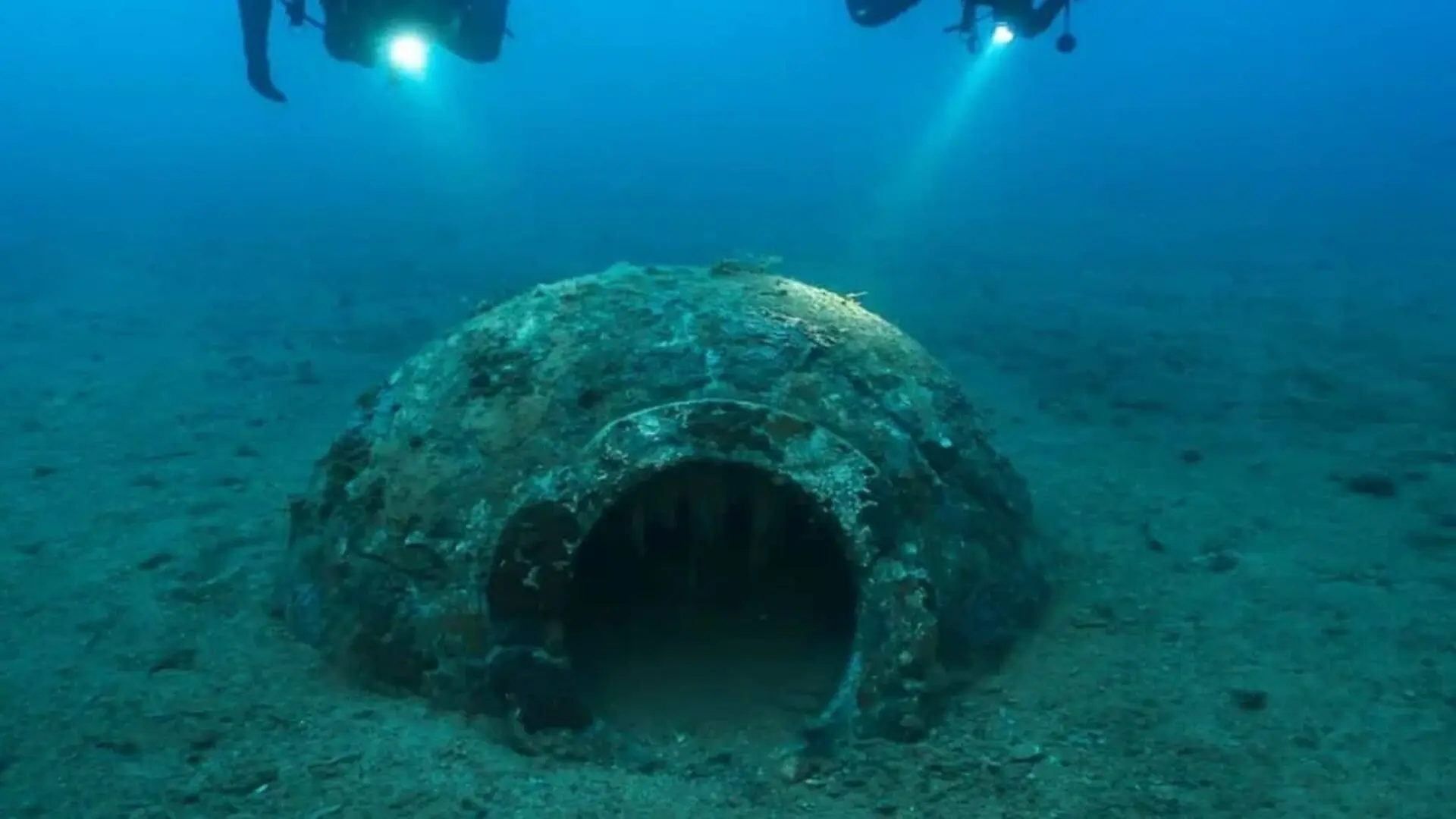
Maritime archaeologists conducting surveys off the coast of Elba Island have uncovered significant remnants of the region’s nautical past, including a remarkably well-preserved Roman storage vessel and the obscured remains of a mysterious ancient shipwreck. These findings, discovered in the waters between the Piombino Channel and the Tuscan Archipelago, provide fresh insight into the historical trade networks that once defined the Mediterranean.
The underwater expedition is led by the Soprintendenza Archeologia, Belle Arti e Paesaggio for the provinces of Pisa and Livorno, in collaboration with the Carabinieri Cultural Heritage Protection Unit in Florence and the Genoa Diving Unit. Launched in May 2026, the ongoing project aims to catalog, monitor, and safeguard archaeological assets resting on the seafloor.
Evidence of Ancient Maritime Commerce
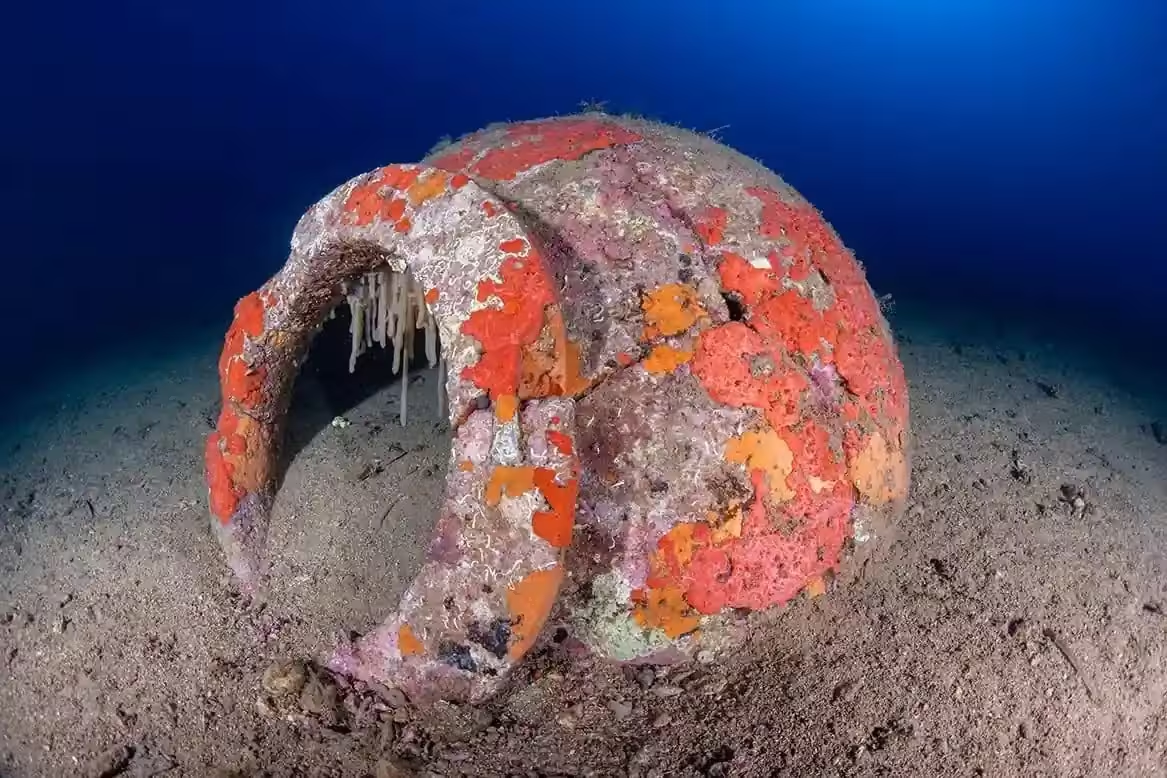
The most striking find is a large terracotta dolium, an oversized container used by the Romans to transport bulk commodities such as wine, olive oil, and grain. Found in near-perfect condition, the vessel is a hallmark of the naves a dolia, a specialized class of Roman merchant ship. Unlike standard cargo vessels that utilized smaller amphorae, these ships were engineered specifically to house massive, fixed or semi-mobile containers within their holds.
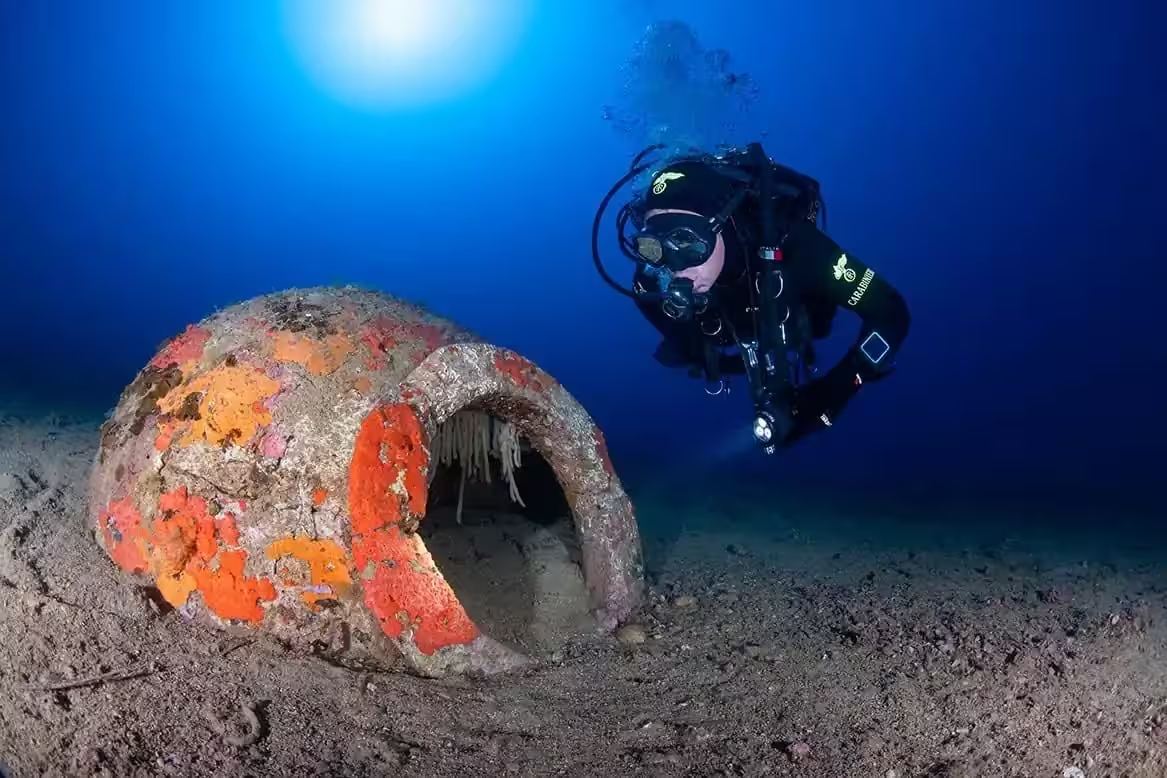
According to the Soprintendenza, such ships were integral to the Tyrrhenian trade routes between the 1st century BC and the 1st century AD, facilitating the movement of goods across the expansive Roman Empire.
An Obscured Maritime Mystery
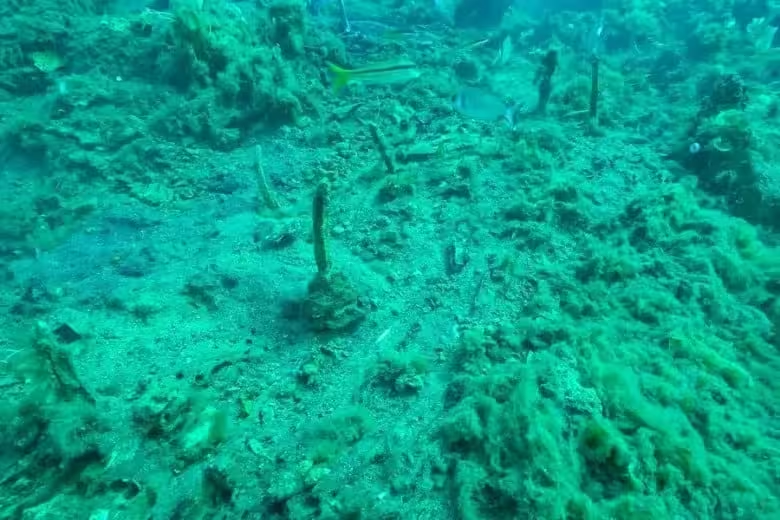
In addition to the Roman relic, researchers identified a smaller, enigmatic shipwreck measuring roughly five by two meters. The wreckage is currently draped in a layer of mucilage—a biological buildup of organic matter and microorganisms—which has complicated efforts to determine its origin. Despite the heavy coating, preliminary inspections by divers have revealed portions of the ship’s hull and numerous bronze nails, confirming its wooden construction.
Archaeologists suggest the site may date from the transition between Late Antiquity and the High Middle Ages. Given its modest size, the vessel likely served local transport or coastal fishing functions. Further investigation of the site is scheduled for the autumn of 2026, when teams hope to conduct a more granular study of the structure and analyze material samples to refine the vessel’s timeline.
Preserving the Underwater Landscape
The ongoing survey is not only identifying new sites but also updating records for previously known archaeological zones within the Tuscan Archipelago. This data integration is essential for informed management and future exploration of the seabed.
To bolster protection efforts, archaeologist Gloriana Pace is spearheading initiatives to engage the local diving community. By fostering a collaborative environment, the team hopes to empower both professional and recreational divers to report significant shifts or new findings in the region’s fragile underwater environment.
This article has been fact checked for accuracy, with information verified against reputable sources. Learn more about us and our editorial process.
Last reviewed on .
Article history
- Latest version
Cite this page:
- Posted by Vikram Desai