Archaeologists Discover Rare 18th Century Shipwreck Hidden on a Forbidden Yucatán Coastline
Archaeologists have mapped a 200-meter seafloor trail of cannons and anchors, revealing the final, desperate moments of a doomed shipwreck.
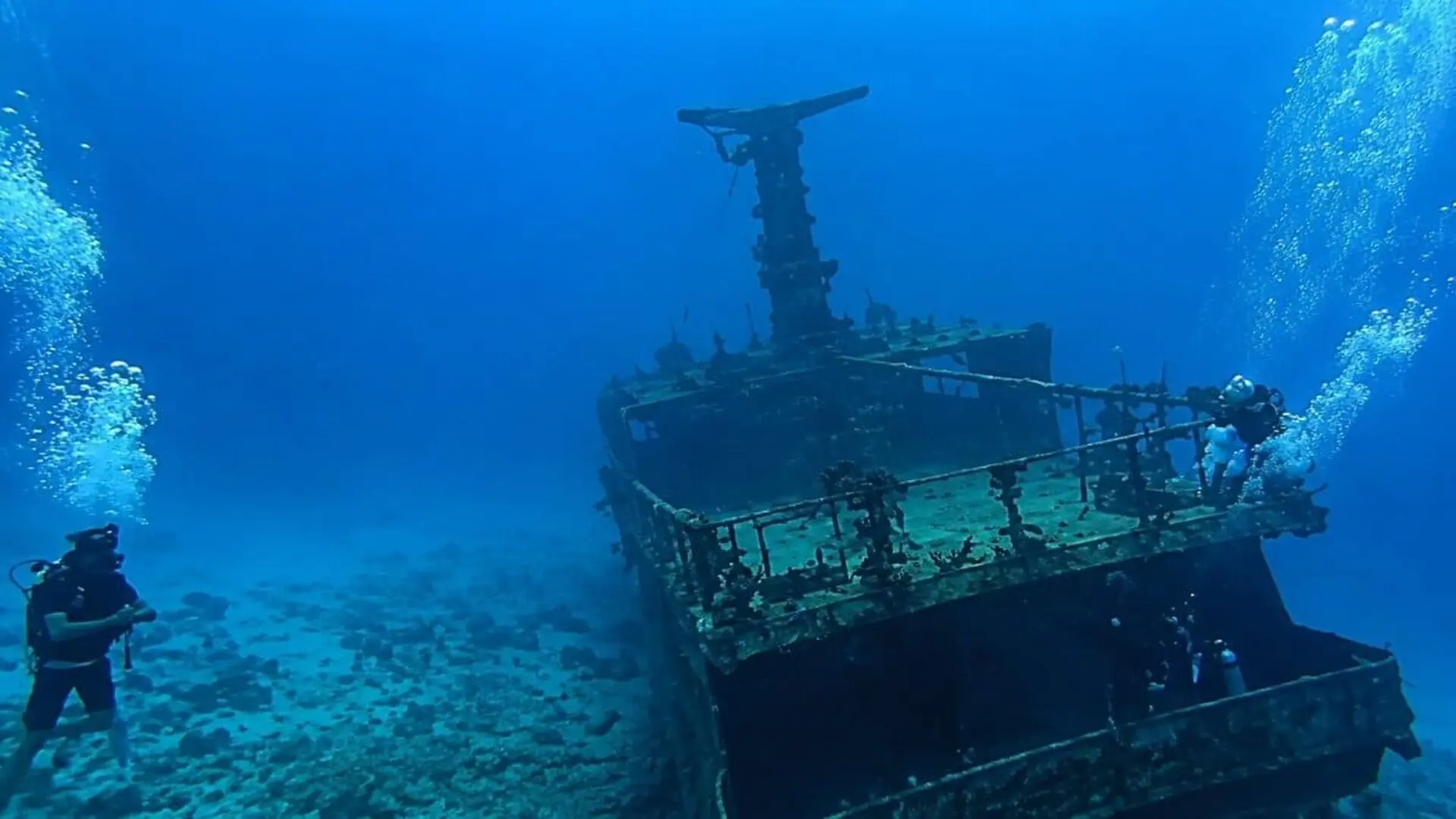
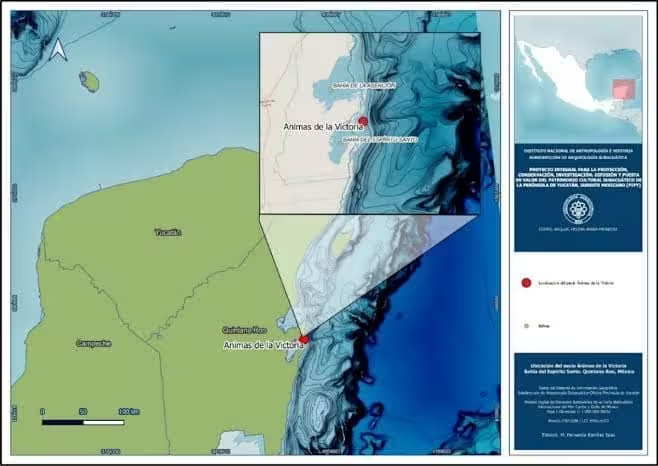
Hidden beneath the Caribbean waters off the Yucatán Peninsula, a haunting collection of nineteen cannons and four massive anchors marks the final resting place of a vessel that ventured where it did not belong. For more than 250 years, the wreckage of the Ánimas de la Victoria has remained undisturbed in the remote, reef-filled expanse of Espíritu Santo Bay. New analysis by a team of archaeologists, recently published in the Journal of Maritime Archaeology, suggests this silent site is evidence of illicit trade in a region that the Spanish Empire purposefully left off its maps.
A Final Attempt at Survival
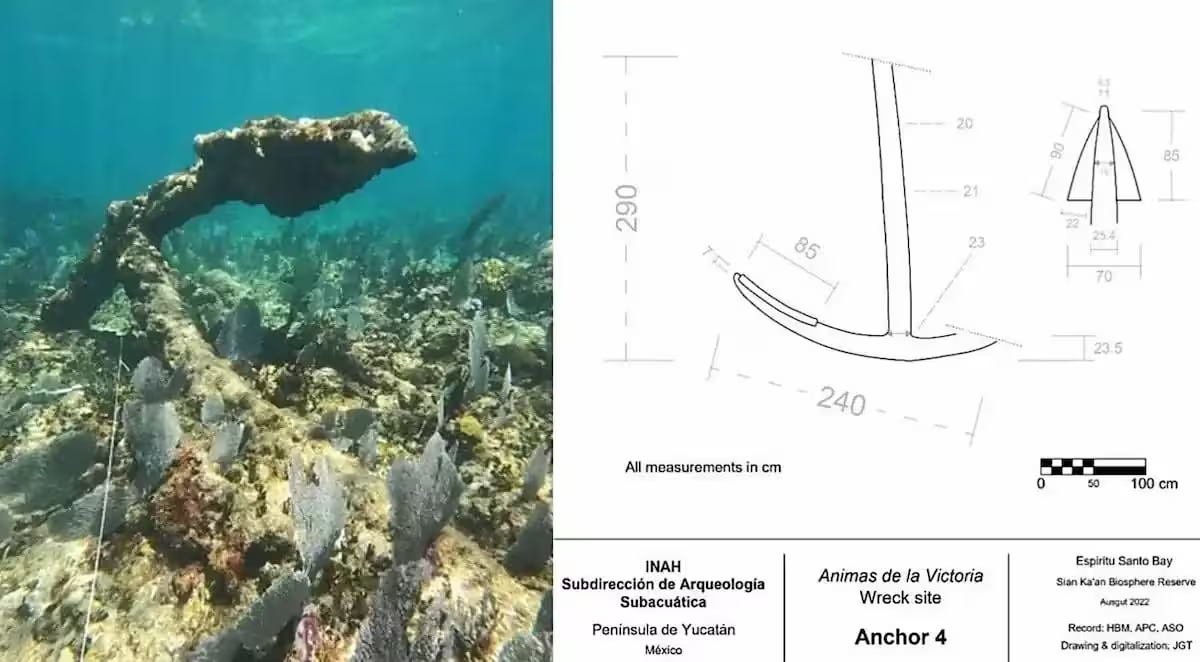
The wreckage is scattered across a 200-meter stretch of seabed, resting at depths between 1.5 and 7 meters. Lead researcher Helena Barba-Meinecke interprets the debris field as a desperate, failed effort to navigate away from the dangerous reef breakers. The four anchors found at the site corroborate this timeline of distress. One anchor displays a bent shank, suggesting it snagged on the seafloor as the crew struggled to stabilize the ship. Others vary in design and age; one notably features proportions characteristic of the 16th or 17th century, implying that some of the vessel’s heavy hardware may have been legacy equipment repurposed for a later 18th-century voyage.
Clues Hidden in Iron
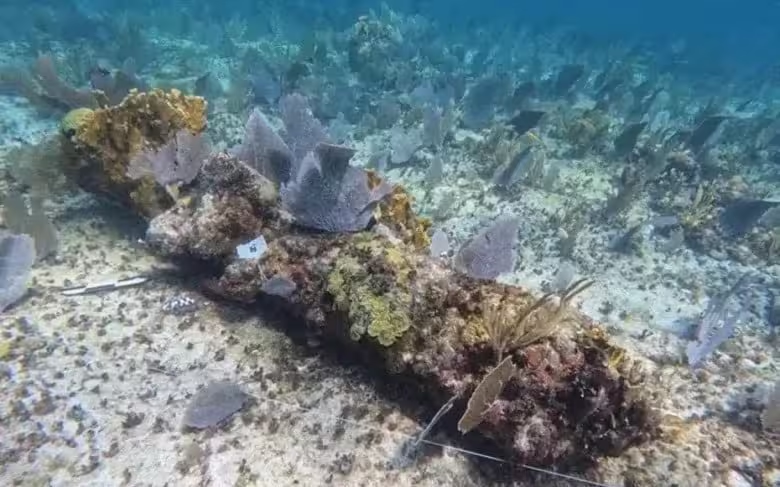
The ship’s identity remains cloaked in mystery, though physical evidence points to a sophisticated armed merchant vessel. When researchers cleared coral growth from the nineteen iron cannons, they discovered a distinct letter “C” stamped onto the trunnions of two pieces. This marking potentially traces the hardware to the Le Creusot foundry in France or the Conster foundry in England. Given the estimated weight of the ship, which experts calculate at approximately 650 to 700 tons, the vessel was likely a well-defended merchant frigate.
A Shadowy Maritime Frontier
The central enigma remains why such a significant ship was navigating the treacherous, uncharted waters of the eastern Yucatán. During this era, Spanish authorities avoided this coastline entirely, lacking both the incentive and the infrastructure to patrol its jagged reefs and dense forests. Historians note that navigation guides of the time explicitly warned against these waters, which were instead dominated by British sailors and local Maya knowledge. The wreck of the Ánimas de la Victoria serves as a rare material witness to this “wild” maritime frontier, suggesting that the bay was a hidden corridor for illegal smuggling operations that bypassed official Spanish trade channels. As researchers continue to analyze the site, they hope to further illuminate the complex, often secretive networks that defined Caribbean history.
This article has been fact checked for accuracy, with information verified against reputable sources. Learn more about us and our editorial process.
Last reviewed on .
Article history
- Latest version
Reference(s)
- Barba-Meinecke, Helena., et al. “Animas de la Victoria Wreck Site, Espiritu Santo Bay, Mexico: First Hypothesis About the Intriguing Context of an Eighteenth-Century Nautical Accident.” Journal of Maritime Archaeology, vol. 21, no. 2, March 23, 2026 Springer Science and Business Media LLC, doi: 10.1007/s11457-026-09505-6. <https://link.springer.com/article/10.1007/s11457-026-09505-6>.
Cite this page:
- Posted by Vikram Desai