Why This Elite Egyptian Mummy Was Frozen With A Screaming Expression For 3,000 Years
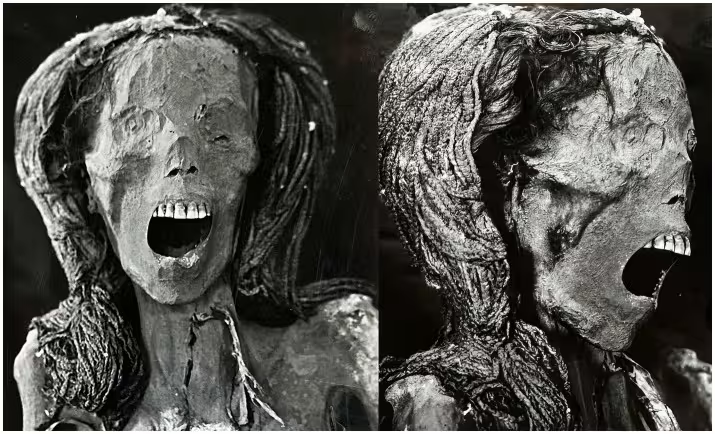
Frozen in a permanent scream for 3,000 years, this mysterious Egyptian mummy has finally revealed why her face was locked in such an extreme expression.

For decades, the discovery of a mummy buried over 3,000 years ago in Thebes has baffled researchers, thanks to the woman’s haunting, open-mouthed expression that suggested she died in extreme distress. Long dismissed by historians as the result of a botched mummification process, new scientific analysis is challenging that narrative. Advanced imaging techniques suggest the “Screaming Woman” was not a victim of poor embalming, but likely experienced a rare, instantaneous physiological response at the moment of her death.
High-Status Burial Defies Theories of Negligence
The theory that the mummy was improperly prepared has been effectively debunked by the high-quality materials found in her tomb. Excavated in 1935 near the final resting place of Senmut, the royal architect for Queen Hatshepsut, the woman was interred with significant wealth. Her body was treated with expensive, imported resins—specifically frankincense and juniper—that would have been brought from the distant kingdom of Punt. These aromatic compounds were reserved for society’s elite during the 18th Dynasty.
Furthermore, her remains were found with an elaborate wig crafted from date palm fibers and treated with rare henna. Scientific analysis revealed the hair was dusted with a mixture of quartz, magnetite, and albite, underscoring the care taken in her burial. While her internal organs remained in situ—an unusual departure from the typical practice of storing them in canopic jars—the overall lavishness of the interment contradicts the notion that her caretakers were indifferent or careless.
Advanced Imaging Provides a Biological Snapshot
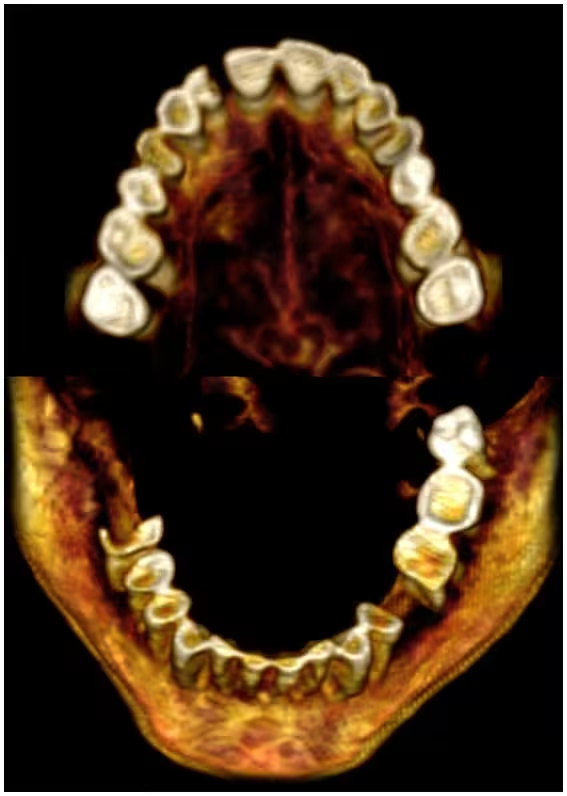
To uncover the truth, a research team led by Cairo University radiologist Sahar Saleem and Egypt’s Ministry of Tourism and Antiquities representative Samia El-Merghani utilized a comprehensive suite of modern analytical tools. By employing X-rays, CT scans, scanning electron microscopy, and molecular structure analysis, the researchers sought to understand the physiology behind the frozen expression.
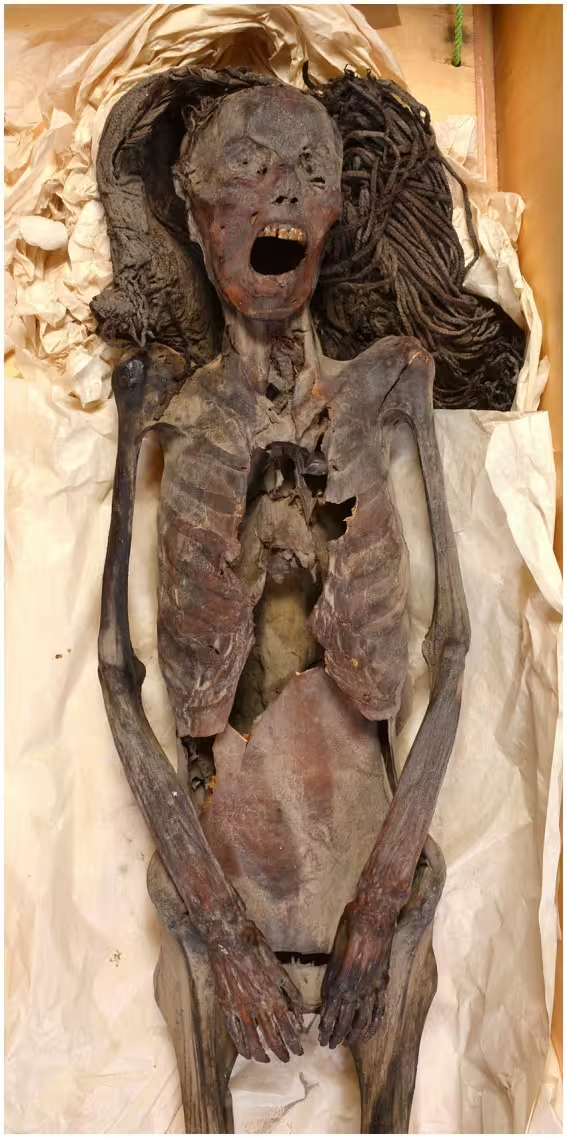
While the exact cause of death remains elusive, the data provided a clear portrait of the individual. Standing approximately five feet tall, the woman was roughly 48 years old at the time of her passing, with physical indicators of age present in her joints and teeth. Although her arms were positioned at her sides—a posture usually reserved for royalty—the study confirmed she was not a member of the royal family.
The Anatomy of a Final Moment
The researchers propose that the woman’s expression is likely the result of a cadaveric spasm, a rare condition where muscles stiffen immediately at the moment of death. Unlike standard rigor mortis, which is a gradual process, a cadaveric spasm is an instantaneous event often linked to severe pain or extreme psychological distress. In their findings, published in Frontiers in Medicine, the authors conclude that the frozen facial expression serves as a testament to the agony she endured in her final moments.
While the precise medical cause of this traumatic death remains unknown, the team suggests several possibilities, including a sudden cardiac event, a stroke, a ruptured aneurysm, or even a lethal animal bite, though the latter remains speculative as no physical evidence of such a wound was recovered. For now, the “Screaming Woman” remains a silent witness to a historical mystery preserved in time.
This article has been fact checked for accuracy, with information verified against reputable sources. Learn more about us and our editorial process.
Last reviewed on .
Article history
- Latest version
Reference(s)
- “CV :: Sahar Saleem.”, August 16, 2025 Sahar Saleem <https://www.saharsaleem.net/about/>.
- <https://independent.academia.edu/SamiaMerghani>.
Cite this page:
- Posted by Vikram Desai