Mysterious 130 Million Year Old Giant Footprints Challenge What We Know About Early Mammals
A mysterious creature that roamed a Cretaceous desert 130 million years ago left behind massive, paw-like tracks, offering a glimpse into a lost world.
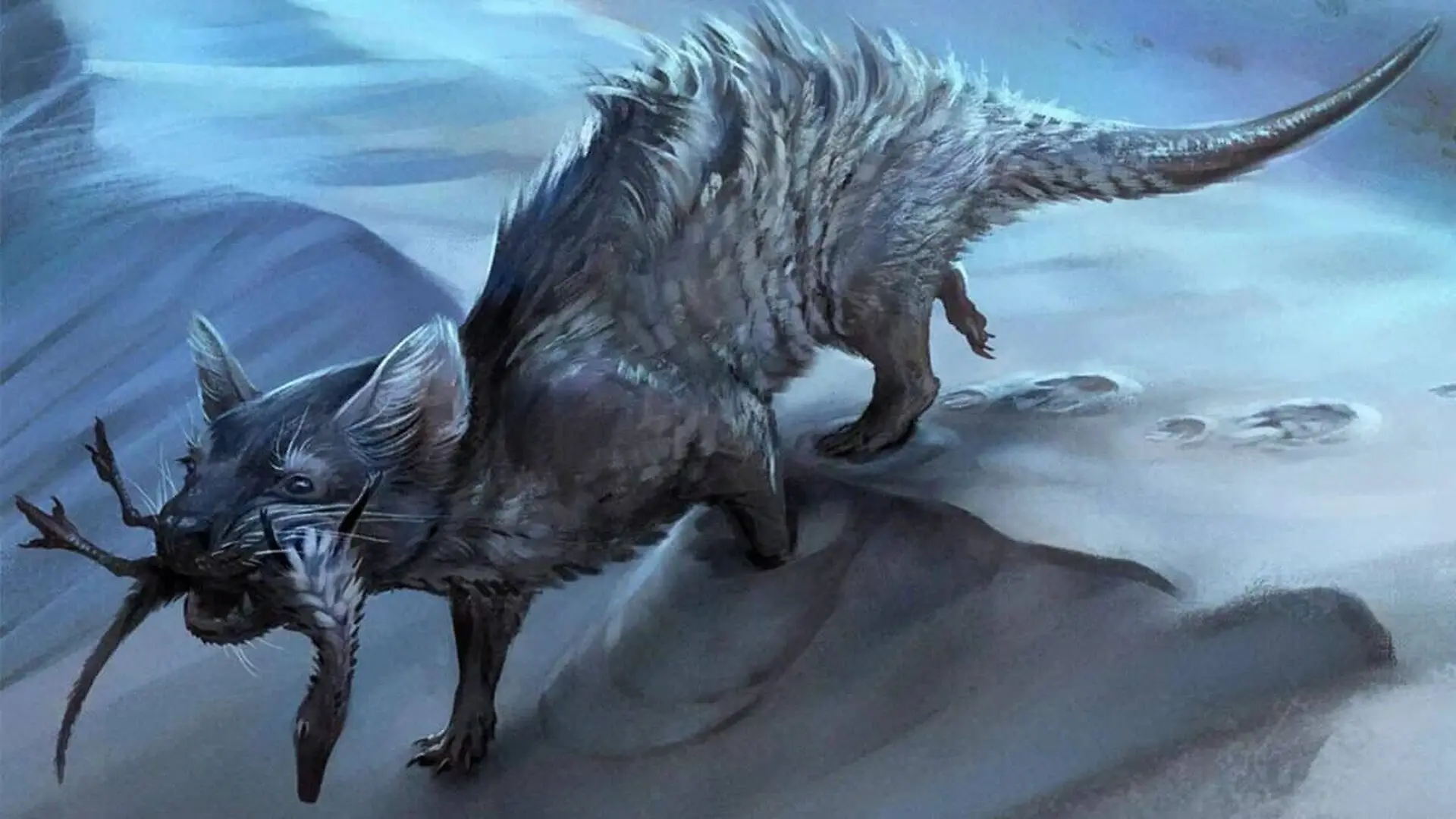
Paleontologists in Brazil have uncovered a series of fossilized footprints that are challenging long-held assumptions about the size of mammals during the age of dinosaurs. Found within the Botucatu formation, a site renowned for preserving evidence of an Early Cretaceous desert, the tracks date back approximately 130 million years. The discovery suggests that some mammals during this era may have been significantly larger than previously believed, reaching dimensions that far exceed their contemporaries.
Challenging the Mesozoic Size Paradigm
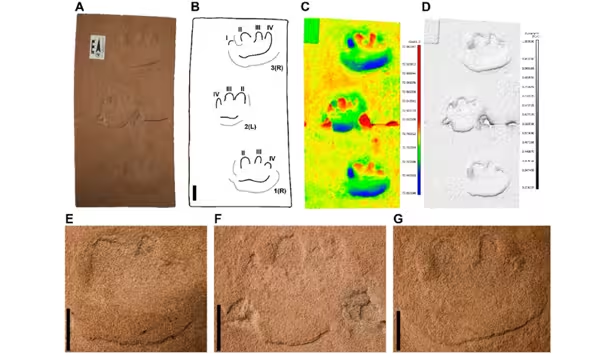
The tracks, which measure up to 11.4 cm in length and 13.4 cm in width, display proportions characteristic of mammalian paws rather than the narrower prints typical of crocodiles or dinosaurs. With a stride length of roughly 40 cm, the animal that left these marks would have been at least twice the size of the largest mammal known to exist during the Mesozoic era. Because no skeletal remains were found alongside the tracks, researchers have categorized them under the group chelichnopodidids, a classification for mammal-like footprint designs.
The discovery, detailed in the Journal of South American Earth Sciences, highlights a potential bias in paleontology. For decades, the prevailing narrative has been that Mesozoic mammals were uniformly small, opportunistic creatures living in the shadow of giants. Hermínio Ismael de Araújo Júnior, a researcher involved in the study, noted that this preconceived notion can lead experts to overlook or misinterpret unusually large tracks or fragmented fossils because they do not fit the expected evolutionary mold.
Ecological Opportunities in Ancient Deserts
While the footprints are a significant find, they represent only a partial glimpse into the lives of these creatures. Unlike skeletal remains, which can reveal details about diet, jaw structure, and internal anatomy, tracks only offer a snapshot of movement. Previous studies have documented large, predator-like mammals such as Repenomamus gigantius, which were capable of consuming small vertebrates, suggesting that the “small mammal” rule had notable exceptions.
One theory proposed by the research team, including lead author Pedro Victor Buck, is that the unique environment of the ancient Botucatu desert may have played a role. It is possible that larger dinosaurs were absent from this specific region, effectively opening up ecological niches that allowed mammalian ancestors to grow larger than they could elsewhere. However, without associated fossils, this remains an educated hypothesis.
The Taphonomic Mystery
The absence of bones at the site is not entirely surprising to experts in taphonomy, the study of how organisms decay and become fossilized. Araújo Júnior, who specializes in the processes that turn organic remains into rock, emphasizes that the environmental conditions required to preserve delicate tracks are often different from those needed to fossilize a carcass. In the sandy, low-cohesion sediments of the Botucatu desert, prints could be preserved in detail even if the animal’s bones were scattered or destroyed by the elements.
As scientists continue to analyze the footprints, the search for skeletal evidence in the region remains a priority. For now, these tracks serve as a silent reminder that our understanding of the prehistoric world is constantly being rewritten by the evidence left behind in the shifting sands of time.
This article has been fact checked for accuracy, with information verified against reputable sources. Learn more about us and our editorial process.
Last reviewed on .
Article history
- Latest version
Reference(s)
- Hu, Yaoming. “Large Mesozoic mammals fed on young dinosaurs - Nature.”, vol. 433, no. 7022, pp. 149-152. Nature, doi: 10.1038/nature03102. <https://www.nature.com/articles/nature03102>.
Cite this page:
- Posted by Vikram Desai