Ancient Fingerprints Reveal Women and Children May Have Built China’s Terracotta Army
A 2,200-year-old fingerprint found on a terracotta warrior is revealing new secrets about the identity and organization of the ancient artisans who built it.
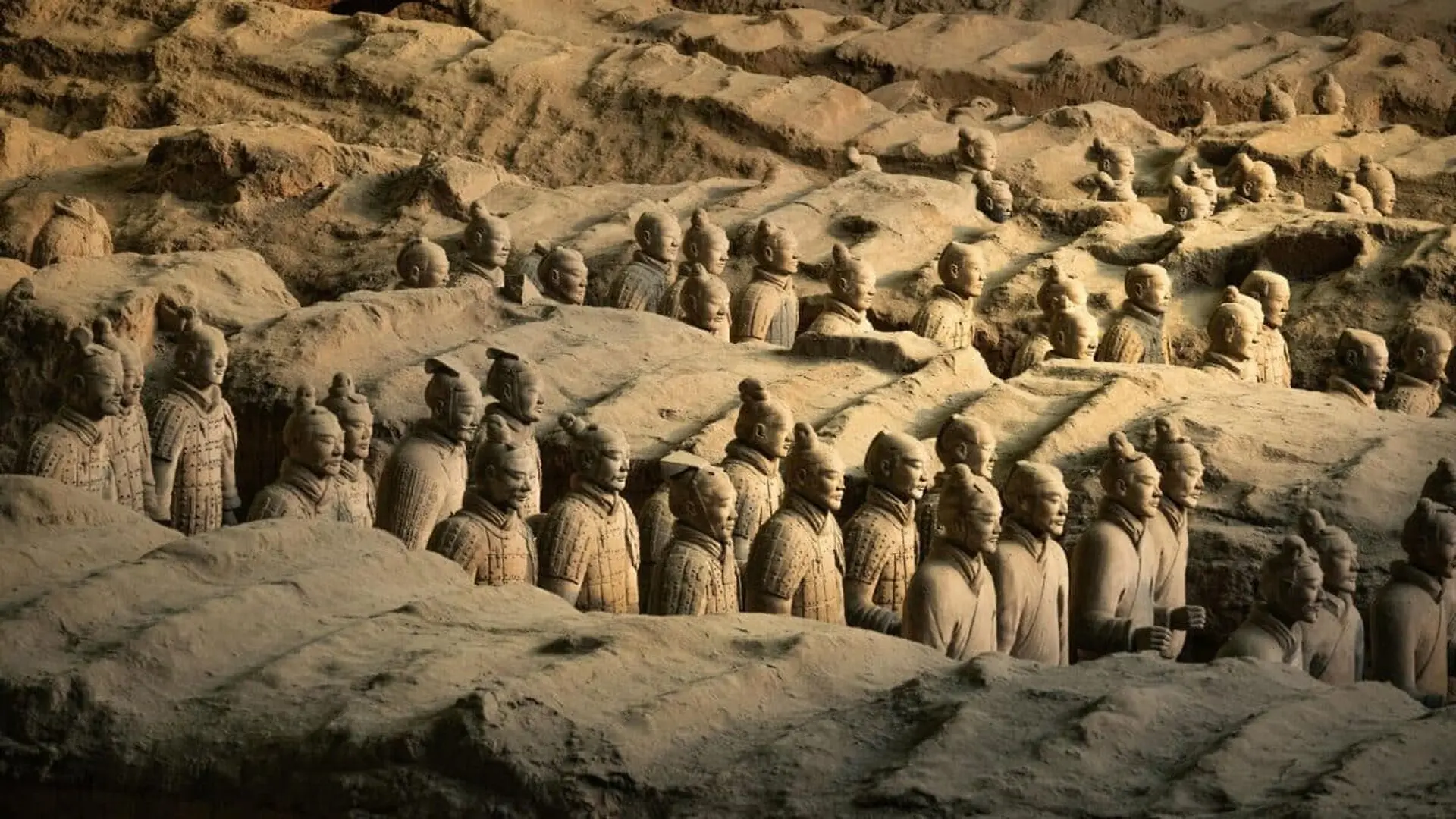
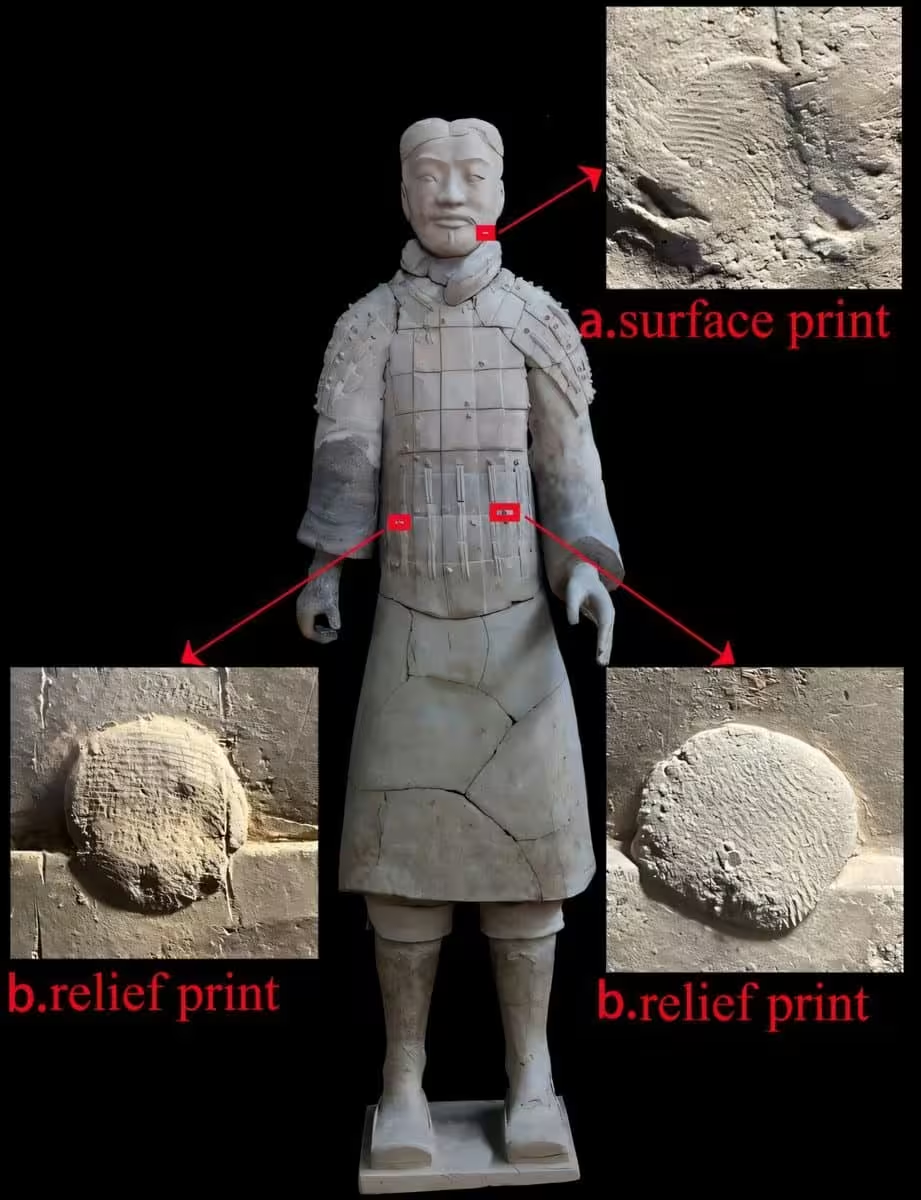
A fresh forensic analysis of the Terracotta Army, the monumental funerary collection created for China’s first emperor, Qin Shi Huang, is challenging long-held assumptions about the workforce behind the massive project. By examining 79 distinct fingerprints preserved on 36 terracotta figures, researchers have uncovered evidence suggesting that the labor force involved in creating the iconic statues was significantly more diverse than previously imagined, incorporating both women and children alongside adult men.
The findings, published in the Journal of Cultural Heritage, utilized a sophisticated statistical approach to analyze impressions left in the wet clay more than 2,200 years ago. While traditional history has often pictured an army of adult male artisans, the new data suggests that adult women accounted for approximately 32.7 percent of the prints, while individuals under the age of 15 represented 22.3 percent. Adult men made up the remaining 45 percent of the sample.
Decoding Ancient Identity
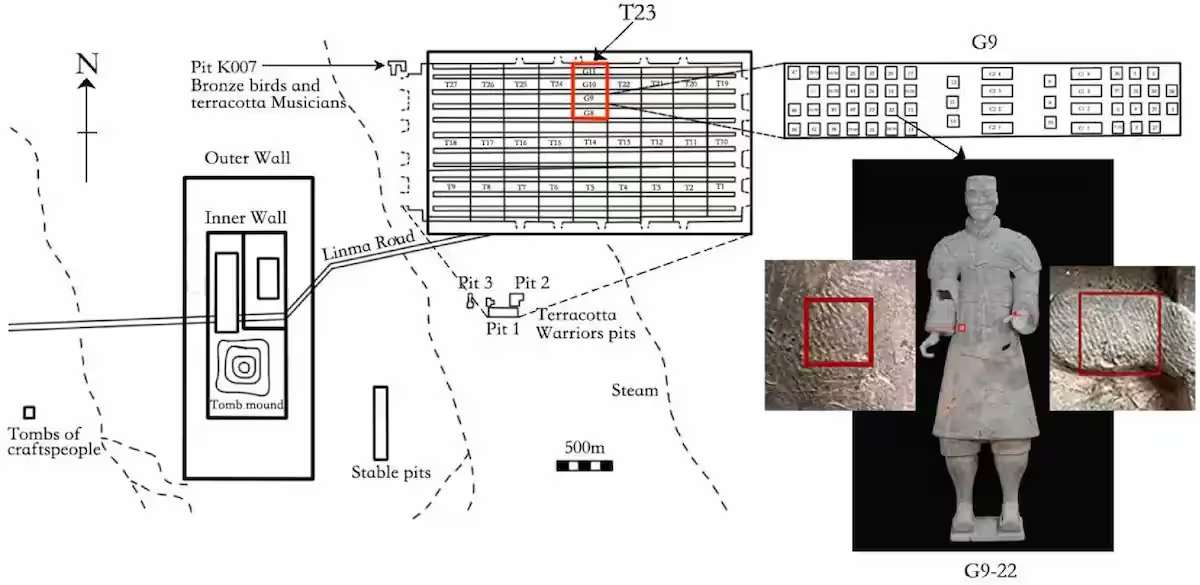
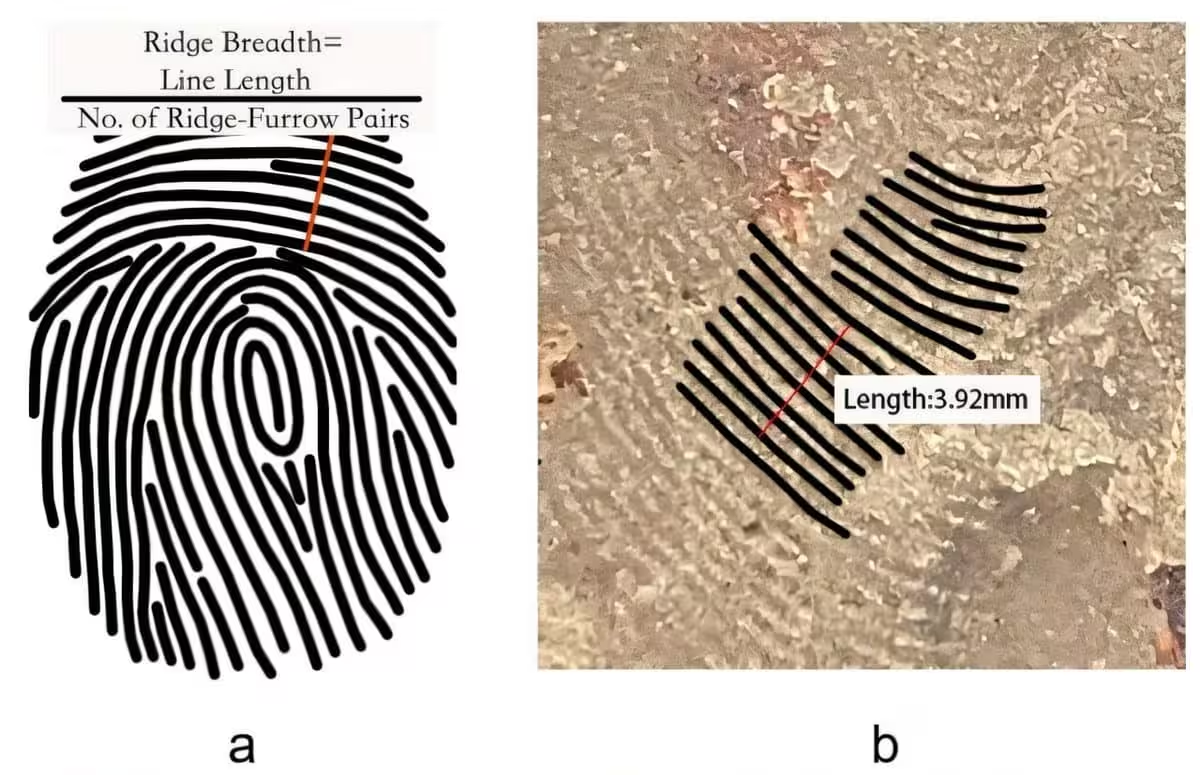
Led by Xiaoxi Li of the Emperor Qinshihuang’s Mausoleum Site Museum, the team focused their study on figures recovered from Unit T23 in Pit 1. Rather than attempting individual identification, the researchers applied a Bayesian mixture model to measure the spacing of ridges within the fingerprints. Because fingerprint ridge density typically shifts as a person matures, this metric provides a reliable proxy for age and sex, even accounting for the inherent biological overlaps between groups.
While the study provides a compelling glimpse into the demographics of the workforce, the researchers emphasize certain limitations. The use of a reference dataset derived from modern European populations and the potential for clay to shrink during the firing process introduce a margin of uncertainty. Furthermore, a single fingerprint does not necessarily reveal the extent of the individual’s contribution to the final sculpture, whether they were lead artisans or apprentices handling specific assembly tasks.
Rethinking Artisan Labor
The possibility of women and children working on the mausoleum aligns with historical records regarding other ancient craft industries. Lukas Nickel, a professor of Asian art history at the University of Vienna, notes that inscriptions on period lacquerware often document a workforce that included women, men, and children. According to Nickel, the production may have relied on family-based workshops or apprenticeship systems, which were common throughout the era.
However, Nickel also pointed to lingering logistical mysteries. Given the massive scale of the project—roughly 7,000 sculptures produced within a decade—the timeline for drying and firing such an immense quantity of clay remains difficult to reconcile. He also expressed curiosity regarding the relative scarcity of fingerprints found on the figures, noting that one might expect a much higher frequency of impressions on such complex, hand-modeled objects.
John Kantner, an archaeologist specializing in ancient ceramic analysis, praised the study as a significant step forward in how the field interprets ancient social structures. Referring to his own 2019 PNAS study of Ancestral Puebloan pottery, Kantner highlighted that evidence of gendered labor diversity is increasingly appearing in archaeological sites across the globe, from the American Southwest to Bronze Age Israel. He suggests that the application of Bayesian modeling to these datasets provides a robust new tool for challenging traditional, often gender-biased, narratives about who participated in the manufacturing of the ancient world.
“Importantly, this work is disrupting age-old assumptions about gendered labor, which is really exciting to see since it has further implications for understanding ancient social structures,” Kantner noted.
This article has been fact checked for accuracy, with information verified against reputable sources. Learn more about us and our editorial process.
Last reviewed on .
Article history
- Latest version
Reference(s)
- “Redirecting.” <https://linkinghub.elsevier.com/retrieve/pii/S1296207426002062>.
- Kantner, John., et al. “Reconstructing sexual divisions of labor from fingerprints on Ancestral Puebloan pottery.” Proceedings of the National Academy of Sciences, vol. 116, no. 25, June 3, 2019, pp. 12220-12225. National Academy of Sciences, doi: 10.1073/pnas.1901367116. <https://doi.org/10.1073/pnas.1901367116?utm_source=chatgpt.com>.
Cite this page:
- Posted by Vikram Desai