Hidden Ingredient Found in Asteroid Ryugu Could Unlock Secrets of the Early Solar System
Powerful X-ray scans of asteroid Ryugu have uncovered a hidden material that may explain how chemical signatures were preserved during ancient water events.
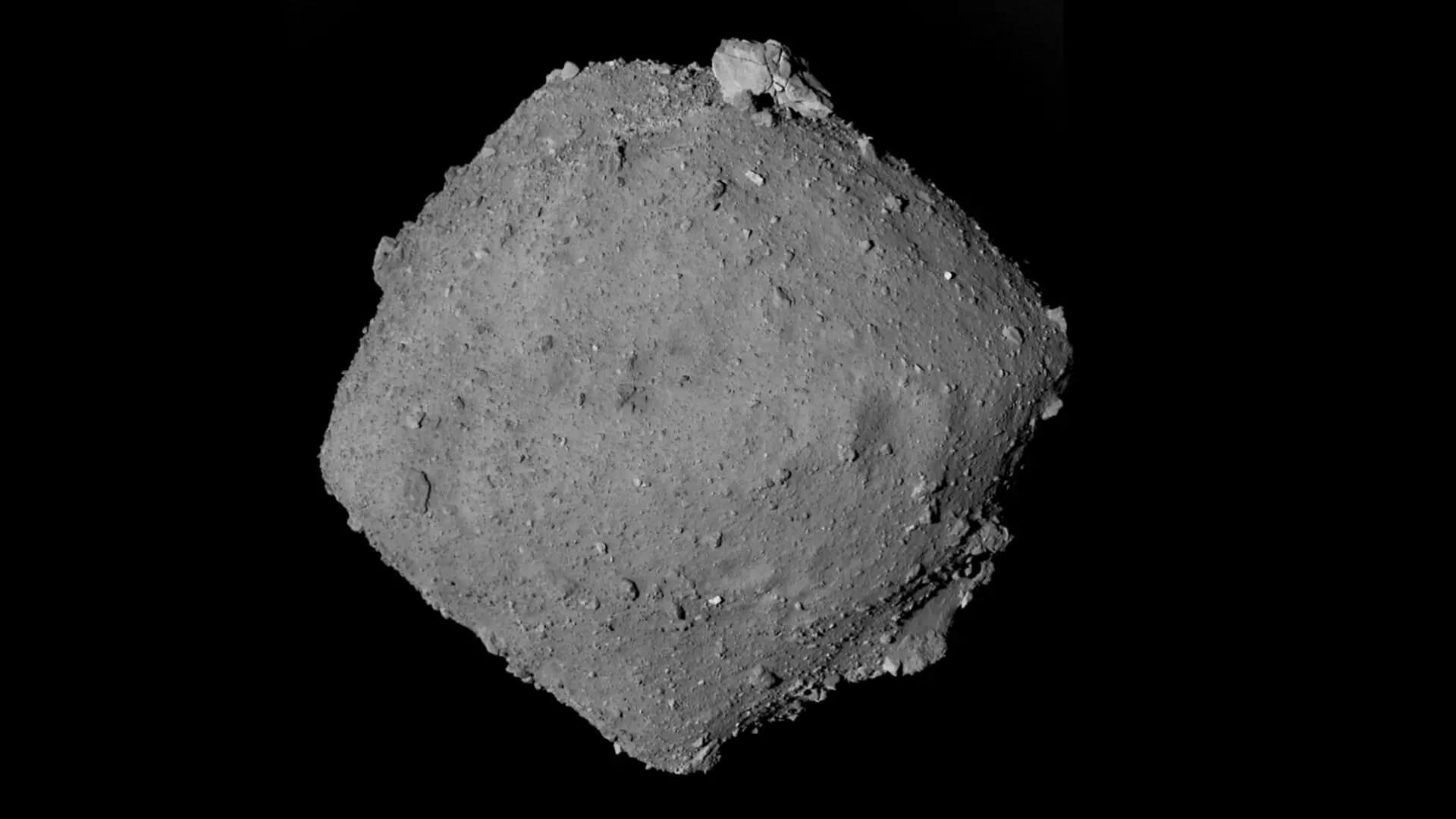
Scientists have long grappled with a geological paradox: how did asteroid Ryugu and similar carbonaceous meteorites undergo extensive aqueous alteration without losing the primordial chemical signatures that define their importance to our understanding of the early Solar System? A new investigation suggests the answer lies in a previously overlooked, poorly crystalline material that may have acted as a chemical bridge during the transformation of these ancient space rocks.
A research team led by experts from Kanazawa University and The University of Tokyo has identified a magnesium-silicate-hydrate-like (M-S-H) component within samples returned by Japan’s Hayabusa2 mission. Their findings, published in Communications Earth & Environment, indicate that this disorganized phase may explain how distinct chemical compositions remained locked within the asteroid’s structure despite the pervasive movement of water.
Bridging the Gap Between Chemistry and Mineralogy
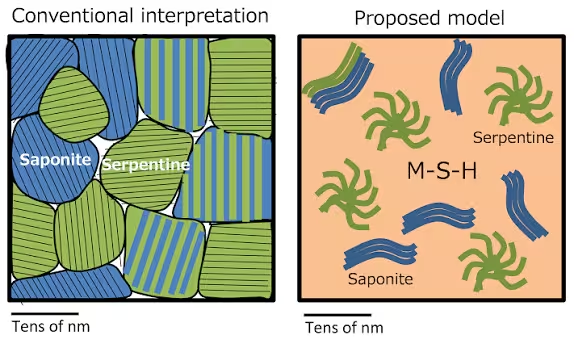
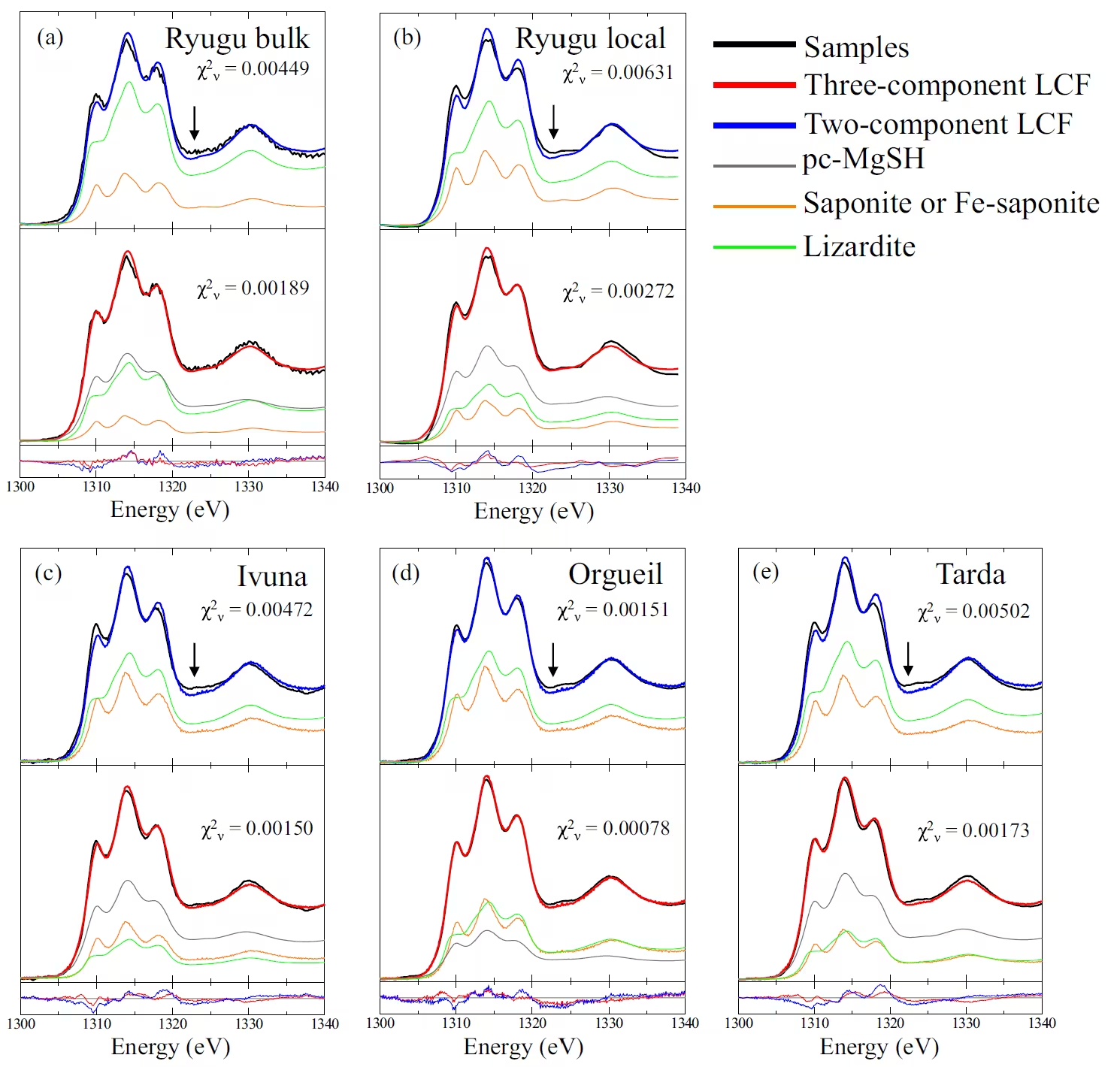
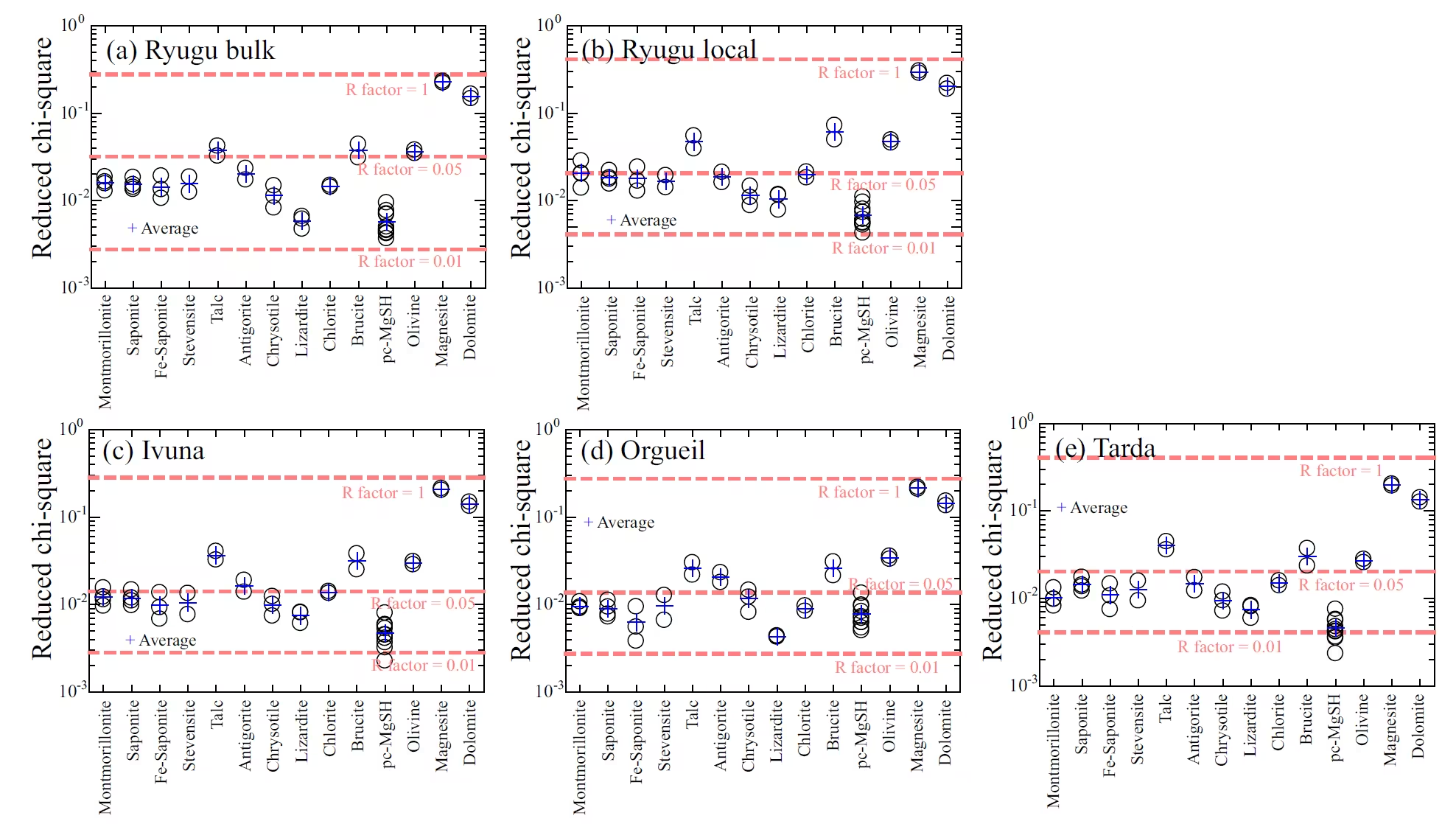
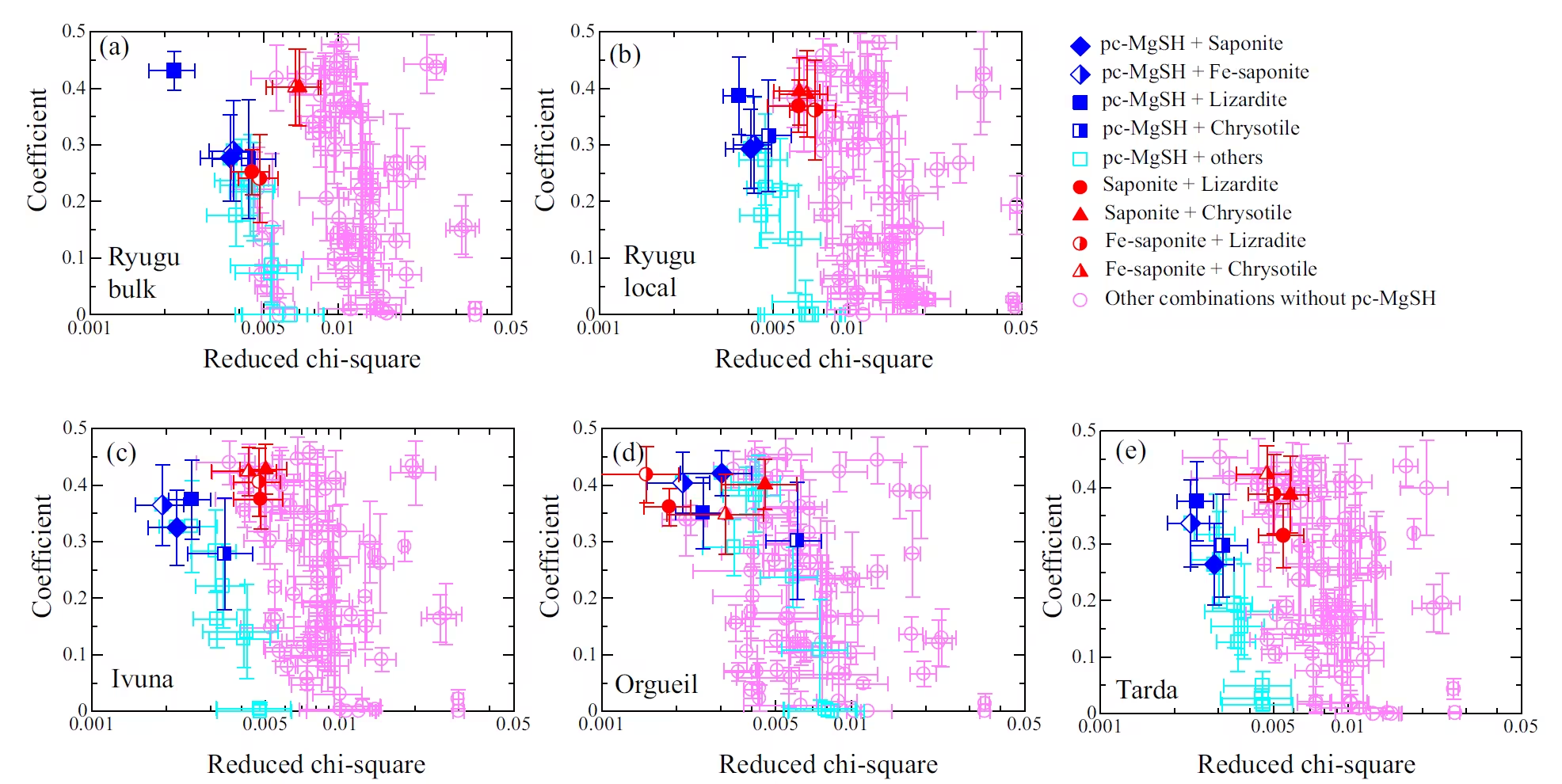
While minerals like serpentine and saponite are well-documented products of rock-water interactions on asteroids, they do not tell the whole story. The study utilized advanced soft X-ray absorption spectroscopy at facilities such as the Photon Factory and SPring-8 to peer into the atomic environment surrounding magnesium atoms in the Ryugu samples. The results revealed that while these traditional minerals are present, they are accompanied by a significant amount of M-S-H, a substance characterized by a lack of long-range atomic order.
This lack of crystallinity is a structural advantage for preserving chemical data. Because M-S-H can accommodate highly variable ratios of magnesium to silicon, it allows different regions of an asteroid to retain unique chemical identities even if they were subjected to similar water-rich environments. According to lead researcher Keisuke Fukushi, this flexibility suggests a mechanism where chemical variation is shielded from the homogenizing effects of fluid circulation.
A New Model for Ancient Alteration
The team proposes that M-S-H served as a primary precursor during the early stages of aqueous alteration. As water moved through the parent body, this M-S-H component likely formed first, trapping the local elemental ratios before potentially evolving into more structured crystalline minerals like serpentine. By treating M-S-H as an intermediate stage in a multi-step reaction, scientists can better account for the observed mineral diversity without assuming that water simply washed away the asteroid’s original chemical heritage.
This model complements other recent efforts to decode the history of carbonaceous asteroids. While previous studies have identified signatures of ancient brines in samples from the asteroid Bennu or analyzed nitrogen-bearing clays in Ryugu, the inclusion of an M-S-H-like component provides a more nuanced view of the transitional states that rocks pass through over billions of years.
Ensuring Sample Integrity
The validity of these findings relies heavily on the meticulous handling of the 5.4 grams of material returned by JAXA’s Hayabusa2 mission. By employing stringent nitrogen-filled and vacuum-sealed environments, researchers minimized the risk of terrestrial contamination that could obscure these subtle, poorly crystalline signatures. This careful curation allows the spectroscopic data to be attributed directly to the asteroid’s intrinsic properties rather than atmospheric exposure on Earth.
As the scientific community continues to analyze these extraterrestrial archives, the identification of M-S-H adds a critical layer to our understanding of early Solar System processes. Future research will focus on determining the precise conditions under which this precursor material forms and exactly how much information it preserves as it matures into more stable minerals.
Deepening the Scientific Record
- Dissolution of Poorly Crystalline Magnesium Silicate Hydrate: Mechanistic Insights from Solution-Based Measurements
- Ammonium-bearing clays and multiple nitrogen species linked to the late-stage brines of Ryugu’s parent body
- An evaporite sequence from ancient brine recorded in Bennu samples
- A pristine record of outer Solar System materials from asteroid Ryugu’s returned sample
- Hayabusa2 Curation
This article has been fact checked for accuracy, with information verified against reputable sources. Learn more about us and our editorial process.
Last reviewed on .
Article history
- Latest version
Reference(s)
- “金沢大学.” 金沢大学 <https://www.kanazawa-u.ac.jp/>.
- “東京大学.” 東京大学 <https://www.u-tokyo.ac.jp/ja/index.html>.
- Okumura, Reon. “Pervasive poorly crystalline Mg-rich hydrous silicate material in C-type asteroid matrices - Communications Earth & Environment.”, September 7, 2026 Nature, doi: 10.1038/s43247-026-03958-2. <https://www.nature.com/articles/s43247-026-03958-2>.
- “Dissolution of Poorly Crystalline Magnesium Silicate Hydrate: Mechanistic Insights from Solution-Based Measurements - PubMed.”, vol. 42, no. 39, January 1, 2026 PubMed, doi: 10.1021/acs.langmuir.6c03649. <https://pubmed.ncbi.nlm.nih.gov/42917648/>.
- Matsumoto, Toru. “Ammonium-bearing clays and multiple nitrogen species linked to the late-stage brines of Ryugu’s parent body - Nature Astronomy.”, August 27, 2026, pp. 1-11. Nature, doi: 10.1038/s41550-026-02962-y. <https://www.nature.com/articles/s41550-026-02962-y>.
- McCoy, T.. “An evaporite sequence from ancient brine recorded in Bennu samples - Nature.”, vol. 637, no. 8048, pp. 1072-1077. Nature, doi: 10.1038/s41586-024-08495-6. <https://www.nature.com/articles/s41586-024-08495-6>.
- Ito, Motoo. “A pristine record of outer Solar System materials from asteroid Ryugu’s returned sample - Nature Astronomy.”, vol. 6, no. 10, pp. 1163-1171. Nature, doi: 10.1038/s41550-022-01745-5. <https://www.nature.com/articles/s41550-022-01745-5>.
- “Hayabusa2 Curation | Astromaterials Science Research Group|ISAS.” Astromaterials Science Research Group|ISAS <https://curation.isas.jaxa.jp/en/sample-curation/ryugu/>.
Cite this page:
- Posted by Aisha Ahmed